
LASHMAITRE wholesale lash knowledge center
Practical guides for salons, lash brands, distributors, academies, and ecommerce buyers sourcing eyelash extensions, lash extensions, cluster lashes, lash glue, private label packaging, and OEM lash products.
Use these guides to choose product categories, compare specifications, plan private label packaging, and prepare a clearer inquiry.
LASHMAITRE Blog
Read the newest LASHMAITRE blog posts about wholesale eyelash extensions, samples, OEM/private label packaging, supplier checks and lash business sourcing.
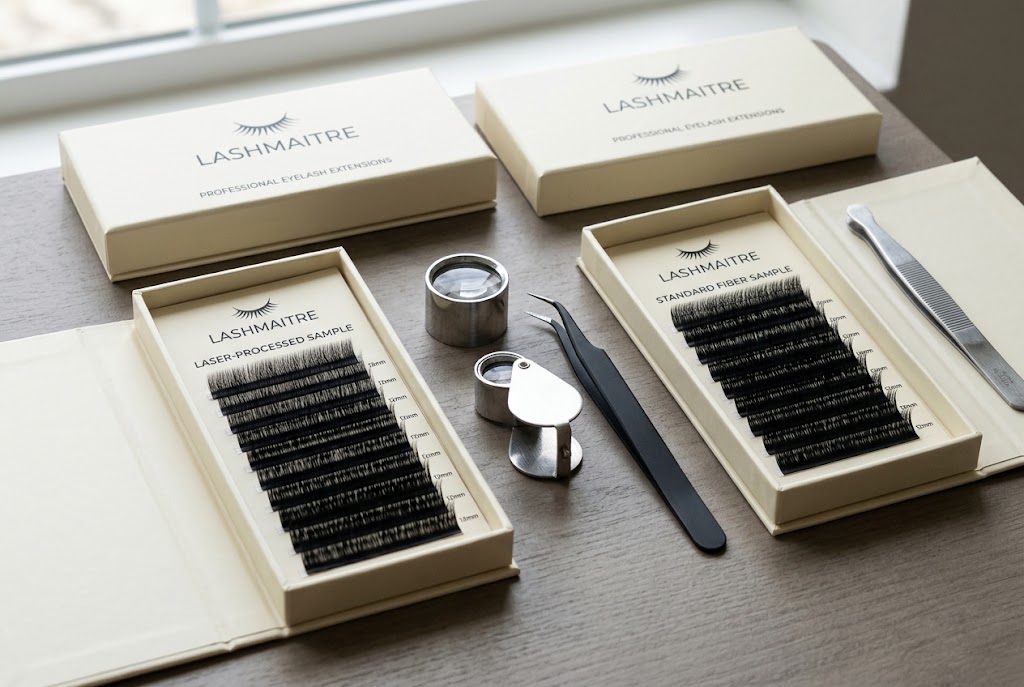
Laser lash extensions vs standard fibers is first a product-definition and evidence decision. Suppliers may use “laser” for a processed fiber surface, a cut or printed premade shape, or another branded construction. The word does not by itself prove a manufacturing method, stronger bonding, lower weight, longer retention or better quality. Wholesale buyers should require…
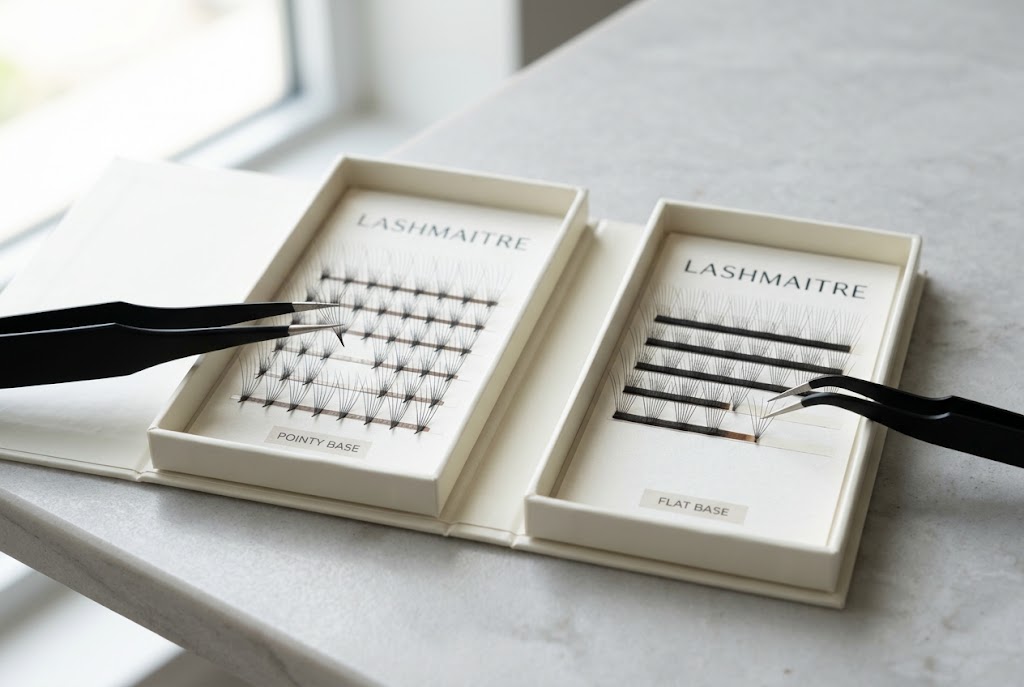
Pointy vs flat base premade fans is a finished-geometry and sample-approval decision. The base label alone does not prove pickup quality, fan integrity, total weight, retention or suitability. Wholesale buyers should compare matched fans under magnification, document the actual base profile and approve the product by usable results rather than by a supplier’s shape name….
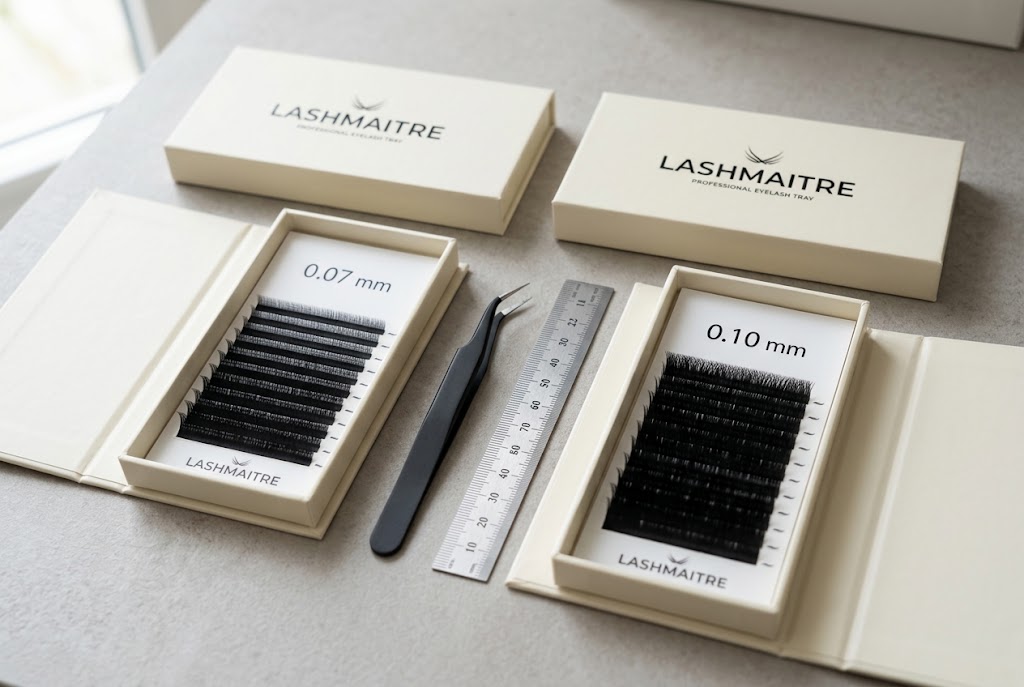
0.07 vs 0.10 volume lash trays is a product-definition, sample-testing and inventory decision. The numbers normally describe nominal fiber diameter in millimeters, but they do not establish finished weight, an approved fan count, quality or professional suitability. Wholesale buyers should compare matched trays, define the physical product in writing and assign each approved diameter a…
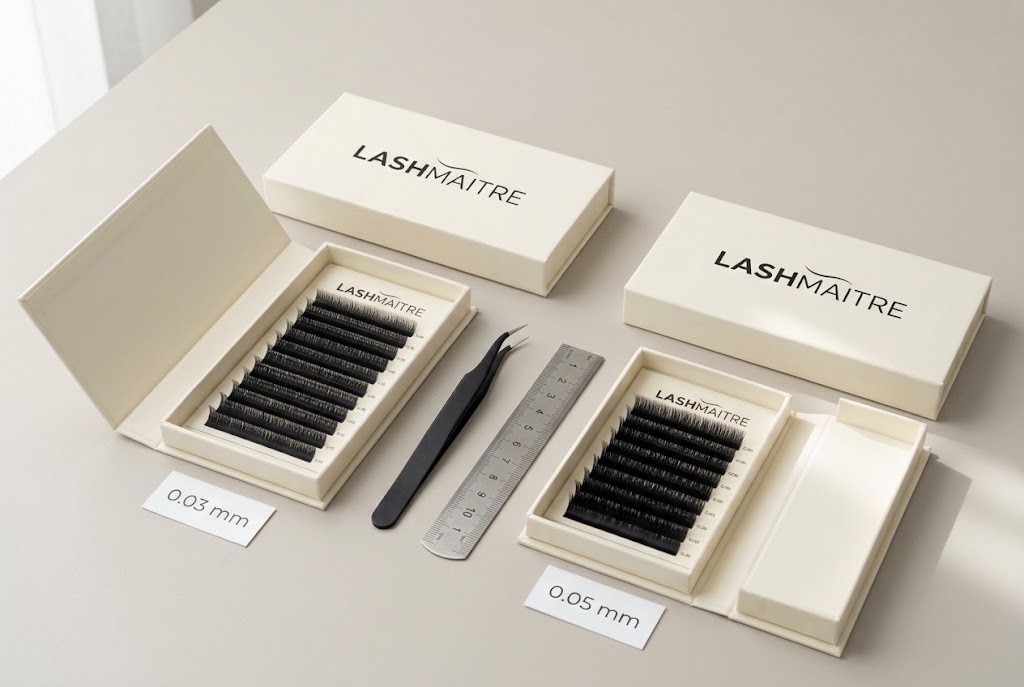
0.03 vs 0.05 mega volume lash trays is a diameter, fan-planning and inventory decision. The two labels normally identify different stated fiber diameters, but they do not establish finished weight, recommended D-count or quality by themselves. Wholesale buyers should compare matched fiber samples by profile, curl, length, finish, strip behavior, row yield and batch consistency,…
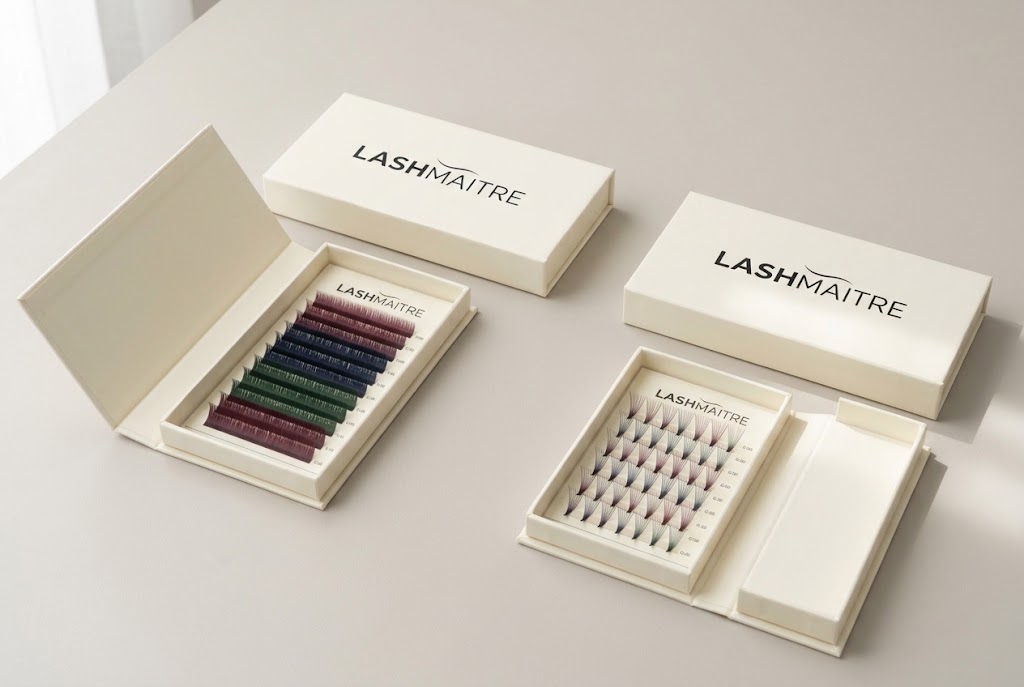
Colored classic vs colored volume lashes is a product-format and assortment comparison. Colored classic trays supply individual fibers for one-to-one or related professional workflows, while colored volume products may supply fine fibers for handmade fans or ready-formed fans, depending on the SKU. Wholesale buyers should define the physical format first, then compare shade, finish, diameter,…
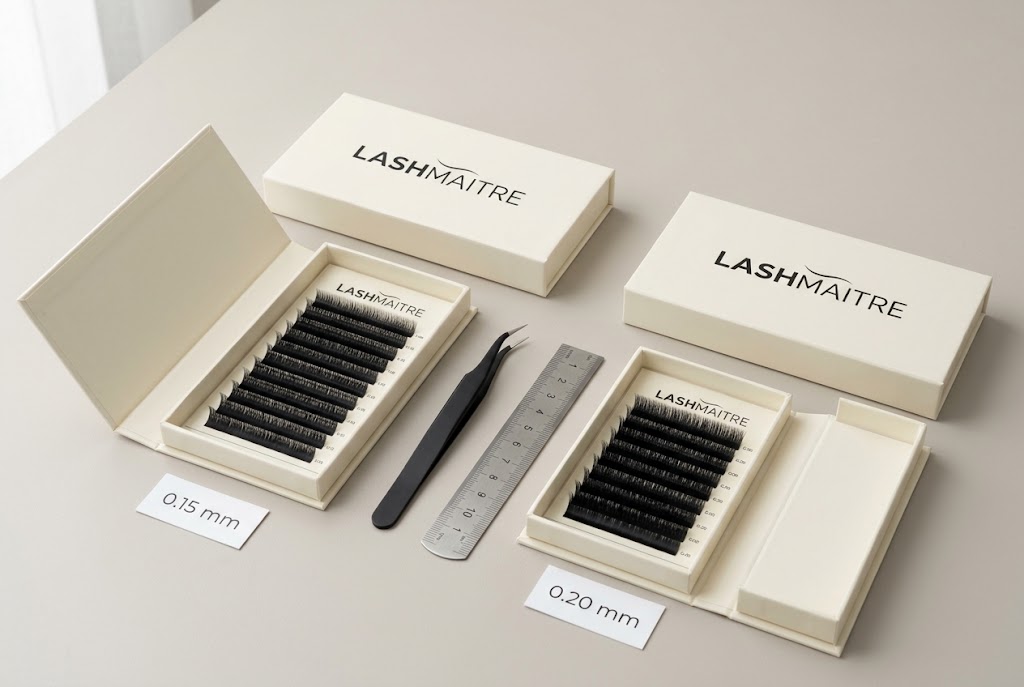
0.15 vs 0.20 classic lash extensions is a diameter and assortment decision, not a simple “natural versus dramatic” label. A wholesale buyer should compare the two diameters in the same curl, length, fiber profile, finish and tray format, then record the measured sample, strip handling, usable yield and intended catalog role. The printed diameter is…
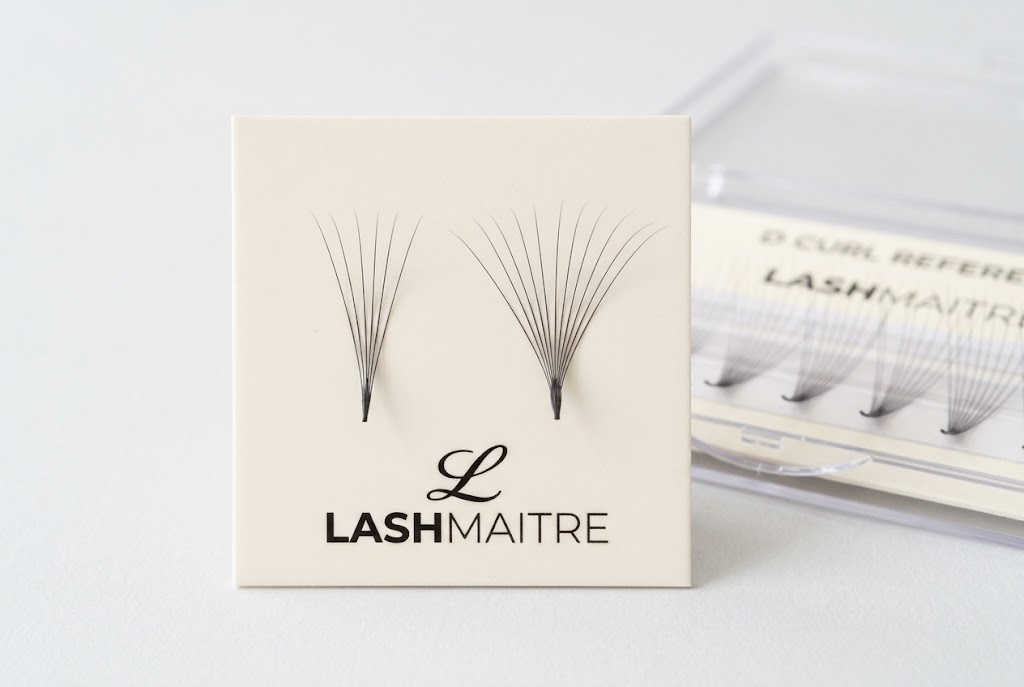
Closed fan vs open fan lashes is a product-structure and assortment decision, not a universal quality ranking. Closed fans keep fibers in a narrow grouped profile, while open fans spread fibers into a wider fan shape. Wholesale buyers should compare matched samples by visible structure, base quality, pickup, count, label wording and reorder consistency before…
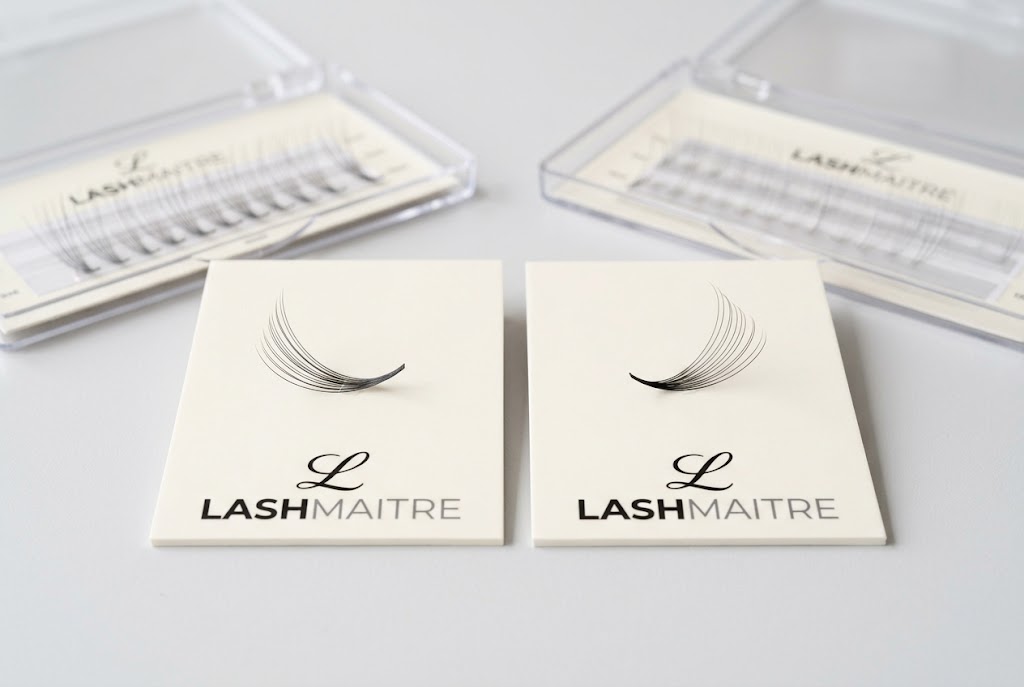

Mixed-length vs single-length cluster lash trays is an assortment and replenishment decision. Mixed-length trays cover several lengths in one SKU and can support starter kits or demand testing. Single-length cluster lash trays provide more depth in one size and can simplify replenishment after demand is known. Wholesale buyers should choose from a written lash-map plan,…

Pre-glued vs bond-and-seal cluster lashes compares two different retail systems. Pre-glued clusters arrive with adhesive already on the base. Bond-and-seal kits use bare clusters with separate bonding and sealing products. Wholesale buyers should decide between them by testing the complete system, reviewing ingredient and label files, checking tray protection and instructions, and confirming how each…

Clear band vs black band cluster lashes is mainly a product-positioning decision. A clear base is intended to stay visually quiet, while a black base adds a more defined line. Neither option proves comfort, flexibility, durability or quality by itself. Wholesale buyers should compare matched samples for base visibility, flexibility, cluster spacing, pickup, packaging clarity…