0.15 vs 0.20 Classic Lash Extensions: 7 Buyer Checks
Share
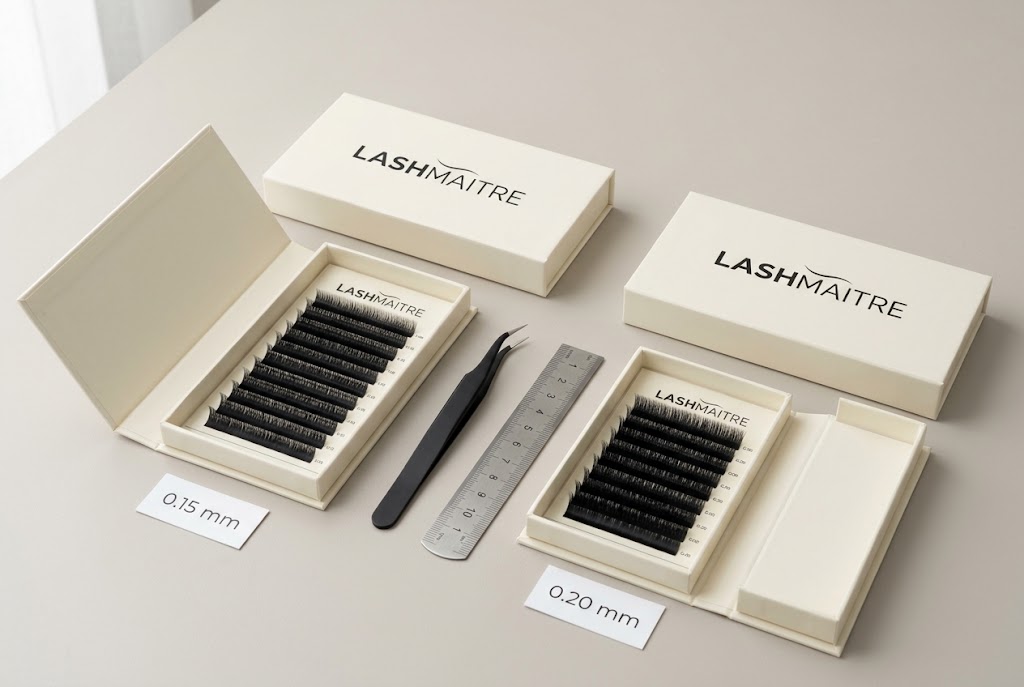
0.15 vs 0.20 classic lash extensions is a diameter and assortment decision, not a simple “natural versus dramatic” label. A wholesale buyer should compare the two diameters in the same curl, length, fiber profile, finish and tray format, then record the measured sample, strip handling, usable yield and intended catalog role. The printed diameter is the starting specification; it does not prove the finished fiber, weight, softness or suitability for every wearer.
1. Define What 0.15 And 0.20 Actually Specify
In a 0.15 vs 0.20 classic lash extensions comparison, the numbers normally refer to the supplier’s stated fiber diameter in millimeters. They do not identify the curl, length, cross-section, finish, taper, row count or tray yield. A 0.15 round fiber and a 0.15 flat or ellipse fiber should not be treated as the same construction simply because the label repeats one number.
Start with the broader lash thickness chart for wholesale buyers, then use this page for the narrower 0.15 vs 0.20 classic lash extensions purchasing decision. Ask the supplier to state the diameter, fiber profile and measurement basis in writing and to supply current tray photographs.
| Buying factor | 0.15 sample | 0.20 sample | Evidence to save |
|---|---|---|---|
| Stated diameter | 0.15 mm as quoted | 0.20 mm as quoted | Specification sheet and sample code |
| Fiber profile | Round, flat or another verified profile | Round, flat or another verified profile | Cross-section definition and macro image |
| Catalog role | Core or lighter classic option when approved | Bold classic option when approved | Buyer profile and sales channel |
| Reorder control | Approved tray and labeled strip | Approved tray and labeled strip | Lot comparison record |
2. Compare 0.15 vs 0.20 Classic Lash Extensions As Matched Samples
Hold curl, length, material description, color, finish, taper, row count and strip system constant. If the 0.15 sample is matte C curl in a 16-row mixed tray while the 0.20 sample is glossy D curl in a 12-row single-length tray, the buyer is comparing several product decisions at once.
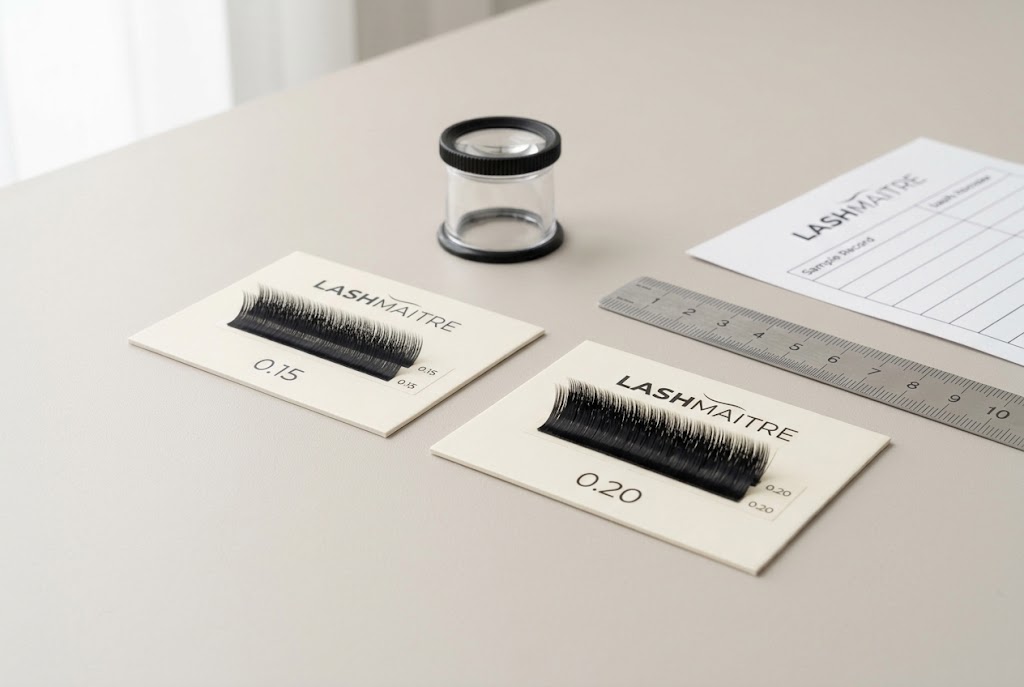
Request both through the lash extension samples path. Label each tray with the supplier, sample date and complete SKU. Photograph the label, one full strip and representative fibers under the same lighting. This creates a record that can be checked again before a reorder.
3. Do Not Convert Diameter Into An Unsupported Weight Claim
When reviewing 0.15 vs 0.20 classic lash extensions made from similar round fibers of the same material, a larger diameter generally changes the fiber’s cross-sectional area and mass. In a real purchase, however, total product behavior also depends on length, taper, cross-section, material and manufacturing tolerance. A printed 0.20 label alone does not establish the actual weight of every fiber or its suitability for a particular natural lash.
Do not publish universal statements such as “0.20 is safe for everyone,” “0.15 always lasts longer” or “flat 0.20 equals round 0.15.” If mass or geometry matters to the range, ask the supplier for the relevant measurement method and qualified professional review. Keep catalog language tied to the verified sample.
4. Give Each Diameter A Distinct Assortment Job
For a 0.15 vs 0.20 classic lash extensions assortment, a catalog may stock 0.15 as the main classic diameter and keep 0.20 for a narrower buyer segment, but that is a range-planning choice rather than an industry rule. Review current customer orders, educator requirements, regional preferences and reorder velocity before allocating inventory.
Separate demand by curl and length. A diameter may sell well in C curl mixed trays but move slowly in every single length. Start with the combinations buyers can name and reorder. Do not launch the full curl-by-length matrix merely because the factory can produce it.
5. Inspect Fiber, Strip And Tray Quality Separately
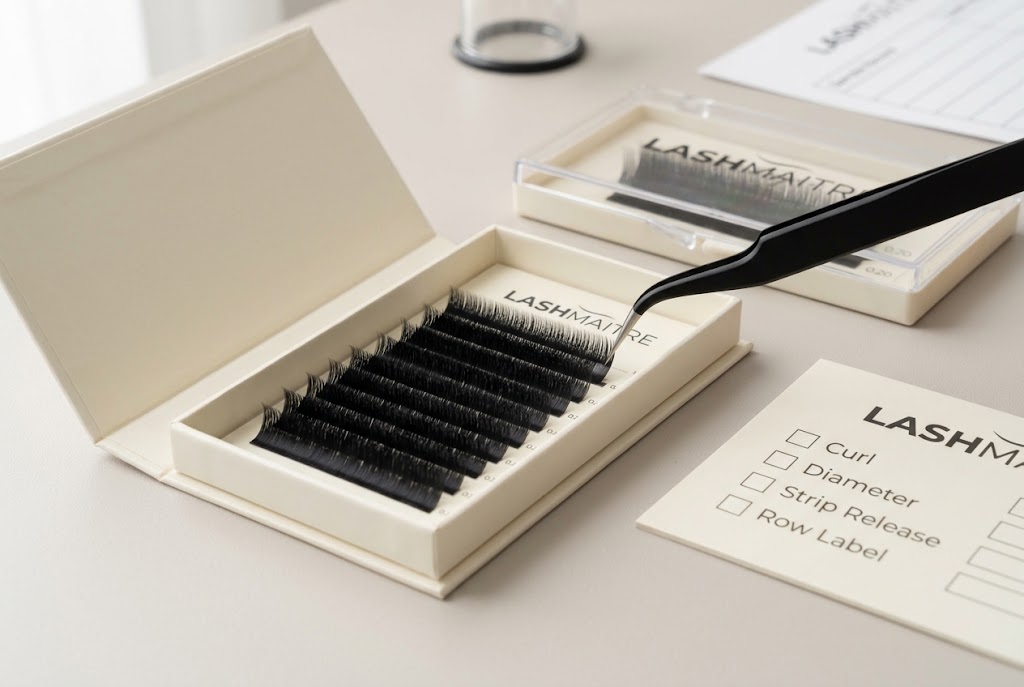
For 0.15 vs 0.20 classic lash extensions, diameter does not replace ordinary tray inspection. Check visible fiber consistency across rows, curl alignment, tip condition, color and finish. Then test strip release, residue, neighboring-fiber movement, row labels and tray protection. Record defects by a defined unit so the result can be compared across samples.
Use the same pickup method and lighting for both trays. If the team uses an acceptance sampling plan for bulk lots, define the sample size, defect categories and release rules in the purchase agreement before inspection. Do not describe an undocumented tray check as compliance with a formal sampling standard.
6. Compare 0.15 vs 0.20 Classic Lash Extensions By Usable Yield
In a 0.15 vs 0.20 classic lash extensions quote, a lower tray price can be misleading when row count, fibers per row, usable yield or packaging differs. State whether the quote is per tray, per row, per case or per specification. Count unusable sections under one written method and keep freight, private-label packaging and sampling charges separate from the product comparison.
| Approval record | Question for 0.15 | Question for 0.20 | Release rule |
|---|---|---|---|
| Identity | Are profile, curl and length explicit? | Are profile, curl and length explicit? | Separate SKU and barcode |
| Tray construction | Rows, labels and strip pass? | Rows, labels and strip pass? | Matches approved sample |
| Usable yield | What defined defects were found? | What defined defects were found? | Method and sample size recorded |
| Commercial fit | Who will reorder this SKU? | Who will reorder this SKU? | Demand owner and launch quantity documented |
7. Approve Packaging And Reorder Records Together
Print the verified diameter, curl, length format and fiber profile consistently on the tray card, box, barcode record and catalog. Do not use one generic product image for both diameters. A macro comparison can help buyers see the difference, but it must be presented as an illustration unless it depicts the actual approved goods.
Connect the final specification to the custom lash packaging path. Retain one approved tray from each diameter and record any packaging revision separately. A reorder should be checked against the physical reference and written specification, not memory.
Safety And Evidence Boundary
Diameter alone does not prove application suitability, comfort, retention or safety. Professional assessment must consider the complete extension and the wearer’s natural lashes. The FDA’s eye cosmetic safety guidance provides general eye-area context; it does not approve a specific diameter or tray.
For an 0.15 vs 0.20 classic lash extensions sample comparison, send the desired profile, curl, lengths, finish, tray format, quantity and packaging direction through the wholesale lash inquiry. Availability and specifications must be confirmed for the current project.
FAQ: 0.15 vs 0.20 Classic Lash Extensions
Is 0.20 always heavier than 0.15?
For otherwise matched round fibers, the larger diameter generally changes cross-sectional area and mass. Real products may also differ in length, taper, profile and material, so compare the finished samples and supplier data rather than the number alone.
Can a brand stock both diameters?
Yes, when each has a defined buyer segment and reorder case. Keep separate SKUs, samples, images and demand records so the range does not become unnecessary inventory.
Are flat 0.20 and round 0.20 the same product?
No. The same stated diameter does not make different cross-sections equivalent. Confirm the fiber profile, measurement basis and actual sample before comparing them.
What should a buyer put on the purchase order?
Record diameter, fiber profile, material description, finish, curl, length format, row count, strip and tray details, label text, sample code, quantity and the agreed inspection method.

Lash Maitre: Your Trusted Partner in Eyelash extension Solutions
Lash Maitre is dedicated to providing professional insights and tips in the eyelash extension industry. Sharing the latest trends, techniques, and product knowledge, Lash Maitre helps lash artists and enthusiasts enhance their skills, stay inspired, and achieve the perfect lash experience.