Laser Lash Extensions vs Standard Fibers: 7 Buyer Checks
Share
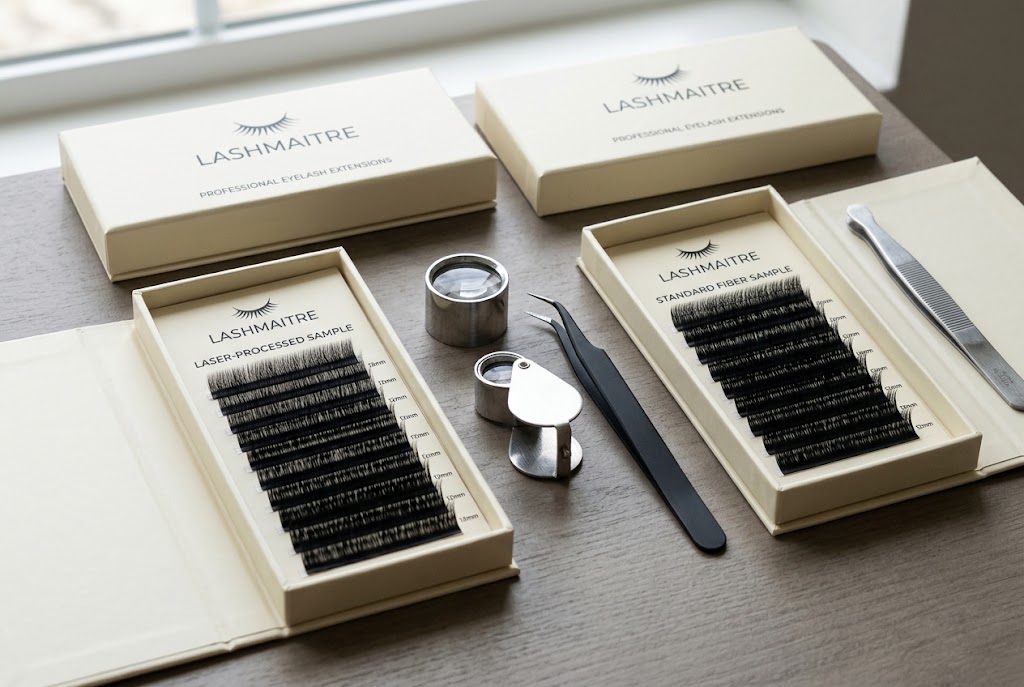
Laser lash extensions vs standard fibers is first a product-definition and evidence decision. Suppliers may use “laser” for a processed fiber surface, a cut or printed premade shape, or another branded construction. The word does not by itself prove a manufacturing method, stronger bonding, lower weight, longer retention or better quality. Wholesale buyers should require a written definition, matched samples and batch-level evidence before creating a separate SKU.
1. Ask What “Laser” Means On This Quote
Start with one direct question: what physical part of the product was processed, and how? A supplier may be describing microscopic surface treatment on individual fibers, a digitally formed premade fan or spike, a printed pattern, or simply a collection name. These are different products with different inspection methods.
The lash fiber finish checklist owns general appearance and surface review. The lash thickness chart owns diameter planning. This page focuses on the evidence a buyer needs when a supplier adds “laser” to the product identity.
| Buying field | Laser-labeled sample | Standard comparison | Evidence to retain |
|---|---|---|---|
| Product definition | Exact processed part and method claimed | Standard construction described | Signed specification or supplier record |
| Physical format | Individual fiber, fan, spike or other unit | Matched physical format | Full-tray and macro photographs |
| Claimed difference | Stated measurable feature | Control sample result | Method, sample size and result |
| Reorder identity | Separate SKU and batch | Separate comparison SKU | Retained samples and artwork version |
2. Build A Matched Laser vs Standard Sample Pair
To compare laser lash extensions vs standard fibers, hold physical format, material description, diameter, curl, length, color, finish, tray row count, strip system and packaging constant. If the laser-labeled sample is a premade anime spike and the standard sample is a loose classic fiber, the comparison cannot isolate the claimed process.
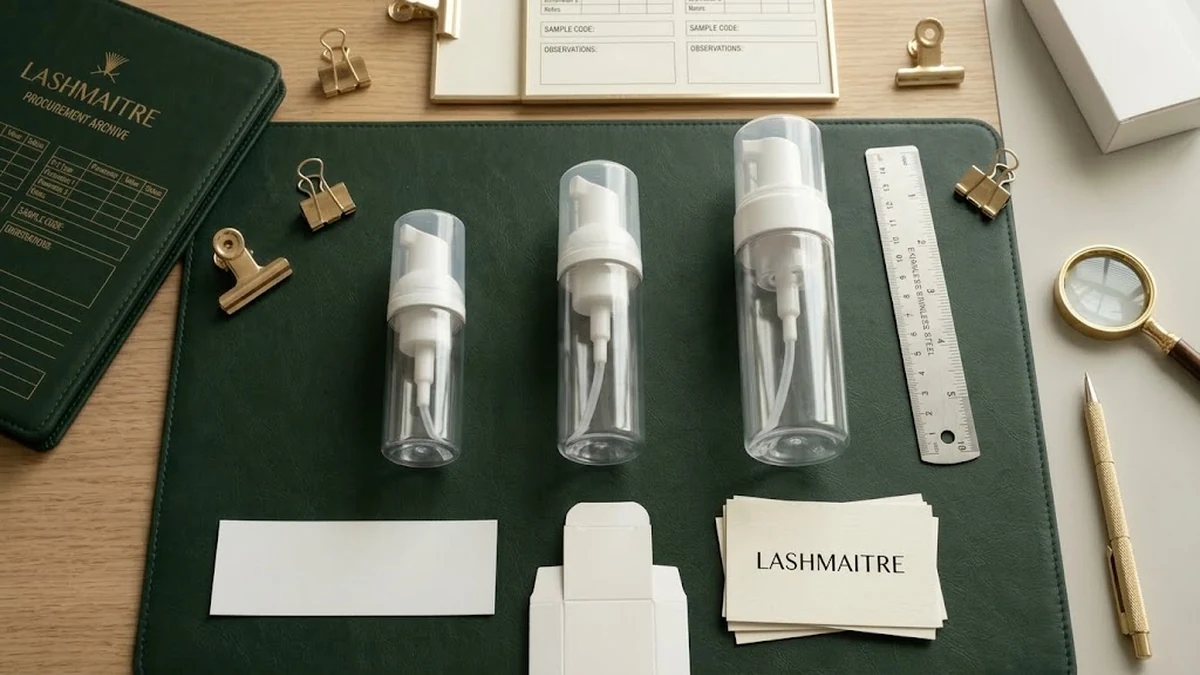
Request both samples through the lash extension samples path. Assign separate codes, photograph labels and physical units under the same lighting, and retain the original trays. Record whether the samples came from commercial production, a prototype run or a supplier display set.
3. Require Evidence For The Manufacturing Claim
Ask the supplier to identify the processing stage and the resulting physical feature. A useful record explains what was changed and where that change should be visible or measurable. A marketing phrase, rendered diagram or unrelated machine photograph does not establish that the delivered batch received the claimed process.
If microscopy or other specialized evidence is offered, record who produced it, which sample code it covers, the magnification or method and the date. Do not reuse one image for future batches without a traceable connection. When the supplier cannot substantiate the term, list the product by its observable construction instead.
4. Inspect Surface, Shape And Consistency
When comparing laser lash extensions vs standard fibers, use suitable magnification to compare representative units from the first, middle and final rows. Review surface appearance, taper, tip condition, curl, visible diameter consistency, base shape and contamination. For formed fans or spikes, also record symmetry, spacing and unit integrity.
Define defect categories before counting. Camera sharpening, lighting and compression can create apparent textures that are not present on the physical fiber, so keep the original sample. A visually different surface is evidence of appearance, not automatic proof of the named process or a performance benefit.
5. Test Handling Under One Controlled Method
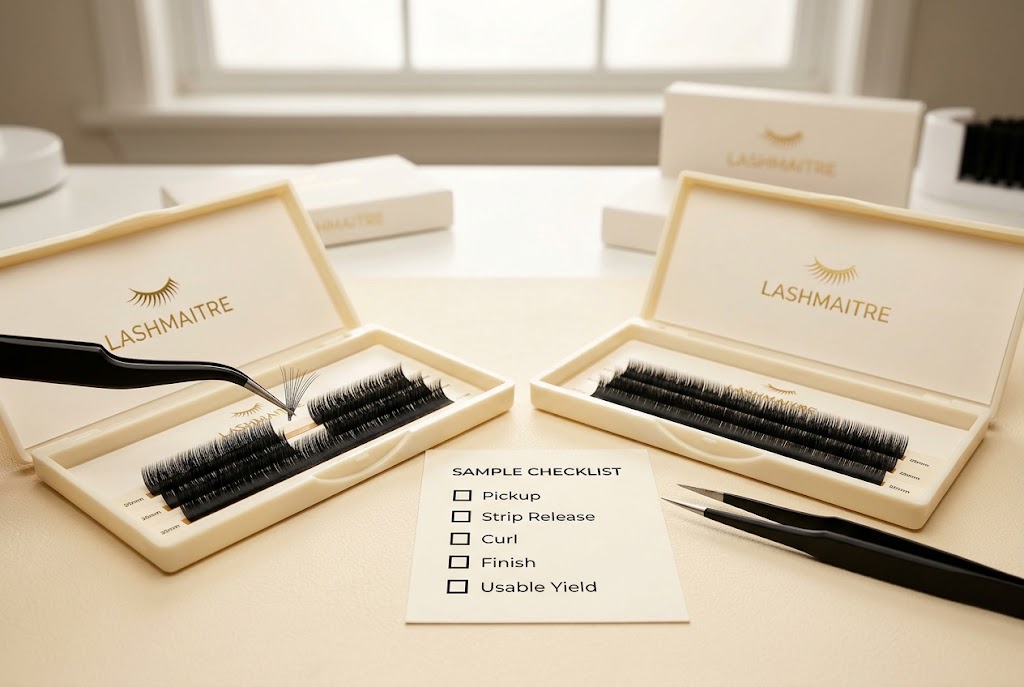
For laser lash extensions vs standard fibers, use the same tweezers, strip area, pickup method, reviewer and number of trials. Record pickup, neighboring-fiber movement, strip release, residue, fan or spike integrity and any visible change after normal handling. Separate these observations from professional application claims.
Strip tack, finish and packaging pressure can change handling even when the fiber is identical. If any of those fields differ, request a second matched pair or record the limitation. A useful buyer test explains what changed, what stayed constant and how many units were reviewed.
6. Evaluate Claims Without Turning Them Into Promises
Claims such as better adhesion, longer retention, lower weight or faster work require a defined comparison, suitable sample size and conditions. Do not convert supplier marketing into an absolute product promise. Retention and application results can also depend on adhesive, environment, technique, aftercare and the individual receiving the service.
For commercial planning, ask whether the laser-labeled construction creates a distinct buyer problem worth solving. Use inquiries, sample requests and reorders to decide. Current B2B demand that cannot be verified should be recorded as N/A rather than inferred from social posts or competitor catalog size.
| Approval field | Laser-labeled record | Standard record | Release rule |
|---|---|---|---|
| Identity | Process definition and SKU | Construction definition and SKU | No undefined marketing term |
| Surface or shape | Images, method and observations | Matched control observations | Sample codes linked |
| Handling | Trial count and result | Trial count and result | Same method and reviewer |
| Commercial release | Demand owner and launch quantity | Existing range role | Review after real reorders |
7. Preserve The Product Definition In Packaging
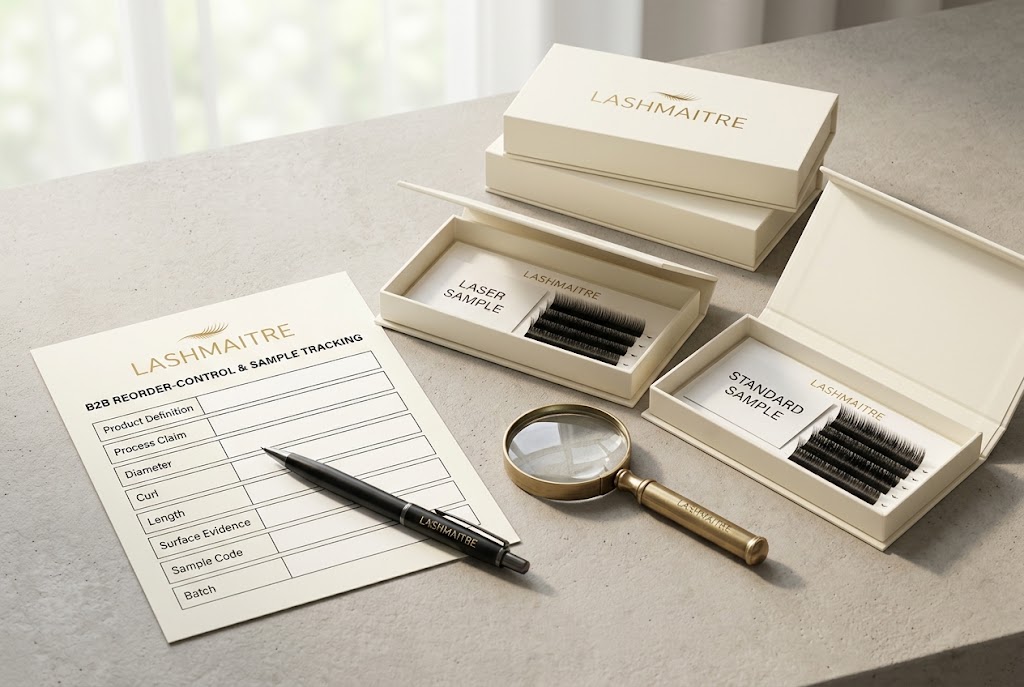
For laser lash extensions vs standard fibers, the tray card, box, barcode record and catalog should state the observable product format, diameter, curl, length and other order fields. If “laser” remains in the name, keep the approved definition and evidence attached to that SKU. Do not use an enlarged illustration as proof of the delivered surface.
Connect the released product to custom lash packaging only after sample approval. Keep one retained tray, the supplier definition, relevant images and the final artwork version. At reorder, compare the physical batch and labels against the same reference.
Safety And Evidence Boundary
A manufacturing label does not prove comfort, retention, suitability or safety. Qualified professionals must assess the complete product and intended use. The FDA’s eye cosmetic safety guidance provides general eye-area context and does not approve a laser process, fiber or lash design.
For a laser lash extensions vs standard fibers project, send the supplier’s definition, physical format, material description, diameter, curl, lengths, finish, sample evidence, quantity and packaging direction through the wholesale lash inquiry. Current supply capability and documentation must be confirmed for the project.
FAQ: Laser Lash Extensions vs Standard Fibers
What does “laser lash extensions” mean?
There is no single market definition. It may describe a processed fiber surface, a cut or printed premade shape, or a branded construction. Ask the supplier to define the exact physical product and process.
Do laser lashes automatically provide better retention?
No. That claim requires a controlled comparison and traceable samples. Adhesive, environment, technique, product construction and aftercare can also affect observed results.
What evidence should a wholesale buyer request?
Request a written definition, matched physical samples, traceable macro or microscopy evidence when relevant, batch identity, test method, sample size and retained reference units.
What belongs on the purchase order?
Record the defined construction, processed part, physical format, material description, diameter, curl, length, finish, sample code, batch, packaging version, quantity and inspection method.

Lash Maitre: Your Trusted Partner in Eyelash extension Solutions
Lash Maitre is dedicated to providing professional insights and tips in the eyelash extension industry. Sharing the latest trends, techniques, and product knowledge, Lash Maitre helps lash artists and enthusiasts enhance their skills, stay inspired, and achieve the perfect lash experience.