Mixed-Length vs Single-Length Cluster Lash Trays Guide
Share
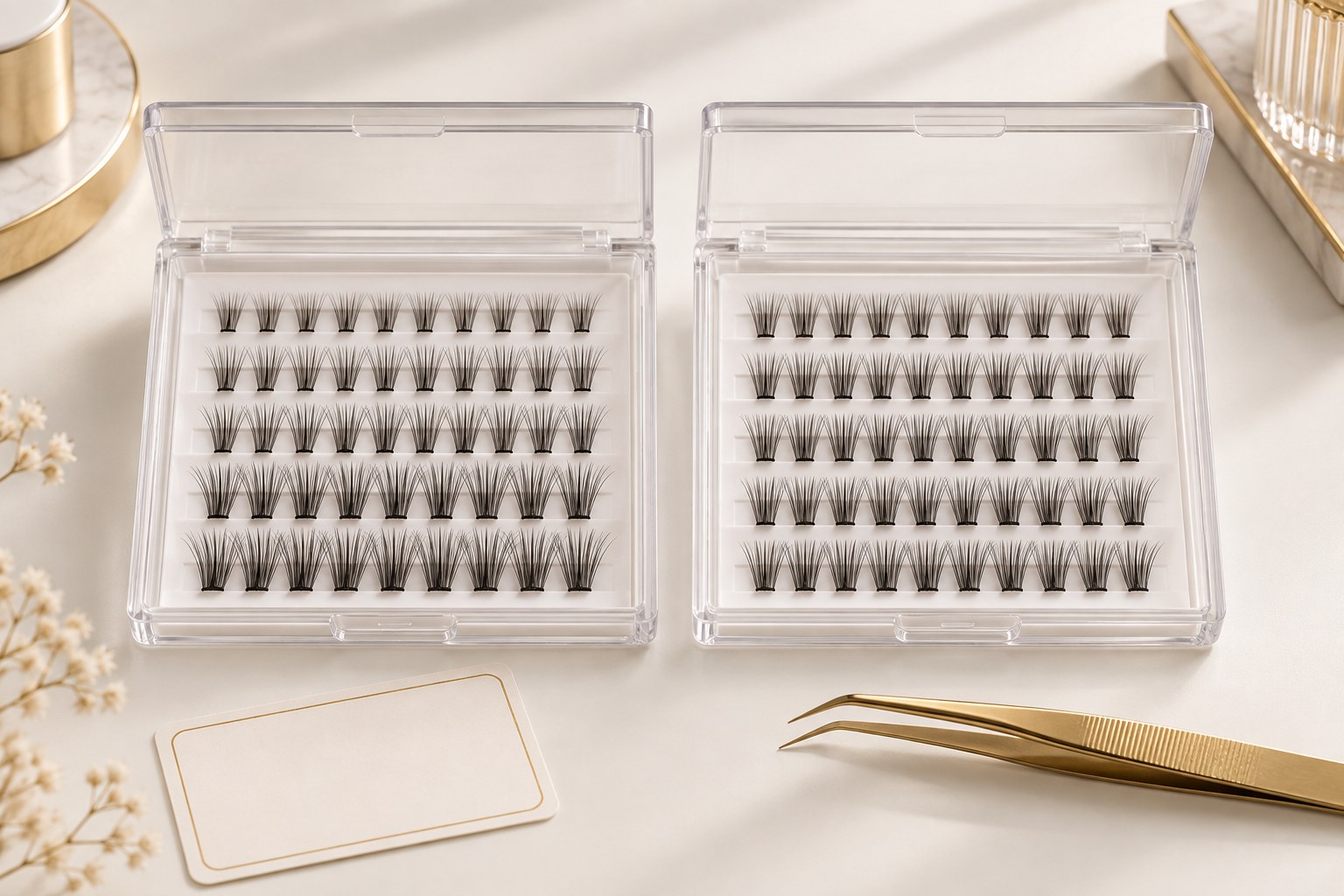
Mixed-length vs single-length cluster lash trays is an assortment and replenishment decision. Mixed-length trays cover several lengths in one SKU and can support starter kits or demand testing. Single-length cluster lash trays provide more depth in one size and can simplify replenishment after demand is known. Wholesale buyers should choose from a written lash-map plan, usable cluster counts and actual reorder data rather than assuming one format is always better.
Mixed-Length vs Single-Length Cluster Lash Trays: Quick Comparison
| Buyer decision | Mixed-length tray | Single-length tray | Evidence to collect |
|---|---|---|---|
| Primary role | Several lengths in one sellable SKU | Depth in one specified length | Target kit and lash maps |
| Launch use | Tests a broader length range | Supports a known high-use length | Pilot sales or usage data |
| Inventory | Fewer opening SKUs | More precise replenishment | Stock by length |
| Main risk | Fast lengths run out before slow rows | Too many low-demand SKUs | Remaining counts and reorder frequency |
| Label requirement | Every included length and allocation | One prominent length | Tray card and SKU proof |
A mixed tray is not automatically a balanced tray. Buyers need the number of rows or clusters assigned to every length. Likewise, a single-length range is not automatically efficient if it multiplies slow-moving SKUs.
1. Start With the Lash Maps the Product Must Support
Write the intended map or set of maps before selecting the tray. Record the lengths used, the number of clusters required at each length and whether the kit supports natural, open-eye, doll-eye, cat-eye or another clearly defined arrangement. These names are not universal physical specifications, so connect each name to an actual length sequence.
If one mixed tray cannot complete the advertised map without running short in a key length, the allocation needs revision. If a single-length range requires customers to buy several trays before they can build the advertised look, the offer and packaging should make that clear.
2. Audit the Allocation Inside a Mixed Tray
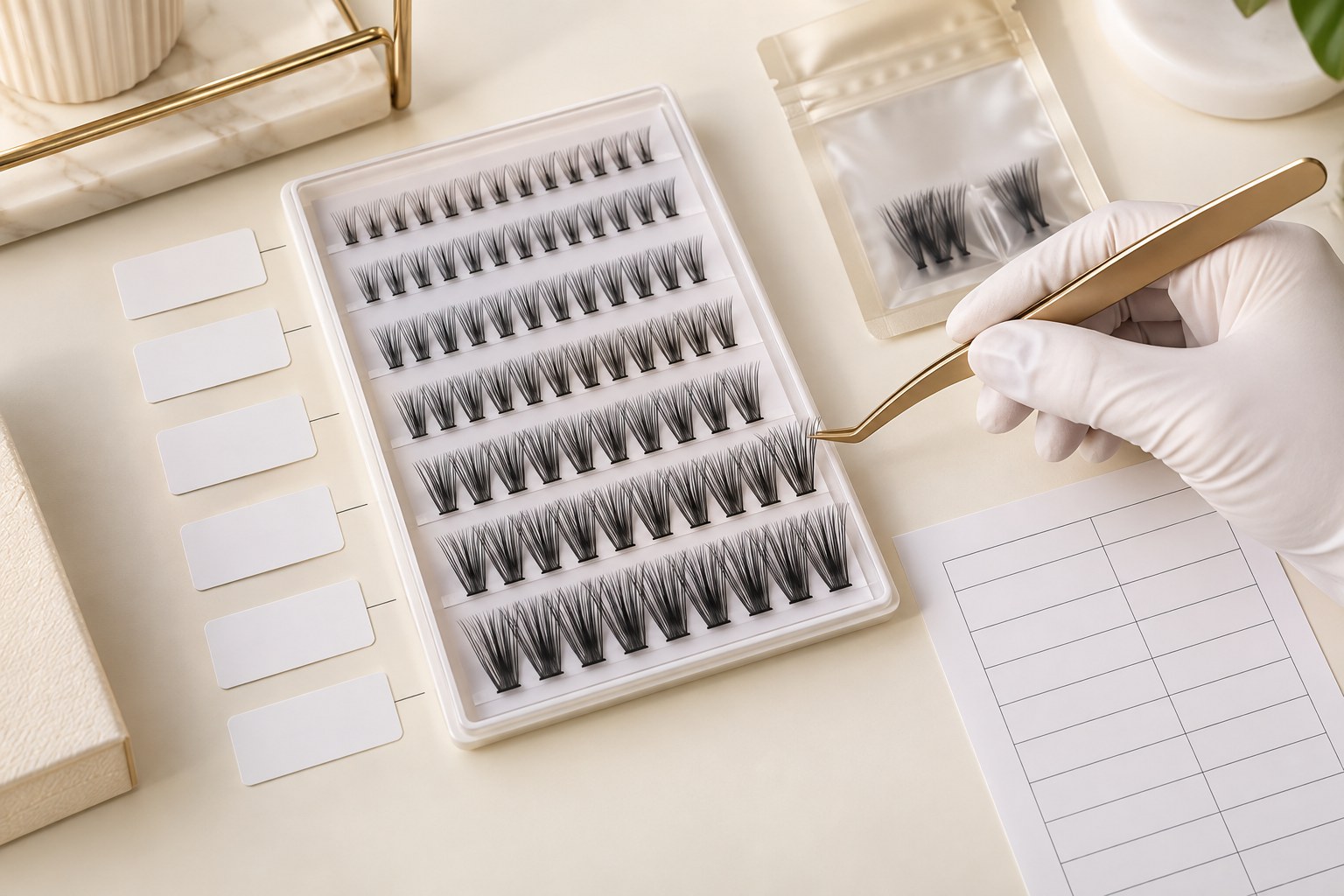
“8–16 mm mixed” does not tell a buyer how much usable stock exists at each length. Ask for the exact row or cluster count for 8, 10, 12, 14 and 16 mm, or whatever sequence applies. Photograph the tray card and count a physical sample.
Review whether the allocation matches the proposed map. Short inner-corner lengths may need fewer clusters than central or outer lengths for one design, while another style may consume them differently. The correct mix comes from the intended product brief and trial use, not a generic percentage.
3. Use Single-Length Trays for Proven Replenishment
Single-length cluster lash trays become useful when sales or trial records show that one length repeatedly runs out first. They let a brand replenish that size without buying more of every slower length. They can also support customers who build their own maps and already know which lengths they use.
The tradeoff is SKU depth. Every added length needs its own tray card, product record, barcode or SKU, inventory location, reorder point and quality reference. Start with the few lengths supported by evidence instead of launching a complete range from assumption.
4. Compare Cost Per Usable Cluster
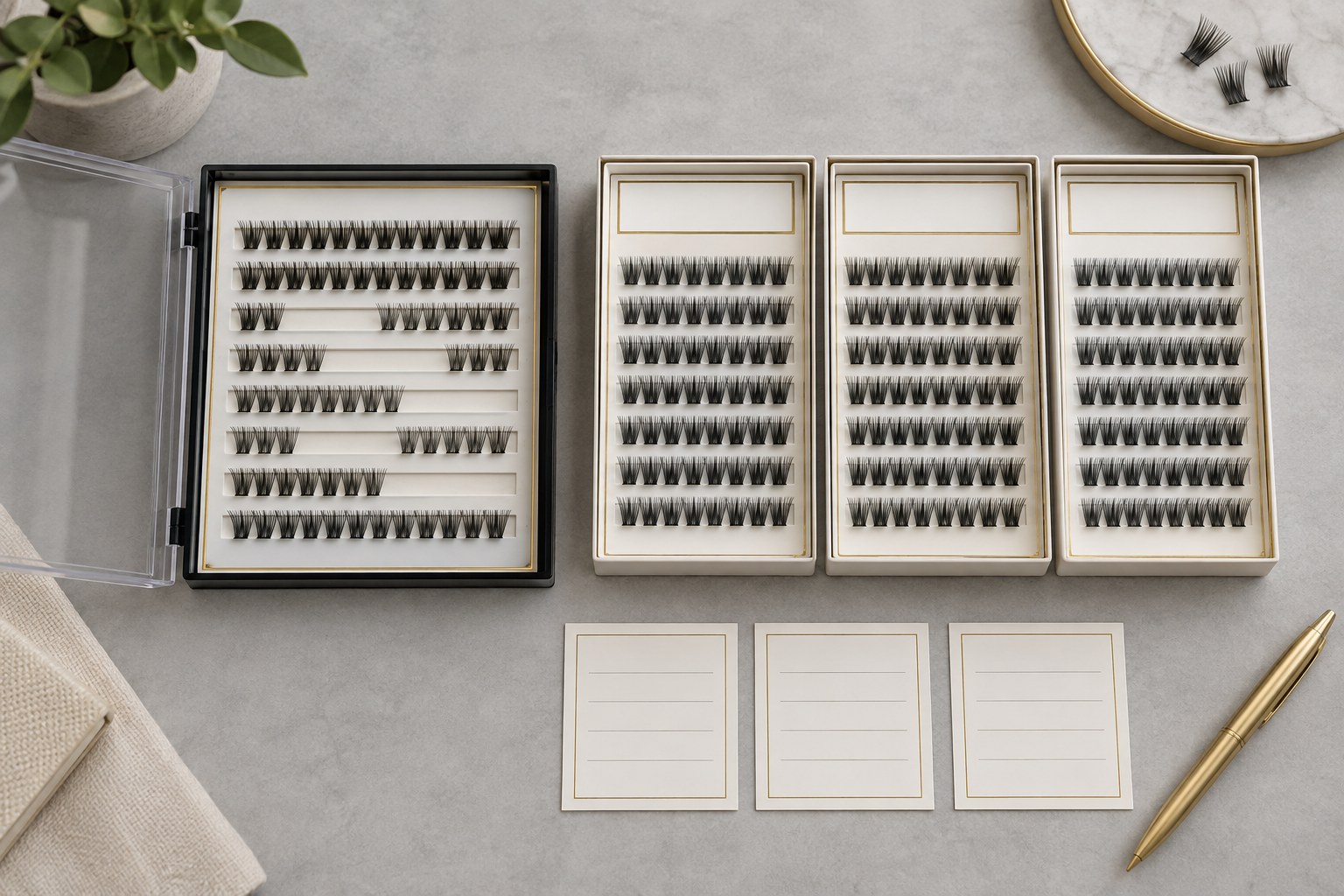
Unit price per tray can hide an inefficient allocation. Count the clusters that fit the intended range and separate them from lengths likely to remain unused. For single-length trays, include the additional inventory and packaging burden created by multiple SKUs.
Use a simple calculation:
Cost per usable cluster = landed tray cost ÷ clusters expected to be used in the target maps.
This is a planning measure, not a promise of sell-through. Update it after the pilot batch with real sales, returns and remaining-length data.
5. Build a Controlled Starter Range
| Range stage | Recommended evidence-led action | Record to keep |
|---|---|---|
| Concept | Define one target buyer and two or three map sequences | Product brief |
| Sample | Test a mixed allocation and count every length | Sample code and count sheet |
| Pilot | Track which rows sell or run out first | Sales and remaining-stock log |
| Expansion | Add single-length depth for proven fast movers | New SKU approval |
| Reorder | Adjust the mixed allocation or single-length quantities | Version and reorder plan |
A hybrid plan often gives the cleanest path: use one mixed-length tray for discovery and broad customer use, then add a limited number of single-length trays for the sizes that prove demand. This preserves choice without turning the first order into an oversized SKU catalog. Buyers can compare the wider product family on the cluster eyelashes wholesale page before fixing the first tray mix.
6. Keep Product Construction Constant During the Format Test
Length format is only one variable. Compare the same cluster style, band type, curl, density, finish, cluster width and adhesive system. If the mixed tray uses a clear flexible band and the single-length tray uses a wider black band, the test cannot isolate the inventory format.
Use the cluster lash base quality guide for construction checks and the cluster lash curl retention guide for a separate curl review. Record each approved sample with photographs and a supplier reference.
7. Make the Length Plan Obvious on the Pack
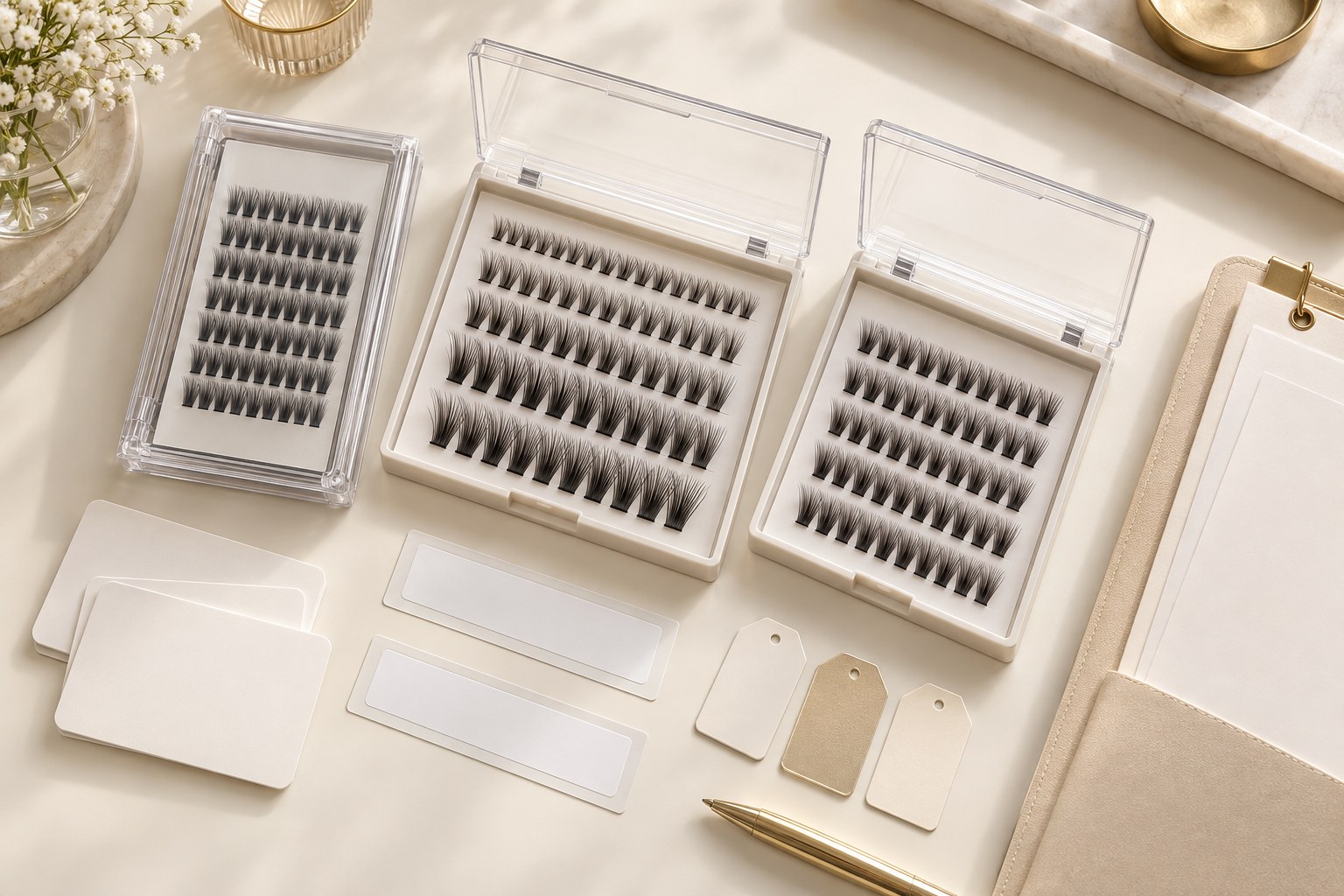
A mixed tray should list every included length and show the allocation clearly enough for receiving inspection and customer understanding. A single-length tray should display its length prominently and consistently on the tray, outer box and SKU record. Similar-looking packages should not rely on color alone.
When a mixed allocation changes, create a new version. A tray that moves from equal rows to a weighted length mix may keep the same outer dimensions, but it is commercially different inventory. Update the product page, barcode record, sample reference and reorder file together.
Single-length cluster lash trays work best as evidence-led replenishment SKUs, not as automatic range expansion.
Common Buying Mistakes
- Ordering “mixed length” without a row-by-row allocation.
- Comparing tray prices without counting usable clusters.
- Launching every single length before demand is known.
- Changing band, curl or density during the length-format test.
- Reusing the same SKU after the mixed allocation changes.
FAQ: Mixed-Length vs Single-Length Cluster Lash Trays
Are mixed-length cluster trays better for a first order?
They can reduce opening SKU count and help test several lengths, but only when the allocation supports the intended maps. Approve the exact count by length before ordering.
When should a buyer add single-length cluster trays?
Single-length cluster lash trays should be added when pilot sales or usage records show repeat demand for specific lengths and the business can manage the extra SKUs.
How should mixed-length trays be labeled?
List every included length and keep the row or cluster allocation in the specification. The tray card, outer box, product page and reorder record should agree.
Can mixed and single-length trays share the same style name?
They may share a style family, but the length format must be distinct in the SKU and visible label. Buyers should be able to identify and reorder each version without opening the tray.
Plan a Cluster Lash Tray Sample
Review the broader cluster lash kit wholesale options, then use the wholesale lash inquiry to send the style, curl, band type, length map, tray count, mixed or single-length direction, packaging and destination. Current availability, MOQ, pricing and lead time should be confirmed in the quotation.
Source
- U.S. FDA: Eye Cosmetic Safety — false eyelashes, eyelash extensions and their adhesives are treated as cosmetics in the United States.

Lash Maitre: Your Trusted Partner in Eyelash extension Solutions
Lash Maitre is dedicated to providing professional insights and tips in the eyelash extension industry. Sharing the latest trends, techniques, and product knowledge, Lash Maitre helps lash artists and enthusiasts enhance their skills, stay inspired, and achieve the perfect lash experience.



