0.07 vs 0.10 Volume Lash Trays: 7 Buyer Checks
Share
0.07 vs 0.10 volume lash trays is a product-definition, sample-testing and inventory decision. The numbers normally describe nominal fiber diameter in millimeters, but they do not establish finished weight, an approved fan count, quality or professional suitability. Wholesale buyers should compare matched trays, define the physical product in writing and assign each approved diameter a clear SKU role before ordering depth.
1. Define What Each Diameter Label Covers
A 0.07 label and a 0.10 label identify one stated dimension. They do not define fiber cross-section, taper, material description, curl, length, finish, strip system or production tolerance. The same diameter can also appear in different product formats, including loose volume fibers, easy-fan products or ready-formed fans. Ask the supplier to name the physical format instead of relying on the word “volume.”
The lash thickness chart owns the broader 0.03–0.15 range question. The 0.05 vs 0.07 comparison answers a different adjacent decision. This guide is limited to the purchase records needed when 0.07 and 0.10 are being considered for one wholesale range.
| Buying field | 0.07 sample | 0.10 sample | Evidence to keep |
|---|---|---|---|
| Identity | 0.07 mm as quoted | 0.10 mm as quoted | Supplier definition and SKU |
| Physical format | Loose, easy-fan or formed unit as specified | Loose, easy-fan or formed unit as specified | Full-tray and macro photographs |
| Range role | Buyer-defined fine option | Buyer-defined heavier-profile option | Approved professional-use matrix |
| Reorder control | Retained tray and strip | Retained tray and strip | Lot and artwork version |
2. Compare Matched 0.07 And 0.10 Samples
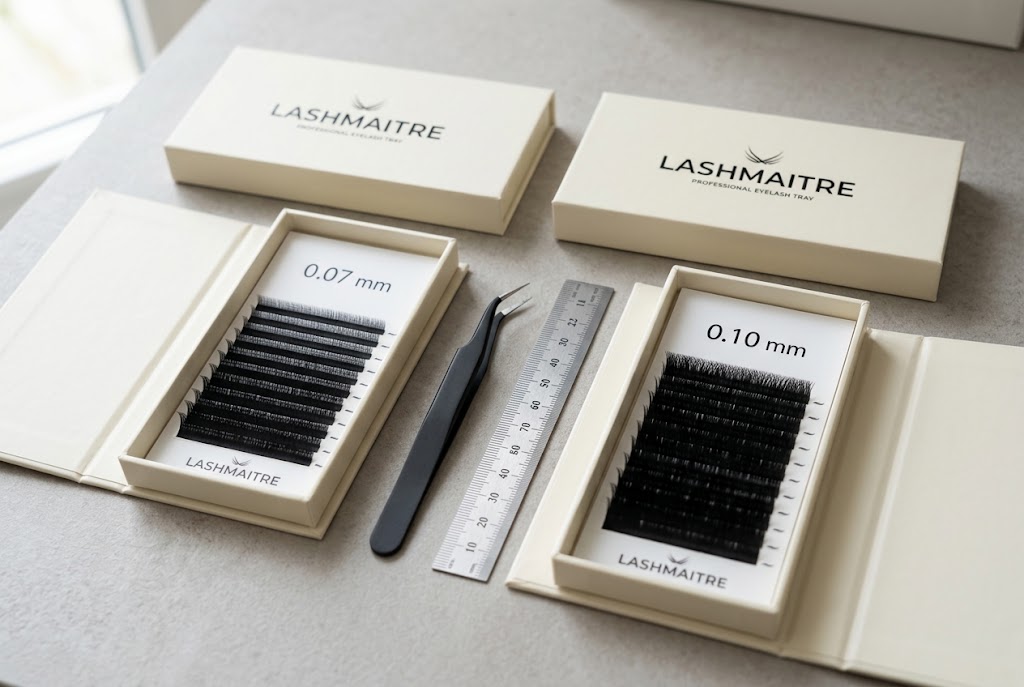
To compare 0.07 vs 0.10 volume lash trays, hold curl, length, color, finish, tray row count, strip construction and packaging constant. If the 0.07 sample is a C-curl mixed tray and the 0.10 sample is a D-curl single-length tray, the result cannot isolate diameter. Request a matched pair through the lash extension samples path and assign each tray a unique reference code.
Photograph the box, tray card, full rows, representative fiber bases and tips under the same lighting. Record the supplier’s stated measurement basis and any permitted tolerance. Keep the physical samples after approval; a digital photograph cannot preserve pickup feel, strip release or the original profile for a future reorder comparison.
3. Keep Diameter Separate From Fan Planning
A buyer should not convert 0.07 or 0.10 into a universal D-count rule. Complete unit mass depends on fiber count, length, taper, cross-section, material and base construction. Professional decisions also require assessment of the intended workflow and the individual receiving the service. Store the diameter field separately from any professional-use guidance approved for the product line.
Do not turn terms such as “light,” “soft” or “volume” into measured claims without evidence. If the supplier recommends a range, ask what product construction and test basis the recommendation covers. Put the responsible reviewer and approval date in the record so marketing copy cannot silently replace the technical decision.
4. Test Pickup, Fanning And Strip Release
For loose fibers, compare how rows align, separate and respond under the buyer’s normal pickup and fanning method. Use the same tweezer, strip area, reviewer and number of trials. Record fibers that cross, kink, lift neighboring fibers, remain stuck, leave residue or lose the intended curl during the test. These observations belong to the exact tray and batch.
Strip tack and backing can change handling independently of diameter. Record strip width, backing material, placement and release behavior as separate fields. A handling difference should not automatically be attributed to 0.07 or 0.10 when the strip system, finish or production lot also changed.
5. Inspect Curl, Taper And Finish Across Rows
Review the first, middle and final rows under adequate magnification. Check visible diameter consistency, curl alignment, taper, tip condition, color, finish and contamination. Define defect categories before counting so one reviewer does not call a crossed fiber cosmetic while another records it as unusable.
Save representative photographs and defect photographs with the sample code. A tray can pass its printed diameter but fail curl consistency, or look even in an overview photograph but perform poorly during pickup. Keep appearance, handling and identity results separate so corrections and reorder checks remain specific.
6. Model Usable Yield And SKU Depth
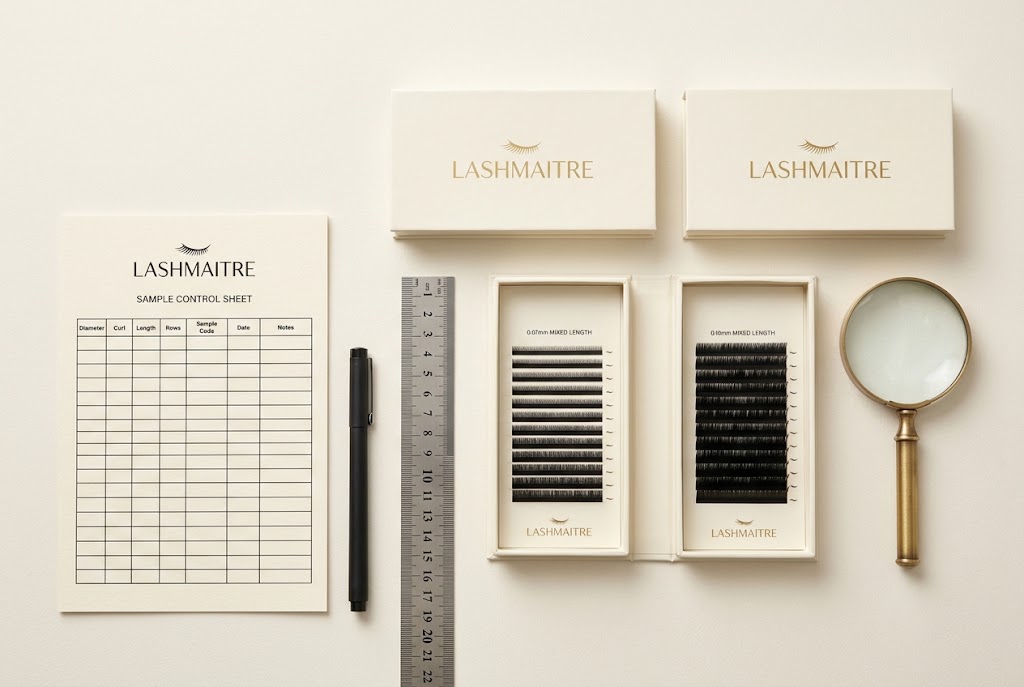
For 0.07 vs 0.10 volume lash trays, tray price alone does not show commercial value. Confirm row count, single-length or mixed-length format, length allocation and the counting basis used in the quote. Measure usable yield under one written method. A high row count can still produce a weak purchase result when a meaningful share of fibers cannot be used under the agreed inspection rule.
Do not launch every curl and length in both diameters. Use current inquiries, sample requests, professional review and reorder evidence to select a narrow initial matrix. If current B2B demand is unknown, record N/A rather than using consumer search volume as an inventory forecast.
| Approval field | 0.07 record | 0.10 record | Release rule |
|---|---|---|---|
| Specification | Profile, curl, length and finish | Profile, curl, length and finish | Separate approved SKU |
| Handling | Pickup, fanning and release result | Pickup, fanning and release result | Same test method |
| Yield | Rows and defined defects | Rows and defined defects | Sample size recorded |
| Commercial role | Launch quantity and owner | Launch quantity and owner | Review against reorders |
7. Preserve The Diameter In Packaging And Reorders
For 0.07 vs 0.10 volume lash trays, print diameter, physical format, curl, length format, row count and fiber identity consistently on the tray card, box, barcode record and catalog. Do not reuse one generic product image for both diameters. Connect the approved product to the custom lash packaging path only after the physical sample has been identified and accepted.
Keep one retained tray and the approved artwork version for each SKU. At reorder, compare fibers, strip behavior and labels against the same reference. When the specification changes, issue a new sample code and artwork revision rather than overwriting the old record.
Safety And Evidence Boundary
Diameter does not prove comfort, retention, suitability or safety. Qualified professionals must assess the complete product and intended use. The FDA’s eye cosmetic safety guidance provides general eye-area context; it does not approve a particular diameter, fan plan or tray.
For a 0.07 vs 0.10 volume lash trays project, send physical format, diameter, fiber profile, curl, lengths, finish, row count, quantity, sample request and packaging direction through the wholesale lash inquiry. Current supply options and documents must be confirmed for the project.
FAQ: 0.07 vs 0.10 Volume Lash Trays
Is 0.07 always a volume fiber and 0.10 always a classic fiber?
No. Market labels vary. Ask the supplier to define the physical format, profile and intended professional range for the exact SKU, then approve a current sample.
Can one wholesale range stock both diameters?
Yes, when each has a distinct buyer role supported by demand and professional review. Keep separate SKUs, samples, images, packaging and reorder records.
What should buyers compare on the strip?
Compare alignment, pickup, fanning response, neighboring-fiber movement, strip tack, residue and behavior across several rows with one documented method.
What belongs on the purchase order?
Record diameter, physical format, material description, profile, curl, length format, row allocation, strip and tray details, finish, approved sample, packaging version, quantity and inspection method.

Lash Maitre: Your Trusted Partner in Eyelash extension Solutions
Lash Maitre is dedicated to providing professional insights and tips in the eyelash extension industry. Sharing the latest trends, techniques, and product knowledge, Lash Maitre helps lash artists and enthusiasts enhance their skills, stay inspired, and achieve the perfect lash experience.