Clear Band vs Black Band Cluster Lashes: 7 Buyer Checks
Share
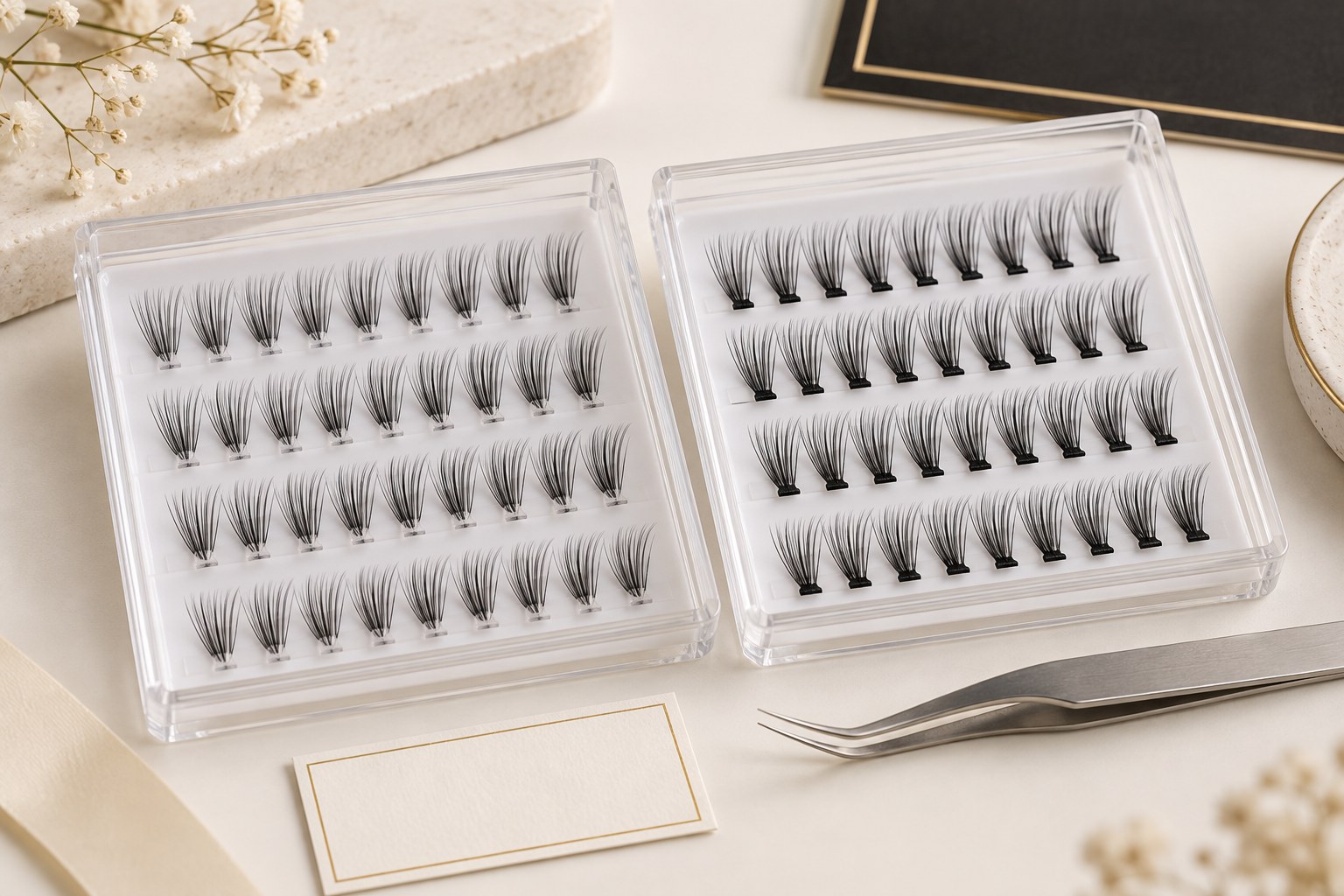
Clear band vs black band cluster lashes is mainly a product-positioning decision. A clear base is intended to stay visually quiet, while a black base adds a more defined line. Neither option proves comfort, flexibility, durability or quality by itself. Wholesale buyers should compare matched samples for base visibility, flexibility, cluster spacing, pickup, packaging clarity and repeat-order consistency before selecting a private-label range.
Clear Band vs Black Band Cluster Lashes: Quick Comparison
| Buyer question | Clear band sample | Black band sample | What to record |
|---|---|---|---|
| Visual effect | Lower-visibility base direction | More visible lash-line definition | Approved front and underside photos |
| Range role | Natural or soft-finish positioning | Defined or liner-effect positioning | Target customer and style name |
| Construction | Color does not establish flexibility | Color does not establish thickness | Width, thickness and bend response |
| Photography | Needs contrast that shows the base | Needs exposure that preserves fiber detail | Lighting setup and approved image set |
| Reorder control | Keep shade and transparency reference | Keep black tone and finish reference | SKU, lot and retained sample |
A clear band vs black band cluster lashes comparison is useful only when the remaining specifications stay matched.
The useful comparison keeps the cluster style, curl, length, density and adhesive system the same. If the clear sample is a light natural style and the black sample is a dense dramatic style, the buyer is comparing two complete products rather than the band color.
1. Define the Band as a Measurable Specification
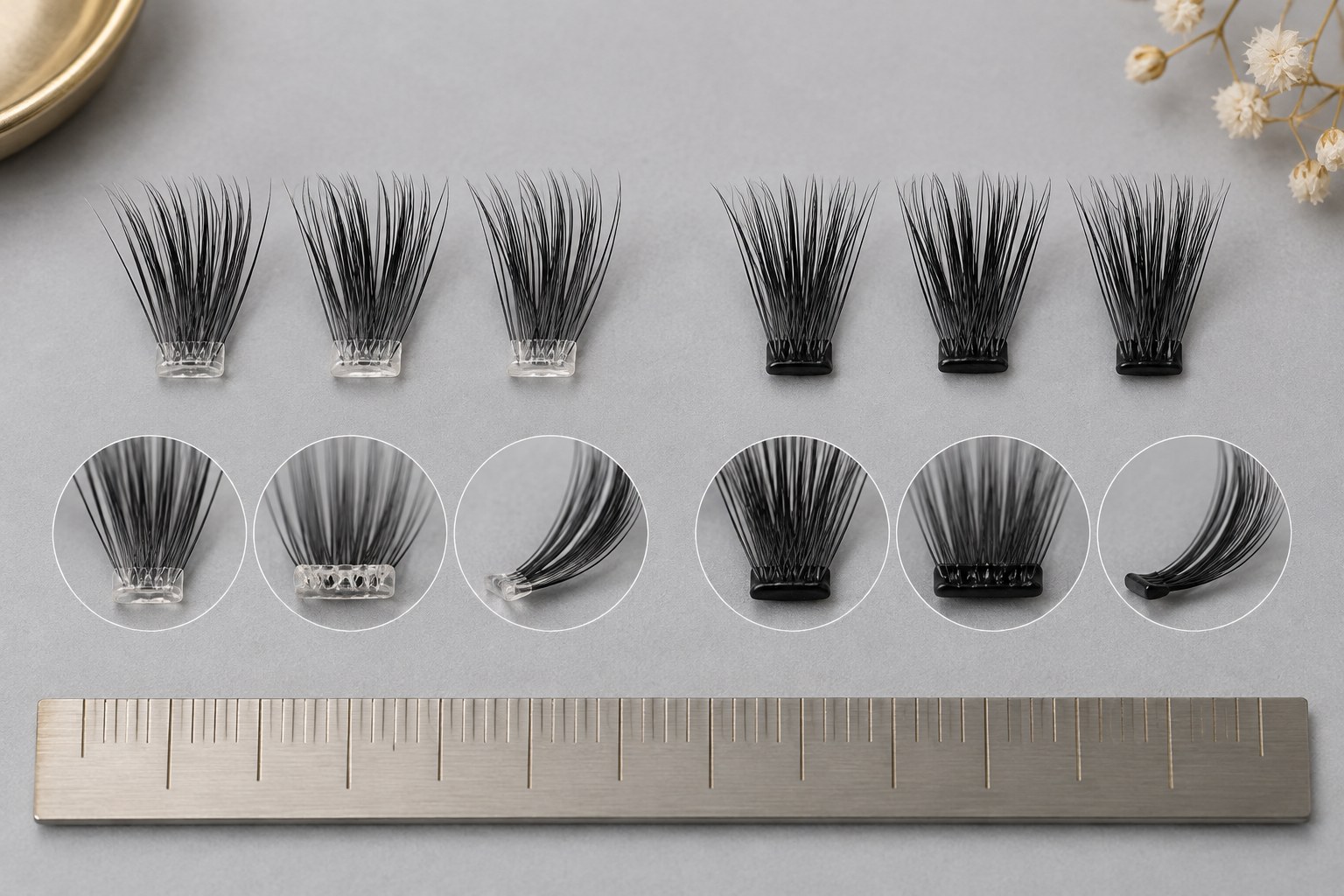
“Clear” and “black” are starting labels, not complete purchase specifications. Add the band width, approximate thickness, flexibility target, surface finish and cluster width to the sample record. Photograph the base from the front, underside and side under the same light.
Ask the supplier whether the visible color comes from the base material, a coating or another construction feature. The answer should be recorded without turning it into an unsupported performance promise. A visually transparent base can still feel firm, and a black base can still be thin and flexible. The finished sample decides.
2. Match Every Other Variable Before Testing
For a fair clear band vs black band cluster lashes test, request the same lash design in both band colors. Keep curl, length map, fiber finish, cluster width, density, tray count and packaging stable. Use the same evaluation lighting and background. This makes the band color the main changed variable.
A useful matched request might read: “Wispy cluster, D curl, 10–16 mm mixed tray, same density and cluster count, one clear-band version and one black-band version.” If the factory cannot supply matched constructions, label the comparison as directional and do not treat the result as proof that one color caused every difference.
3. Inspect Visibility From More Than One Angle
Evaluate the tray first, then the product against several neutral reference backgrounds. Review the base from the top and underside because ecommerce product images often show only one view. The clear option should be judged for visible edges, haze, surface residue and consistency across the tray. The black option should be judged for color uniformity, excessive width, glossy patches and abrupt changes between the base and fibers.
Use at least 20 clusters from multiple tray locations. One carefully selected cluster cannot represent a production tray. Record exceptions rather than averaging them away.
4. Separate Band Color From Base Quality
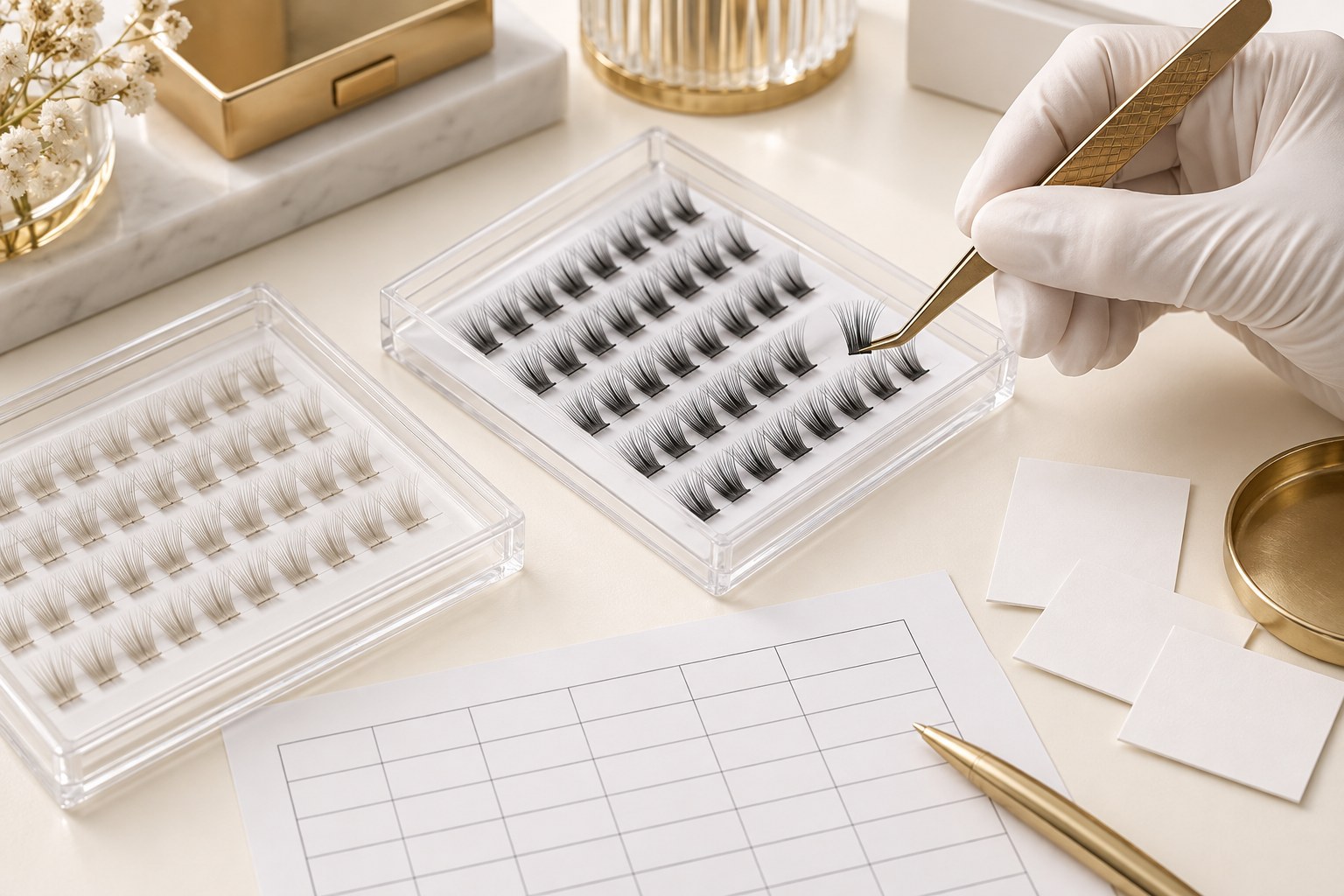
Band color does not replace a base-quality inspection. Check whether each cluster releases cleanly, remains intact during controlled handling and matches the approved width. Compare adjacent clusters for skew, crossed fibers, uneven spacing and inconsistent bases.
The dedicated cluster lash base quality checklist can be used beside this color comparison. Buyers who need a complete retail format can also review the cluster lash kit wholesale hub before confirming kit components.
5. Give Each Option a Clear Catalog Role
Two band colors should not create duplicate SKUs with no clear buyer difference. A clear-band SKU may support a soft, low-visibility product story. A black-band SKU may support a more defined finish. These are positioning directions to validate with samples and target-customer feedback, not universal results.
For a first clear band vs black band cluster lashes launch, choose one base direction per style family. Add a second color only when buyer feedback, search behavior or sales data shows a distinct use case. This keeps photography, labels, inventory and reorder records manageable.
6. Make the Difference Visible on the Product Page
Show the base honestly. Include one macro image on a neutral surface, one underside view and one full-tray image. Do not brighten a clear band until its edges disappear or crush the shadows on a black band until the fiber spacing disappears. Consistent photography helps customers understand the actual choice and reduces avoidable returns.
The product name, tray label, outer box and barcode record should use the same band description. If “invisible band” is used as marketing language, the specification should still identify the physical color and construction that were approved.
7. Lock the Reorder Reference
| Approval field | Example record | Why it matters |
|---|---|---|
| Band color | Clear or black | Prevents substitution |
| Band dimensions | Approved width and thickness reference | Separates color from geometry |
| Cluster specification | Style, curl, lengths, density and count | Defines the complete product |
| Image reference | Front, underside and side photos | Preserves the visual standard |
| Version control | Sample code, packaging version and date | Supports repeat orders |
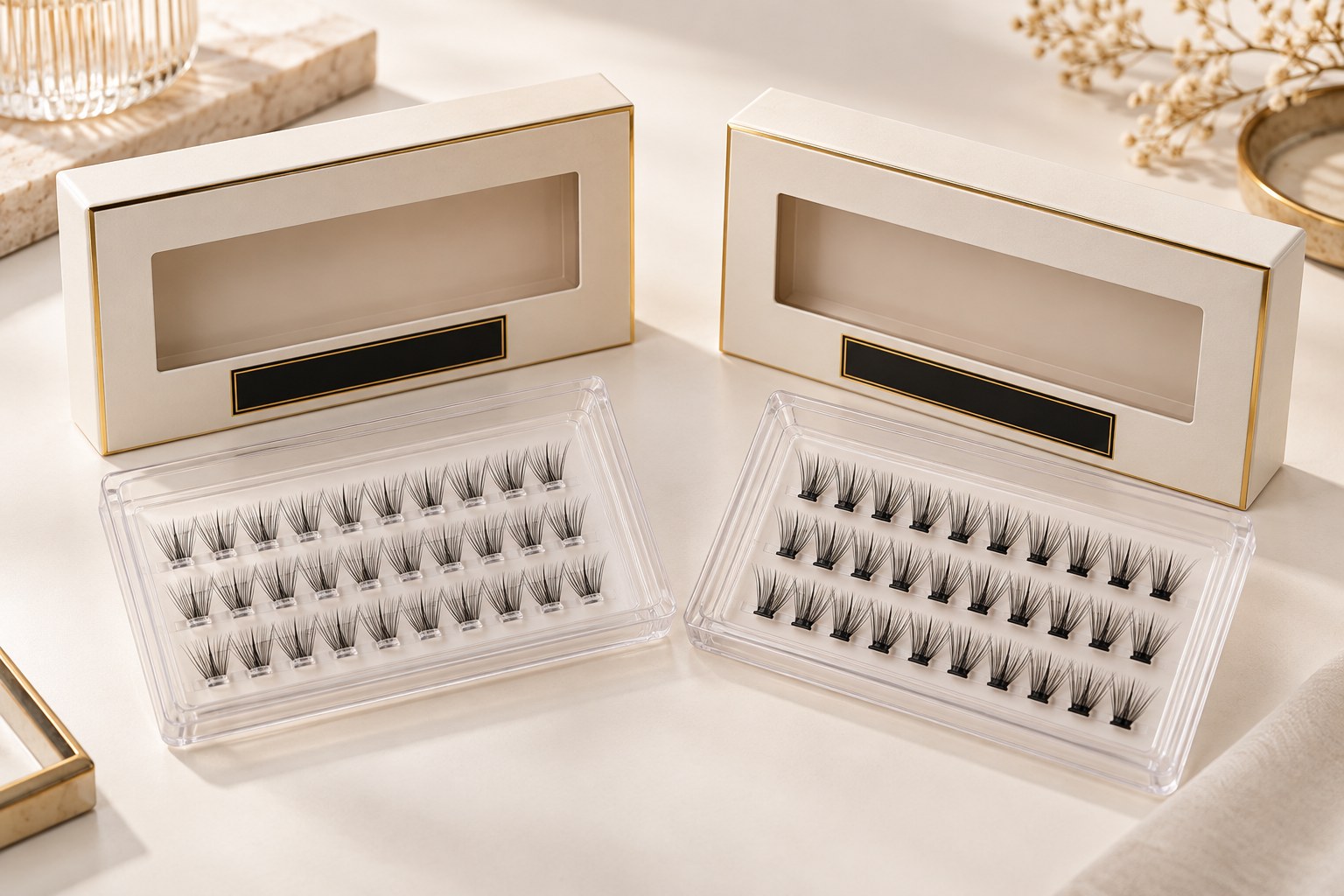
Retain one approved tray and connect it to the written specification. For a larger order, compare production samples with the retained reference before packaging release. LASHMAITRE’s wholesale lash samples page explains the sample-first route, while the custom lash packaging page covers the next packaging step.
A clear band vs black band cluster lashes decision should stay tied to matched samples and a defined catalog role.
Common Buying Mistakes
- Comparing two different styles and attributing every difference to band color.
- Assuming clear always means thinner or black always means stiffer.
- Approving only a front-facing product photo.
- Using “invisible” without preserving the physical band specification.
- Launching both versions before the customer role for each SKU is clear.
FAQ: Clear Band vs Black Band Cluster Lashes
Are clear band cluster lashes always more natural looking?
A clear base is designed for lower visual presence, but the finished appearance also depends on fiber density, cluster width, placement, lighting and the wearer’s lash line. Approve the complete sample rather than the color label alone.
Is a black band automatically thicker than a clear band?
No. Color and thickness are separate specifications. Measure or compare matched samples and record width, thickness and flexibility independently.
Should a wholesale range include both band colors?
For a clear band vs black band cluster lashes range, include both only when each color has a distinct customer and catalog role. A focused first range is easier to photograph, explain, stock and reorder.
What should buyers send with a sample request?
Send the cluster style, curl, length map, density, tray count, desired band colors, packaging direction, target quantity and destination market. Ask for matched clear and black samples where possible.
Request a Matched Cluster Lash Sample
For a clear band vs black band cluster lashes quote, use the wholesale lash inquiry form to send the intended band color, cluster style, length map, kit format and packaging direction. LASHMAITRE can then confirm which options are available for sampling and quotation; final specifications, MOQ, pricing and lead time should be confirmed in the current quote.
Source
- U.S. FDA: Eye Cosmetic Safety — false eyelashes, eyelash extensions and their adhesives are treated as cosmetics in the United States.

Lash Maitre: Your Trusted Partner in Eyelash extension Solutions
Lash Maitre is dedicated to providing professional insights and tips in the eyelash extension industry. Sharing the latest trends, techniques, and product knowledge, Lash Maitre helps lash artists and enthusiasts enhance their skills, stay inspired, and achieve the perfect lash experience.



