Closed Fan vs Open Fan Lashes: 7 Buyer Checks
Share
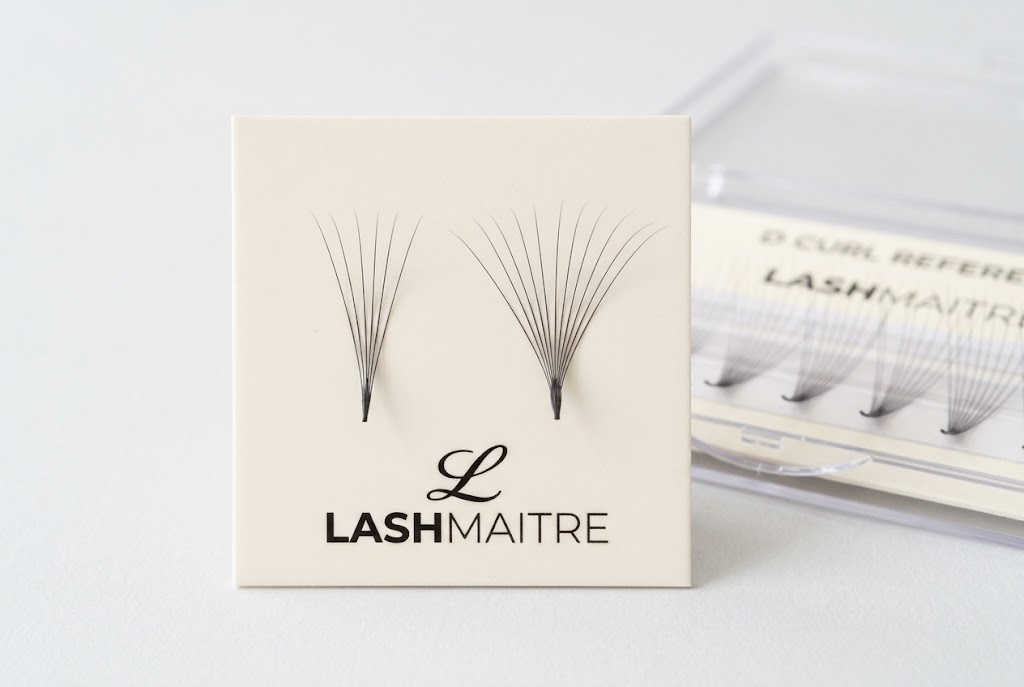
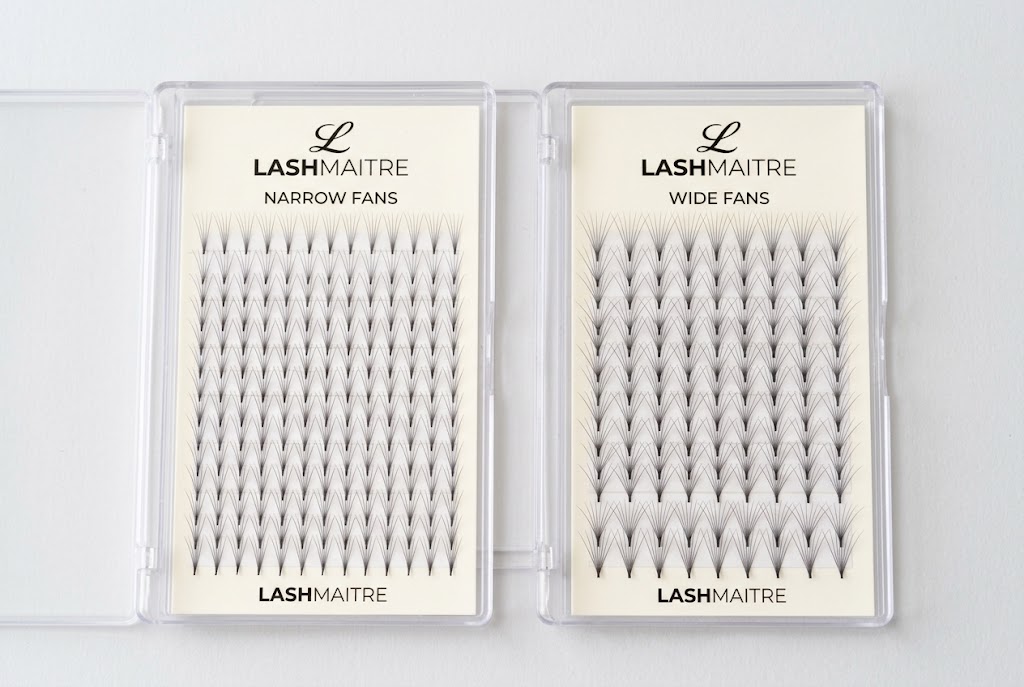
Closed fan vs open fan lashes is a product-structure and assortment decision, not a universal quality ranking. Closed fans keep fibers in a narrow grouped profile, while open fans spread fibers into a wider fan shape. Wholesale buyers should compare matched samples by visible structure, base quality, pickup, count, label wording and reorder consistency before deciding whether one or both belong in the catalog.
1. Define The Structure Before Using The Name
Market language is not perfectly standardized. One supplier may use “closed fan” for a narrow premade spike, while another may use “narrow fan,” “angel fan” or a style-specific name. “Open fan” may describe a wider volume fan, but the actual spread, stem and base can still vary.
Ask the supplier to define each SKU with a photograph and written specification. Use the premade fans wholesale hub for the broader category, then keep this comparison focused on the visible closed or open structure.
| Buying factor | Closed fan sample | Open fan sample | Buyer evidence |
|---|---|---|---|
| Visible structure | Fibers remain in a narrow grouped profile | Fibers spread into a wider fan | Front and side macro photographs |
| Catalog role | Texture or spike-oriented SKU when verified | Volume coverage SKU when verified | Approved product description |
| Count basis | Units, rows or tray as quoted | Units, rows or tray as quoted | Usable-unit count method |
| Reorder control | Save width, stem and base reference | Save spread, symmetry and base reference | Physical approved tray |
2. Compare Matched Fans, Not Different Product Families
For a controlled closed fan vs open fan lashes comparison, keep D-count, fiber diameter, curl, length, finish, tray format and factory base method stable. If the closed fan is 5D 0.07 D curl and the open fan is 10D 0.05 CC curl, the buyer cannot isolate the structure decision.
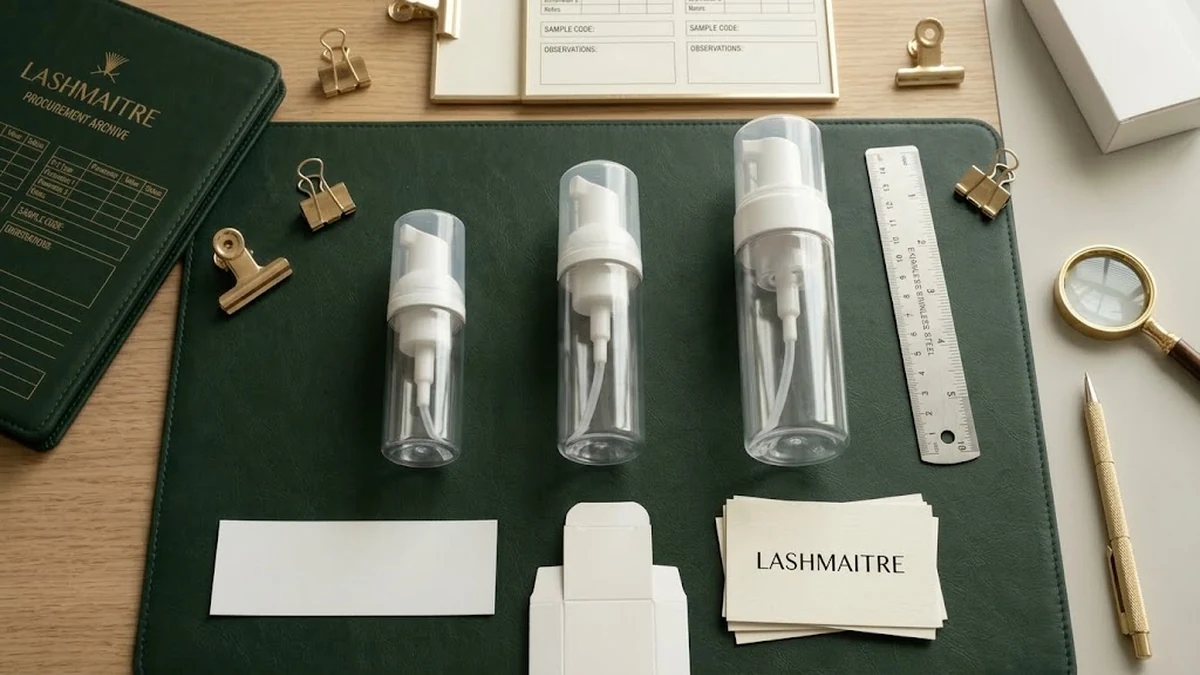
Request the two units through the lash extension samples path. Mark each tray with a sample code and record the exact supplier terminology. If the supplier cannot provide a matched pair, state the differences clearly instead of presenting the test as a controlled comparison.
3. Give Each SKU A Clear Catalog Role
Closed and open fans can serve different visual and merchandising roles, but avoid promising a finished service result from the tray name alone. A closed-fan product may support narrow texture or spike-oriented ranges; an open fan may support wider volume ranges. The actual outcome still depends on the complete specification and professional application.
For procurement, the useful distinction is the structure that arrives in the tray and can be checked again at reorder. Keep visual style language secondary to that measurable sample record.
Write the product page around observable structure: number of fibers when confirmed, visible spread, stem, base, curl, length, tray count and finish. Avoid claims such as “best retention,” “safe for every client” or “works for every style” unless evidence supports the exact product and use.
4. Inspect Base Quality And Pickup Separately
A closed profile is not automatically a narrow base, and an open profile is not automatically a wide or bulky base. Check the root shape, factory base point, stem length and pickup stability for each sample. The premade fan base quality guide provides the narrower root and pickup inspection workflow.
Pick up units from the first, middle and final rows. Record whether the structure stays intact, whether neighboring units move, whether the base splits and whether the fan matches the approved reference after handling. Keep the test descriptive rather than turning it into a universal application rule.
5. Count Usable Units On The Same Basis
In a closed fan vs open fan lashes quote, a tray price is incomplete without a count basis. Ask whether the quote covers rows, individual fans, approximate fan count or another unit. Then inspect usable units rather than assuming every visible item passes. Record collapsed fans, merged units, damaged bases or inconsistent structures under one defined review method.
Do not compare a loose-fan jar with a tray-mounted product as if only the closed/open structure changed. Packaging format creates a separate handling and count decision. Keep the present article limited to like-for-like packages, or use the existing loose premade fans vs trays guide for that packaging comparison.
6. Approve Names, Photos And Packaging Together
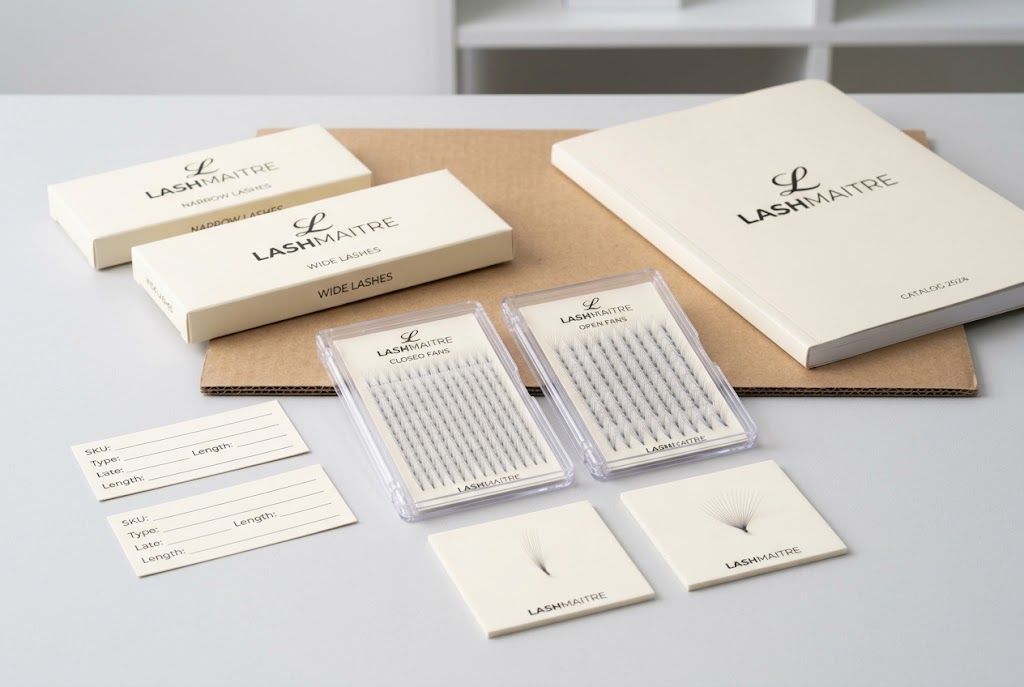
For closed fan vs open fan lashes packaging, private-label wording should help a buyer identify the product without inventing a technical standard. Use a distinct SKU for the closed and open versions. Include verified D-count, curl, diameter, length format and tray count. If “angel,” “wet look” or another style term is used, define the actual product structure beside it.
Approve front, side and tray photographs from the current sample. Do not reuse one structure image for both products. The custom lash packaging guide can connect the tray card, box, barcode and reorder file after the product itself is approved.
7. Keep A Reorder Reference For Both Structures
Save one physical approved tray for each SKU with front and side macro photographs. Record D-count, curl, diameter, lengths, visible width or spread, stem, base, tray count, sample code and label version. At reorder, review the new lot against the same reference before packaging release.
| Record field | Closed fan | Open fan | Release decision |
|---|---|---|---|
| Structure | Narrow profile photo and width note | Spread photo and symmetry note | Matches approved sample |
| Base and pickup | Root, stem and integrity result | Root, stem and integrity result | Differences documented |
| Quantity | Quoted and usable unit basis | Quoted and usable unit basis | Count method unchanged |
| Identity | SKU, label and packaging proof | SKU, label and packaging proof | Warehouse record is unambiguous |
Safety And Evidence Boundary
Closed or open structure alone does not prove comfort, retention, weight suitability or safety. Those questions depend on the complete product, professional assessment and application. The FDA’s eye cosmetic safety guidance provides broad eye-area context and does not certify a particular fan or replace professional training.
For a closed fan vs open fan lashes sample review, send the intended structure, D-count, diameter, curl, lengths, tray count, quantity, packaging direction and sample request through the wholesale inquiry path. Current supply options must be confirmed against the project rather than inferred from an illustration or market name.
FAQ: Closed Fan vs Open Fan Lashes
Are closed fans the same as narrow premade fans?
Sometimes suppliers use the terms for similar products, but the names are not universal. Ask for the visible width, D-count, stem, base, photographs and written product definition.
Are open fans always better for volume ranges?
No. An open structure can support a wider visual spread, but the buyer still needs to review fan count, diameter, base, symmetry, pickup and the intended catalog role.
Can a wholesale catalog stock both structures?
Yes, when each SKU has a distinct buyer purpose, clear naming and realistic reorder demand. Use separate samples, images, labels and inventory records.
What should buyers compare before bulk approval?
Compare matched D-count, diameter, curl, length and package format; then inspect structure, base, pickup, usable count, label wording, photographs and repeatability across rows.

Lash Maitre: Your Trusted Partner in Eyelash extension Solutions
Lash Maitre is dedicated to providing professional insights and tips in the eyelash extension industry. Sharing the latest trends, techniques, and product knowledge, Lash Maitre helps lash artists and enthusiasts enhance their skills, stay inspired, and achieve the perfect lash experience.