Pre-Glued vs Bond-and-Seal Cluster Lashes: Buyer Guide
Share
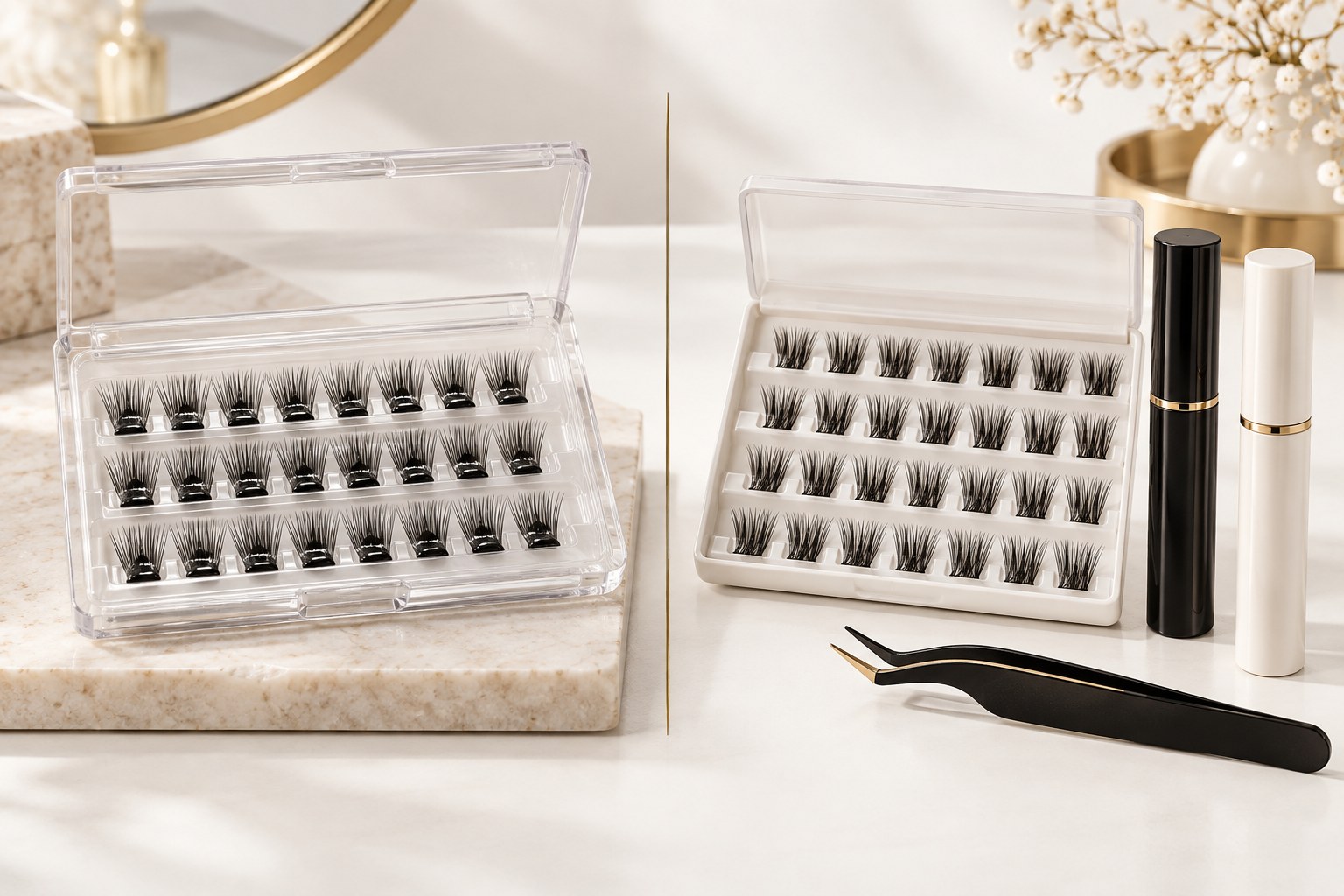
Pre-glued vs bond-and-seal cluster lashes compares two different retail systems. Pre-glued clusters arrive with adhesive already on the base. Bond-and-seal kits use bare clusters with separate bonding and sealing products. Wholesale buyers should decide between them by testing the complete system, reviewing ingredient and label files, checking tray protection and instructions, and confirming how each format fits the target customer.
Pre-Glued vs Bond-and-Seal Cluster Lashes: Quick Comparison
| Decision point | Pre-glued clusters | Bond-and-seal kit | Buyer verification |
|---|---|---|---|
| Adhesive format | Applied to the cluster base before sale | Separate bond and seal products | Complete component list |
| Application sequence | Remove, position and press as instructed | Apply bond, place clusters and use seal as instructed | Validated instruction card |
| Packaging load | Tray must protect prepared bases | Kit must secure multiple components | Transit and closure test |
| Label file | Product and adhesive-base information | Separate component and ingredient records | Target-market label review |
| Sample approval | Test the finished tray as sold | Test clusters, bond, seal and applicator together | Approved system and version |
Bond-and-seal cluster lashes should be approved as a complete kit rather than as isolated parts. Neither system is universally better. The commercial decision is whether the approved format is understandable, repeatable and suitable for the intended retail channel. Avoid copying wear-time, “sensitive” or “hypoallergenic” claims from supplier marketing into a private-label product without substantiation and target-market review.
1. Treat the Adhesive System as the Product Identity
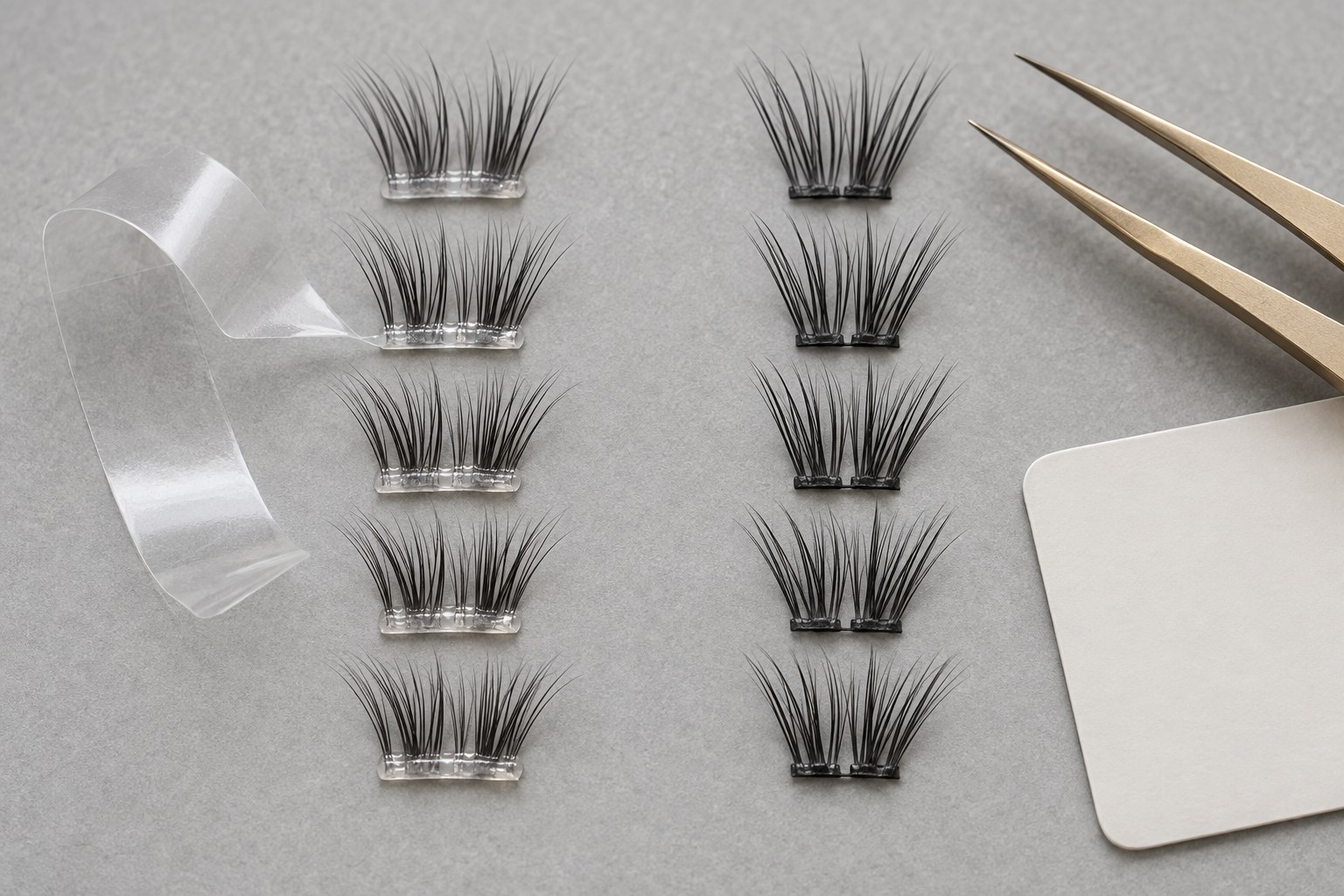
A pre-glued cluster and a bare cluster may look similar in a tray, but they are not the same SKU. The prepared base changes handling, protective packaging, instructions and the evidence a buyer needs. A bond-and-seal kit adds separate cosmetic components, each with its own formula, fill, package and label record.
The purchase order should state “pre-glued cluster” or “bare cluster for separate bond-and-seal kit.” Do not use “glueless” as the only specification because the market may use that word for several formats. Describe where the adhesive is and list every included component.
2. Review Formula and Label Files Before Packaging
The U.S. Food and Drug Administration states that false eyelashes, eyelash extensions and their adhesives are cosmetic products. Its eye cosmetic safety guidance also tells consumers to check adhesive ingredients. For a U.S. retail program, the formula identity, ingredient declaration and claims therefore need review before final artwork.
For bond-and-seal kits, match each ingredient list to the correct component and package. For pre-glued trays, ask how the supplier identifies the prepared adhesive base in the product file and how storage or shelf instructions are supported. Regulations vary by market, so the responsible person or importer should confirm the final requirements for the destination.
3. Test the Complete System, Not an Unfinished Component
A pre-glued sample must arrive in the tray and protective format intended for sale. A loose prototype cannot confirm whether bases stay separated, protected and usable after transport. Inspect multiple positions in the tray for flattened clusters, exposed adhesive, transfer to neighboring wells or protective film, and inconsistent pickup. Use the wholesale lash samples route to connect the physical kit with a documented approval reference.
A bond-and-seal sample should include the proposed bond, seal, applicator, remover reference where applicable, tray and instructions. Changing the bond after sample approval creates a new system and requires a controlled review.
4. Use a Repeatable Sample Protocol
| Sample stage | Pre-glued check | Bond-and-seal check | Record |
|---|---|---|---|
| Receiving | Base protection and tray cleanliness | Component count, seals and fill presentation | Photos and sample code |
| Instructions | Removal, placement and disposal steps | Bond, placement, seal and removal sequence | Approved instruction revision |
| Handling | Pickup consistency and base integrity | Applicator control and component compatibility | Observed exceptions |
| Pack close | Protective liner and closure fit | Bottle, wand, tray and tool retention | Packaging version |
| Reorder | Compare prepared bases with retained sample | Compare every component and formula version | Lot and change record |
Do not convert a short internal evaluation into a universal wear claim. Use the supplier’s substantiation, controlled testing and legal review required for the final market. If the product causes irritation during evaluation, stop the test and follow the appropriate medical and reporting process.
5. Compare Packaging Complexity and Failure Points
Pre-glued trays need protection that keeps prepared bases clean and separated. Confirm liner removal, closure fit, temperature and transit assumptions, and whether clusters remain in the intended position. The outer box should make the format clear before the customer opens it.
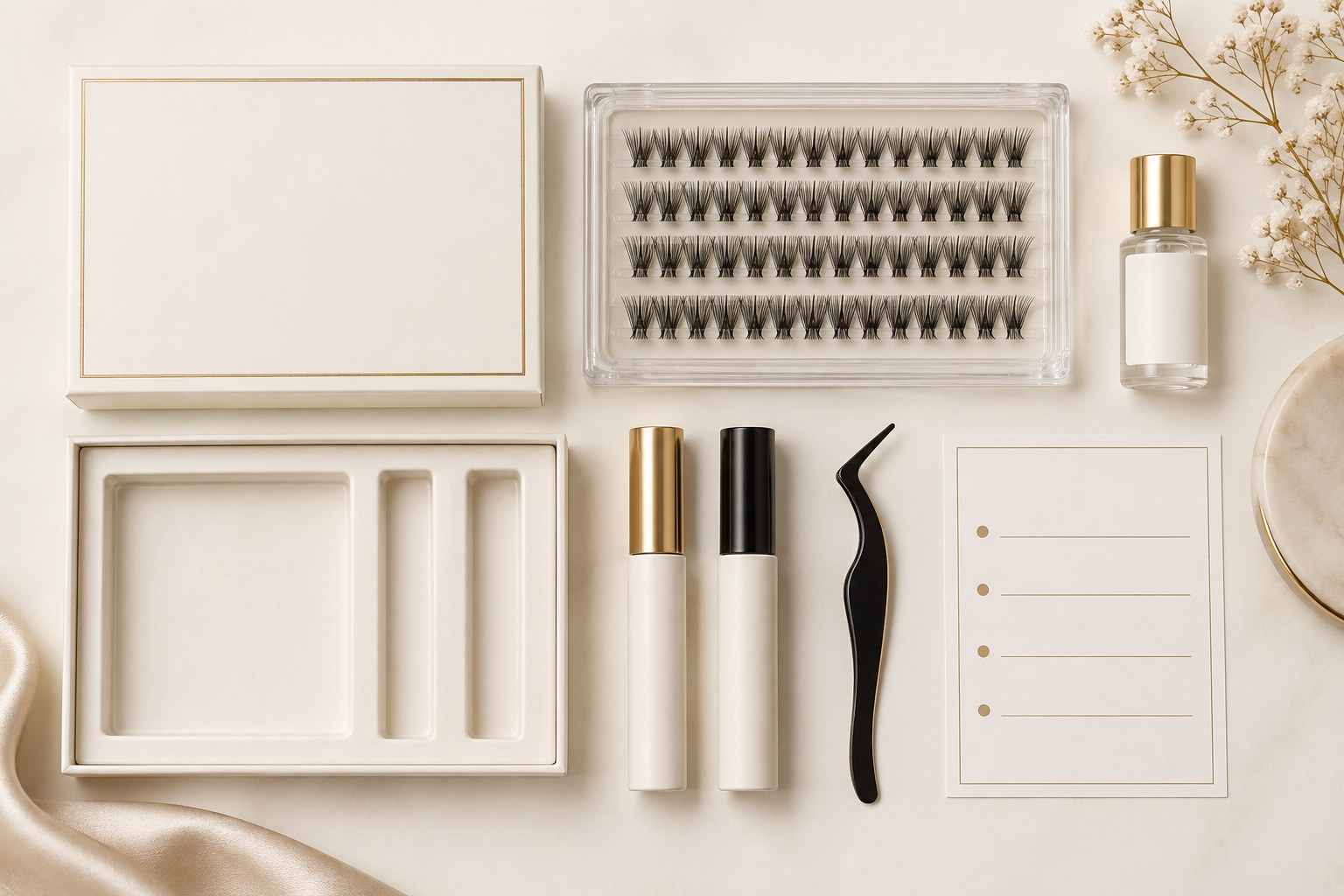
Bond-and-seal cluster lashes have more components in the retail kit and therefore more packing checks. Confirm that bottles cannot move into the lash tray, wands remain protected, the applicator is retained, and every component listed on the box is present. Use the custom lash packaging guide to connect the product decision with the insert, label and box plan.
For these bond-and-seal cluster lashes, component placement and instruction control belong in the same approval record.
and therefore more packing checks. Confirm that bottles cannot move into the lash tray, wands remain protected, the applicator is retained, and every component listed on the box is present. Use the custom lash packaging guide to connect the product decision with the insert, label and box plan.
6. Match the Format to a Defined Buyer
A pre-glued format may fit a convenience-first product brief. A bond-and-seal format may fit a kit in which customers expect separate application steps and component choice. Those are commercial positions to validate, not promises about universal ease, comfort or wear.
Write one target-customer statement for each proposed SKU. If the two statements are interchangeable, the range may be duplicating itself. The cluster lash kit wholesale hub provides the broader kit-planning path, and the cluster eyelashes wholesale page covers the product family.
7. Control Claims and Reorder Changes
Claims such as “waterproof,” “all-day,” “multi-day,” “latex-free,” “hypoallergenic” or “safe for sensitive eyes” need evidence that matches the final formula and pack. The FDA’s cosmetics labeling summary explains that false or misleading cosmetic labeling can make a product misbranded in the United States.
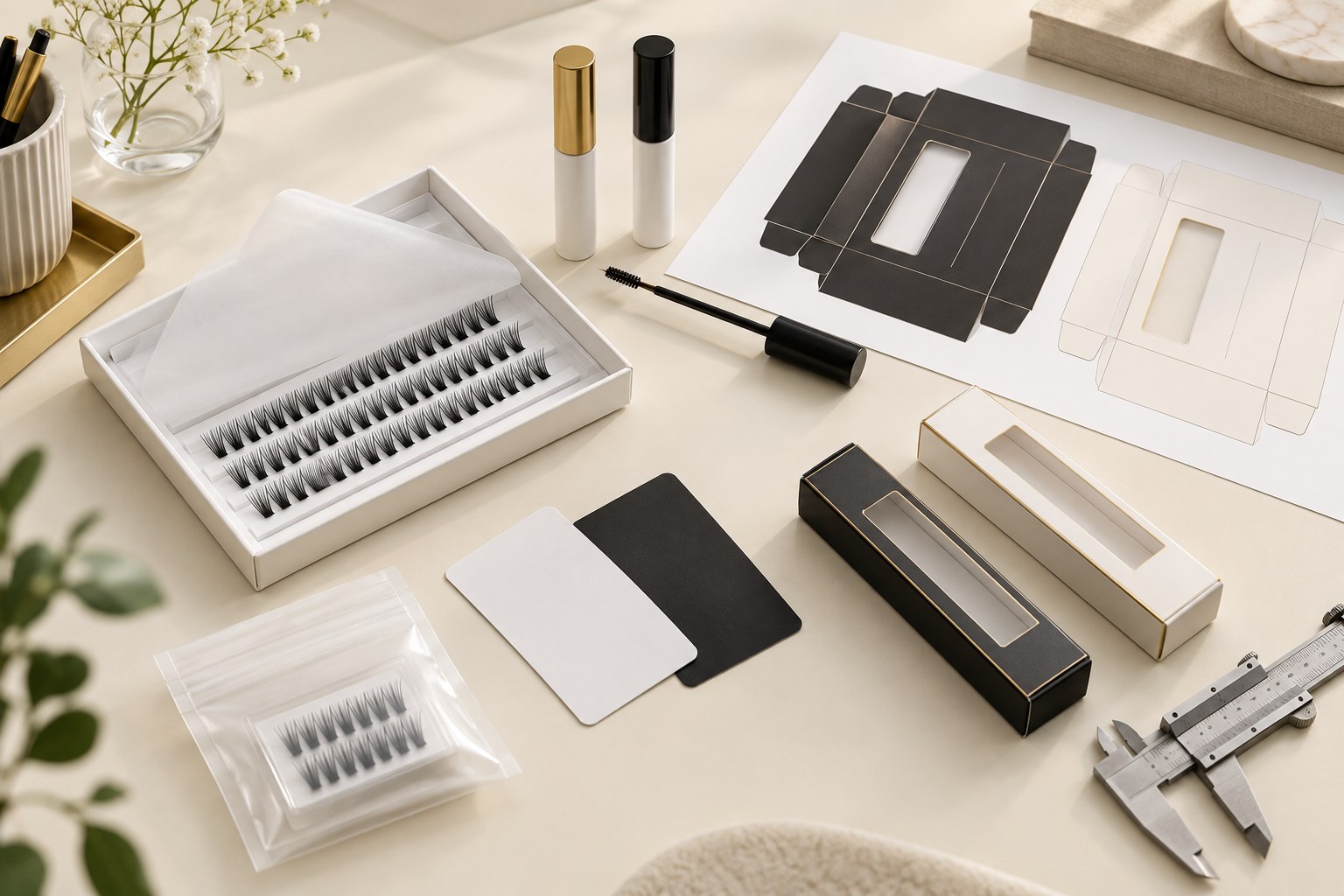
Lock the cluster specification, adhesive or formula reference, component sizes, instruction revision, artwork version and approved sample code together. A formula, applicator, tray or instruction change should be reviewed before the next production run is treated as equivalent.
Common Buying Mistakes
- Using “glueless” without defining where the adhesive is located.
- Approving cluster fibers while leaving the adhesive system open.
- Copying wear-time or sensitivity claims without matching evidence.
- Testing bottles separately from the final kit and instructions.
- Reordering by style name without formula and packaging versions.
FAQ: Pre-Glued vs Bond-and-Seal Cluster Lashes
What is the main difference between pre-glued and bond-and-seal cluster lashes?
Pre-glued clusters have adhesive prepared on the cluster base before sale. Bond-and-seal systems use bare clusters with separate bonding and sealing products. The distinction changes the component list, packaging, instructions and approval record.
Does pre-glued mean adhesive-free?
No. It means the adhesive is already present on the product rather than applied from a separate bond container during use.
Which system is easier to private label?
For bond-and-seal cluster lashes, that depends on the available formula documentation, packaging structure, target-market label review and supplier capability. Buyers should compare the complete approved system, not only the number of components.
Can the same cluster tray be used for both systems?
The fiber style may be related, but a prepared adhesive base changes the finished product and its protective packaging. Treat each version as a separate sample and SKU unless the supplier’s documented construction proves otherwise.
Request a Cluster Kit System Sample
Send the intended cluster style, pre-glued or bond-and-seal direction, component list, packaging format, quantity and destination through the wholesale lash inquiry. LASHMAITRE can confirm current sample options and documentation; final formula, specifications, MOQ, price, claims and lead time belong in the current quotation and approval file.
Sources

Lash Maitre: Your Trusted Partner in Eyelash extension Solutions
Lash Maitre is dedicated to providing professional insights and tips in the eyelash extension industry. Sharing the latest trends, techniques, and product knowledge, Lash Maitre helps lash artists and enthusiasts enhance their skills, stay inspired, and achieve the perfect lash experience.



