Lash Packaging Line Clearance: 8 Checks Before SKU Changeover

Share
Lash packaging line clearance is the documented check that removes the previous job's trays, cards, labels, cartons, inserts and records before a new SKU or artwork revision begins. For a private-label lash order, the line should restart only when residual components are reconciled, the workstation is clean, the active SKU is verified and an authorized person records release.
What Is Lash Packaging Line Clearance?
Line clearance separates two production jobs. It prevents a C-curl tray card, an old barcode label or a superseded box from entering the next order simply because it remained near the workstation.
The check is wider than cleaning. It covers physical materials, printed data, equipment settings, digital files and status identification. It also differs from artwork approval: artwork approval confirms the intended design, while a lash packaging changeover checklist confirms that only the approved current version is available at the line.
FDA cosmetics manufacturing guidance discusses controls intended to prevent mix-ups and calls for appropriate identification of materials, labels and finished products. LASHMAITRE uses that general documented-control principle here as a buyer-facing quality framework, not as a claim that a specific pharmaceutical rule automatically applies to eyelash extensions.
Why Does a Lash SKU Changeover Fail?
Most changeover failures are ordinary control failures rather than complex technical defects. A partial label roll is left in a drawer. An operator keeps an old tray card as a visual example. Two nearly identical navy boxes are staged together. The scanner points to yesterday's SKU. Production then continues with correct lashes inside incorrect packaging.
For buyers, that creates traceability, relabeling, customs, marketplace and customer-service risk. Private label lash label mix-up prevention therefore needs a recorded stop-clear-verify-release process.
8 Line-Clearance Checks Before Packing Restarts
1. Close the Previous Job
Confirm the previous purchase order, SKU, lot and packaging revision have reached a defined status. Record the accepted quantity, rejected quantity, samples removed and remaining components. Do not begin the next job while the previous job remains administratively open.
2. Remove Every Previous Component
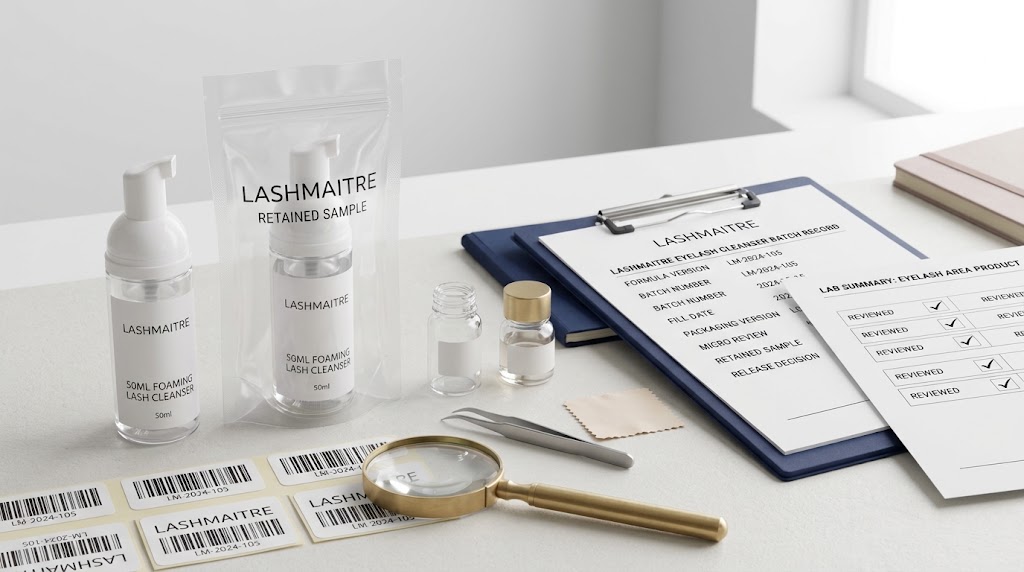
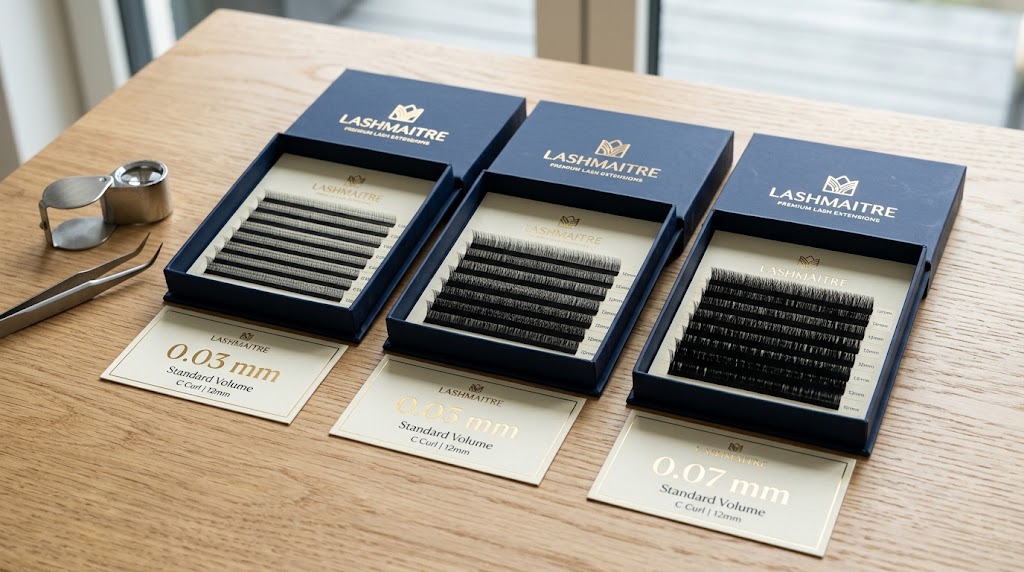
Clear lash trays, tray cards, strip labels, barcode labels, cartons, sleeves, inserts, seals and work-in-process records from the table, printer area, drawers and nearby racks. Small printed components create the highest mix-up risk because they are easy to overlook.
3. Reconcile Leftover Packaging
Count residual materials and assign a disposition: return to controlled storage, retain as an approved reference, quarantine for review or destroy securely.
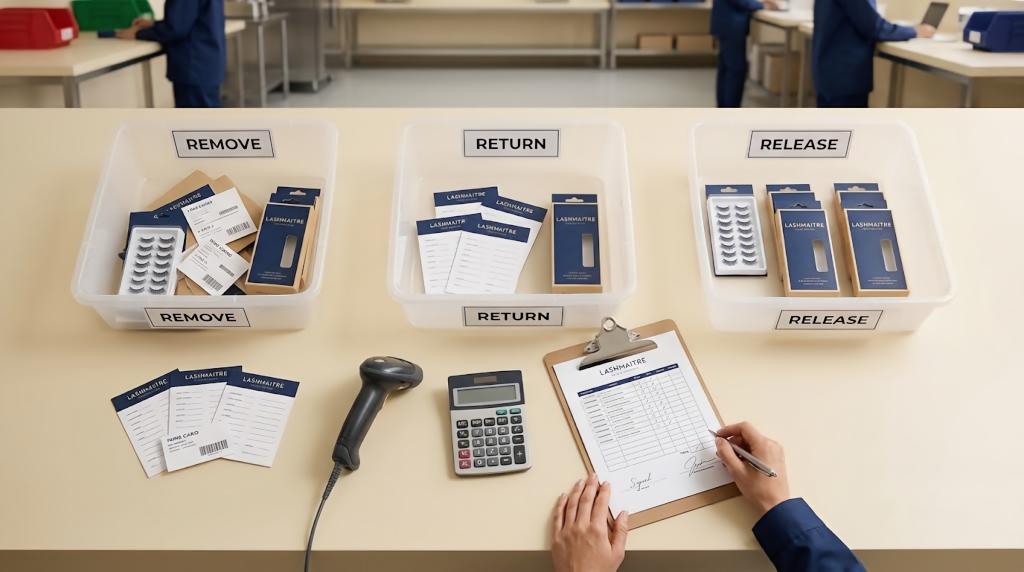
| Residual item | Quantity evidence | Allowed disposition |
|---|---|---|
| Current reusable component | Count and bin location | Return to identified storage |
| Superseded artwork | Count and revision | Secure destruction or documented hold |
| Damaged packaging | Defect count | Reject and record |
| QC/reference sample | Sample ID and owner | Controlled retention |
The leftover lash packaging ownership guide helps buyers define who approves these decisions.
4. Clean and Inspect the Workstation
Inspect benches, fixtures, scanners, printers, drawers, bins and floor-level areas. Remove scraps, loose labels and sample pieces. Cleaning is complete only when the area has been visually checked, not when someone reports that it was cleaned.
5. Stage Only the Current SKU
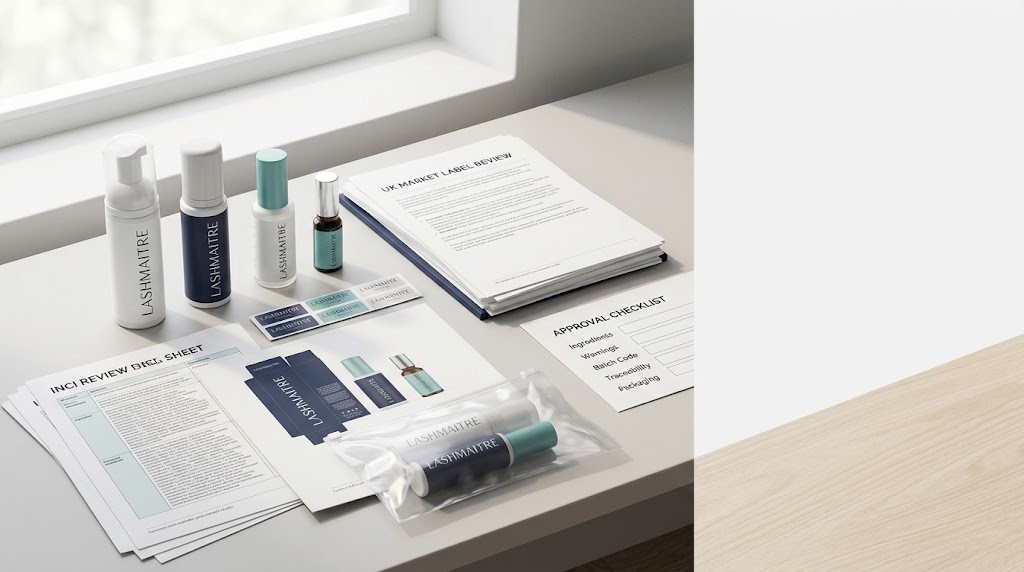
Bring in one active set of approved components after clearance. The purchase order, specification, tray card, label master, carton and packing instruction should identify the same SKU and revision.
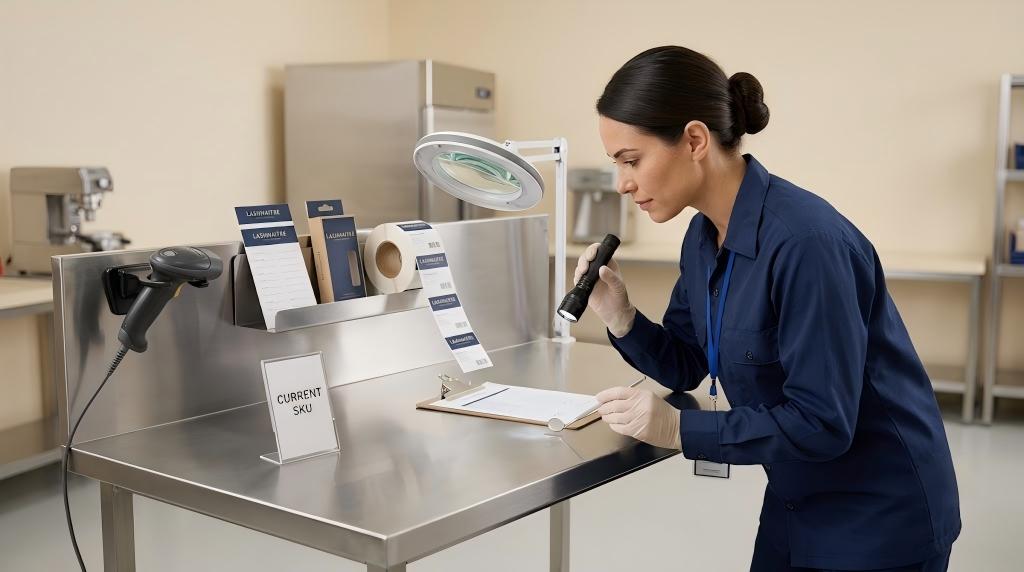
6. Verify Equipment and Digital Settings
Check barcode scanners, label printers, counters and any production screen. A physically cleared table can still produce the wrong label when an old print file or previous SKU remains selected.
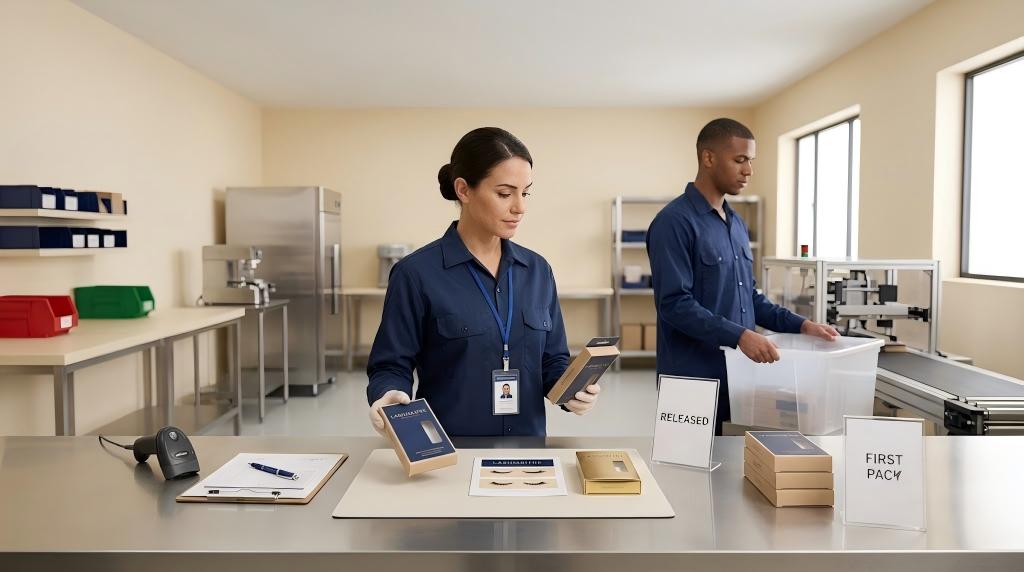
7. Inspect the First Packed Unit
Compare the first completed saleable unit with the active artwork proof and approved reference. Verify lash identity, tray card, row labels, barcode, carton, inserts and product fit before normal packing resumes.
8. Record Release and Responsibility
The operator and checker should record the previous job, new job, time, exceptions and release decision. If any unexplained material remains, hold the line until it is identified and reconciled.
Clear, Hold or Reconcile: Buyer Decision Rule
| Condition | Decision |
|---|---|
| Previous components fully removed and counts agree | Clear for current-SKU setup |
| Count difference has an explained, approved record | Reconcile and obtain authorization |
| Unidentified label, tray card or carton remains | Hold the line |
| First packed unit does not match active approval | Stop, segregate and correct |
Evidence a Buyer Should Request
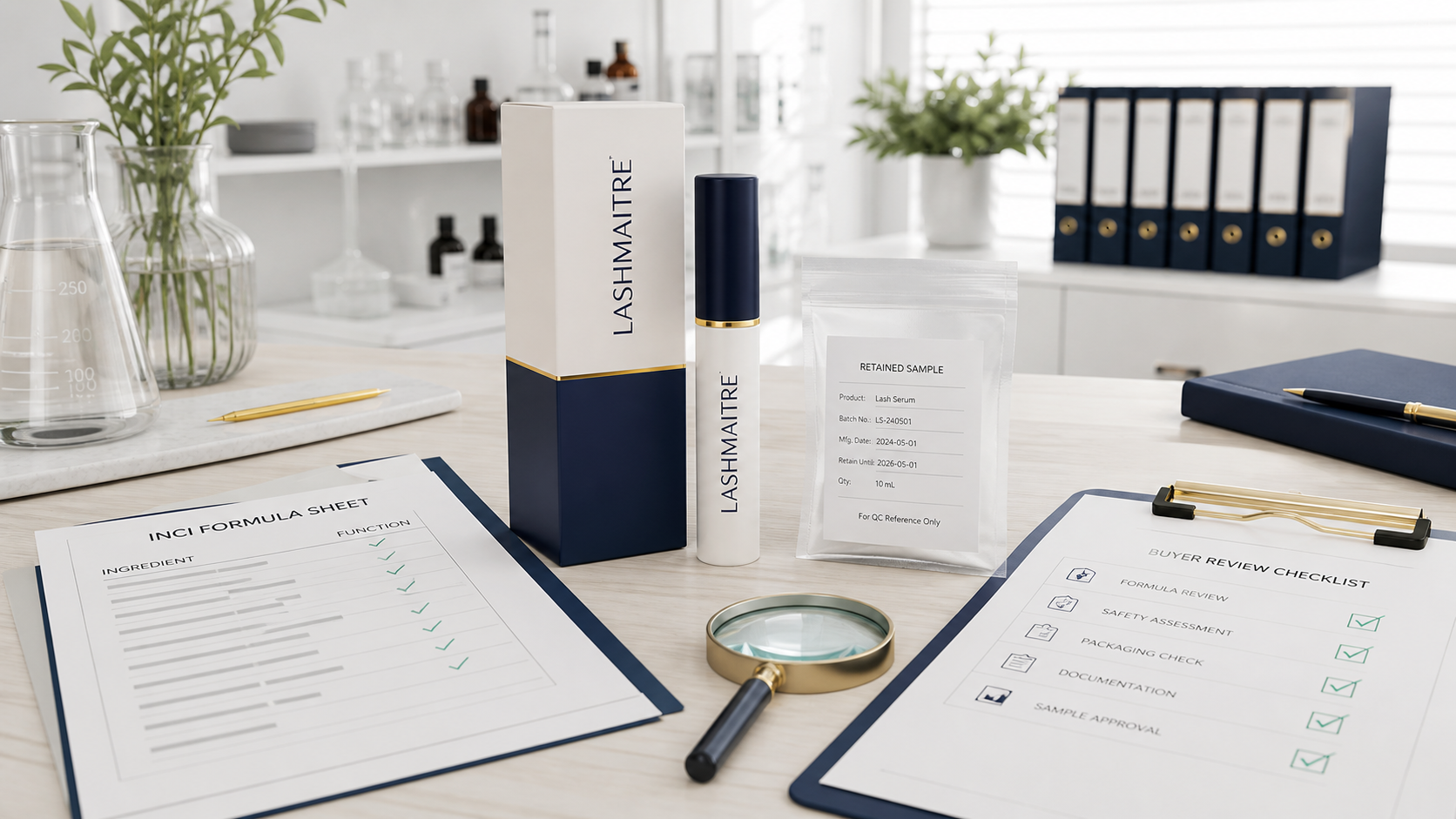
A practical line-clearance record should show the old and new order identities, date and time, component reconciliation, cleaning confirmation, current revision, first-pack verification, deviations and named approval. Photographs can support the record, but they should not replace counts and signatures.
FAQ: Lash Packaging Line Clearance
What is line clearance in lash packaging?
It is a documented removal, reconciliation and verification process between packaging jobs that prevents old or incorrect components from entering the next lash SKU.
When should packaging materials be cleared?
Clear them before every SKU, buyer, artwork, barcode, packaging revision or lot change, and after an interrupted job when component status is uncertain.
Is cleaning alone enough?
No. Cleaning does not prove that leftover labels were counted, the printer file was changed or the first packed unit matches the active approval.
What evidence should a buyer request?
Request the previous/new job identity, residual count, disposition, workstation check, equipment setting check, first-pack comparison and authorized release.
Build Mix-Up Prevention Into the Private-Label Workflow
A reliable lash packaging line clearance makes the change from one approved SKU to another visible and auditable. Buyers planning private label lash extensions can connect this changeover gate with LASHMAITRE lash quality control and confirm requirements through the wholesale lash inquiry.
Authority reference: FDA Good Manufacturing Practice Guidelines/Inspection Checklist for Cosmetics.
A cleared packaging line still needs measurable acceptance limits. Use a lash specification tolerance sheet to define acceptable curl, thickness, length, finish, label and packaging variation before the first pack is released.
Use clearly coded approved lash extension samples as the physical reference when the first packed unit is checked after line clearance.
Line clearance can only verify the correct components when every box, tray, insert and label is controlled in a current lash packaging bill of materials with codes, quantities and revisions.
Line clearance prevents prior-job mix-ups, while documented lash label reconciliation accounts for issued, used, damaged, returned and destroyed labels before batch close.
When packaging correction is required, a controlled lash rework authorization should define the lot, method, replacement components, quantity reconciliation, reinspection and final release authority.

Lash Maitre: Your Trusted Partner in Eyelash extension Solutions
Lash Maitre is dedicated to providing professional insights and tips in the eyelash extension industry. Sharing the latest trends, techniques, and product knowledge, Lash Maitre helps lash artists and enthusiasts enhance their skills, stay inspired, and achieve the perfect lash experience.