Leftover Lash Packaging Ownership: 9 Proven Buyer Terms

Share
Leftover Lash Packaging Ownership Buyer Summary
Leftover lash packaging ownership should define title, physical custody, SKU and artwork-version counts, storage period, loss responsibility, obsolescence, disposal approval and transfer rights before custom materials are ordered.
Leftover lash packaging ownership should be agreed before custom boxes, labels, tray cards or inserts are purchased. Payment does not always answer every operational question: the buyer and supplier should separately record who owns each material, who holds it, how stock is counted, how long it will be stored, who carries loss risk, and what happens when branding changes or the relationship ends.
Leftover Packaging Buyer Summary
- Separate legal or commercial ownership from physical custody.
- Record the paid quantity, used quantity and remaining balance by packaging SKU and version.
- Agree a storage period, count frequency and authorized use.
- Define normal loss, damage reporting, obsolete stock and disposal evidence.
- Preserve the buyer's right to transfer paid branded materials when commercially and legally permitted.

Professional purchasing guidance on buyer-owned, supplier-held inventory recommends controls for identification, records and prompt notice of damage or loss. Oracle's documentation for consigned inventory aging also illustrates why ownership and physical location are separate fields: ownership can transfer at an agreed aging point even while inventory is managed within a supplier process.
These sources describe broader procurement arrangements, not one mandatory rule for lash packaging. Your signed terms, governing law and accounting treatment control the actual transaction.
Why Leftover Private Label Packaging Creates Risk
Custom lash packaging is often produced in print or conversion quantities that do not match one finished-goods order exactly. A buyer may order 1,000 branded boxes but use only 700 in the first production run. The remaining 300 units can support a reorder, but only if both parties know the version, condition and recorded balance.
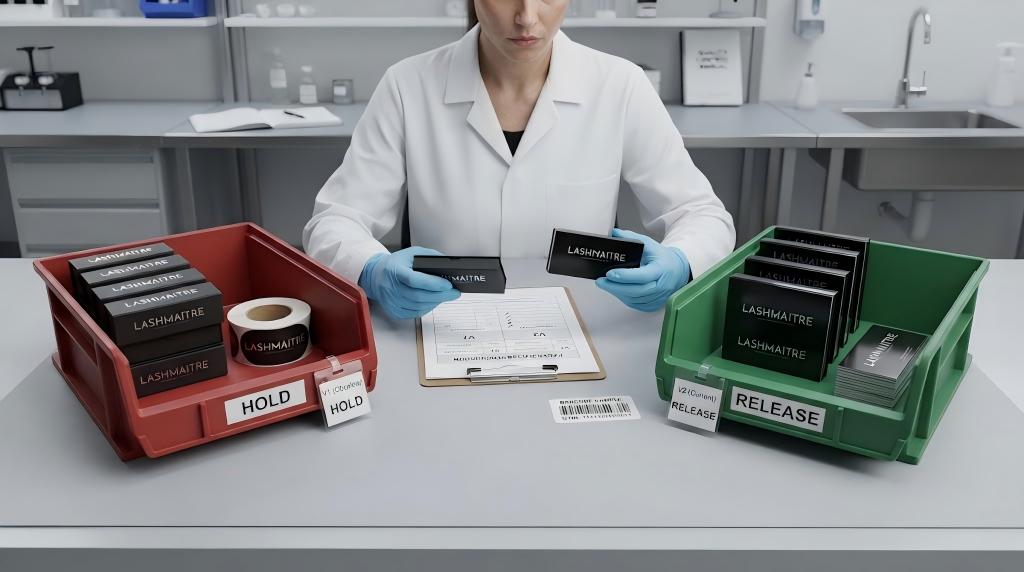
Uncontrolled packaging inventory can create four problems:
- the buyer pays twice for materials already in stock;
- old artwork is used after a barcode, claim or address changes;
- damaged or missing materials are discovered only at reorder;
- buyer-branded components cannot be transferred or destroyed when the supplier relationship ends.
Before choosing structures, finishes and print quantities, use the custom lash packaging planning page to connect packaging choices with sample approval, MOQ and reorder needs.
Nine Terms for Leftover Lash Packaging Ownership
| Contract field | Buyer question | Record to keep |
|---|---|---|
| Material identity | Which box, tray card, label, insert or sleeve is covered? | Packaging SKU and version |
| Ownership trigger | Does ownership transfer at payment, delivery, use or another event? | Quote, invoice and written term |
| Physical custody | Where will the materials be stored? | Supplier/site location |
| Opening balance | How many approved units were received? | Receipt or production count |
| Usage record | How many units were used for each order? | Issue and packing record |
| Loss allowance | What normal setup waste or damage is allowed? | Agreed tolerance and incident log |
| Storage term | How long is storage included and what happens after expiry? | Start date and review date |
| Obsolescence | Who approves reuse, rework, destruction or write-off? | Disposition approval |
| Exit and transfer | Can paid stock be shipped to the buyer or another supplier? | Transfer instruction and final count |
Do not reduce these nine fields to a message saying “we will keep your boxes.” Storage is only one part of the control.
Build a Packaging Inventory Record by SKU and Version
Each packaging component needs its own identity. A black magnetic box, a white sleeve, a barcode label and a curl sticker are not one interchangeable balance. The record should show:
- buyer and brand name;
- packaging SKU and description;
- artwork or dieline version;
- supplier batch or receipt date;
- quantity produced or received;
- setup waste and rejected quantity;
- quantity issued to each finished-goods order;
- quantity remaining and condition;
- next review or expiry date;
- authorized disposition.
The version field matters as much as the count. The lash packaging artwork proof checklist helps buyers freeze the approved content before printing, while the packaging proof revision guide separates an approved revision from an obsolete file.
Decide Who Carries Loss and Damage Risk
Ownership alone does not automatically define responsibility for fire, water, crushing, contamination, unauthorized use or normal production waste. Write a practical risk rule.
The agreement can require the supplier to segregate branded stock, restrict access, use reasonable storage conditions, report incidents promptly and obtain written approval before disposal. It should also define whether a small setup-loss allowance applies and how unexplained shortages are handled.
Avoid invented “industry-standard” loss percentages. Use the actual material, print process, packaging line and commercial agreement to set any tolerance.
Plan for Design Changes and Obsolete Lash Packaging
Packaging becomes obsolete when a buyer changes artwork, barcode, legal entity, destination-market text, claims, color system or product specification. The old material may look usable but no longer match the approved order.
Before a change takes effect, ask for a stock report showing:
- quantity of the current version on hand;
- open finished-goods orders using that version;
- rework feasibility and cost;
- last permitted use date;
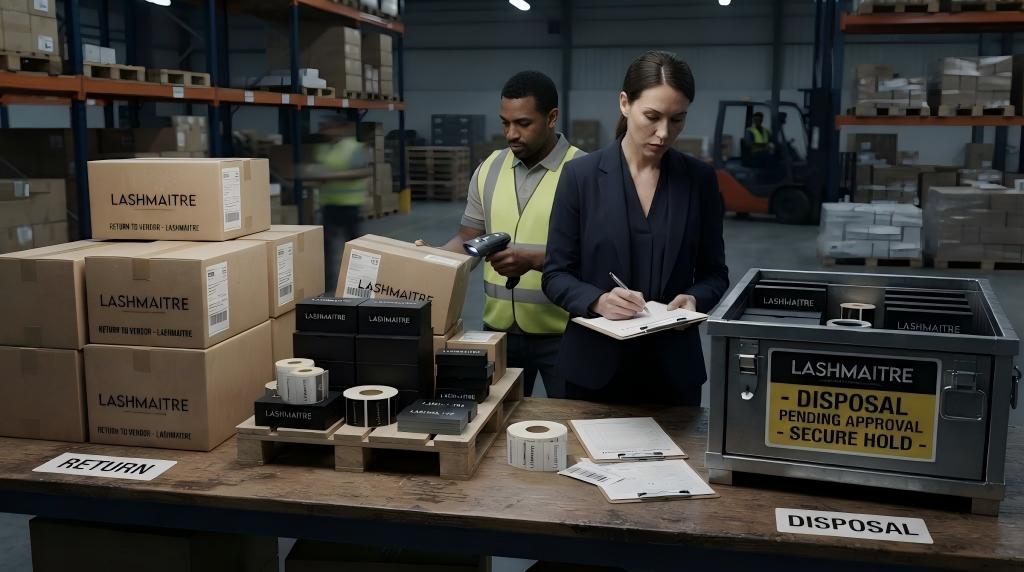
- destruction, return or transfer instruction;
- photographic or documentary proof of final disposition.
Do not allow the supplier to mix old and new versions merely to consume stock. The buyer should approve any transition quantity in writing.
Confirm Transfer and Exit Rights
If a buyer changes suppliers, pauses a product or closes a brand, leftover branded materials still need a controlled outcome. The exit term should cover final stock counting, unpaid storage or handling charges, export or domestic delivery arrangements, packing method, transfer deadline and destruction if transfer is not authorized or economical.
Some materials may be inseparable from supplier-owned tooling, proprietary structures or regulated information. Confirm feasibility before promising a transfer. The goal is a written decision, not an assumption that every component can move.
Leftover Lash Packaging Ownership FAQ
Does paying for custom lash boxes automatically mean the buyer owns every leftover box?
Not necessarily. Payment, ownership, custody and risk can be treated differently under the quote, invoice, supply agreement and governing law. State the ownership trigger and remaining-stock rights in writing before materials are ordered.
How often should a supplier report unused packaging inventory?
Use a frequency that matches reorder activity and obsolescence risk. At minimum, request a balance before each reorder, before an artwork change and before the storage term expires. High-value or fast-changing packaging may need scheduled reports.
Can old lash packaging be used after a design revision?
Only when the buyer confirms that the old version remains acceptable for the intended product and market. Barcodes, claims, warnings, addresses and SKU identifiers should be reviewed before any transition quantity is approved.
Should a supplier destroy unused branded packaging?
Destruction should require written authorization and evidence when the material cannot be reused or transferred. The disposition record should identify the packaging version and quantity so branded materials do not remain unaccounted for.
Confirm Packaging Inventory Before the First Print Run
Leftover lash packaging ownership is easiest to control before the buyer pays for custom materials. Send LASHMAITRE the packaging components, expected first-run quantity, artwork version and reorder plan through the wholesale lash inquiry page so storage and residual-stock questions can be confirmed with the quote.
When a product is leaving the range, connect packaging ownership and disposition to a documented lash SKU discontinuation plan covering final orders, replacement mapping, customer notice and retained evidence.
Before a new SKU or revision enters the packing area, complete a documented lash packaging line clearance to remove obsolete components, reconcile quantities and verify the current labels.
After ownership and custody are agreed, maintain lash packaging inventory control records for receipts, revisions, issues, balances, waste, counts and approved disposition of buyer-owned components.

Lash Maitre: Your Trusted Partner in Eyelash extension Solutions
Lash Maitre is dedicated to providing professional insights and tips in the eyelash extension industry. Sharing the latest trends, techniques, and product knowledge, Lash Maitre helps lash artists and enthusiasts enhance their skills, stay inspired, and achieve the perfect lash experience.