EU Lash Cleanser Labeling 2026: Private Label Buyer Guide
Share
Reviewed by the LASHMAITRE Sourcing & Quality Team · 26 August 2026
Quick Answer
EU lash cleanser labeling requires private label buyers to connect one controlled formula, a complete INCI list, the applicable fragrance allergen assessment and approved packaging. Since July 31, 2026, cosmetics newly placed on the EU market must comply with the expanded fragrance allergen labeling requirements introduced by Commission Regulation (EU) 2023/1545. The change adds individual labeling requirements for 56 additional fragrance allergens and applies when a listed allergen exceeds 0.001% in a leave-on cosmetic or 0.01% in a rinse-off cosmetic.
For buyers comparing a lash cleanser manufacturer or wholesale lash cleanser supplier, the practical risk is approving bottles or labels before the final formula and market review are locked. Connect the approved sample, ingredient list, safety file, Responsible Person review, batch code and packaging proof to one version before placing the bulk order. The rule does not automatically apply to lash trays, tweezers or other non-cosmetic accessories.

What Changed for EU Lash Cleanser Labeling on July 31, 2026?
Commission Regulation (EU) 2023/1545 amended Annex III of the EU Cosmetics Regulation. According to the European Commission, the amendment introduced individual labeling requirements for 56 additional fragrance allergens and updated some existing entries.
The Commission states that:
- A listed fragrance allergen must appear individually in the ingredient list when it exceeds 0.001% in a leave-on product.
- The threshold is 0.01% in a rinse-off product.
- Since July 31, 2026, a cosmetic product that does not meet the new requirements may no longer be placed on the EU market.
- A product placed on the market before July 31, 2026 may continue to be made available until July 31, 2028, subject to the conditions in the regulation.
This distinction matters for inventory planning. “Placed on the market” and “made available” are legal concepts, so a brand should not assume that every unit produced before the deadline qualifies for the transition. The EU Responsible Person or a qualified regulatory adviser should confirm the status of existing stock.
Which Lash Products May Be Affected?
The labeling change is formula-based, not channel-based. A product does not fall outside the rules simply because it is sold to lash salons or included in a lash kit.
| Product | Likely procurement question |
|---|---|
| Foaming lash cleanser | Is it treated as a rinse-off cosmetic, and does the final fragrance declaration match the INCI list? |
| Eye-area cleanser | Does the safety assessment cover the intended eye-area use and final formula? |
| Fragranced aftercare liquid | Is it leave-on or rinse-off, and which threshold applies? |
| Lash shampoo concentrate | What is the intended dilution and use instruction for the finished product? |
| Lash adhesive, remover or bonder | What is the product classification in the target market, and which separate restrictions or warnings apply? |
| Lash trays, tweezers and empty packaging | The fragrance allergen rule does not apply unless the item is part of a regulated cosmetic presentation or kit with cosmetic contents. |
The correct classification should be confirmed before artwork is frozen. A supplier can provide formula and production evidence, but the brand’s EU Responsible Person remains central to the final market assessment.

EU Lash Cleanser Labeling: Buyer Checklist Before Formula Approval
1. Lock the exact formula version
Ask the supplier to identify the formula with a version number or controlled code. “Same base formula” is not precise enough when fragrance, preservative, color or extract systems can change the ingredient list.
The approved sample, formula declaration and future production batch should all point to the same version.
2. Request a complete INCI list
The ingredient list should be generated from the final formula, not copied from an older label or a similar product. Confirm spelling, ingredient order and any required individual fragrance allergen names with the Responsible Person or regulatory reviewer.
3. Obtain fragrance and allergen information
If the formula contains parfum, aroma, essential oils or aromatic extracts, request the information needed to assess Annex III labeling. A general statement that the fragrance is “safe” or “IFRA compliant” does not by itself determine the finished cosmetic ingredient list.
The review should connect the fragrance material, its use level in the finished formula and the applicable labeling threshold.
4. Confirm intended use
Document whether the cleanser is rinse-off or leave-on, how it is used around the eye area and what directions and precautions will appear on the label. The intended use affects both the safety assessment and the allergen threshold.
5. Align the safety file
The Product Information File and Cosmetic Product Safety Report should be consistent with the final composition, intended use and labeling. A packaging revision should not introduce claims or directions that conflict with the assessed product.
EU Lash Cleanser Packaging Requirements Before Printing
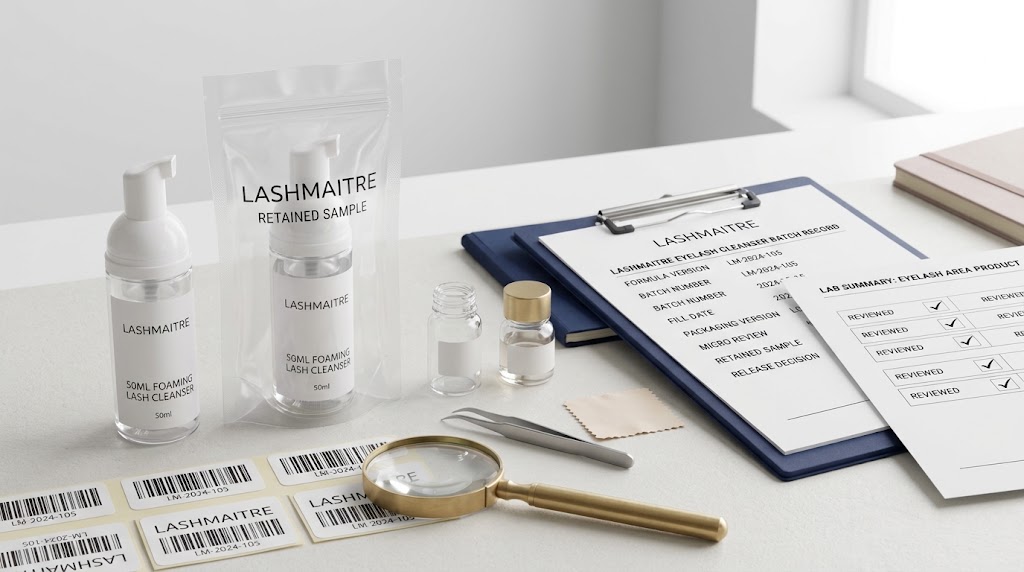
Private label packaging should not go to print while the formula and allergen review are still open. Use a controlled packaging proof that records:
| Approval item | Buyer check |
|---|---|
| Product identity | Product name, function and formula version match the approved sample |
| Ingredient list | Final INCI and required fragrance allergens are included |
| Responsible Person | Name and address are correct for the target EU market |
| Net content | Declared in the required format and visible on the final pack |
| Batch traceability | Space and printing method are confirmed for the batch or reference code |
| Directions and precautions | Match the intended use and safety assessment |
| Language plan | Required market languages fit without reducing readability |
| Artwork version | One dated, approved file is released for production |
Small cleanser bottles often have limited label space. The buyer should therefore choose the bottle, label area and secondary carton before final artwork approval. A larger label or carton may be more practical than compressing required information into unreadable text.

What Documents Should a Lash Cleanser Manufacturer Provide?
A useful private label supply file connects the commercial order to the compliance review. It may include:
- Final formula or composition declaration with version control.
- Full INCI list and fragrance allergen assessment information.
- Approved physical sample or retained sample reference.
- Packaging dieline and final artwork proof.
- Batch code format and production record reference.
- Change log for formula, fragrance, bottle, label or carton revisions.
- Responsible Person approval and notification evidence where applicable.
- Supplier contact and escalation route for post-market questions.
The purpose is not paperwork for its own sake. It allows a buyer to prove which formula and label were approved, identify affected batches if information changes and avoid using obsolete artwork on a reorder.

Five Questions for a Wholesale Lash Cleanser RFQ
- Is the proposed cleanser formula fragranced, fragrance-free or unscented, and what evidence supports that description?
- Which fragrance allergens must be individually listed at the intended use level?
- Is the product assessed as rinse-off or leave-on for the intended market?
- Can the supplier provide a controlled formula version, INCI list, batch code plan and retained sample reference?
- When must the final bottle, label and carton artwork be frozen before production?
These questions help the supplier quote the correct formula and packaging route. They also reduce late-stage label changes after bottles, labels or cartons have already been ordered.
How LASHMAITRE Supports Private Label Lash Cleanser Buyers
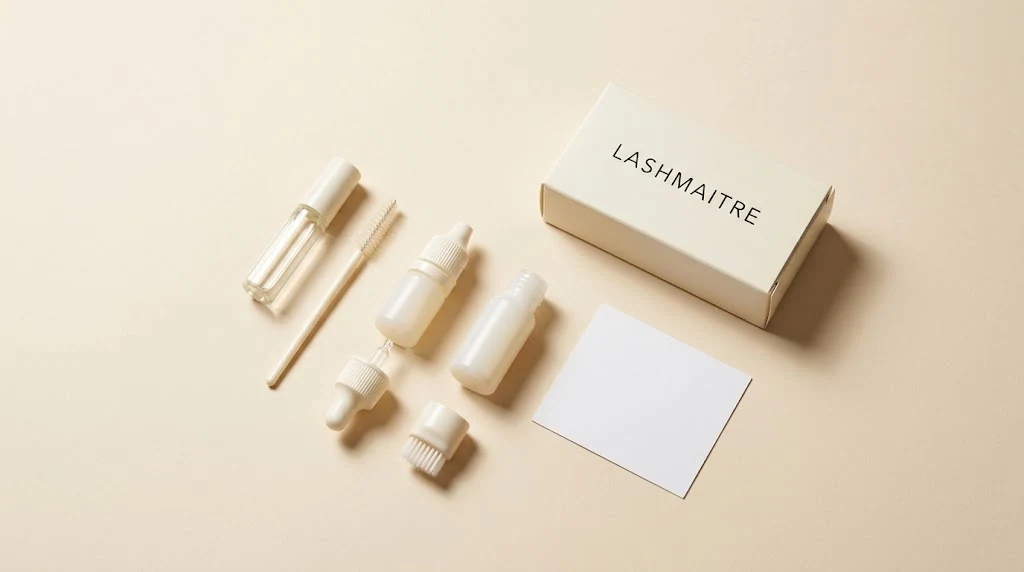
LASHMAITRE helps private label lash buyers organize product samples, formula references, packaging direction and approval records before bulk production. For a cleanser project, share the target market, pack size, fragrance preference, required label languages, quantity and launch schedule.
We can prepare a sample and packaging checklist for buyer review. Final regulatory assessment, Responsible Person duties, safety documentation and market notification remain subject to the applicable law and qualified professional review.
Request a Formula, Label and Packaging Review
Tell us your target market, cleanser format, pack size, fragrance preference, label languages and estimated quantity. Start your wholesale inquiry or review our lash cleanser wholesale sourcing guide.
Frequently Asked Questions
What changed in EU lash cleanser labeling in 2026?
From July 31, 2026, EU lash cleanser labeling for cosmetics newly placed on the market must comply with expanded individual labeling requirements for fragrance allergens introduced by Regulation (EU) 2023/1545.
Does EU labeling affect private label lash cleanser?
It may. If the cleanser is a cosmetic product and contains a listed fragrance allergen above the applicable threshold, that allergen must be identified in the ingredient list. Classification and final labeling should be confirmed by the Responsible Person.
Does “fragrance-free” remove the need for an allergen review?
Not automatically. The complete formula should still be reviewed because essential oils, botanical extracts or other aromatic materials may require assessment. Marketing wording must also be supportable.
Can old packaging be used until July 31, 2028?
Only qualifying cosmetic products placed on the market before July 31, 2026 may continue to be made available during the transition described by the regulation. A brand should verify its inventory status rather than relying only on the packaging print date.
What should a private label lash cleanser supplier approve before printing?
Approve the final formula version, INCI list, allergen declaration, intended use, Responsible Person details, directions, precautions, batch-code area and final artwork version.
Official Sources
This article is a procurement planning resource and does not constitute legal advice. Product classification, safety assessment, Responsible Person obligations, notification and final labeling should be reviewed for the intended market.

Lash Maitre: Your Trusted Partner in Eyelash extension Solutions
Lash Maitre is dedicated to providing professional insights and tips in the eyelash extension industry. Sharing the latest trends, techniques, and product knowledge, Lash Maitre helps lash artists and enthusiasts enhance their skills, stay inspired, and achieve the perfect lash experience.