UK Cosmetics Import Alerts: What Lash Aftercare Buyers Should Check
Share
Reviewed by the LASHMAITRE Sourcing & Quality Team · 24 August 2026
Recent UK cosmetics import alerts show why private label lash aftercare buyers should verify more than the product name, bottle and logo before approving a bulk order. Between 14 and 20 August 2026, UK authorities reported cosmetic actions involving a prohibited ingredient, undeclared fragrance allergens, incomplete labelling and traceability information, and potential microbiological contamination.
None of the cited products was a LASHMAITRE product, and the cases do not mean that every lash cleanser, remover or primer presents the same risk. They do, however, provide a useful procurement lesson: eye-area aftercare should move from formula review to label approval, batch evidence and retained-sample control as one connected process.
Direct answer for private label buyers
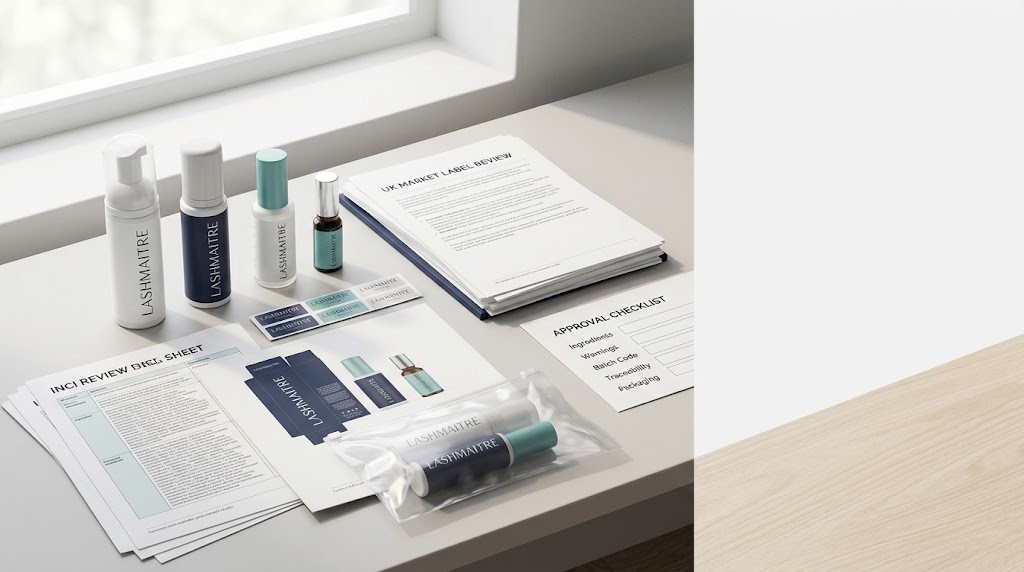
Before approving a private label lash cleanser, remover, primer or aftercare product for the Great Britain market, a buyer should request five evidence groups:
- A complete INCI list and restricted-ingredient review.
- A market-specific label proof with required warnings and traceability information.
- Product safety and microbiological evidence appropriate to the formula.
- A batch or lot-code system that connects the finished product to production records.
- A retained sample and written release decision for the approved version.
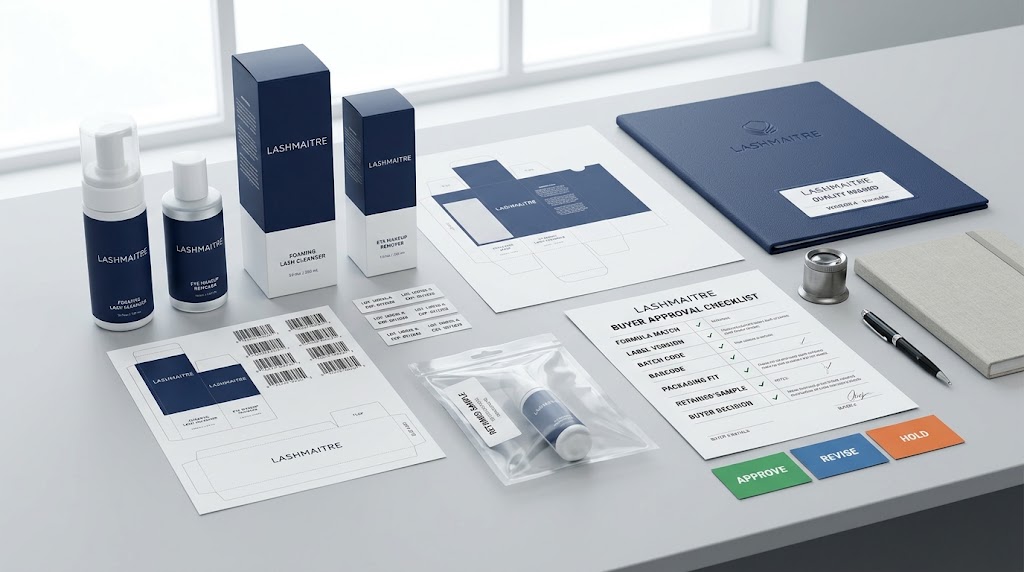
These checks do not replace advice from a qualified UK Responsible Person or safety assessor. They help buyers prepare a cleaner approval file before committing to inventory.
For EU-bound cleanser projects, use the separate EU lash cleanser labeling buyer guide to review fragrance-allergen thresholds, INCI control and packaging approval.
UK Cosmetics Import Alerts: What Happened?
| Date | Official action | Reported issue | Procurement lesson |
|---|---|---|---|
| 20 August 2026 | Import rejected at the UK border | A cosmetic contained BMHCA/Lilial, which is not permitted, and several fragrance allergens above the relevant labelling threshold were not declared | Confirm the formula and final INCI artwork together |
| 17 August 2026 | Import rejected at the UK border | Mandatory labelling and traceability information was incomplete | Approve the market-specific label, batch identification and responsible-party details before shipment |
| 14 August 2026 | Product withdrawal and consumer recall | Specified batches of micellar cleansing water were potentially microbiologically contaminated and could cause eye inflammation | Water-based eye-area products need suitable microbiological controls and batch-level release records |
The first case was published by the UK Office for Product Safety and Standards as a serious chemical risk. The authority reported the presence of butylphenyl methylpropional, also called Lilial or BMHCA, plus undeclared fragrance allergens. The import was rejected at the border. Read the official UK product safety report.
The second action concerned missing mandatory cosmetic labelling and traceability information. Although it involved sunscreen rather than lash aftercare, the underlying buyer issue is transferable: attractive packaging does not correct an incomplete compliance file. Read the official UK labelling and traceability report.
The third case involved affected batches of micellar cleansing water. UK authorities reported potential microbiological contamination and an eye-inflammation risk. This is especially relevant to buyers evaluating water-based cleansers and removers used near the eye area. Read the official UK recall notice.
Five checks for private label lash aftercare compliance
1. Review the formula and label as one approval item
A formula list stored in one email and label artwork stored in another can create version errors. Buyers should compare the final INCI declaration with the formula version intended for production. Any formula change should trigger another artwork check before printing.
For products sold in Great Britain, official guidance requires clearly presented information such as the Responsible Person, country of origin for imported products, nominal content, durability or period-after-opening information where applicable, precautions, batch identification, product function and ingredients. The applicable details should be confirmed with the buyer’s qualified Responsible Person. Review the official GB cosmetics guidance.
2. Ask for evidence appropriate to a water-based eye-area product
Lash cleansers and removers may be water based and used close to the eye. A buyer should ask the supplier and safety team what microbiological testing, stability work and packaging-compatibility checks support the proposed formula. The evidence requested should match the actual product, packaging and market rather than relying on a generic statement.
The goal is not to collect documents for appearance. It is to know which formula and packaging version was tested, when it was tested, and whether the production version still matches that evidence.
3. Make batch traceability visible before production
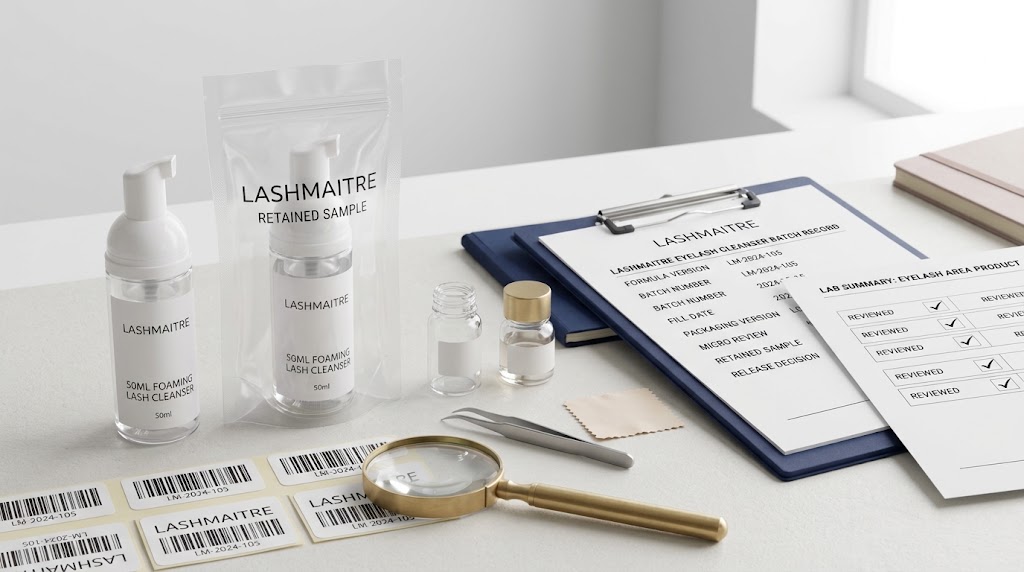
A lot code should connect the finished bottle and carton to a production batch, release record and retained sample. Buyers should agree where the code will appear and check that it remains readable after printing, filling and packing.
Current UK guidance identifies a batch number or other manufacturing identification as required product information. Supply-chain traceability is also part of the Responsible Person and distributor obligations. See the official enforcement guidance.
4. Approve physical packaging, not only a screen mockup
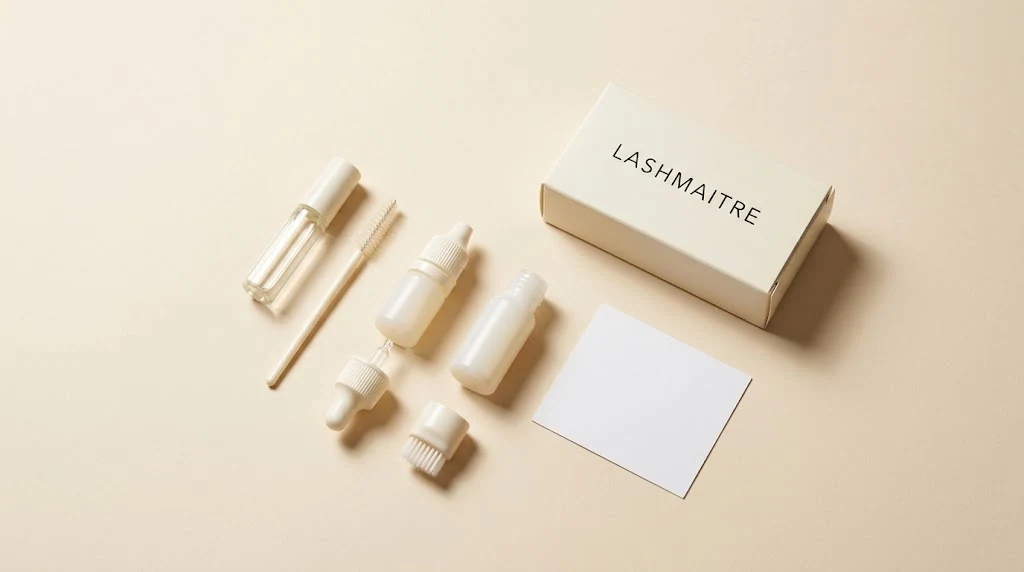
Digital artwork is useful for early review, but small bottles can expose practical problems: text may be too small, a seam may cover required information, a label may lift, or a barcode may not scan. A physical sample lets the buyer review legibility, adhesion, placement, leakage and presentation together.
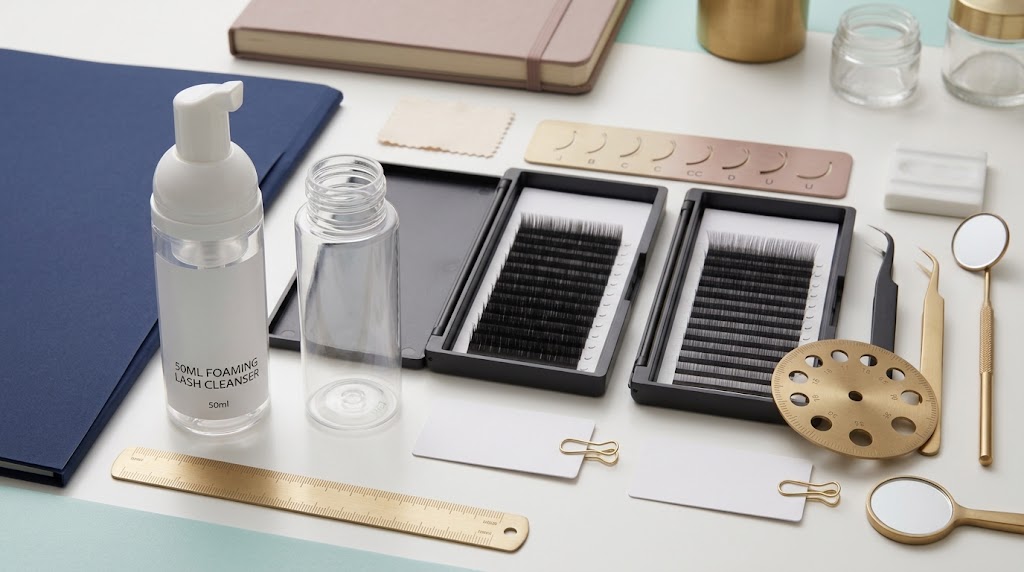
For a sample-first workflow, review the product and packaging through the LASHMAITRE lash extension samples process before approving a larger order.
5. Keep a retained sample and release record
The approved sample should not disappear after the purchase order is signed. Retain a labelled reference sample and record the formula version, artwork version, lot-code format and approval date. When repeat production arrives, compare the incoming batch against that reference before release.
This connects directly with a documented lash quality control process and reduces uncertainty when a buyer needs to investigate a complaint or reorder difference.
A practical approval sequence for lash cleansers and removers
Private label buyers can use the following sequence:
- Define the target market and product function.
- Confirm the proposed formula and complete INCI list.
- Ask the Responsible Person or qualified adviser to review market requirements.
- Review the safety and microbiological evidence for the final formula.
- Approve the bottle, closure, fill volume and physical label sample.
- Verify warnings, ingredients, nominal content, origin and traceability information.
- Record the approved formula, packaging and artwork versions.
- Keep a retained sample and compare it with the first bulk batch.
- Release the order only after documented incoming inspection.
Buyers developing a branded lash range can also review LASHMAITRE’s private label lash extension options alongside their aftercare sourcing plan.
Why this matters for ecommerce and salon brands
For ecommerce brands, one incomplete label or untraceable batch can affect listings, fulfilment inventory and customer service at the same time. For salon distributors, an aftercare issue can also affect professional recommendations and repeat purchasing relationships.
The UK cosmetics import alerts show that border and market controls can focus on several different failure points. A buyer therefore needs one approval system that joins formula, documentation, packaging and batch release rather than treating each as an isolated task.
Frequently asked questions
Do the recent UK alerts prove that lash cleansers are unsafe?
No. The official actions concerned specific products and batches. Their value for lash buyers is as a warning about ingredient, labelling, traceability and microbiological control, not as evidence that all lash aftercare products are unsafe.
Is a supplier’s ingredient list enough for UK market approval?
No single document is enough. The final formula, safety assessment, Responsible Person arrangements, notification, label, packaging and batch records must be considered together according to the product and target market.
What should a buyer approve before printing private label packaging?
At minimum, approve the final formula version, INCI list, required label content, artwork dimensions, lot-code location, barcode, warnings, nominal content and physical packaging sample. A qualified Responsible Person should confirm the applicable GB requirements.
Should every bulk batch be compared with an approved sample?
Yes, a retained reference helps the buyer compare packaging, appearance, fill, label position and other agreed attributes. Product-specific testing should follow the agreed quality plan.
Prepare the evidence before the bulk order
LASHMAITRE supports sample-first planning for lash brands, salons, ecommerce sellers and distributors. Buyers can align the product sample, private label artwork, batch reference and quality-control notes before confirming production.
Request a lash aftercare sample and label review
When contacting us, include the target country, product type, expected quantity, packaging direction and any formula or label requirements already identified by your compliance adviser.

Lash Maitre: Your Trusted Partner in Eyelash extension Solutions
Lash Maitre is dedicated to providing professional insights and tips in the eyelash extension industry. Sharing the latest trends, techniques, and product knowledge, Lash Maitre helps lash artists and enthusiasts enhance their skills, stay inspired, and achieve the perfect lash experience.