Private Label Lash Production File: 8 Records for Reorders
Share
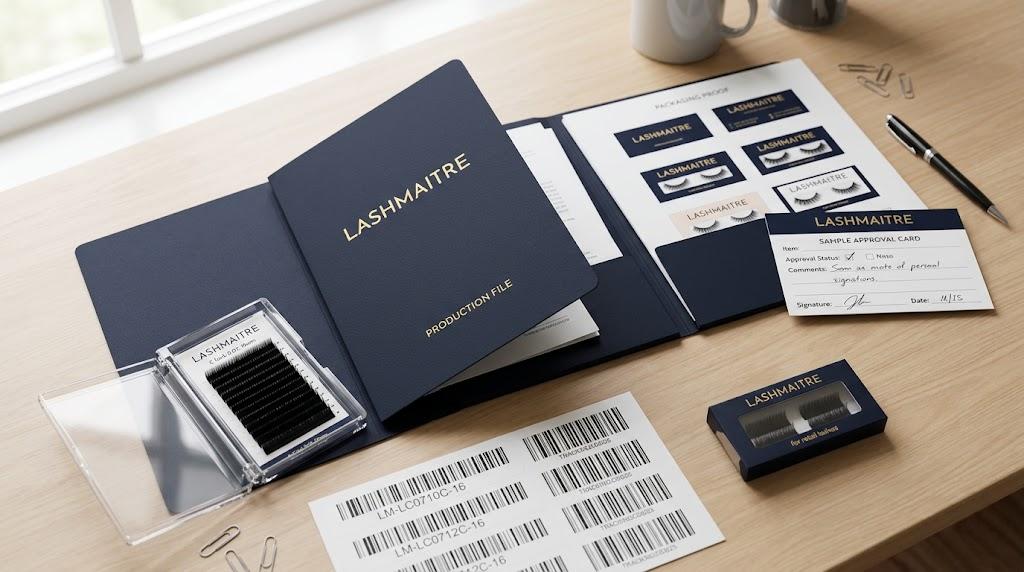
Direct answer: A private label lash production file keeps the approved tray specs, packaging version, label wording, barcode files, QC notes and reorder SKUs together so repeat bulk orders stay consistent.
What Is a Private Label Lash Production File?
A private label lash production file is the buyer's record of the approved lash tray, specs, packaging proof, label version, barcode or SKU, carton mark, QC notes and reorder details. It helps a lash brand repeat the same product after the first private-label order.
This is different from a general quote. A quote may show price, quantity and lead time. A production file shows what the buyer actually approved and what should be repeated next time.
For LASHMAITRE buyers, the production file connects the sample, private label packaging, QC record and reorder path. It gives both sides one clear reference before the next order is placed.
If the private label setup is still early, start with private label lash extensions and lash extension samples before building a full production file.
Why Private Label Lash Buyers Need a Production File
Private label orders involve more than lash fibers. The buyer may need a logo, tray card, box, label, barcode, carton mark and approved sample record. If those details are scattered across messages, the reorder can become slow or inconsistent.
A production file helps prevent:
- Reordering the wrong curl or thickness.
- Printing an old packaging version.
- Mixing tray card names.
- Using the wrong carton mark.
- Losing sample approval notes.
- Confusing similar SKU codes.
- Repeating a correction that was already fixed.
The file does not need to be complicated. It needs to be complete enough that the next order can be checked against it.
Record 1: Approved Sample Tray
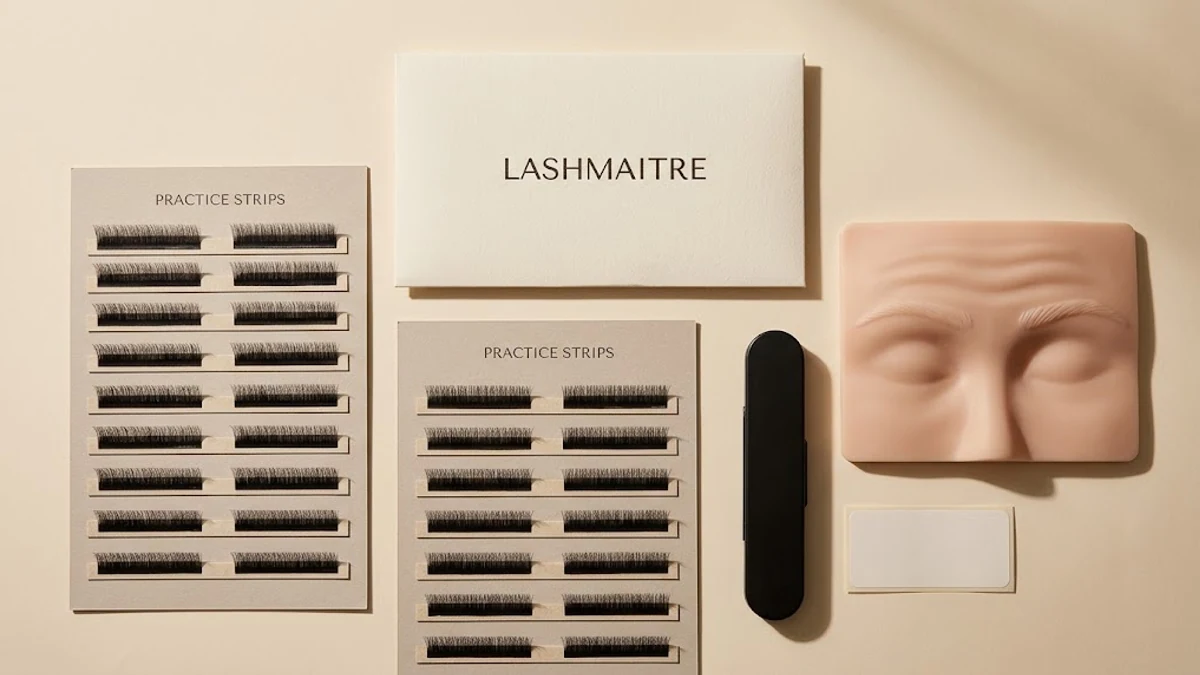
The approved sample tray is the product reference. Keep one physical tray if possible, and keep photos only as backup.
Record:
- Product family.
- Curl.
- Thickness.
- Length or length map.
- Finish.
- Tray type.
- Sample approval date.
- Buyer feedback.
If the buyer wants the next batch to match the first approved tray, connect this record with a lash batch consistency check.
Record 2: Curl, Thickness, Length and Finish
Every private label lash production file should include a spec table.
| Field | Example |
|---|---|
| Product family | Classic, volume, premade, flat, YY, W |
| Curl | C, CC, D, M or L |
| Thickness | 0.03, 0.05, 0.07, 0.10 or 0.15 |
| Length | 8-15 mm mixed, single length or custom range |
| Finish | Matte, silk, cashmere-like or standard |
| Tray format | Single-length, mixed tray, sample set or boxed range |
The buyer should avoid relying only on product names such as "soft glam" or "premium volume." Those names are useful for branding, but production still needs exact specs.
Record 3: Tray Card and Product Name
Private label tray cards often carry the brand's product story, but they also need clear product information.
Save:
- Brand name.
- Product name.
- Curl and thickness wording.
- Length range.
- Logo version.
- Tray card color.
- Front and back proof if used.
The tray card should match the physical tray and the carton label. A mismatch can create customer-service problems even if the lashes themselves are correct.
Record 4: Logo, Box and Packaging Proof
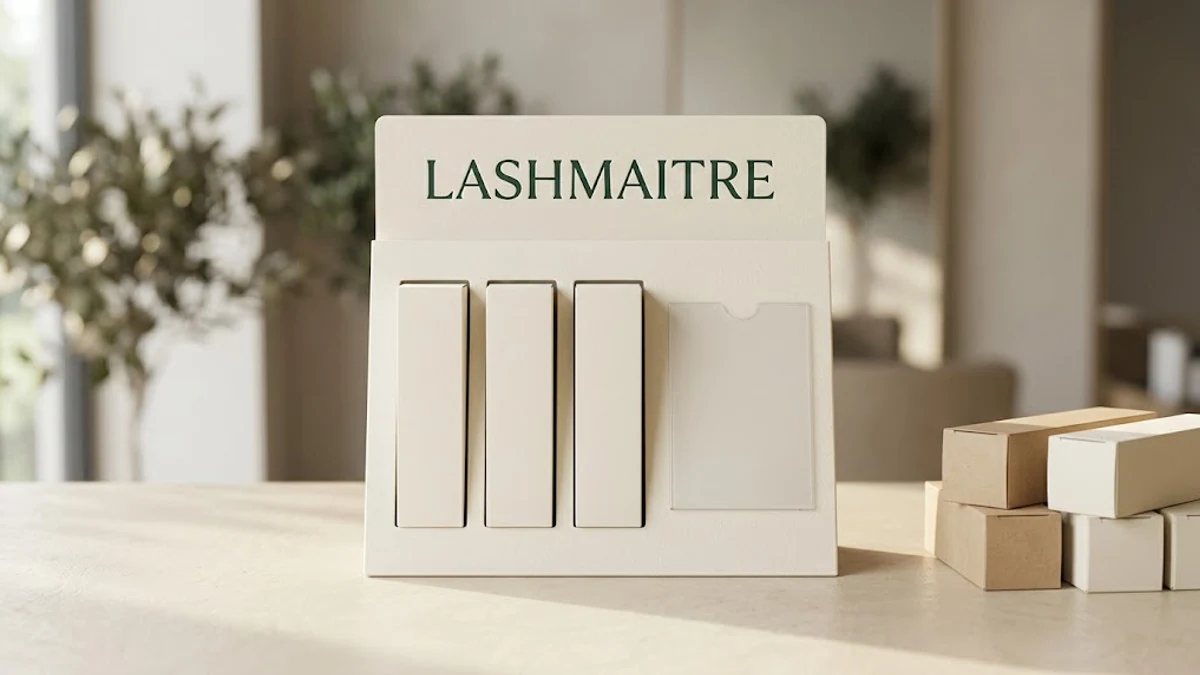
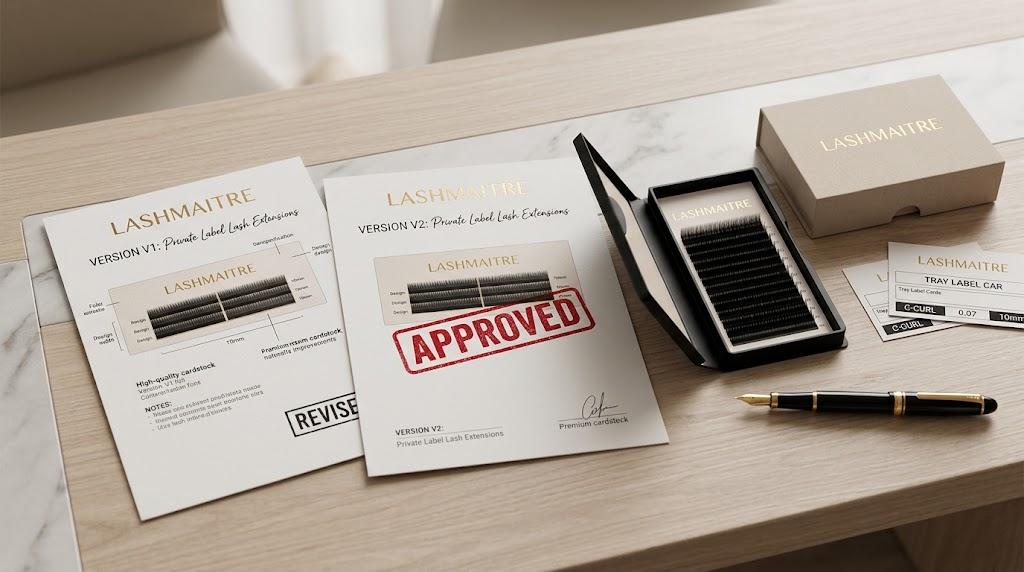
Packaging proof should be saved with the production file, not separately. If the buyer approves a box or sleeve, keep the final version and revision history.
Record:
- Logo file used.
- Box color.
- Tray card proof.
- Label proof.
- Barcode area.
- Packaging version number.
- Approval date.
Use custom lash packaging when the buyer needs box, sleeve, label or artwork planning beyond a standard tray.
Record 5: SKU, Barcode and Carton Mark
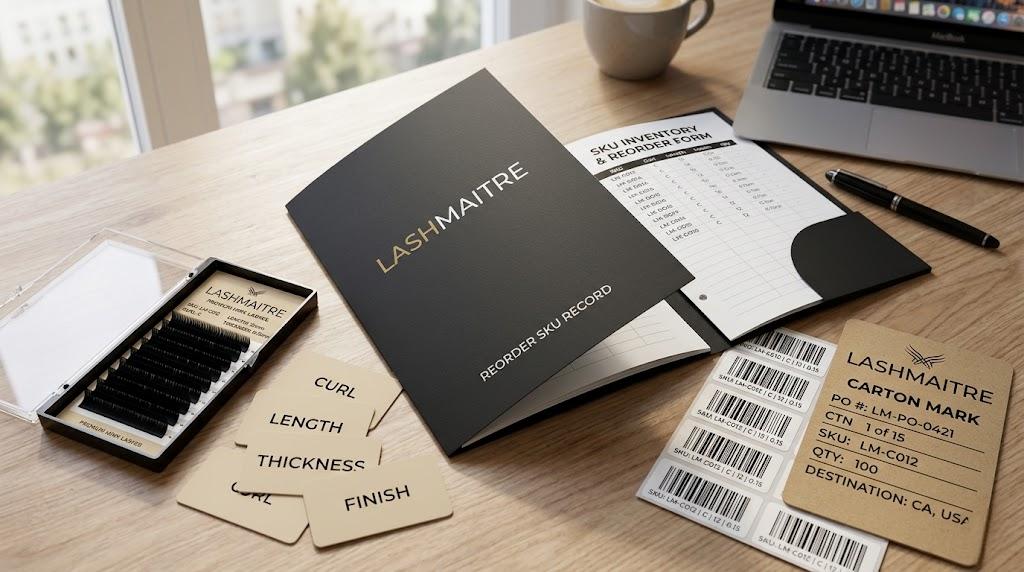
Private label buyers often create several similar lash SKUs. A reorder file should make each one easy to identify.
Save:
- SKU code.
- Barcode or barcode placement note.
- Tray label code.
- Carton mark.
- Quantity per carton.
- Carton count.
Product identification and barcode systems vary by market and sales channel. GS1 US is a useful reference for product identification concepts, but buyers should confirm the exact retail or warehouse requirements for their own market.
Record 6: QC Notes and Correction History
QC notes should explain what was checked and what was corrected.
Examples:
- Curl consistency approved.
- Strip release adjusted.
- Tray card logo moved.
- Carton label revised.
- Row alignment checked.
- Packaging proof approved.
For broader inspection steps, use lash quality control. The private label production file should keep only the final approved notes and any correction history that matters for reorders.
Record 7: Bulk Order Quantity and Shipping Details
A production file should include the first production quantity and shipment basics. This helps the buyer compare later orders and understand whether a reorder is a repeat or a scaled version. If the buyer is still testing the range, connect the file to a controlled MOQ 50 wholesale lash extensions path before scaling too many private label SKUs.
Record:
- Quantity per SKU.
- Total order quantity.
- MOQ path.
- Packing list.
- Carton count.
- Destination.
- Shipping term if applicable.
The International Trade Administration's commercial invoice and Incoterms resources are useful background references for order documentation and shipping responsibilities. The buyer should still confirm final requirements with its logistics provider.
Record 8: Reorder Version and Buyer Feedback
The best production file becomes more useful after the first order ships. Add buyer feedback once the product is received, stored and sold.
Record:
- What worked.
- What needs adjustment.
- Whether the same SKU should be reordered.
- Whether packaging needs a new version.
- Whether quantity should increase or stay controlled.
LASHMAITRE Production File Checklist
Before placing or repeating a private label lash order, keep these records together:
- Approved sample tray.
- Curl, thickness, length and finish.
- Tray card and product name.
- Logo, box and packaging proof.
- SKU, barcode and carton mark.
- QC notes and correction history.
- Bulk order quantity and shipping details.
- Reorder version and buyer feedback.
Prepare a Private Label Lash File With LASHMAITRE
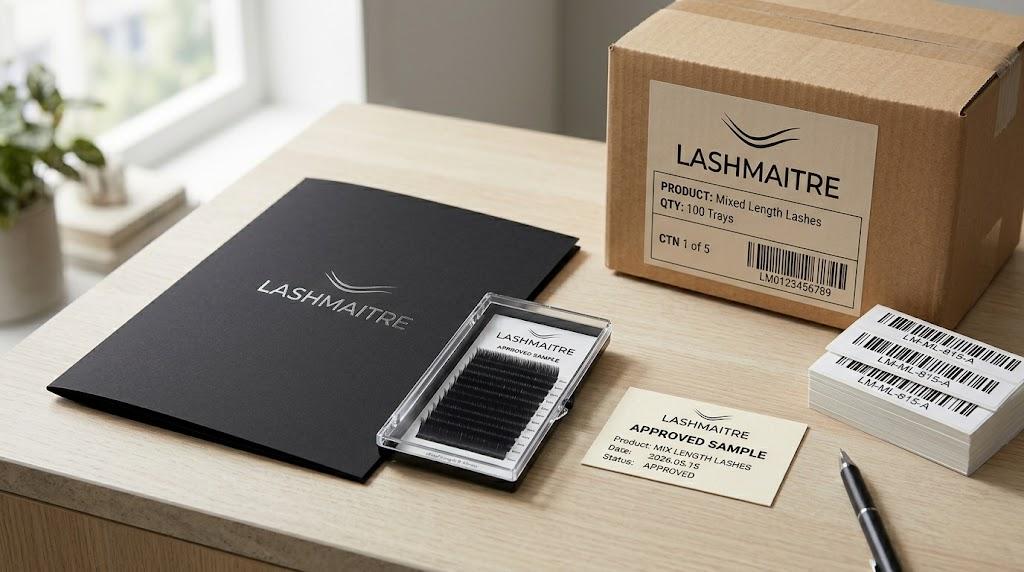
Share your logo, tray specs, approved sample notes, packaging proof and reorder target with LASHMAITRE so your private label lash file can be prepared before bulk production.
When the details are ready, send them through the wholesale lash extensions inquiry page.
For repeat private label reorders, clear lash carton labels help match tray specs, SKU records, packing lists, QC status and approved sample files before shipment.
For a cleaner production file, prepare lash supplier specs before quotation so curl, thickness, length, finish, tray card, SKU labels, MOQ and destination details are locked early.
After the production file is approved, buyers can map the next launch step with this private label lash line roadmap, including starter SKUs, packaging proof, MOQ planning, QC and reorder records.
FAQ
What is a private label lash production file?
A private label lash production file is the complete record of the approved lash product, packaging proof, label details, SKU, carton mark, QC notes and reorder information for a private label lash order.
What records should a private-label lash buyer keep?
The buyer should keep the approved sample tray, product specs, tray card proof, logo and box proof, SKU or barcode details, carton label, QC notes, order quantity and reorder feedback.
How does a production file reduce reorder mistakes?
A production file gives the buyer and supplier one shared reference. It reduces mistakes because the reorder can be checked against the approved sample, packaging version, SKU record and carton mark instead of relying on memory.
Should packaging proof be saved with the approved lash sample?
Yes. Packaging proof should be saved with the approved lash sample because private label orders depend on both product specs and brand presentation. The next reorder needs both records.
After the production file is built, this private label lash launch file helps buyers confirm approved samples, locked specs, packaging proof, SKU labels, product photos, shipment records and reorder readiness before launch.
A private label lash approval log helps the buyer and supplier confirm sample approval, quote scope, packaging proof, production QC and shipment evidence before bulk release.
If a supplier proposes a material, specification, packaging, or process change, review the lash supplier change notice guide before approving the next production batch.
After approving artwork and packaging version, use a lash packaging transit test to verify the tray, inner box, master carton and intended distribution route before bulk release.
Inside the controlled production file, use a lash production traveler to connect the order, SKU, revisions, material lots, operations, checks, rework, packing and final quantity reconciliation.

Lash Maitre: Your Trusted Partner in Eyelash extension Solutions
Lash Maitre is dedicated to providing professional insights and tips in the eyelash extension industry. Sharing the latest trends, techniques, and product knowledge, Lash Maitre helps lash artists and enthusiasts enhance their skills, stay inspired, and achieve the perfect lash experience.