Lash Batch Consistency: 8 Reorder Checks for Wholesale Buyers
Share
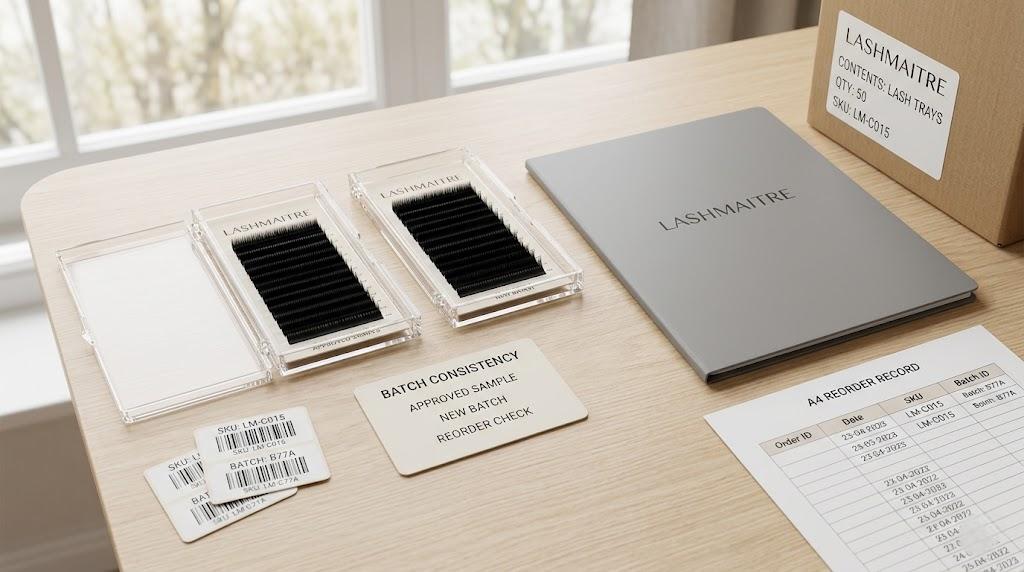
Direct answer:Lash batch consistency means the reorder batch matches the approved sample for curl, length, thickness, finish, tray labels, barcode records and carton notes before a wholesale buyer accepts production.
What Does Lash Batch Consistency Mean?
Lash batch consistency means the new production batch matches the approved sample in curl, thickness, length, fiber finish, tray layout, label wording and packing record. For wholesale buyers, the safest process is to keep an approved sample file and check every reorder against that file before bulk stock is released.
This matters because a lash reorder is rarely judged by one tray only. A buyer may be comparing the new shipment with a previous sample, a private label tray card, a carton mark, a barcode record and feedback from salons or distributors. If those records are not aligned, the reorder can become difficult to sell even when the lashes are usable.
For LASHMAITRE buyers, batch consistency is handled as a repeatable approval process: approve the sample, record the specs, compare the reorder, and keep the final file for the next production run.
If the approved reference is not clear yet, start with a controlled lash extension samples file and connect the result to your broader lash quality control process.
A simple lash batch consistency file gives both the buyer and supplier one shared reference before the next shipment is packed.
Why Repeat Orders Can Drift From the Approved Sample
Small differences can happen when the buyer changes a specification, when the order moves from sample to bulk, or when the label and packing file are not clear enough. A reorder can also feel different if the buyer compares a fresh tray with an older tray that has been stored for months.
The goal is not to chase a vague idea of "perfect." The goal is to define the product clearly enough that the next tray can be checked against the same standard.
Quality management systems often emphasize consistent processes and customer expectations, not only final inspection. ISO describes its quality management family as a way for organizations to improve products and services and consistently meet customer expectations. In lash wholesale, that same thinking becomes practical through sample records, batch IDs, QC notes and reorder controls.
Check 1: Keep the Approved Sample Tray
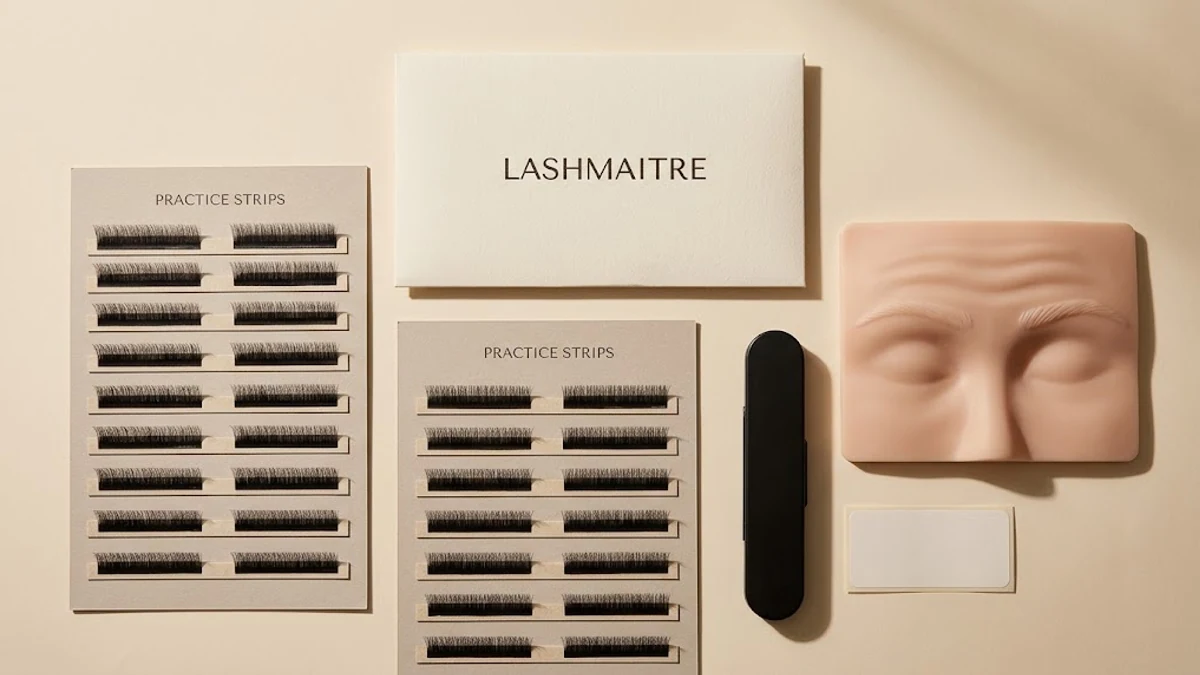
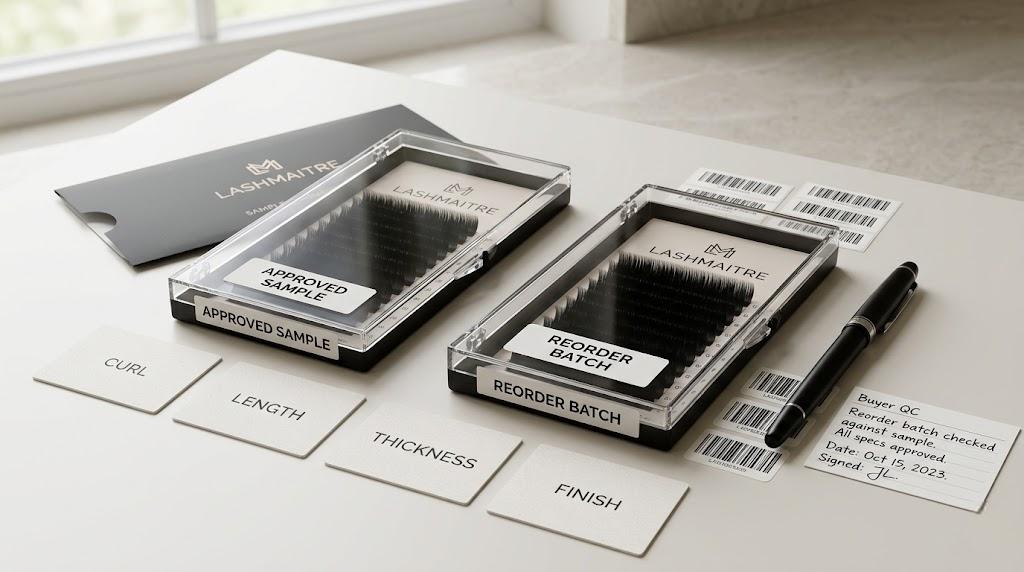
The approved sample tray is the reference point. Do not rely only on a photo, a chat message or a product name. Keep one physical tray, the tray card, the sample approval date, and the final buyer feedback.
For a private label order, the approved sample file should include:
| Record | Why it matters |
|---|---|
| Product family | Prevents mixing classic, volume, flat, easy fan or premade fan samples. |
| Curl | Keeps the finished look repeatable. |
| Thickness | Controls weight, softness and buyer expectation. |
| Length range | Prevents wrong tray mix or wrong label. |
| Finish | Helps match matte, silk or cashmere-like positioning. |
| Tray card and label | Prevents packaging mismatch at reorder. |
Check 2: Compare Curl Shape Across Rows
Curl is one of the first things buyers notice when a reorder feels different. Compare the new batch against the approved sample under the same light and angle. Check whether the rows sit evenly and whether the curl shape looks consistent across the tray.
Do not judge only the outer rows. Open the tray and compare several rows in the middle. If the product is part of a style map, such as cat eye, doll eye or fox eye, make sure the curl still supports that intended result.
For style-map products, compare the reorder against the approved lash mapping styles file instead of checking curl alone.
Check 3: Confirm Length and Thickness Labels
A reorder problem can be a product problem, but it can also be a label problem. Check the length mark, thickness mark, curl mark and tray card name before the batch is packed.
For mixed trays, confirm that the length order matches the approved map. For single-length trays, confirm that the tray label, barcode label and carton label all match the same SKU.
This is especially important for buyers who run multiple private label names for similar trays. If two SKUs look similar but use different curls or finishes, the label record must be clean.
Check 4: Review Fiber Finish and Softness
Fiber finish affects how the lash range feels in the hand and how it appears to the final customer. A reorder batch should match the approved finish: matte, silk-like, cashmere-like, dark black, soft black or another agreed style.
Softness should be checked by product family. A volume tray and a classic tray should not be judged with the same expectation. The buyer should compare the reorder against the approved tray for that exact product family.
If finish is part of the complaint, compare the reorder against the approved lash fiber finish checklist rather than judging by product name only.
Check 5: Check Strip Release and Row Alignment
Strip release affects how technicians pick up the lashes. Row alignment affects how professional the tray looks and how easy it is to check.
For a reorder batch, inspect:
- Whether rows are straight and evenly spaced.
- Whether lashes face the same direction.
- Whether the strip releases cleanly.
- Whether the lash bases look neat.
- Whether the tray still looks acceptable after opening.
These checks are practical, not decorative. A tray that looks disorganized can create buyer complaints even if the individual fibers are correct.
Check 6: Match Tray Cards and Private Label Names
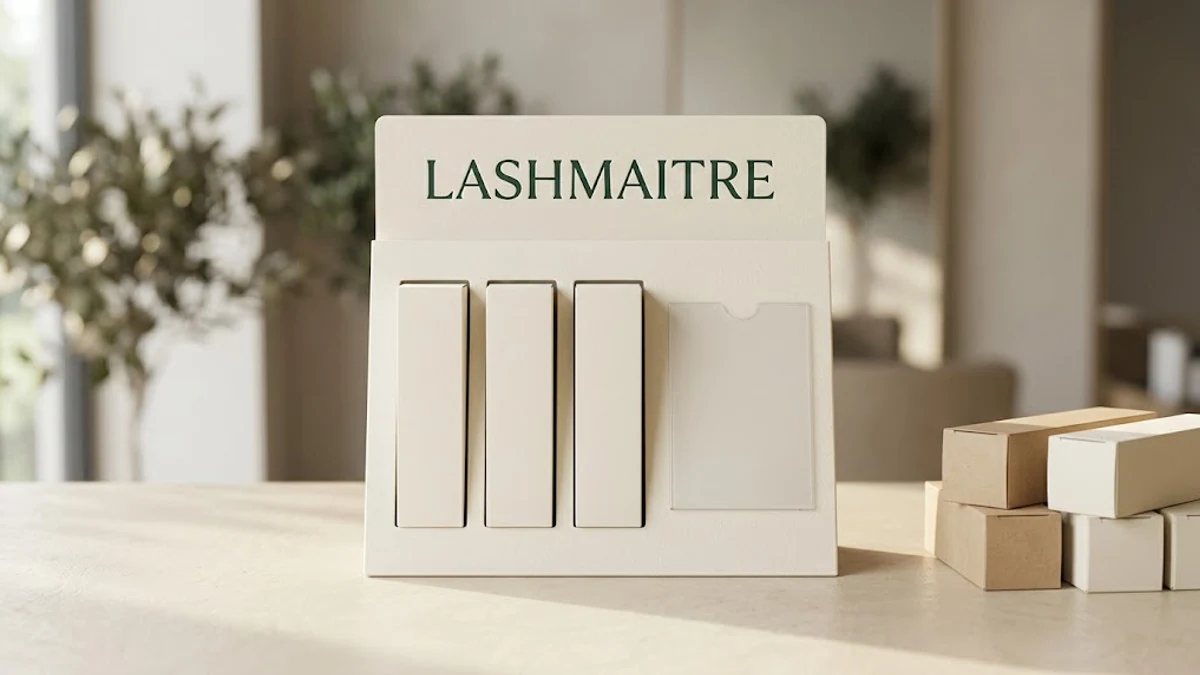
Private label reorders need both product consistency and packaging consistency. A tray can pass fiber checks but still fail buyer approval if the tray card, sample box or barcode label has changed.
Before accepting a reorder, compare:
| Item | Reorder check |
|---|---|
| Tray card name | Same as approved file. |
| Logo placement | Same approved layout. |
| Curl and thickness text | Matches the actual tray. |
| SKU label | Matches buyer reorder sheet. |
| Box or sleeve | Matches packaging proof. |
A private label lash extensions reorder should keep the product spec and the packaging spec in the same file.
Check 7: Keep Carton and Batch Records
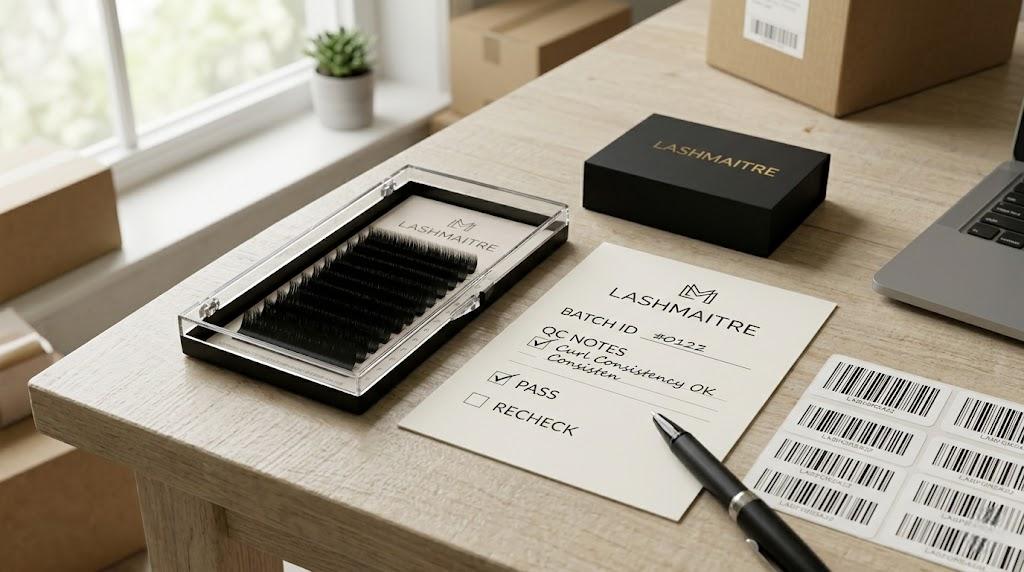
Batch consistency is easier when every reorder has a simple record. A practical file can include the batch ID, carton mark, production date, buyer SKU, supplier SKU, quantity, destination and QC notes.
Barcode and traceability standards are used in many supply chains to connect products, locations and checkpoints. LASHMAITRE buyers do not need a complicated system for every small sample order, but they do need enough information to identify which batch created a good or bad reorder experience.
This is why lash batch consistency should be documented as a reorder control, not only checked by eye at the end.
Check 8: Record Reorder Feedback Before Scaling
Do not wait until a large shipment has already been distributed. Ask the internal team, sample testers or salon buyers to record feedback while the reorder is still easy to trace.
For small confirmation runs, connect reorder feedback to the same sample-to-MOQ discipline used in MOQ 50 wholesale lash extensions planning.
Useful feedback is specific:
- Curl looks slightly softer than approved sample.
- Strip pickup feels stronger than last batch.
- Tray label should show length more clearly.
- Carton label should include buyer SKU.
- Approved sample should be kept for next reorder.
This creates a better next production file than a general comment like "quality not same."
LASHMAITRE Buyer Checklist
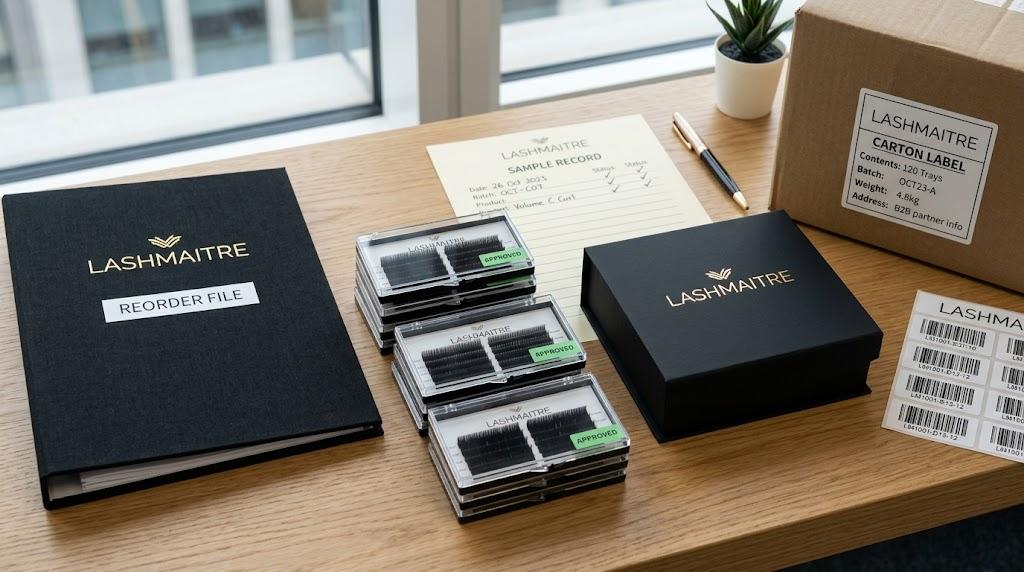
| Before repeat wholesale order | Status |
|---|---|
| Approved sample tray saved | |
| Curl compared to approved sample | |
| Length and thickness labels confirmed | |
| Fiber finish and softness reviewed | |
| Strip release and row alignment checked | |
| Tray card and private label name matched | |
| Carton label and batch ID recorded | |
| Reorder feedback saved |
FAQ
What is lash batch consistency?
Lash batch consistency means a new production batch matches the approved sample in curl, thickness, length, finish, tray layout, label wording, packing and reorder record.
How can wholesale buyers check a lash reorder against the approved sample?
Keep one approved sample tray and compare the reorder against it under the same light. Check curl, length, thickness, fiber finish, strip release, row alignment, tray card, barcode and carton label.
Why do lash trays from different batches look slightly different?
Differences can come from changed specs, unclear sample records, storage condition, label mix-ups or the move from sample production to bulk production. A clear approval file reduces this risk.
What records should be saved for lash extension reorders?
Save the approved sample, product specs, buyer SKU, supplier SKU, tray card proof, barcode label, carton mark, batch ID, approval date and QC notes.
Request a Reorder Sample Check
Send LASHMAITRE your approved tray, target batch record, private label tray card and carton label requirements. The team can help prepare a reorder sample check before your next wholesale production run.
Use the wholesale lash extensions inquiry page when you are ready to send the approved sample file and reorder details.
Authority and Source Notes
- ISO quality management reference: ISO 9000 family
- GS1 traceability reference: GS1 Global Traceability Standard
If a repeat defect appears across a batch, use a documented supplier corrective action request to contain affected stock, identify root cause, verify the fix and protect the next reorder.

Lash Maitre: Your Trusted Partner in Eyelash extension Solutions
Lash Maitre is dedicated to providing professional insights and tips in the eyelash extension industry. Sharing the latest trends, techniques, and product knowledge, Lash Maitre helps lash artists and enthusiasts enhance their skills, stay inspired, and achieve the perfect lash experience.