Lash Production Traveler: 10 Records That Follow Every Batch
Share
Lash Production Traveler Buyer Summary
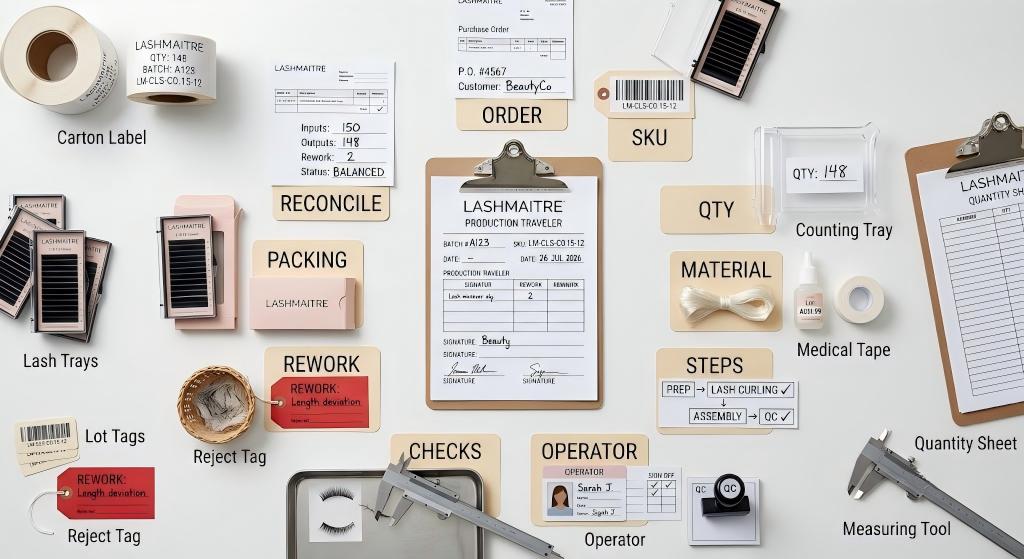
A lash production traveler should identify the order, SKU, approved revision, planned quantity, material lots, required operations, responsible personnel, in-process inspection, nonconformity and rework records, packing status and final quantity reconciliation for one batch.
A lash production traveler is the controlled record that follows one order or lot through manufacturing and packing. It should identify the order, SKU, revision, planned quantity, material lots, operations, in-process checks, nonconformities, packing status and final reconciliation with attributable entries.
What Is a Lash Production Traveler?
A production traveler, work-order traveler or batch traveler carries the instructions and execution evidence needed at each production stage. It connects the approved order definition to what operators actually made, checked, moved and packed.
Oracle Manufacturing documentation describes generating a work-order traveler for use during production execution. The exact format varies by factory, but the control principle is stable: the active record must remain linked to the correct order and current revision.
Traveler, Specification and Production File
The specification defines what the product must be. The traveler records how a particular order or batch moved through the process. The production file is the broader collection of approvals, commercial records and retained evidence.
These records should link to one another, but combining everything into an uncontrolled packet makes revision errors more likely.
10 Records on a Lash Batch Traveler
1. Order and Traveler Identity
Assign a unique traveler or work-order number and link it to the buyer PO, supplier order and issue date.
2. SKU and Revision
Record the product code and the current specification, master-sample and packaging revisions used for the run.
3. Planned Quantity and Dates
State the planned quantity, approved overage or tolerance, start date and required completion date.
4. Material and Component Lots
Capture relevant lash fiber, tray, label, printed packaging and other controlled component lot or batch references.
5. Operation Sequence
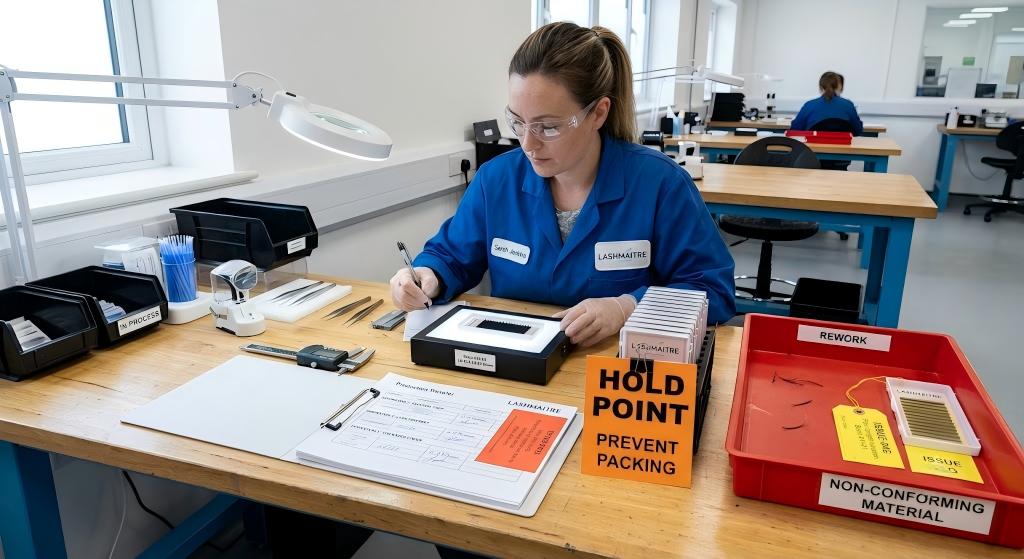
List the required steps and hold points in order. Operators should not skip a stage because the record is unclear or physically separated.
6. Operator and Equipment Attribution
Record who completed or verified each required stage and identify controlled equipment when its status affects acceptance.
7. In-Process Inspection Results
Capture first-piece approval, sampling frequency, results and acceptance against the current criteria. Link detailed logs when the traveler only records a summary.
8. Nonconformity and Rework
Reference segregated quantities, issue numbers, authorized rework, deviations and reinspection results. Never erase the original result.
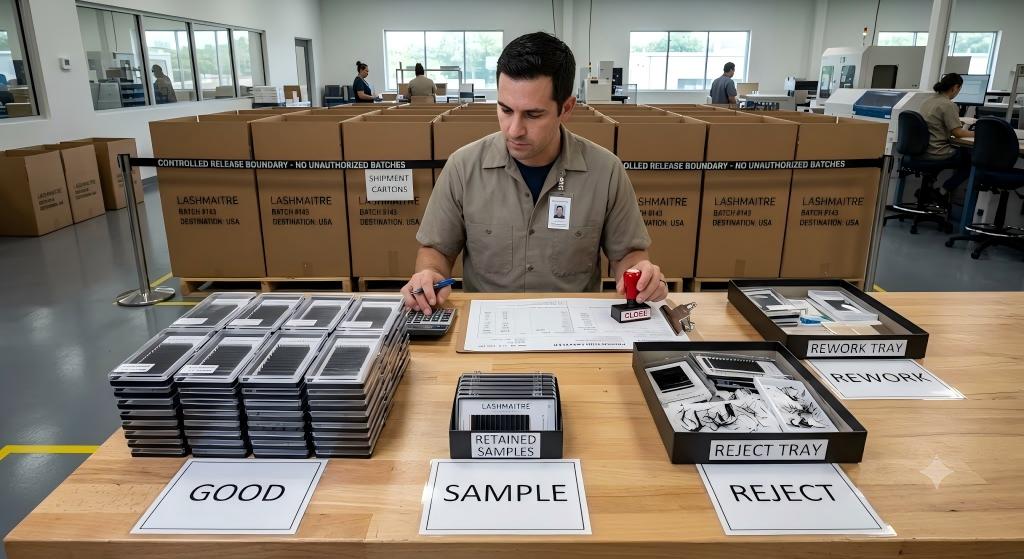
9. Packing and Label Status
Confirm the issued packaging revision, packing quantity, carton identity and line-clearance or reconciliation evidence.
10. Final Quantity Reconciliation
Reconcile good units, rejects, samples, rework and remaining work in process. The quantities should explain the full planned or issued amount.
Traveler Closeout Rule
| Condition | Closeout decision | Required action |
|---|---|---|
| All stages complete and quantities reconcile | CLOSE | Sign or digitally approve the traveler |
| Evidence exists in a linked controlled record | CLOSE WITH LINK | Record the exact reference and location |
| An entry or quantity is unexplained | HOLD | Investigate before batch release |
| Wrong revision or identity affected work | ESCALATE | Segregate affected product and assess impact |
Paper vs. Digital Travelers
Both can work. Paper needs controlled issuance, legible permanent entries, correction rules and protection from loss or damage. Digital systems need permissions, revision control, timestamps, attribution and dependable access at the workstation.
Avoid parallel uncontrolled paper and digital copies. Define which record is authoritative and how temporary downtime entries are reconciled.
Common Traveler Failures
- Reusing a traveler without changing the order or lot identity.
- Issuing the traveler before the specification revision is confirmed.
- Recording only pass/fail without the result or linked evidence.
- Leaving rework and rejected quantities outside the reconciliation.
- Signing all operations at the end instead of when performed.
- Closing the traveler while packing or label discrepancies remain open.
FAQ: Lash Production Traveler
What is a lash production traveler?
It is the controlled order- or lot-specific record that carries current instructions and captures execution evidence through production and packing.
Which records should follow a lash batch?
Include identity, revision, quantity, material lots, operations, responsible personnel, inspection results, deviations, packing status and final reconciliation.
Can a digital traveler replace paper?
Yes, if it controls access, revisions, timestamps, attribution, corrections and availability. The factory should define one authoritative record.
When is the traveler complete?
It is complete when required stages and checks are recorded, referenced evidence is accessible, open issues are dispositioned and all quantities reconcile.
Make Every Batch Explainable
Build the traveler around a controlled private label lash program, documented lash quality control, approved lash samples and a traceable wholesale lash inquiry.
Authority reference: Oracle Manufacturing guidance on printing a work order traveler.

Lash Maitre: Your Trusted Partner in Eyelash extension Solutions
Lash Maitre is dedicated to providing professional insights and tips in the eyelash extension industry. Sharing the latest trends, techniques, and product knowledge, Lash Maitre helps lash artists and enthusiasts enhance their skills, stay inspired, and achieve the perfect lash experience.