Lash Mapping Styles: 8 Wholesale Tray Planning Checks
Share
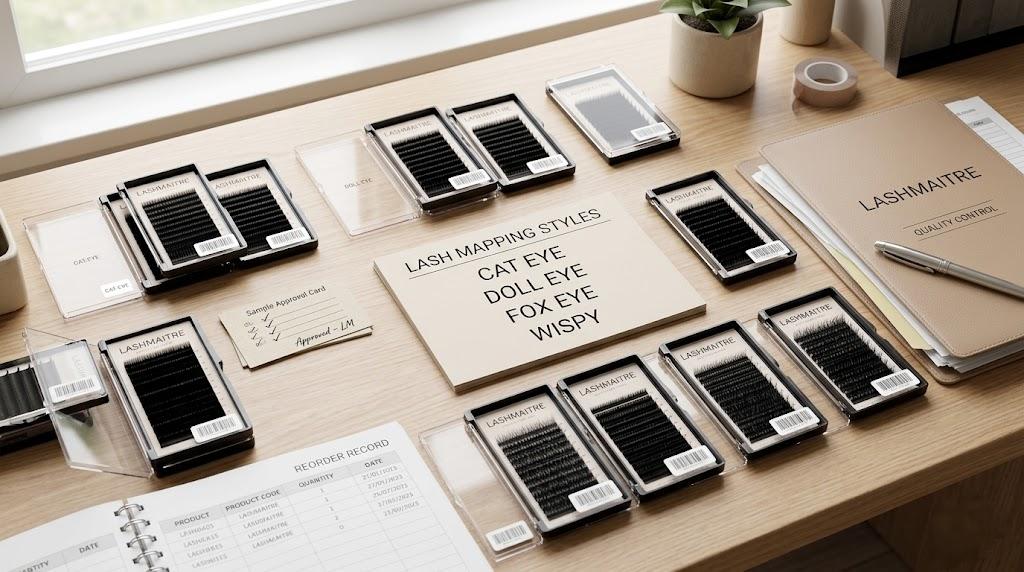
Lash mapping styles are not only service-menu ideas. For a wholesale buyer, each style must become a product file with curl, thickness, length zones, tray format, label wording, sample approval, QC notes and reorder control.
Most search results explain lash mapping styles for artists or clients. LASHMAITRE looks at the same topic from the buyer side: how a lash brand, distributor, salon chain or academy turns a visual map into a tray range that can be sampled, labeled, stocked and reordered.
Direct answer: Lash mapping styles are planned lash placement patterns that control where shorter, medium and longer lengths sit across the lash line. For wholesale buyers, the important step is not only naming the style, but locking the curl, thickness, length map, tray format, label name, sample approval record and reorder SKU before bulk production.
Buyer note: For general eye-area cosmetic context, buyers can review the FDA eye cosmetic safety page. Keep wholesale product content focused on tray specs, sample approval, label accuracy and QC records rather than medical or performance claims.
What Lash Mapping Styles Mean for Wholesale Buyers
In salon education, a lash map shows where different lengths and curls may sit across the lash line. In wholesale planning, that map has to become a product decision. The buyer needs to know what the tray card says, what sample was approved, what MOQ was tested, and what record will be used for repeat orders.
A useful lash mapping styles file should define:
- style name
- length zones
- curl family
- thickness
- finish and fiber direction
- mixed tray or single-length tray format
- private label tray card wording
- sample approval and reorder code
If those details are missing, the buyer may approve a beautiful sample but struggle to reorder the same product later.
Quick Comparison of Common Lash Mapping Styles
The first decision is not which style sounds fashionable. The first decision is which style can become a clear product range.
| Lash mapping style | Basic map logic | Wholesale planning note |
|---|---|---|
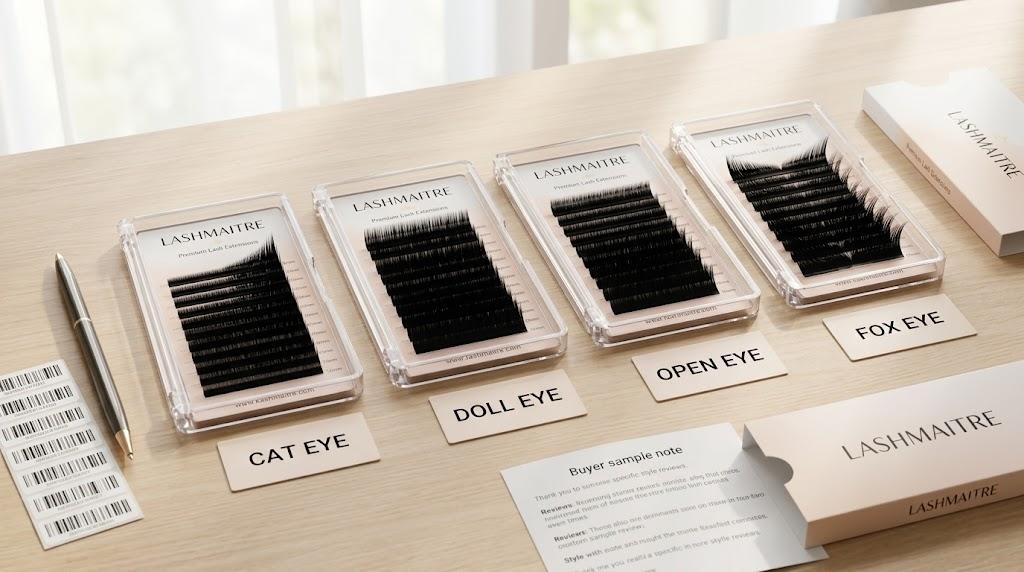
| Cat eye | Shorter inner lengths, longer outer lengths | Good for a style-specific tray range; keep outer length and curl recorded |
| Doll eye | Longest lengths near the center | Useful for rounder/open-looking style ranges; control the center length zone |
| Open eye | Center emphasis with balanced taper | Often overlaps with doll eye; avoid making duplicate SKUs too early |
| Fox eye | Short inner zone with stronger outer-corner extension | Needs careful outer length, transition and curl approval |
| Wispy | Spike rows plus softer base rows | Record spike/base logic, not only the trend name |
| Anime or manga | Distinct spike spacing and base rows | Keep style language tied to actual tray specs |
The 2026 LASHMAITRE style cluster already includes buyer guides for cat eye lash extensions map, wispy lash extensions wholesale and anime lash extensions wholesale. This broader guide helps buyers connect those style pages into one product planning system.
1. Confirm the Style Name Before Sampling
The same style name can mean different things in different markets. "Soft cat eye," "doll eye," "fox eye," "open eye" and "wispy" may be used loosely by clients, artists and retail brands.
Before ordering samples, define what the style name means for the product file:
- which visual result the buyer wants
- which length zones create that result
- whether the style belongs in a core, trend, academy or private label range
- whether the tray card should use a style name or a technical name
This matters because private label packaging can make the style name more visible than the technical spec. A strong product file connects both.
2. Translate the Map Into Length Zones
Lash mapping styles only become orderable when they are translated into length zones. Instead of asking for "a fox eye tray" or "a doll eye tray," buyers should define the inner, middle, center and outer zones.
| Zone | What to record | Why it matters |
|---|---|---|
| Inner zone | Starting length and curl | Prevents the map from looking too heavy at the start |
| Center zone | Peak or transition length | Separates doll/open eye from outer-lift styles |
| Outer zone | Ending length and curl | Controls cat-eye and fox-eye direction |
| Approved sample | Final measured spec | Becomes the reorder reference |
For more detailed length decisions, buyers can use the LASHMAITRE lash extension lengths guide before requesting first samples.
3. Match Curl to the Style Result
Curl can change the way lash mapping styles read in the catalog. A buyer may keep one length map but test C, CC or D curl. Another buyer may keep one curl and test two maps.
The safest first round is to change only one major variable at a time. If the buyer changes style, length, curl, thickness and packaging name together, sample feedback becomes hard to use.
LASHMAITRE buyers can review the lash extension curl guide when deciding whether a style should feel softer, lifted or more dramatic.
4. Choose Thickness and Finish for Brand Positioning
The same lash mapping style can be sold as soft, natural, bold, training-friendly or trend-forward. Thickness and finish help define that positioning.
Wholesale buyers should record:
- thickness
- matte or glossy finish
- classic, volume, premade or mixed range
- target buyer group
- tray label wording
This is especially important when a brand sells several styles in the same collection. The customer may see style names, but the supplier needs technical records.
5. Decide Mixed Tray or Single-Length Tray
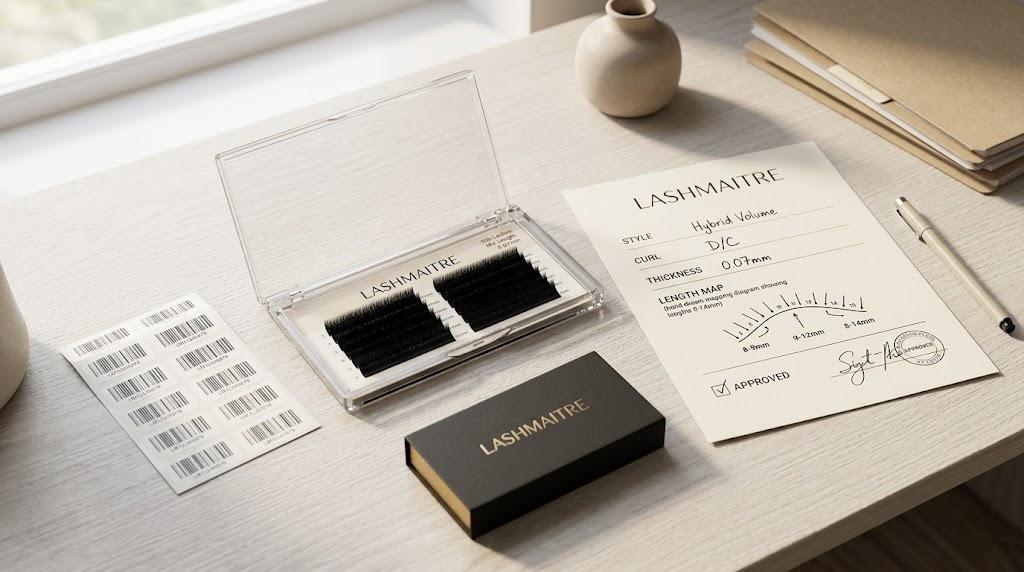
Many lash mapping styles are easier to sample as mixed trays because the buyer can see the full map in one product. Single-length trays may be better after demand is proven.
| Tray format | Better for | Buyer risk |
|---|---|---|
| Mixed style tray | First samples, trend launches, academy kits | The exact mix must be recorded clearly |
| Single-length tray | Mature catalogs and salon-chain reorders | Too many slow SKUs if launched too early |
| Style kit | Private label launch or educator set | Packaging and label records must stay aligned |
If inventory risk is a concern, the MOQ 50 wholesale lash extensions path can help buyers test one style before expanding into more curls or lengths.
6. Add Private Label Names Carefully
Private label names help sell a style, but they can also cause reorder confusion. A retail name like "Velvet Doll" or "Lifted Fox" should still connect to a technical tray record.
For private label lash extensions, keep these details in the version file:
- Style name.
- Curl.
- Thickness.
- Length map.
- Tray format.
- Tray card proof.
- Box or sleeve proof.
- Reorder code.
That connection keeps the brand language attractive while still making production repeatable.
7. Use Sample Approval Notes Before MOQ
Sample approval should happen before the buyer commits to a wider catalog. The approved sample should not be a memory or a chat message. It should be a recorded product file.
Good approval notes include:
- what the buyer liked
- what must not change
- length and curl records
- label spelling
- packaging version
- QC comments
- reorder quantity plan
The LASHMAITRE lash extension samples page explains how sample trays help buyers confirm specs before placing a wholesale order.
8. Keep a Reorder Record for Every Style
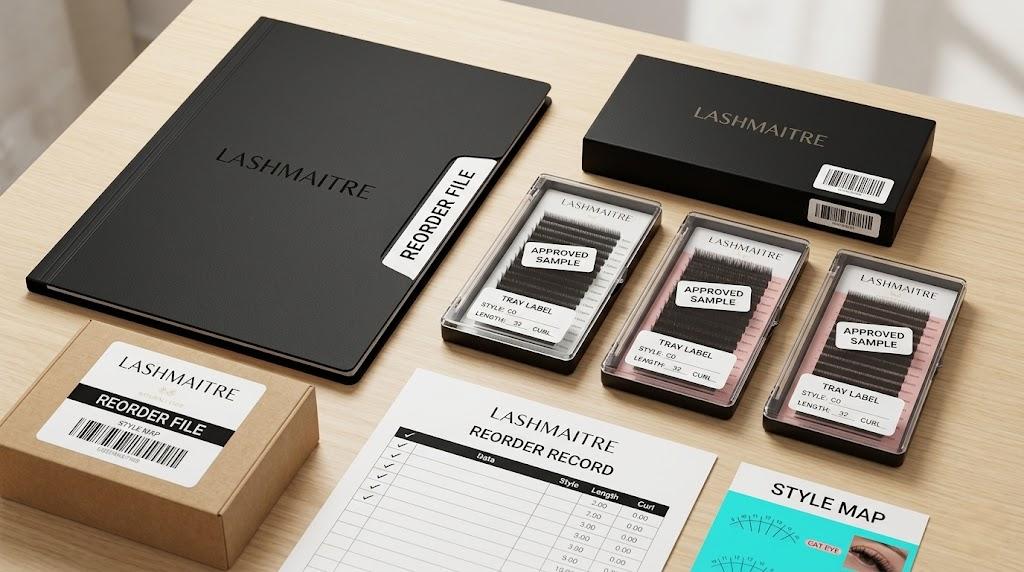
The best lash mapping styles are not just attractive. They are repeatable. Once a buyer approves a style, the approved tray, label, packaging proof and QC notes should stay in one reorder file.
LASHMAITRE's lash quality control process connects visible tray consistency with label and reorder accuracy. That matters when a buyer grows from one sample to multiple SKUs.
Lash Mapping Styles Inquiry Checklist
Before contacting a supplier, prepare a short, specific request:
- target style or style collection
- buyer type: brand, distributor, salon chain or academy
- length zones
- curl and thickness
- mixed tray or single-length tray format
- private label needs
- target MOQ or test quantity
- tray card and barcode needs
- sample approval timeline
Buyers can send the planned spec through the wholesale lash extensions inquiry page and ask for a sample path.
For an adjacent map concept, use the reverse cat eye lash extensions tray planning checklist to record zone-by-zone lengths, curls, texture and compatible SKUs.
FAQ
What are lash mapping styles?
Lash mapping styles are planned placement patterns for lash lengths and curls. For wholesale buyers, lash mapping styles should be converted into tray specs, sample records, labels and reorder files.
Which lash mapping style should a wholesale buyer sample first?
Start with the style that has the clearest commercial role in the catalog. If the buyer is unsure, sample one core style and one trend style instead of opening many similar SKUs at once.
Are lash mapping styles printed on the tray card?
They can be, especially for private label ranges. Even if the style name is printed on the tray card, the reorder file should still include curl, thickness, length map and tray format.
Can one private label range include several lash mapping styles?
Yes. A private label range can include cat eye, doll eye, fox eye, wispy or anime styles, but each style needs its own approved sample, label record and reorder code.
Request a Lash Mapping Sample Plan
If you are building a style-map lash range, send LASHMAITRE your target styles, length zones, curl, thickness, packaging needs and MOQ plan. The team can help turn lash mapping styles into sampleable, labelable and reorderable wholesale trays.

Lash Maitre: Your Trusted Partner in Eyelash extension Solutions
Lash Maitre is dedicated to providing professional insights and tips in the eyelash extension industry. Sharing the latest trends, techniques, and product knowledge, Lash Maitre helps lash artists and enthusiasts enhance their skills, stay inspired, and achieve the perfect lash experience.