Wispy Lash Extensions Wholesale: 8 Spike and Mixed Tray Checks
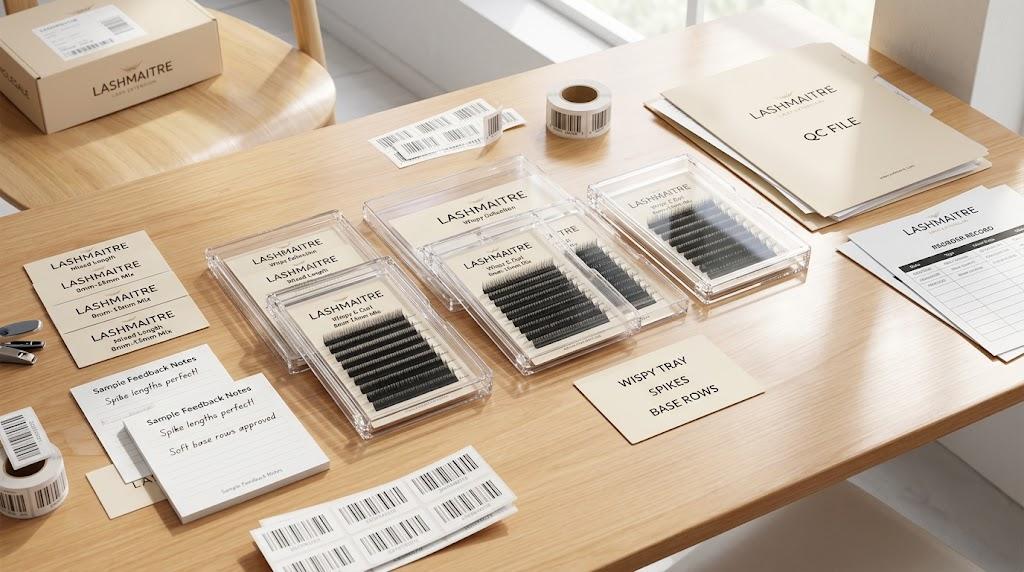
Share
Wispy lash extensions can create strong demand, but for wholesale buyers the style must become a repeatable tray structure. The buyer needs more than a trend name. They need spike length, base length, curl, thickness, tray format, label wording, sample feedback, QC notes and reorder records.
Many search results explain wispy lashes as a service or style. LASHMAITRE frames wispy lash extensions as a B2B product planning decision for private label brands, salon chains, distributors and lash academies.
Direct answer: Wispy lash extensions are built around contrast between longer spike sections and softer base rows. For wholesale buyers, the key is not only the look but the repeatable tray structure: approve the spike length, base length, curl, thickness, tray format, label text, QC notes and reorder file before scaling the range.
Buyer note: For general eye-area cosmetic context, buyers can review the FDA eye cosmetic safety page. Keep product claims limited to visible tray specs, sample approval, packaging records and QC control.
What Wispy Lash Extensions Mean in Wholesale Tray Planning
In a retail or service setting, "wispy" may describe a soft, textured, uneven or spike-forward look. In wholesale tray planning, that is too vague. The supplier and buyer need a product file that can be repeated.
The first planning question is simple: what creates the wispy effect in this range?
- longer spike rows
- softer base rows
- mixed length layout
- classic wispy tray
- hybrid wispy tray
- volume or premade support
- private label packaging name
If the buyer cannot point to the structure, the reorder may not match the approved sample.
For a first round, buyers can start with lash extension samples instead of a wide production order. Samples give the buyer a controlled way to compare spike visibility, base row support and label wording before choosing a first MOQ.
1. Define Whether the Range Is Natural, Classic, Hybrid or Volume Wispy
Not every wispy tray should be positioned the same way. A natural wispy range may need softer contrast. A hybrid wispy range may need more visible spike separation. A volume wispy range may need density and fan planning.
| Wispy range type | What buyers should define | Common risk |
|---|---|---|
| Natural wispy lash extensions | Soft spike contrast and wearable length range | Too subtle to differentiate in catalog |
| Classic wispy lash extensions | Single-fiber structure plus length variation | Confused with a regular mixed tray |
| Wispy hybrid lash extensions | Spike rows plus fuller base support | Vague naming without spec record |
| Volume wispy range | Fan/density logic plus spikes | Too many variables in first sample |
If the buyer also plans wet set, YY/W or premade support, keep the range logic separate. The LASHMAITRE articles on wet set lash extensions wholesale and YY vs W lash extensions can help separate texture categories.
2. Approve Spike Length Before Expanding SKUs
The spike row is usually the most visible part of a wispy range. If the spike length changes, the finished style changes quickly. That is why buyers should approve spike length before opening extra curls, thicknesses or packaging variants.
| Wispy range element | What to approve | Reorder risk |
|---|---|---|
| Spike row | Length, curl and spacing direction | Spikes change look quickly if specs drift |
| Base row | Base length and density | Weak base makes the tray feel inconsistent |
| Tray format | Mixed tray or dedicated length tray | Buyers may reorder the wrong format |
| Label wording | Style name, curl, thickness and length range | Trend names can become unclear without specs |
The first sample should make the spike/base relationship visible. If the buyer only sends a mood image and says "make it wispy," the supplier still needs a clear technical record.
Premade Spike Lash Extensions: Count the Unit, Not Just the Tray
When a wispy range includes premade spike lash extensions, record fibers per spike and spike units per tray separately. A D-count label should not be read as the number of spikes in the box. Ask the supplier to state its counting convention for the exact SKU.
| Field | What to record |
|---|---|
| Fibers per unit | Constituent fibers in each preformed spike. |
| Spike units per tray | Number of individual spike units supplied. |
| Mixed-tray allocation | Separate spike and base-unit quantities for each included length. |
For example, PLA’s product specification lists fibers per closed fan separately from spikes per tray. This illustrates the two units of measurement; it is not a LASHMAITRE product specification. Request a labelled sample and confirm the counts before comparing quotations.
For broader product options, use the premade fans wholesale guide; keep the chosen spike/base combination on the sample record.
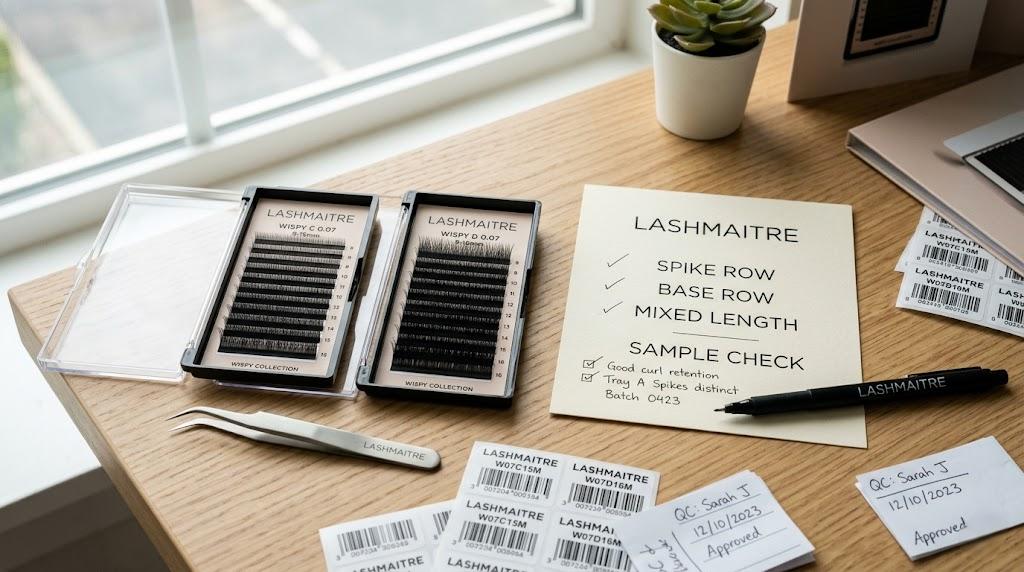
3. Match Base Rows to the Intended Service Menu or Catalog
The base rows carry the range. They support the texture and make the tray feel complete. If the base row is too weak, the product may look unfinished. If it is too dense, the spike effect may disappear.
Buyers should decide:
- base length range
- base curl
- base thickness
- whether the tray is mixed or single length
- how much contrast should appear between base and spike sections
For buyers comparing classic, volume and hybrid positioning, the LASHMAITRE classic vs volume lash extensions guide can help separate product families before sample approval.
4. Keep Curl and Thickness Controlled During the First Sample Round
Do not test every variable at once. If a buyer changes spike length, base length, curl, thickness, density and packaging name together, the sample feedback becomes difficult to use.
A cleaner first sample round can compare:
- one spike/base plan across two curls
- one curl across two spike lengths
- one tray format against another
That keeps the buyer's feedback useful. It also helps the supplier build a stable reorder file instead of guessing which element the buyer approved.
5. Decide Whether Mixed Trays or Single Length Trays Fit the Catalog
Wispy ranges often depend on mixed length logic, but not every wholesale buyer needs the same tray format.
| Tray format | Better for | Buyer note |
|---|---|---|
| Mixed wispy tray | First sample, trend range launch, academy demos | Make the length mix readable on the tray card |
| Single length support trays | Mature catalogs and salon-chain usage | Use only after demand is proven |
| Kit format | Private label launch packs or educator kits | Keep SKU labels simple |
| Premade support | Volume-oriented buyers | Check base quality and fan consistency |
If the buyer uses premade options, the LASHMAITRE guide to premade fans vs handmade can help keep fan type and style-map planning separate.
For buyers worried about inventory depth, MOQ 50 wholesale lash extensions can keep the first wispy launch small enough to test before expanding into more curls, lengths or packaging versions.
6. Keep Private Label Names Tied to Clear Tray Specs
Trend names help sell the range, but they can create reorder confusion. A name like "Airy Wispy" or "Soft Spike" is useful only if the tray card and reorder file also show the real specs.
For private label packaging, record:
- product family
- style name
- curl
- thickness
- length range
- spike/base notes
- SKU or reorder code
- packaging version
LASHMAITRE's private label lash extensions support can connect the visible packaging name with the exact tray file behind it.
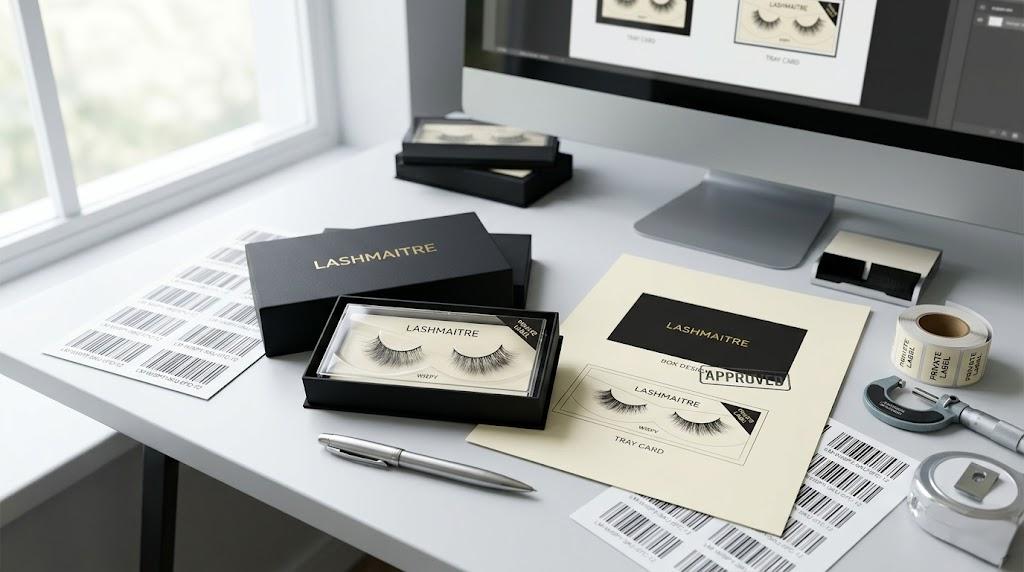
7. Check Texture Consistency Across Sample Trays
Wispy texture should not change randomly from tray to tray. Before a buyer approves MOQ, compare sample trays under the same lighting and record what must stay consistent.
QC notes can include:
- spike visibility
- base row density
- row alignment
- curl consistency
- tray card accuracy
- label accuracy
- packaging proof version
- sample feedback
The LASHMAITRE lash quality control page can support this process by connecting product checks with buyer records.
8. Store the Approved Sample and Reorder File Together
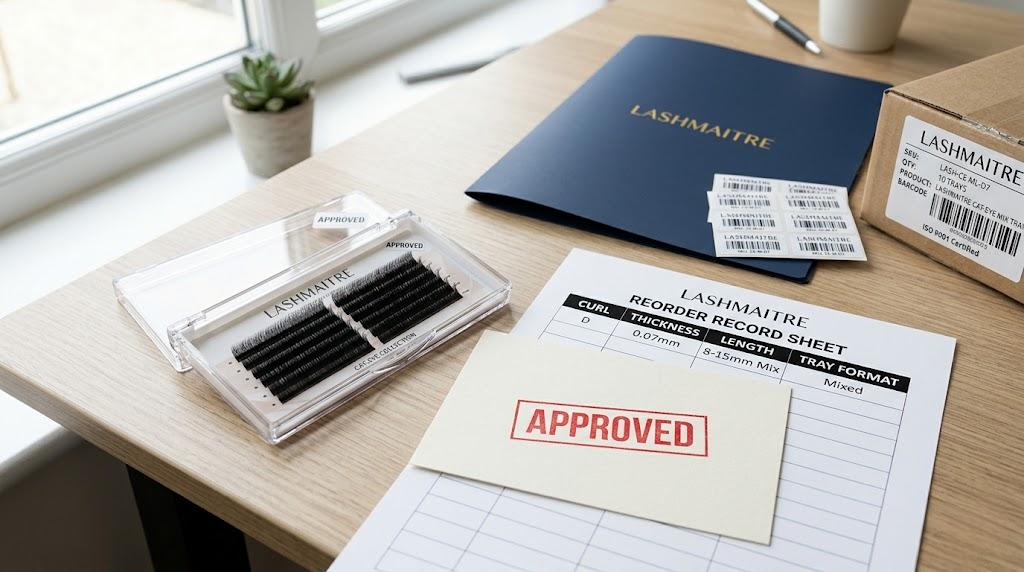
A wispy tray is easy to describe loosely and hard to repeat without records. The approved sample, tray card, packaging proof and reorder file should stay together.
Before scaling, save:
- Approved physical tray.
- Spike/base length notes.
- Curl and thickness record.
- Mixed or single length tray format.
- Label artwork proof.
- Barcode or carton label.
- QC notes.
- Reorder code.
Wispy Lash Extension Sample Inquiry Checklist
Send a clear request before sample production:
- desired wispy style: natural, classic, hybrid, volume or premade support
- target buyer: salon chain, distributor, private label brand or academy
- spike length
- base length
- curl
- thickness
- mixed or single length tray format
- packaging and label needs
- first sample quantity or MOQ target
- feedback timeline
Buyers can use the wholesale lash extensions inquiry page to send the planned range and request a sample path.
FAQ
What are wispy lash extensions in wholesale tray planning?
Wispy lash extensions are trays or ranges built around visible texture, usually with longer spike sections and softer base rows. In wholesale planning, the buyer should record the spike length, base length, curl, thickness, tray format and label wording.
Are wispy lash trays the same as mixed length trays?
Not always. Many wispy trays use mixed lengths, but a normal mixed tray is not automatically wispy. Wispy planning needs a clear spike/base structure or texture direction.
Should buyers sample classic wispy or volume wispy first?
The better first sample depends on the buyer's catalog and customers. A new brand may start with one simple classic or hybrid wispy tray. A volume-focused distributor may test a volume or premade support option after core demand is known.
How should spike lengths be recorded for reorder control?
Record the spike length, base length, curl, thickness, tray format, label wording and approved sample photo. Keep the record with the tray card proof and reorder code.
What should a wispy lash extension sample request include?
Include the intended style, spike/base plan, curl, thickness, tray format, private label needs, sample quantity and expected first-order quantity. Clear specs reduce sample revisions.
Soft CTA
If you are planning wispy lash extensions for a wholesale catalog, private label launch, salon chain or academy kit, send LASHMAITRE your spike/base plan, curl, thickness, tray format and packaging needs. The team can help turn the trend into a controlled sample and reorder file.

Lash Maitre: Your Trusted Partner in Eyelash extension Solutions
Lash Maitre is dedicated to providing professional insights and tips in the eyelash extension industry. Sharing the latest trends, techniques, and product knowledge, Lash Maitre helps lash artists and enthusiasts enhance their skills, stay inspired, and achieve the perfect lash experience.