Lash Pilot Order: 8 Decisions Before Scaling to Full MOQ
Share
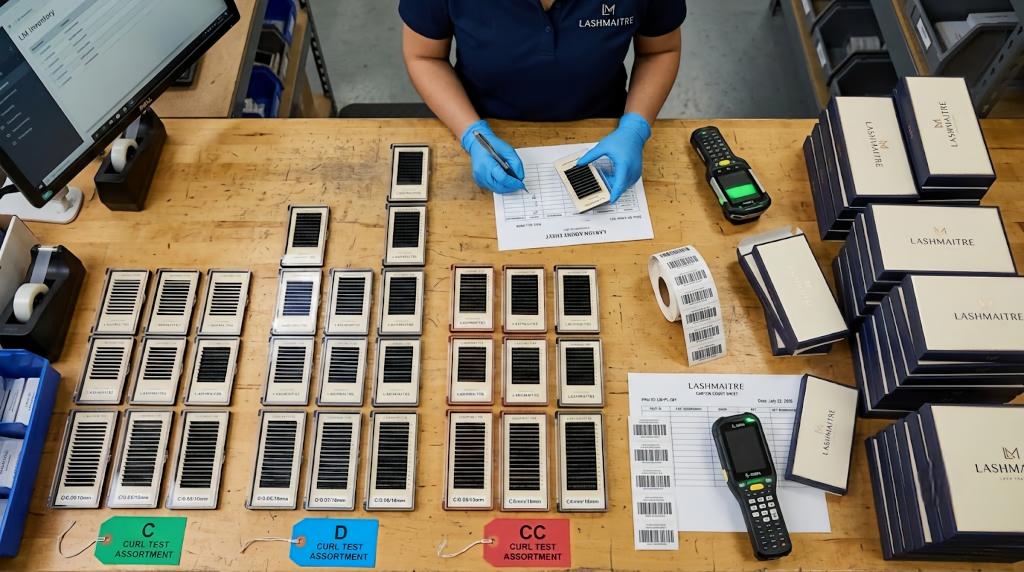
A lash pilot order is a limited production order used to test the supplier's normal workflow before a buyer commits to a larger MOQ or repeat program. Unlike a development sample, it should exercise production, packaging, quantity control, documents, shipment and receiving. The result is a written scale, repeat or stop decision based on evidence rather than a successful-looking sample alone.
What Is a Lash Pilot Order?
A pilot order is a deliberately limited commercial or pre-commercial run with defined learning goals and acceptance criteria. It can function as a small batch lash order or controlled lash test order when the buyer needs evidence before scale. For wholesale lashes, it can confirm whether the approved design survives normal production and whether the complete order process works at a manageable quantity.
The quantity should be large enough to reveal normal variation and process handoffs, yet small enough to limit exposure if the product, packaging or logistics fail. The correct number depends on SKU count, packaging complexity, production method and the buyer's launch plan.
Sample vs Pilot Order vs Full MOQ
| Stage | Main purpose | Typical evidence | Decision |
|---|---|---|---|
| Development sample | Refine product and packaging | Sample comments and artwork revisions | Revise or approve |
| Approved reference | Freeze the comparison standard | Signed specification and controlled sample | Authorize pilot setup |
| Lash pilot order | Test the normal end-to-end workflow | Production, QC, packing, shipping and receiving records | Scale, repeat or stop |
| Full MOQ order | Deliver the planned commercial quantity | Standard order and quality records | Accept and replenish |
A buyer seeking a low-MOQ lash order may use the first commercial quantity as the pilot, but the learning objectives and decision rules should still be written before ordering.
8 Decisions to Define Before the Pilot
1. State the business and process objective
Decide what uncertainty the pilot must reduce. Examples include production consistency, mixed-length accuracy, branded packaging fit, barcode workflow, transit protection, receiving speed or customer response.
Avoid a vague objective such as “test the supplier.” A pilot that tries to answer every possible question usually produces unclear evidence. List the few decisions that must be made after the order.
2. Limit the SKU and variant scope
Choose representative products instead of placing every curl, diameter, length and box version into the first run. Include the variants that create meaningful production or packing differences.
A clear pilot matrix might cover one core seller, one technically demanding style and one packaging variant. Document excluded SKUs so a successful pilot is not incorrectly treated as proof for untested configurations.
3. Set a quantity that can expose normal variation
The pilot quantity must fit the learning objective. A handful of hand-selected trays may be enough for design approval but not for evaluating production consistency, packing accuracy or shipping damage.
Discuss the supplier's carton multiple, line setup, material minimums and lash order quantity tolerance. Record whether the pilot quantity is an exception and whether the full order will use different commercial terms.
4. Require normal production materials and workflow
Use the intended fiber, tray, strip, adhesive system, labels, packaging and standard work route. If the supplier uses special handling for the pilot, document it and decide whether that method can scale.
The pilot should also use the planned approvals and quality gates, including first article release, in-process checks and final inspection. Otherwise, it tests a demonstration route rather than the production system.
5. Define acceptance criteria before ordering
Connect the pilot to the approved specification, defect rules, sampling plan, packaging requirements and quantity tolerance. Include measurable success criteria for the pilot's objectives.
| Pilot objective | Evidence to collect | Example decision rule |
|---|---|---|
| Product consistency | Inspection results by SKU and lot | Critical defects absent; agreed limits met |
| Packaging protection | Packing photos and arrival condition | No systematic tray or box damage |
| Quantity accuracy | Packed, shipped and received counts | Variance within written tolerance |
| Label traceability | Barcode scans and lot reconciliation | SKU and lot trace from unit to carton |
| Workflow timing | Approval, production and shipping dates | Milestones achieved or causes documented |
Use criteria appropriate to the order rather than copying examples without buyer approval.
6. Test the complete packaging and document set
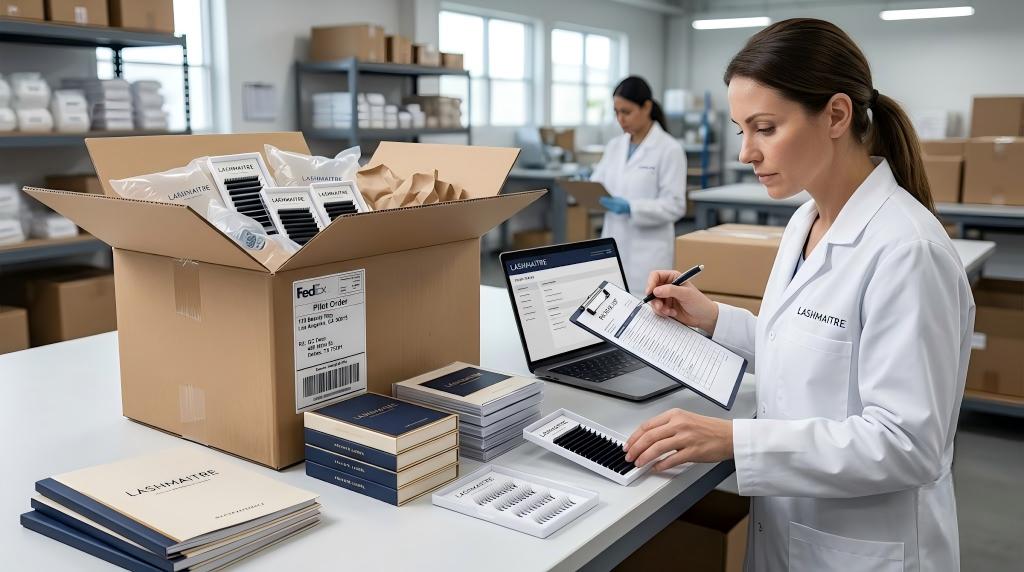
Include the intended tray card, primary box, barcode, carton label, packing list and commercial documents. Confirm names, addresses, SKU codes and quantities across each record.
The pilot is the right time to find mismatches between beautiful retail packaging and the less visible warehouse documents that control receiving. The private-label lash extensions process should freeze active artwork revisions before the run.
7. Plan shipment and receiving evidence
Use a shipment method representative of the planned business when practical. Record carton configuration, protective materials, gross weight, carrier events and arrival condition.
At receipt, quarantine the pilot until identity, count, condition and required QC checks are complete. A structured lash receiving inspection separates supplier performance from damage or mixing discovered after delivery.
8. Predefine scale, repeat and stop decisions
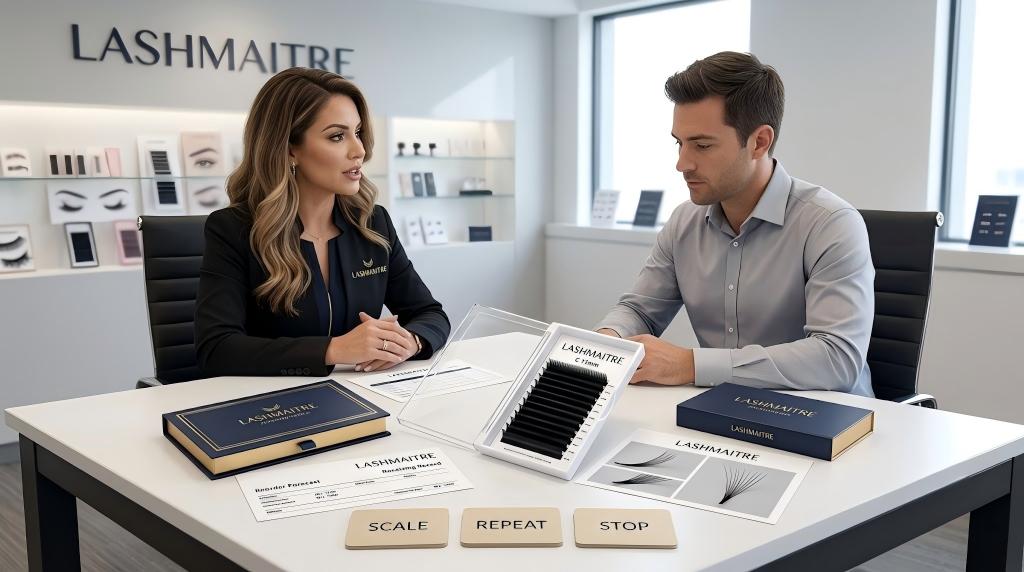
Name the decision owner and meeting date before the pilot starts. Use three clear outcomes:
- Scale: requirements are met and the next order can move to the planned MOQ.
- Repeat: a limited correction or unanswered risk requires another controlled pilot.
- Stop: the product, process or commercial model does not justify further commitment.
A conditional scale decision should list open actions, owners and deadlines. Do not let a deadline convert unresolved findings into silent acceptance.
Pilot Order Control Plan
| Phase | Buyer control | Supplier evidence |
|---|---|---|
| Prepare | Objective, SKU scope and approved masters | Feasibility, materials and route confirmation |
| Order | Quantity, tolerance, price and milestones | Order acknowledgment and production plan |
| Produce | Release gates and defect criteria | First article and in-process records |
| Pack | Artwork, barcode and carton plan | Packing photos, counts and label scans |
| Ship | Route, documents and notification | Tracking, packing list and shipment records |
| Receive | Quarantine, count, condition and inspection | Response to discrepancies |
| Review | Scale, repeat or stop rules | Corrective actions and next-order readiness |
This plan can accompany a wholesale lash extensions inquiry so the supplier understands that the small quantity is a controlled evaluation rather than an informal sample purchase.
Common Pilot Order Mistakes
Treating the pilot as a discounted full launch
A pilot has a learning purpose and limited exposure. Launch deadlines should not remove the inspection, receiving and review gates that make the exercise useful.
Changing several variables without traceability
If product, packaging, material and shipping method all change at once, record each revision and its evidence. Otherwise, the team cannot explain success or failure.
Judging only the best-looking units
Review the lot and process evidence, not a curated presentation. Quantity, labeling, packing and arrival condition can matter as much as the appearance of one tray.
Scaling before closing corrective actions
Define which actions must close before the full MOQ purchase order. A verbal promise is not a substitute for an owner, due date and verification method.
Frequently Asked Questions (FAQ)
Is a lash pilot order the same as a sample order?
No. A sample order mainly supports product or packaging approval. A pilot order tests a limited but representative end-to-end production and fulfillment workflow before scale.
How large should a lash pilot order be?
There is no universal number. It should be large enough to exercise normal production, packing and shipment while limiting risk. Consider SKU coverage, carton multiples, material minimums and the decisions the pilot must support.
Can a pilot order be below the supplier's MOQ?
Sometimes, if the supplier agrees to an exception, setup fee or different unit price. Record whether the exception applies only to the pilot and what commercial terms will govern the full order. LASHMAITRE also offers information on MOQ 50 wholesale lash extensions.
What happens after a failed pilot?
Classify the failure, contain affected product, determine corrective action and decide whether evidence supports a repeat pilot or stopping the program. Do not scale until the relevant risks have been verified as controlled.
Scale Only After the Workflow Is Proven
A useful lash pilot order tests more than the tray. It connects a representative production run with specifications, packaging, quantity, documents, shipment and receiving evidence. When the buyer defines the objective and decision rules in advance, the result provides a defensible basis to scale, repeat or stop. Start with controlled lash extension samples and carry the approved reference into the pilot order.
Authority reference: ASCM – Supply Chain Management reference document.

Lash Maitre: Your Trusted Partner in Eyelash extension Solutions
Lash Maitre is dedicated to providing professional insights and tips in the eyelash extension industry. Sharing the latest trends, techniques, and product knowledge, Lash Maitre helps lash artists and enthusiasts enhance their skills, stay inspired, and achieve the perfect lash experience.