Lash Receiving Inspection: 10 Critical Checks
Share
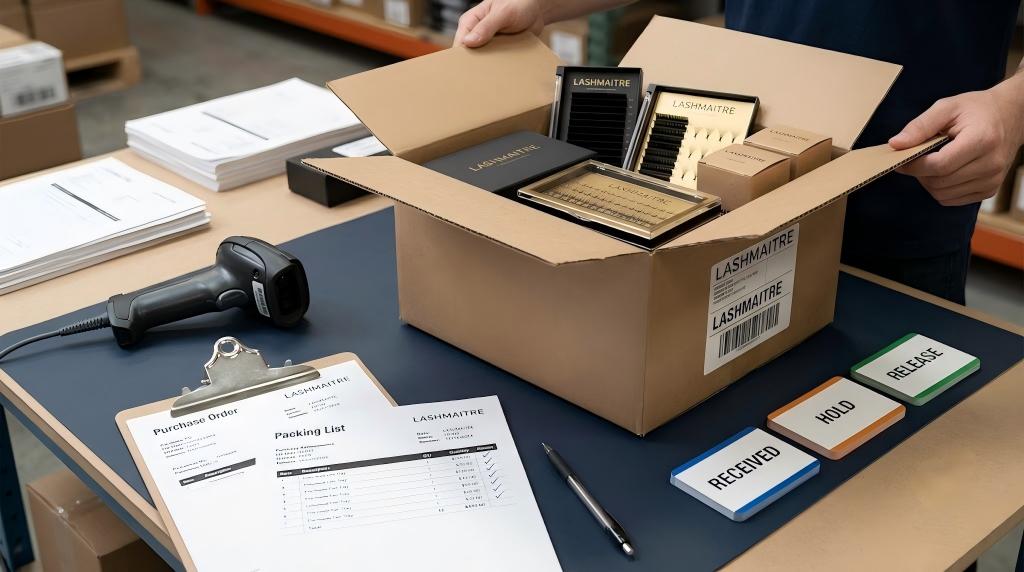
A lash receiving inspection should confirm that the shipment, cartons, SKUs, quantities, packaging revisions and sampled products match the approved order before stock is released. Record discrepancies at receipt, separate questionable units and assign a documented disposition instead of allowing unverified inventory into available stock.
Use the process as an incoming lash inspection record and a lash shipment receiving checklist, while product-specific acceptance criteria remain in the approved specification.
Buyer Summary
- Match the delivery to the purchase order, packing list and approved specifications.
- Check outer cartons before opening them and preserve evidence of transport damage.
- Count by SKU, batch and packaging revision rather than only by total cartons.
- Use a defined sample plan for product and packaging inspection.
- Quarantine discrepancies until an authorized release, rework, claim or rejection decision.
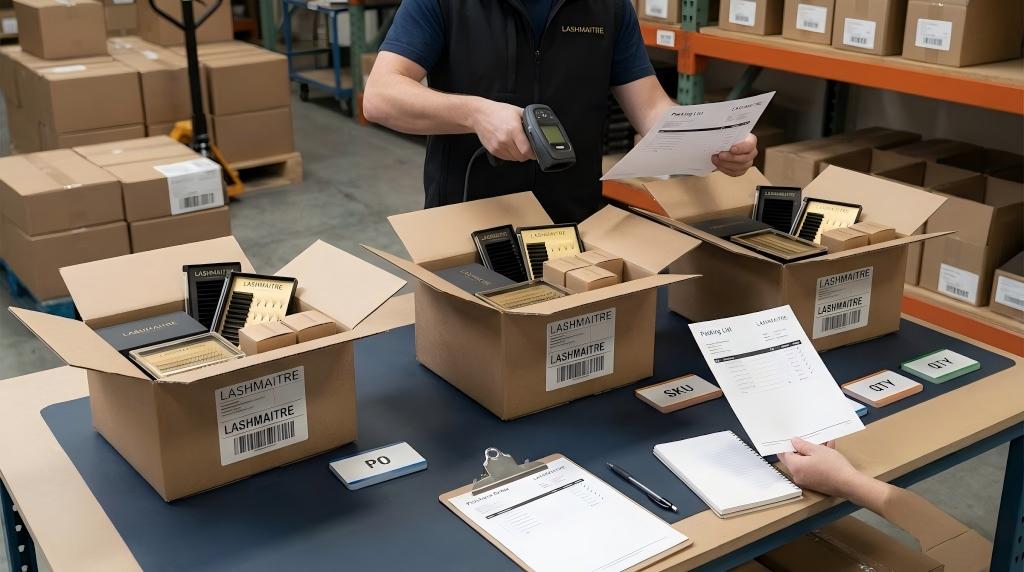
Why Receiving Is a Control Point
Once a shipment is mixed into normal inventory, it becomes harder to prove whether a discrepancy came from the supplier, carrier, warehouse count or a later internal movement. Receiving is therefore the cleanest moment to connect the physical goods with the documents and approved reference.
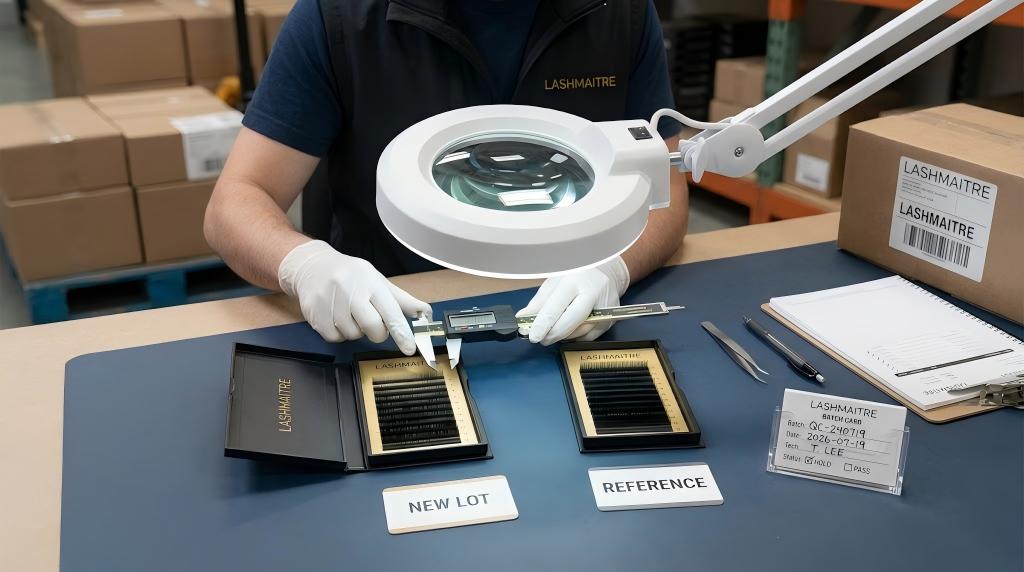
Oracle's receiving documentation describes inspection routing as a process in which received goods are inspected before delivery into inventory. That source is general enterprise guidance, not a lash-industry standard, but the control principle is relevant: inspection and acceptance should occur before normal stock release. See Oracle Receiving Inspection.
For private-label lashes, identity includes more than the fiber tray. Curl, thickness, length map, tray card, box artwork, barcode and batch marking can all affect whether the goods are usable for the intended order.
Ten Checks in a Lash Receiving Inspection
| Check | What to verify | Evidence to retain |
|---|---|---|
| 1. Delivery identity | Supplier, purchase order, shipment reference and receiving date | Packing list and receiving record |
| 2. Carton condition | Crushing, water exposure, punctures, broken seals or relabeling | Photos before opening |
| 3. Carton count | Delivered cartons versus packing list | Signed count and shortage note |
| 4. SKU identity | Curl, thickness, length format, color/fiber and tray format | SKU label and approved specification |
| 5. Quantity | Units per carton and total received by SKU | Count sheet or scan export |
| 6. Batch traceability | Lot or batch identity across cartons and units | Label images and batch log |
| 7. Packaging revision | Box, tray card, label, barcode and insert version | Approved artwork reference |
| 8. Product appearance | Curl consistency, strip alignment, cleanliness and visible damage | Sample photos and inspection record |
| 9. Measurement | Applicable strip, band, length or packaging dimensions | Calibrated result and tolerance |
| 10. Disposition | Release, hold, rework, claim or reject | Named approver, date and reason |
The exact tests and sample size should be defined by the buyer's approved specification and risk plan. Do not invent a universal acceptance limit for every lash style.
Reconcile Documents Before Opening Every Carton
Begin with the purchase order, packing list, approved specification and any approved change notice. Compare the supplier name, order number, ship-to location, carton count and SKU summary. If the shipment reference is missing or inconsistent, record the exception before breaking down the load.
Photograph visible carton damage while the shipment remains identifiable. Do not discard labels, seals or packing material needed for a carrier or supplier investigation. A clean evidence chain helps the buyer distinguish freight damage from manufacturing or packing issues.
Count by SKU, Batch and Revision
A total-unit count can still hide a serious allocation error. For example, 1,000 trays may be correct overall while the mix between C curl and D curl is wrong. Count the exact commercial identity used in the catalog and warehouse system.
Keep these fields together:
- SKU and product specification.
- Batch or lot.
- Packaging/artwork revision.
- Carton number and units per carton.
- Released, held and damaged quantity.
This structure also supports the lash order quantity verification guide when ordered, accepted, shipped and invoiced quantities need to reconcile.
Inspect a Defined Sample
Do not select only the easiest carton or the most attractive tray. Use a documented plan that spreads samples across cartons, positions and batches. Record how the sample was chosen so the result can be repeated or challenged.
Compare the sample against the approved reference and specification, not against memory. Check the attributes that matter for that SKU: curl profile, thickness, length sequence, strip alignment, band presentation, tray/card fit, print content and barcode readability. The LASHMAITRE lash quality control process explains how buyers can connect inspection evidence with a controlled QC route.
Hold Discrepancies Outside Available Stock
If the count, identity, packaging or inspected quality does not match, separate the affected units physically and in the inventory record. A hold label should state the SKU, batch, quantity, reason, date and owner. Avoid vague notes such as “check later.”
| Finding | Immediate control | Possible next decision |
|---|---|---|
| Short shipment | Recount and confirm carton trail | Claim, credit or balance shipment |
| Wrong SKU mix | Segregate affected cartons | Return, exchange or approved reallocation |
| Old packaging revision | Hold by revision | Rework, controlled use or rejection |
| Visible damage | Preserve photos and samples | Carrier claim, supplier claim or disposal review |
| Quality deviation | Expand review under written plan | Release, conditional acceptance, rework or reject |
Release only the quantity supported by the receiving and inspection record. If part of the shipment passes and part remains held, show both quantities clearly.
Connect Receiving to Reorder Planning
Receiving records become the opening balance for future cycle counts, aging reports and reorder decisions. A shortage that is never entered as a discrepancy can later look like unexplained inventory shrinkage. An old packaging version received as current stock can create apparent excess during a SKU review.
Before the next order, compare usable stock with actual demand and supplier commitments. The MOQ 50 wholesale lash planning page can help buyers build a controlled mix without assuming every variation needs the same depth.
Lash Receiving Inspection FAQ
What is a lash receiving inspection?
It is the documented check performed when wholesale lash goods arrive, before they enter available inventory. It reconciles shipment documents, cartons, quantities, product identity, packaging revisions, batch information and defined quality attributes.
Should every tray be inspected?
Not necessarily. The buyer should define a sample plan based on risk, specification and agreement. Every carton and quantity may still require identity and count controls even when detailed product testing uses samples.
What happens when received quantity is wrong?
Recount by SKU and carton, preserve the packing and scan evidence, record accepted and discrepant quantities separately, then obtain an authorized claim, credit, replacement or other disposition.
When can received lashes be released to stock?
Release them after required document, count, identity, packaging and quality checks pass and an authorized person records the accepted quantity. Keep unresolved units on hold.
Build a Receiving Brief With LASHMAITRE
Prepare your SKU list, approved specifications, packaging revisions, quantity plan and required receiving evidence. Then use the wholesale lash inquiry page to discuss a private-label supply and QC brief with LASHMAITRE.

Lash Maitre: Your Trusted Partner in Eyelash extension Solutions
Lash Maitre is dedicated to providing professional insights and tips in the eyelash extension industry. Sharing the latest trends, techniques, and product knowledge, Lash Maitre helps lash artists and enthusiasts enhance their skills, stay inspired, and achieve the perfect lash experience.