Lash Supplier Quality Agreement: 10 Critical Buyer Responsibilities
Share
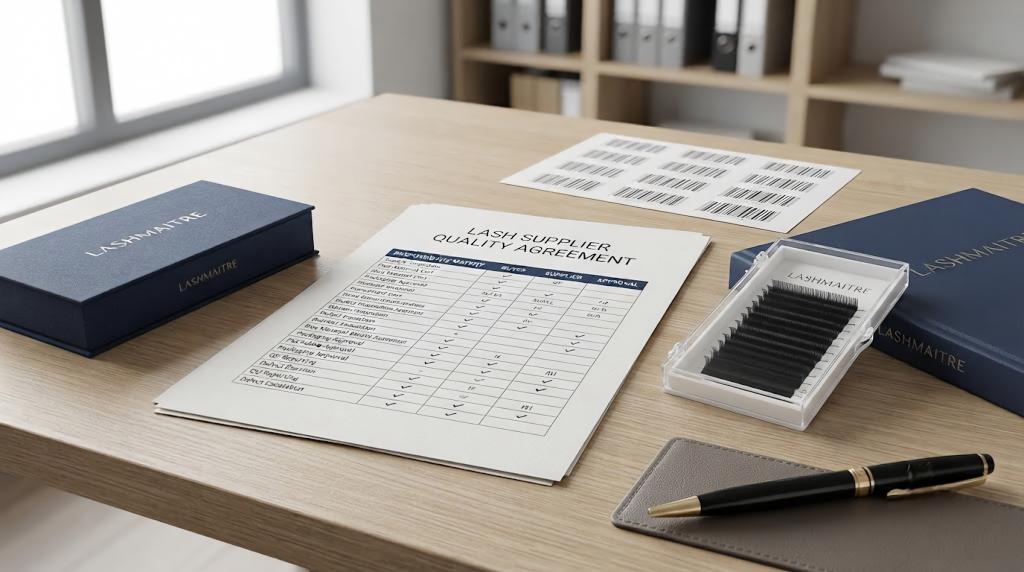
A lash supplier quality agreement should assign who prepares, reviews, approves, records and escalates every important quality activity. It can define approved references, inspection, batch release, change control, deviations, traceability and complaint handling, but it should support—not replace—the purchase contract, product specification or legal review.
Lash Supplier Quality Agreement Buyer Summary
- Identify the products, sites, parties and documents covered.
- Assign one owner and one approver for every quality activity.
- Keep commercial terms and product specifications connected but distinguishable.
- Define how samples, proofs, inspection results and release decisions are recorded.
- Require advance notice for material, process, packaging and source changes.
- State how deviations, complaints, recalls and record retention are handled.
What a Quality Agreement Does
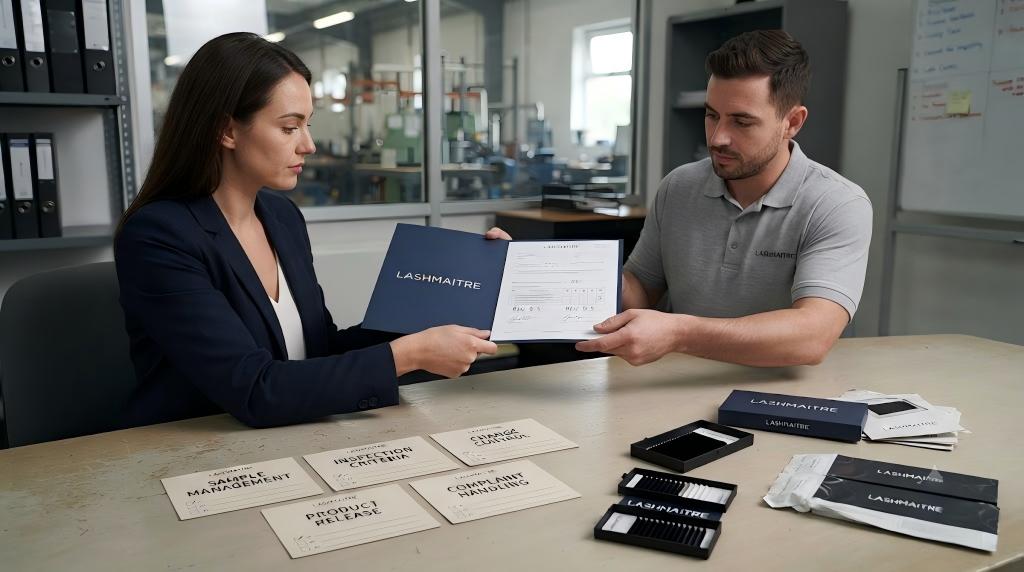
A product specification says what the lash tray, fiber, curl, length map, label or package should be. A purchase order says what the buyer is ordering and under which commercial terms. A quality agreement defines how the buyer and supplier manage the activities that protect those requirements.
The FDA's contract manufacturing quality-agreement guidance explains how parties can assign manufacturing and quality responsibilities in regulated drug manufacturing. Lash extensions are not automatically subject to drug CGMP rules, so this source is used only as a general responsibility-design reference. Its useful transferable principle is that roles, communication, changes, deviations and records should be clearly assigned rather than assumed.
Quality Agreement vs Commercial Contract
| Document | Main purpose | Typical lash-order content |
|---|---|---|
| Commercial contract or supply terms | Legal and commercial relationship | Price, payment, delivery, liability, confidentiality and dispute terms |
| Purchase order | Specific buying instruction | SKU, quantity, price, destination and requested timing |
| Product specification | Measurable product requirements | Curl, thickness, length, fiber, finish, tray, label and packaging criteria |
| Quality agreement | Responsibility and control system | Approval, inspection, release, change, deviation, traceability and complaint roles |

The documents should reference one another where useful, but conflicts need a stated resolution rule. Buyers should obtain qualified legal advice for contract enforceability and market-specific obligations.
Ten Responsibilities to Define
| Responsibility | Questions to settle | Evidence |
|---|---|---|
| 1. Scope and contacts | Which products, sites and teams are covered? | Product appendix and contact matrix |
| 2. Approved references | Which sample, specification and artwork version control production? | Signed sample code and revision list |
| 3. Incoming materials | Who approves fibers, tray cards, boxes and labels? | Supplier records and approved component references |
| 4. Process and in-process checks | Which controls protect curl, length, pickup, bases and cleanliness? | Process checklist and in-process records |
| 5. Inspection and sampling | Who defines the lot, sample and defect classes? | Inspection plan and report |
| 6. Batch release | Who can release, hold, rework or reject? | Signed disposition record |
| 7. Change control | Which changes require notice, samples or buyer approval? | Supplier change notice and approval |
| 8. Deviation control | How is a one-time exception requested and limited? | Deviation request and expiry |
| 9. Traceability and records | Which SKU, batch, carton and shipment records are retained? | Traceability file and retention schedule |
| 10. Complaints and corrective action | How are affected stock, root cause and recurrence controlled? | Complaint and corrective-action file |
Build a Responsibility Matrix
For each activity, identify who performs the work, who approves it, who must be consulted and who receives the final record. A simple matrix prevents statements such as “QC will check it” from hiding which QC team, which document and which release authority are involved.
For example, the supplier may prepare an inspection report, the buyer may approve a deviation, and both parties may retain the final decision. The buyer should not assume that paying for inspection automatically assigns final release authority. State the decision path.
The lash AQL inspection plan can support the sampling section, while the lash specification tolerance guide helps define measurable acceptance limits.
Connect Approved Samples to Production Records
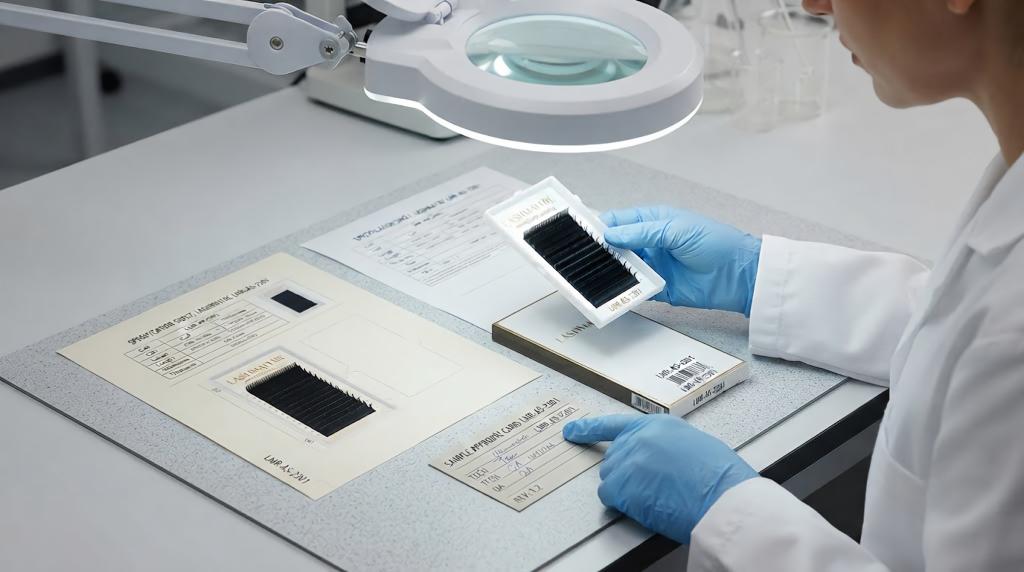
A private label quality agreement should identify how the approved sample is coded, stored and connected to the production SKU. It should also define whether approval covers product only or includes tray card, box, label, insert and master-carton details.
Use revision-controlled references. If the buyer approves a new packaging proof but the supplier retains an older sample, the agreement should state which reference governs and how obsolete versions are marked or removed from use.
Define Change and Deviation Routes
A planned permanent change should follow change control. The supplier should identify the affected SKU, old and proposed condition, reason, effective batch and required re-approval. The lash supplier change notice guide provides a practical buyer checklist.
A temporary exception should not silently update the master specification. It needs a defined scope, evidence, one-time disposition and expiry. Repeated deviations may indicate that the specification, process or corrective action needs formal review.
Set Record and Escalation Rules
The agreement should name normal contacts and escalation contacts for quality, production and commercial decisions. Define response windows according to issue severity rather than promising unrealistic instant answers for every question.
Record retention should cover the period needed for reorders, complaints, traceability and any applicable market requirements. At minimum, connect the approved reference, production batch, inspection, carton/shipment records and final disposition. The lash product recall traceability guide shows how those records support recipient and shipment reconciliation.
How to Apply a Lash Supplier Quality Agreement
- Issue the lash supplier quality agreement with a controlled revision number.
- Link the lash supplier quality agreement to the approved sample and specification.
- Use the lash supplier quality agreement to assign inspection and release authority.
- Require written change and deviation notices under the lash supplier quality agreement.
- Review the lash supplier quality agreement when products, packaging or responsibilities change.
Lash Supplier Quality Agreement FAQ
Does every small lash order need a separate quality agreement?
Not always. The level of formality should match product complexity, private-label risk, order frequency and the buyer's quality system. A concise responsibility checklist may be sufficient for a simple trial order, while repeated or complex OEM work may justify a fuller agreement.
Who should sign a supplier quality agreement?
Use authorized representatives who understand the covered activities. Quality, procurement, production and legal stakeholders may need input. The agreement should identify decision authority rather than relying only on job titles.
Can the agreement reference an approved sample?
Yes. Record the sample code, approval date, applicable SKU and version. Clarify whether it is a visual reference, a measurable specification reference or both.
How often should the agreement be revised?
Review it when products, sites, processes, packaging, responsibilities or relevant requirements change, and at a scheduled interval suitable for the relationship. Preserve revision history and effective dates.
Assign Quality Responsibility Before Production
A lash supplier quality agreement is most useful before the first complex private-label order or before repeated orders expose unclear responsibilities. Review LASHMAITRE's lash quality control approach and private label lash extension options, then send the SKU, approved-reference and packaging requirements through the wholesale lash inquiry page for a quality-planning discussion.
The quality agreement should also assign final lash batch release authority and define which specifications, inspection records, deviations and packaging evidence must be complete before shipment.

Lash Maitre: Your Trusted Partner in Eyelash extension Solutions
Lash Maitre is dedicated to providing professional insights and tips in the eyelash extension industry. Sharing the latest trends, techniques, and product knowledge, Lash Maitre helps lash artists and enthusiasts enhance their skills, stay inspired, and achieve the perfect lash experience.