Lash Product Recall Traceability: 8 Critical Records
Share
A lash product recall traceability plan connects every affected SKU and batch to its approved specification, production evidence, packed cartons, shipment documents and direct recipients. It should let the business trace backward to the supplier and production lot, trace forward to customers or distributors, isolate stock, document decisions and verify the final disposition.
Lash Recall Traceability Buyer Summary
- Assign stable SKU, batch or lot identifiers before shipment.
- Link production output to the packaging version and carton record.
- Record which lots went into each shipment and which direct recipients received them.
- Keep incident, hold, notification and disposition decisions in one controlled file.
- Test the traceability path before a real issue occurs.
GS1's official traceability explanation organizes traceability around Critical Tracking Events, such as receiving, packing and shipping, and Key Data Elements that explain who, what, where, when and why. A lash brand does not need to copy every GS1 technology to use the underlying control principle: events and identifiers must connect.
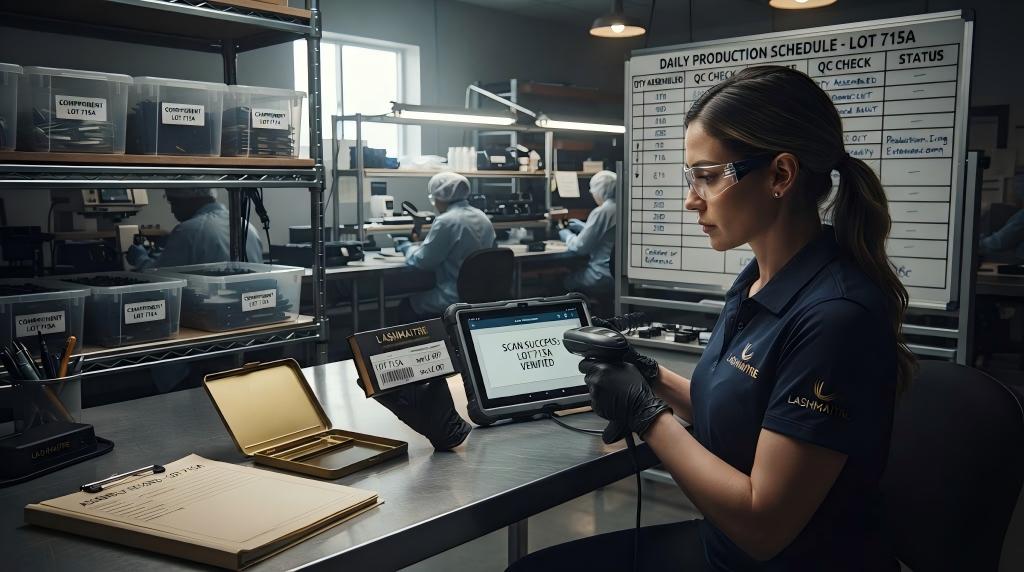
For private label lash production, connect branded packaging versions to the LASHMAITRE quality-control path before goods leave the factory; otherwise the product, lot and shipment records can separate at the exact point the buyer needs them.
Recall Rules Depend on Product and Market
Do not assume every lash item, adhesive, remover or accessory has the same legal status. Requirements can depend on product design, claims, ingredients, destination, seller role and reported hazard.
The U.S. Consumer Product Safety Commission provides official recall guidance for products within its jurisdiction. In the EU, the General Product Safety Regulation includes product-safety processes and traceability duties for covered economic operators. Other markets and product categories have different authorities and duties. Obtain market-specific regulatory or legal advice when an actual safety concern arises. This article addresses operational traceability, not a legal conclusion that a recall is required.
Eight Records in a Lash Recall File
| Record | Minimum connection | Recall use |
|---|---|---|
| Product master | SKU, description, specification and approved sample | Identifies the affected product |
| Lot/batch record | Batch ID, date, line/site and quantity | Defines production scope |
| Component record | Fiber, strip, tray, label, box or chemical lot where relevant | Traces possible source |
| Packaging record | Artwork version, barcode and carton aggregation | Locates branded units |
| Release record | Inspection, test, hold and approval evidence | Shows release basis |
| Shipment record | Cartons, dates, carrier and destination | Tracks movement |
| Recipient record | Direct customer, distributor or warehouse and quantity | Supports forward contact |
| Incident/disposition log | Complaint, assessment, notice, return, destruction or correction | Documents action and closure |
Connect SKU, Batch and Packaging Version
A product name alone is too broad. The same lash style may exist in several curls, thicknesses, length maps, tray formats and artwork versions.
Create a controlled connection among:
- commercial SKU;
- approved sample or specification code;
- production batch or lot;
- packaging version;
- barcode or other item identifier;
- inner-pack and master-carton identity;
- production and release dates;
- quantity produced, held, released and shipped.
Use the lash batch ID record to keep the same identifier across production, quality and reorder records.
Trace Back and Trace Forward
Backward traceability answers: Which supplier, site, production lot, component and approved reference produced this unit?
Forward traceability answers: Which shipments, warehouses, distributors or direct customers received units from the affected lot?
GS1's global framework describes a practical one-up, one-down capability: each party should be able to identify its direct source and direct recipient. The brand may need deeper downstream information depending on contracts, market rules and distribution structure.
Build Carton-to-Shipment Aggregation
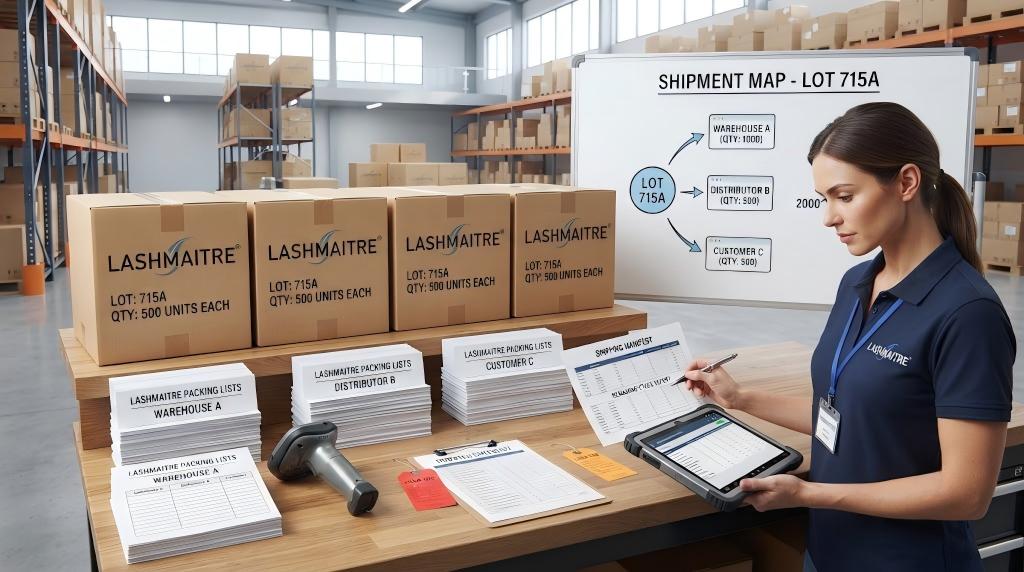
If possible, record which inner packs belong to each master carton and which cartons belong to each shipment. At minimum, the packing list should connect:
- carton identifier;
- SKU and quantity;
- lot or batch;
- packaging version;
- purchase order;
- shipment or tracking reference;
- destination and recipient;
- ship date.
The lash carton-label guide helps keep these identifiers readable at receiving and reorder stages.
What Happens When an Incident Is Reported?
Do not jump from one complaint to a public conclusion without assessment, but do not allow missing records to delay containment.
A controlled sequence is:
- Capture product, lot, photos, description, date and reporter.
- Place related internal and in-transit stock on hold where appropriate.
- Verify the affected SKU, batch and distribution scope.
- Escalate safety or regulatory questions to the responsible expert or authority.
- Decide correction, notification, withdrawal, recall or another action under applicable rules.
- Contact direct recipients using the shipment record.
- Track returned, corrected, destroyed or otherwise dispositioned units.
- Investigate cause and verify corrective action.
Use a supplier corrective action request when the response requires root-cause and recurrence-prevention evidence.
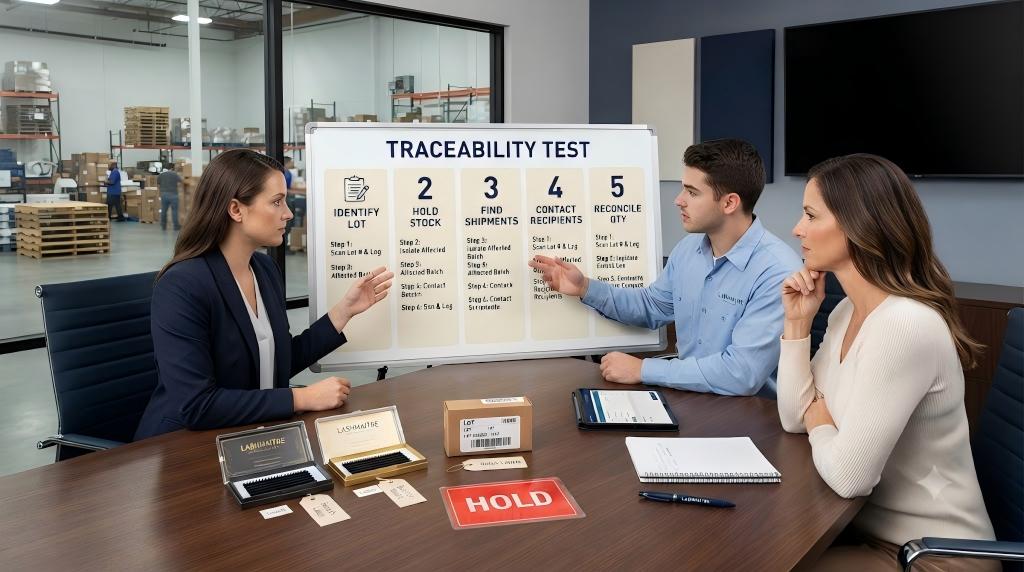
Test the Plan Before an Incident
Run a traceability exercise using one selected lot. Ask the team to produce the approved reference, production record, carton list, shipments and direct-recipient quantities. Reconcile produced, held, released, shipped and remaining stock.
Record missing links and retrieval time. The objective is not a decorative policy; it is a working evidence chain that people can use under pressure.
Lash Product Recall Traceability FAQ
Does a barcode alone create traceability?
No. A barcode can carry an identifier, but the business still needs records linking that identifier to the batch, packaging, shipment and recipient.
Should every unit have a unique serial number?
Not always. The necessary level may be SKU, lot, carton or unit depending on product risk, market rules and business design. Choose a level that can isolate affected scope without losing practical control.
How long should lash traceability records be kept?
Set retention according to applicable law, product life, distribution time, contract requirements and complaint risk. Do not use one generic period for every product and destination.
Is a withdrawal the same as a recall?
Terms and legal consequences vary by authority and situation. Use the terminology required by the responsible market authority and qualified adviser; keep the operational traceability file available for any action.
Build the Evidence Chain Before Launch
Recall readiness begins before the first shipment. Send LASHMAITRE the SKU structure, approved sample codes, batch-ID plan, packaging versions and destination markets through the wholesale lash inquiry page so production and shipment records can be aligned from the start.
Recall readiness depends on stable production identity, so define a controlled lash lot numbering system that links each code to product, production, inspection, release, carton and shipment evidence.

Lash Maitre: Your Trusted Partner in Eyelash extension Solutions
Lash Maitre is dedicated to providing professional insights and tips in the eyelash extension industry. Sharing the latest trends, techniques, and product knowledge, Lash Maitre helps lash artists and enthusiasts enhance their skills, stay inspired, and achieve the perfect lash experience.