Lash Production Deviation Approval: 7 Critical Buyer Checks
Share
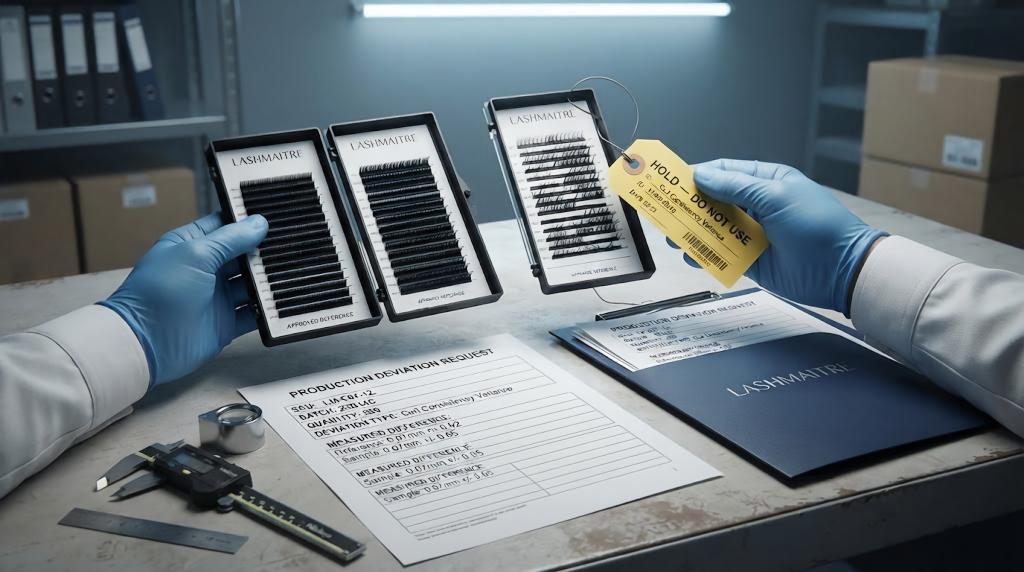
A lash production deviation approval should be limited to a clearly identified SKU, batch, quantity, measured difference and time period. Approve an exception only after reviewing buyer risk, inspection evidence, disposition, expiry and corrective action. A one-time approval must not silently revise the master specification or authorize future batches.
Lash Production Deviation Approval Buyer Summary
- Hold affected stock while the request is reviewed.
- Compare the measured condition with the approved reference and tolerance.
- Identify every affected SKU, batch, carton and quantity.
- Decide whether the issue changes use, appearance, packaging, labeling or traceability.
- Record accept, rework, partial accept or reject by authorized decision-makers.
- Give every approval an expiry and link repeated issues to corrective action.
Deviation, Change and Defect Are Different Decisions
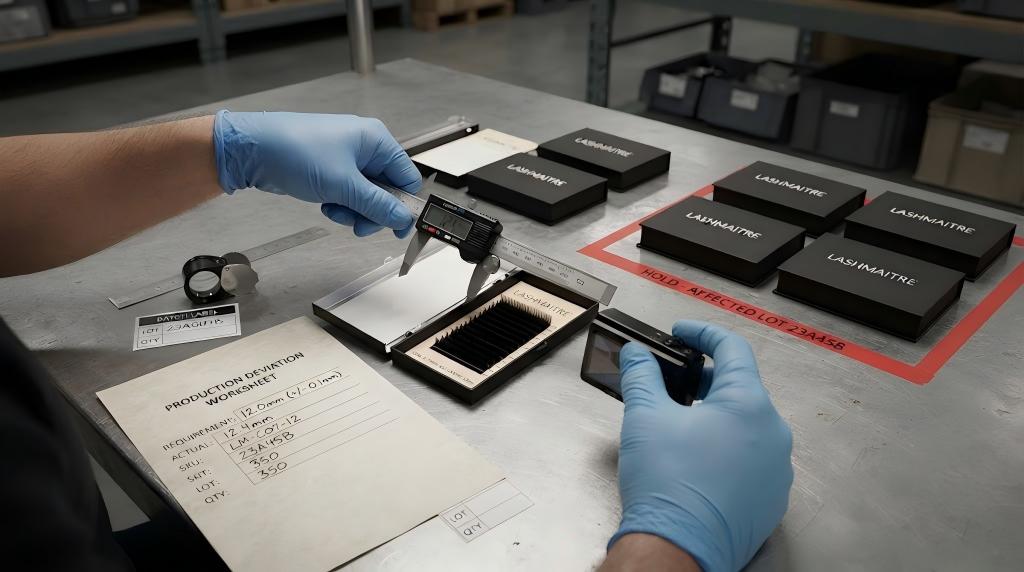
A deviation is a departure from an approved instruction or established standard for a defined scope. A change modifies the approved future condition. A defect or nonconformance describes a product or result that does not meet the requirement. The buyer may receive a deviation request because a nonconforming batch has already been produced, but the approval decision should not erase the nonconformance record.
The FDA's Q7A quality-management guidance states within its pharmaceutical scope that deviations from established procedures should be documented and explained, with critical deviations investigated. Lash products are not pharmaceutical APIs, so the guidance is cited only as a quality-system analogy for documentation and investigation—not as a claim that drug GMP applies.
The UK Ministry of Defence's quality guidance for nonconforming product and concessions likewise illustrates a general procurement principle: identify the nonconformance, assess impact, obtain authorized approval when required, control the scope and retain records. Its defence requirements do not automatically apply to lash orders.
Seven Checks in a Lash Order Deviation Request
| Check | Buyer question | Required record |
|---|---|---|
| 1. Requirement | Which approved sample, specification or proof is not met? | Reference code and revision |
| 2. Measured difference | What is the actual result and how was it measured? | Inspection data and photos |
| 3. Affected scope | Which SKU, batch, cartons and quantity are involved? | Traceable quantity list |
| 4. Risk and use | Does the difference affect application, appearance, labeling, packaging or market use? | Written risk review |
| 5. Containment | Is affected stock identified and separated? | Hold status and location |
| 6. Disposition | Accept, rework, partial accept, sort or reject? | Authorized decision |
| 7. Expiry and prevention | Is this one-time, and how will recurrence be prevented? | Expiry, owner and corrective action |
Compare Against the Approved Tolerance
The request should quote the exact requirement. “Curl slightly different” is not enough. Identify the approved curl reference, measurement or visual standard, observed condition, sample size and affected quantity.
If measurable tolerances have not been defined, use the approved sample and specification file to determine whether additional sampling or buyer application testing is needed. The lash specification tolerance guide can help buyers define future acceptance limits.
Review Risk by Intended Use
A deviation may be visually minor but commercially material. Ask whether the difference affects:
- pickup, fan opening, base shape or application;
- curl, thickness, length map, finish or tray consistency;
- logo, barcode, warnings, legal text or destination labels;
- package fit, protection or shipping performance;
- batch, SKU or carton traceability;
- marketplace listing, launch photography or brand consistency.
Do not approve a batch solely because rework would delay shipment. Delivery urgency is one factor, not proof that product risk is acceptable.
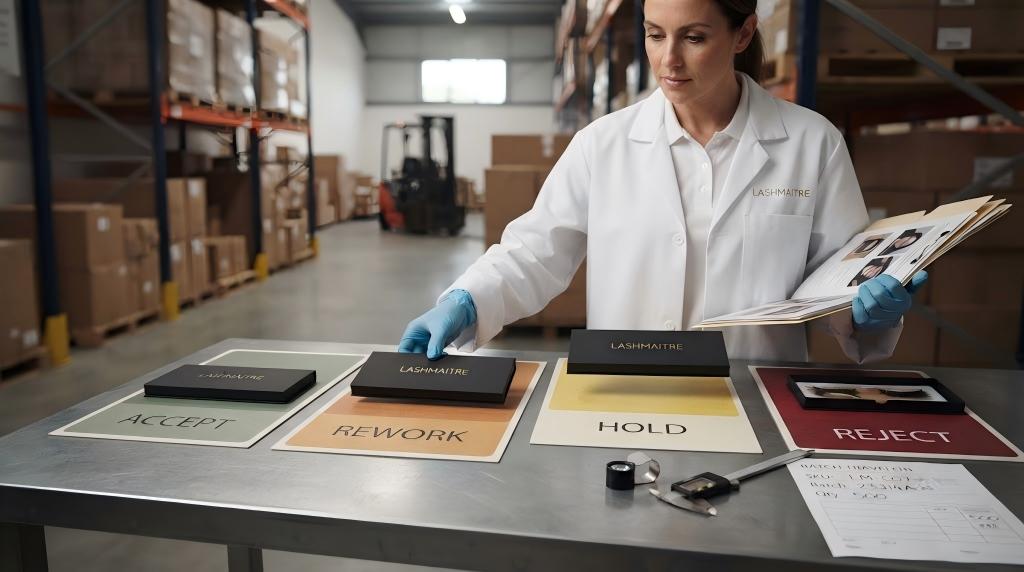
Choose Accept, Rework, Partial Accept or Reject
| Decision | Use when | Control needed |
|---|---|---|
| Accept as a one-time exception | The difference is understood, limited and acceptable for intended use | Written scope, expiry and receiving notice |
| Rework | A controlled action can restore the approved requirement | Rework instruction and re-inspection |
| Sort and partial accept | Conforming units can be reliably separated | Sorting rule, quantity reconciliation and new labels |
| Hold | Evidence or authority is incomplete | Segregated stock and review deadline |
| Reject | Risk is unacceptable or the lot cannot be controlled | Disposition, replacement or credit record |
When physical replacement is needed, the lash order replacement or credit guide helps document the commercial resolution after the quality decision.
Keep the Approval One-Time
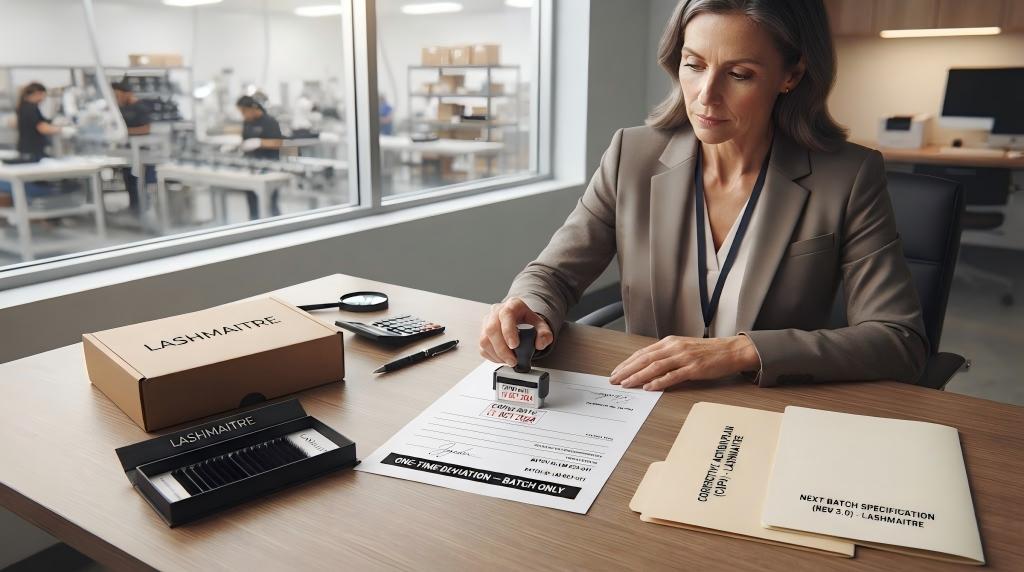
The record should state that approval applies only to the listed batch, quantity and decision. It should not change the next purchase order or approved specification unless a separate change process is completed.
If the supplier expects the condition to continue, require a lash supplier change notice with samples, impact review and buyer approval. If the issue reveals a process failure, use a supplier corrective action request to contain stock, determine root cause and verify prevention.
How to Control a Lash Production Deviation Approval
- Open a lash production deviation approval before releasing affected stock.
- Limit the lash production deviation approval to identified SKUs, lots and quantities.
- Attach measurements and risk evidence to the lash production deviation approval.
- Record the authorized disposition and expiry on the lash production deviation approval.
- Close the lash production deviation approval without changing future specifications silently.
Lash Production Deviation Approval FAQ
Is a deviation approval the same as a specification change?
No. A deviation approval normally covers a defined one-time exception. A specification change updates the approved future requirement and should follow formal change control.
Can only part of a lash batch be accepted?
Yes, when conforming and nonconforming units can be reliably identified, separated, counted and relabeled without damaging traceability. Record the accepted and rejected quantities by SKU and batch.
Who should approve a production deviation?
Use the buyer and supplier representatives authorized for the affected quality and commercial decisions. The required authority should be defined before an urgent exception occurs.
Does accepting one deviation waive future requirements?
It should not. State the applicable batch, quantity, expiry and one-time nature. Future orders remain subject to the approved specification unless a separate written change is approved.
Review the Exception Before Shipment Release
Do not let an urgent shipping date turn an undocumented exception into a permanent standard. Send LASHMAITRE the approved sample code, SKU, tolerance, affected quantity, inspection evidence and deadline through the wholesale lash inquiry page and review the lash quality control page for a documented batch decision.

Lash Maitre: Your Trusted Partner in Eyelash extension Solutions
Lash Maitre is dedicated to providing professional insights and tips in the eyelash extension industry. Sharing the latest trends, techniques, and product knowledge, Lash Maitre helps lash artists and enthusiasts enhance their skills, stay inspired, and achieve the perfect lash experience.