Premade Fans vs Handmade: 8 Best Sample Checks
Share
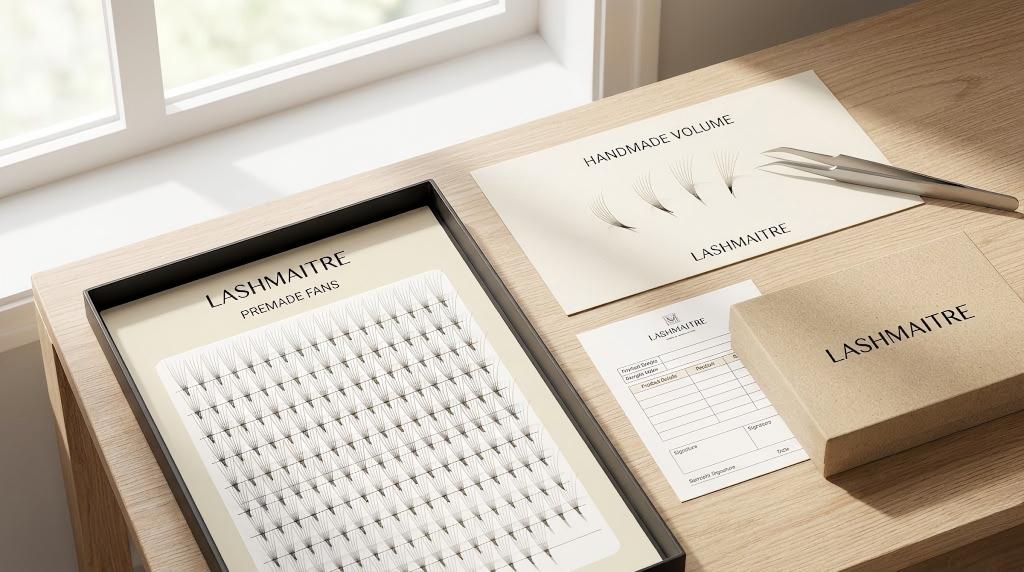
Premade fans lashes vs handmade volume lashes is not only a lash artist technique question. For wholesale buyers, it is a product line decision. The choice affects sample testing, tray specs, private label wording, reorder consistency, and how easily salons can repeat the same service result after the first approved batch.
Premade Fans vs Handmade Buyer Summary
Premade fans vs handmade volume lashes should be compared with the same curl, thickness, length, pickup test, tray label and reorder record before a buyer approves a wholesale range.
Premade fans are prepared before application, so the artist picks up a ready fan from the tray. Handmade volume lashes are created by the artist during service from individual volume lash fibers. Both can work, but they solve different business problems. A salon chain may want speed and predictable service time. A distributor may need consistent tray specs and simple labels. A premium studio may prefer artist control and handmade customization.
Before adding either option to a wholesale range, compare real samples under the same curl, thickness, length and service scenario. Use LASHMAITRE's premade fans wholesale page for product context, then request lash extension samples before planning MOQ 50 or private label packaging.
Premade Fans vs Handmade: Which Should Buyers Choose?
Premade fans are usually better when the buyer needs faster service, consistent fan shape, easier training, and repeatable tray specs. Handmade volume lashes are usually better when the salon depends on advanced artist control, custom fan width, and highly flexible styling. For private label buyers, the safest first step is to sample both and record fan base, spread, pickup, curl, weight, tray label and reorder details before bulk approval.
1. Compare Service Speed Without Ignoring Skill Level
The obvious advantage of premade fans is speed. A ready fan removes the time needed to build every fan by hand during the appointment. This can help salons manage fuller service menus, faster fills, and more predictable appointment lengths.
But speed only matters if the tray performs well. A poor premade fan that collapses during pickup, has a bulky base, or varies across rows can slow the artist down again. When reviewing samples, ask artists to test:
- pickup from the strip
- fan stability after removal
- placement speed
- whether the fan twists or opens too widely
- whether the base feels bulky on the lash line
Do not approve a premade fan only because it looks tidy in the tray. The real test is whether multiple artists can use it consistently during sample work.
2. Inspect Fan Base Shape
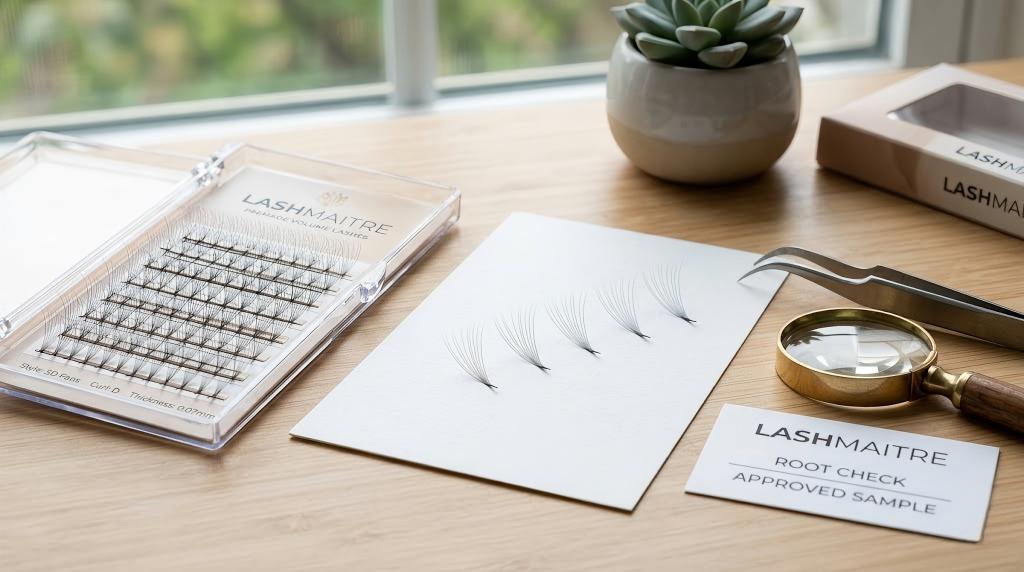
Fan base is the first quality gate for premade fans. A narrow, tapered base usually supports easier placement and cleaner appearance. A blunt or thick base can feel heavy, look dark at the attachment point, or create concerns during artist testing.
Use a simple sample card:
| Check | Premade Fan Sample | Handmade Volume Reference |
|---|---|---|
| Base width | Narrow / medium / bulky | Artist controlled |
| Base shape | Pointed / flat / blunt | Varies by artist |
| Glue dot or bond point | Clean / visible / heavy | Depends on handmade technique |
| Pickup stability | Stable / twists / collapses | Depends on fiber and artist |
This is also where buyers should connect the article with premade fan base quality. If base quality is not stable, the product is not ready for private label approval.
3. Compare Fan Spread and Symmetry
Premade fans should not look like random clusters. The fan should open with a controlled spread, and similar fans in the same tray should look close enough for repeatable service work. Check rows from different tray positions, not only the first visible row.
For handmade volume, symmetry depends more on the artist. That gives more creative control, but it also makes the result harder to standardize across a multi-artist salon or distributor customer base.
For wholesale planning, ask:
- Does the fan spread match the target service menu?
- Are 3D, 5D or 10D options visually distinct?
- Does the tray show consistent rows from left to right?
- Can the supplier repeat the same fan style in the next batch?
This is where sample approval and reorder control matter more than marketing names.
4. Test Curl, Thickness and Weight Together
A premade fan is not just a fan count. The weight depends on thickness, fan dimension, fiber type, base shape and length. For example, a 5D fan in 0.05 mm does not behave like a 5D fan in 0.07 mm. Longer lengths can also feel heavier, especially in fuller fan counts.
For handmade volume lashes, artists may adjust fan size by natural lash condition. That flexibility is useful, but it is harder to turn into a clean SKU. If a buyer sells trays rather than salon services, the tray spec must be clear.
A wholesale sample record should include:
- fan dimension
- curl
- thickness
- length range
- tray format
- row count
- fiber finish
- base type
- approved sample ID
Those details should later connect to MOQ planning, tray labels and packaging proof.
5. Review Pickup Feel With More Than One Artist
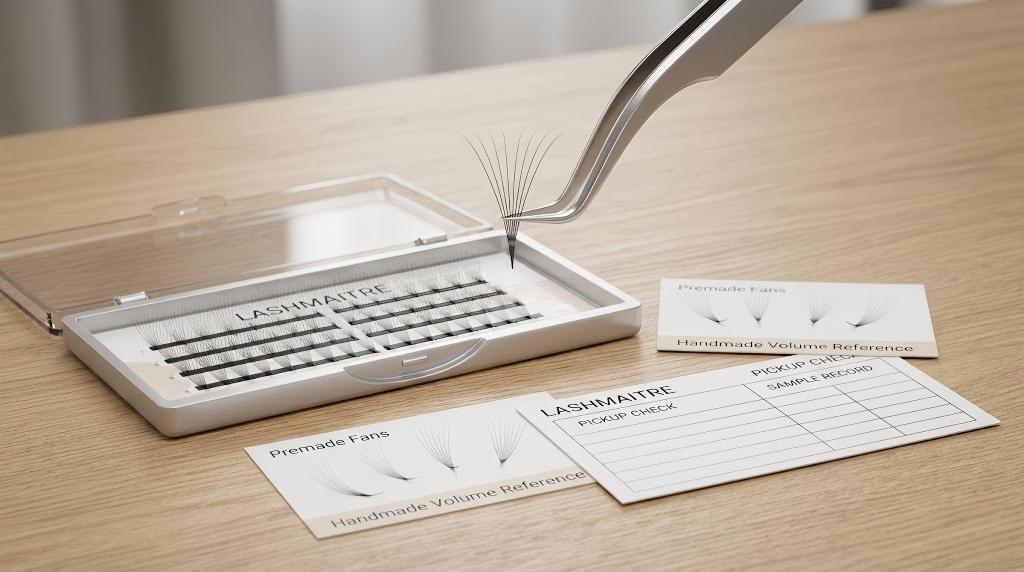
One artist's opinion is useful, but not enough. If the buyer serves multiple salons or distributors, sample feedback should come from more than one technician. Different pickup styles can reveal different problems.
Ask testers to record:
- whether the fan releases cleanly
- whether the base stays intact
- whether fibers separate unevenly
- whether fan direction stays controlled
- whether strip tackiness feels too strong or too weak
If two artists report opposite results, the buyer may need a second sample batch or clearer application instructions. A supplier brief should include those notes before the first wholesale order.
6. Keep Product Claims Careful
Product copy for premade fans should stay accurate. FDA notes that false eyelashes, eyelash extensions and their adhesives are considered cosmetic products and must follow cosmetic safety and labeling requirements. Buyers should also avoid packaging claims that sound medical, permanent, or unsupported.
Use practical wording:
- "sample-approved fan base"
- "consistent tray rows"
- "private label ready"
- "available for MOQ planning"
- "designed for professional lash use"
Avoid claims that cannot be proven across every user or market. FDA cosmetics labeling claims guidance is useful when reviewing packaging copy and website language before printing private label materials.
7. Decide Whether Premade Fans Need Their Own SKU
Some buyers should treat premade fans as a separate hero product line. Others should use them as a support category inside a broader volume lash range.
Premade fans may deserve their own SKU range when:
- the buyer sells to salons that need faster volume services
- the fan base quality is stable
- sample testers approve pickup feel
- packaging can explain fan dimension clearly
- reorder files can lock the approved specs
Handmade volume trays may remain the stronger core product when:
- the buyer serves advanced artists
- customization is the selling point
- single-length depth matters more than speed
- salons already train artists in volume fanning
For new brands, a focused first range is usually safer than launching too many fan dimensions at once.
8. Connect Sample Approval to Reorder Control
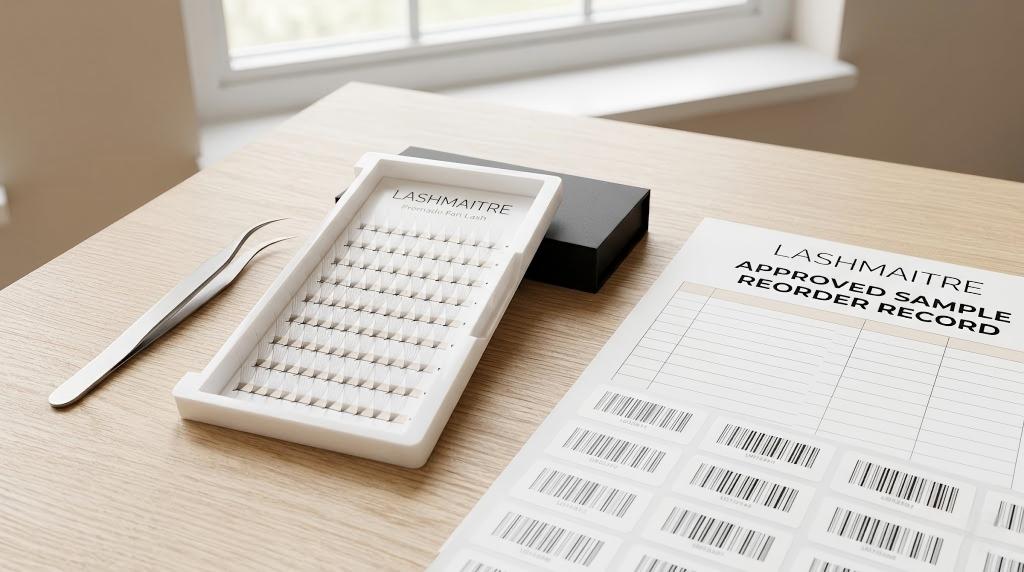
The biggest mistake is approving a beautiful first sample without saving the details needed for repeat orders. A sample tray, a photo and a short message are not enough.
Before placing the first bulk order, record:
- approved fan dimension
- curl, thickness and length
- tray row layout
- label wording
- packaging version
- batch reference
- artist test notes
- reorder quantity plan
This connects the product decision with lash quality control, private label lash extensions, custom lash packaging and wholesale inquiry preparation. The goal is not only to choose premade or handmade. The goal is to make the approved product repeatable.
Premade Fans vs Handmade Quick Review
- Use premade fans vs handmade testing to compare speed, artist control and tray repeatability.
- Use premade fans vs handmade testing to record fan base, spread, pickup feel and row consistency.
- Use premade fans vs handmade testing to connect the approved sample with labels, packaging and reorder records.
Premade Fans vs Handmade Link Path
After the premade fans vs handmade sample test, buyers should connect the approved tray to the premade fans wholesale range, request lash extension samples, review lash quality control, and prepare private label lash extensions, custom lash packaging, and a wholesale lash extensions inquiry.
For product wording, buyers can also review the FDA eye cosmetic safety page and the ISO 22716 cosmetics GMP standard page before approving private label claims.
FAQ: Premade Fans vs Handmade
Are premade fans better than handmade volume lashes?
Premade fans are better for speed, training consistency and repeatable tray specs. Handmade volume lashes are better for artist control and custom fan creation. Wholesale buyers should sample both before choosing a range.
What should buyers check in premade fan samples?
Check fan base, spread, curl consistency, pickup feel, thickness, length range, row quality, tray labels and packaging fit before approving a premade fan for bulk order.
Should a new lash brand launch premade fans first?
A new brand can include premade fans if the target buyer wants faster volume services. For many brands, a safer first range includes classic trays, volume or premade fan samples, and a focused private label packaging plan.
How should premade fans be named on private label trays?
Use clear specs such as fan dimension, curl, thickness and length range. Marketing names can be added, but the reorder record must keep the physical product details.
CTA
Send LASHMAITRE your target fan dimension, curl, thickness, length range, tray type, packaging needs and sample quantity. We can help you compare premade fan samples before MOQ 50 wholesale planning, private label packaging and repeat order approval.
—

Lash Maitre: Your Trusted Partner in Eyelash extension Solutions
Lash Maitre is dedicated to providing professional insights and tips in the eyelash extension industry. Sharing the latest trends, techniques, and product knowledge, Lash Maitre helps lash artists and enthusiasts enhance their skills, stay inspired, and achieve the perfect lash experience.