Classic vs Volume Lash Extensions: 8 Starter Range Checks for Wholesale Buyers
Share
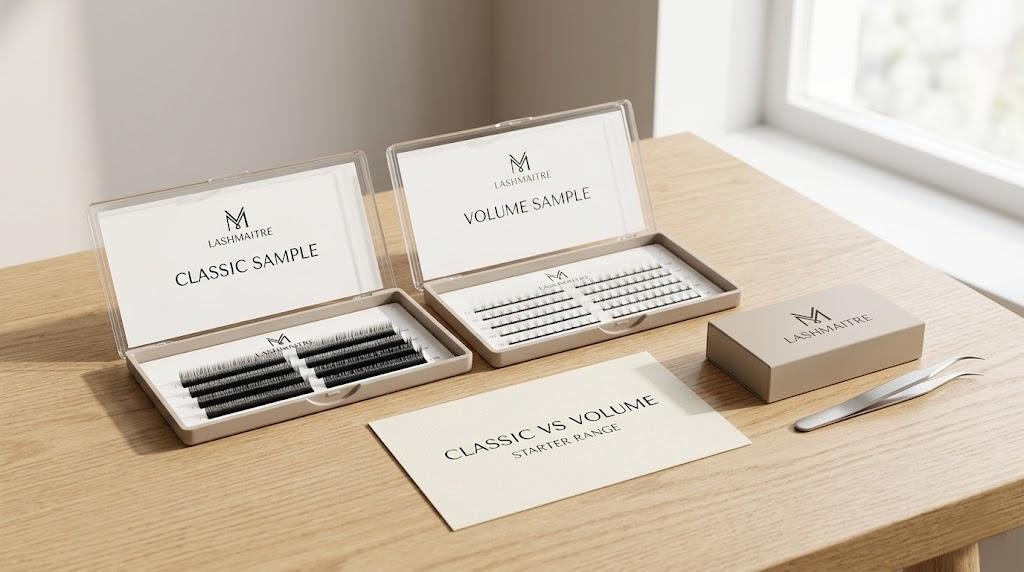
Classic vs volume lash extensions is not only a salon-service comparison. For wholesale buyers, the decision affects tray depth, sample testing, MOQ planning, label wording, artist feedback, and repeat-order records.
A new private label brand may need classic trays first because they are easier to explain, sample, and reorder. A salon chain or distributor may need volume trays earlier because their buyers expect fuller sets and more product variety. The better choice depends on buyer type, sales channel, artist skill level, sample feedback, and how much SKU depth the first order can support.
Direct answer: Classic lash extensions are usually easier for a controlled starter range because each tray is simpler to specify and reorder. Volume lash extensions can add stronger catalog value, but they require clearer planning around fan type, thickness, density, pickup feel, and sample approval before bulk orders.
What Classic and Volume Mean for a Wholesale Buyer
Classic lashes are usually planned around one extension attached to one natural lash in salon service use. For the buyer, this often means simpler tray specs: curl, thickness, length range, finish, tray type, and label wording.
Volume lashes are built for fuller sets. In wholesale buying, the word "volume" may involve handmade volume trays, premade fans, easy fans, narrow fans, wide fans, or other volume-related product formats. This makes the buying decision more complex because the buyer is not only selecting a style. The buyer is selecting a production format and a repeatable tray standard.
That is why the comparison should not stop at "classic looks natural and volume looks fuller." A better B2B comparison asks:
- Which tray family belongs in the first sample set?
- Which product is easiest for the buyer's customers to understand?
- Which tray specs can be repeated cleanly?
- Which MOQ plan avoids too many first-order SKUs?
- Which range can be labeled and reordered without confusion?
Buyers building a first product line can review LASHMAITRE's wholesale eyelash extensions page before choosing how classic and volume trays should sit inside the full catalog.
Check 1: Match the Product Type to Buyer Stage
Classic vs volume lash extensions should start with buyer stage. A new brand often needs a range that is simple to sample, easy to photograph, and easy to explain to customers. An established salon buyer may already know which thicknesses and curls are used often. A distributor may need both product families, but not with equal SKU depth at launch.
| Buyer stage | Classic range role | Volume range role |
|---|---|---|
| New private label brand | Easier first range, simpler labels | Add as a focused sample set |
| Salon buyer | Core daily service support | Needed if artists already request volume trays |
| Distributor | Stable base category | Catalog expansion and professional depth |
| Ecommerce seller | Clear product listing and starter education | Higher-value category if specs are clear |
| Academy buyer | Training-friendly core product | Add when course level supports volume work |
The safest starter plan is usually not "classic only" or "volume only." It is a controlled range that matches buyer demand. Some buyers should start with classic trays and one volume sample path. Others should build both at once but limit curls, thicknesses, and length ranges.
Check 2: Define the Tray Format Before Comparing Prices
Two supplier quotes are not comparable if the product format is different. A classic mixed tray quote cannot be compared directly with a premade fan tray quote. A handmade volume practice tray is not the same as a ready-to-sell volume tray. A quote with private label packaging is not the same as a plain stock tray quote.
Before comparing classic vs volume prices, record:
- Product family
- Curl
- Thickness
- Length range
- Tray type
- Row count
- Finish
- Fan type, if volume
- Packaging level
- MOQ and sample quantity
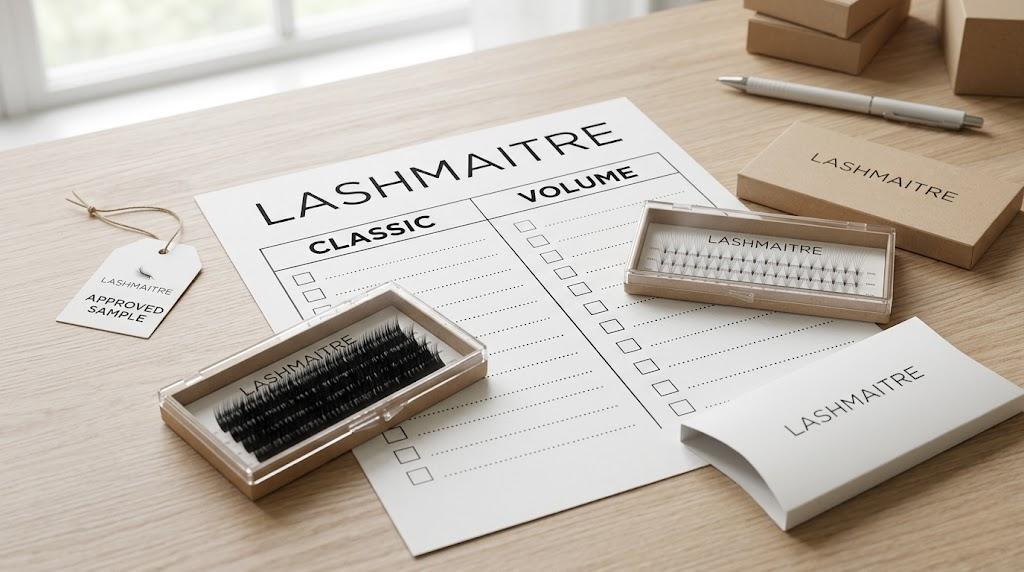
If the buyer skips these fields, the cheaper quote may simply be a different product. Use LASHMAITRE lash extension samples to compare both formats under the same sample record before bulk planning.
Check 3: Keep the First SKU Plan Small Enough to Test
Volume trays can multiply SKU count quickly because the buyer may need to choose fan style, curl, thickness, length, density, and tray structure. Classic trays can also become too broad if the buyer adds many curls and single lengths too early.
For a first wholesale order, the buyer should ask which range can create useful feedback without creating a catalog that is too heavy to manage.
| Planning question | Classic starter answer | Volume starter answer |
|---|---|---|
| How many curls are needed first? | Usually one or two core curls | One or two curls, only if buyer demand is clear |
| How many thicknesses? | One or two common thicknesses | Fewer thickness choices at first |
| Mixed or single length? | Mixed first, single length after demand | Mixed or controlled sample tray first |
| Private label now or later? | Possible if range is stable | Better after volume specs are approved |
| MOQ risk | Easier to control | Higher if fan formats multiply |
LASHMAITRE's MOQ 50 wholesale lash extensions page can help buyers test starter options before committing to a wide bulk order.
Check 4: Compare Artist Feedback Separately
Classic and volume products should not be judged with the same feedback form. Classic tray feedback often focuses on curl consistency, length use, thickness, finish, row clarity, and label accuracy. Volume feedback should also include fan spread, base shape, pickup feel, density, and whether the fan structure stays consistent across rows.
Classic sample feedback should ask:
- Does the curl match the approved reference?
- Does the thickness match the buyer's expected darkness?
- Are the rows easy to read?
- Is the length range useful for the buyer's customer base?
- Is the label easy to reorder?
Volume sample feedback should ask:
- Is the fan base clean and controlled?
- Does the spread match the intended look?
- Does pickup feel stable?
- Does the tray avoid stiff or plastic-feeling fibers?
- Can the same fan quality be repeated in bulk?
This separation is important because a volume tray can look attractive in photos but still fail artist pickup or base consistency checks. A classic tray can look simple but still fail if curl, thickness, or length labeling is unclear.
Check 5: Use Quality Control Before Bulk Approval
Classic vs volume lash extensions should both pass a written quality review before bulk orders. The buyer should not approve a sample only from a photograph or chat message.
| Quality point | Classic tray | Volume tray |
|---|---|---|
| Curl consistency | Required | Required |
| Thickness match | Required | Required, with density review |
| Row clarity | Required | Required |
| Base / root control | Less complex | Very important |
| Pickup feel | Important | Critical |
| Label accuracy | Required | Required |
| Sample-to-bulk match | Required | Required |
| Reorder record | Required | Required |
Use the LASHMAITRE lash quality control page as the broader quality checkpoint when both classic and volume trays are moving from sample approval into bulk orders.
FDA treats false eyelashes, eyelash extensions, and related adhesives as eye-area cosmetic products, so buyers should keep labels, product records, and supplier documentation organized. Reference: FDA Eye Cosmetic Safety.
Check 6: Decide How Private Label Packaging Will Explain the Range
Private label packaging should make the product range easier to buy and reorder. It should not hide important specs. Classic and volume trays may need different front-label wording, tray-card notes, or SKU codes.
For classic trays, packaging often needs clear:
- Curl
- Thickness
- Length range or exact length
- Finish
- Product family
For volume trays, packaging may also need:
- Fan type
- D-count or volume style
- Base or stem note if relevant
- Pickup or use-case note
- Batch or approved sample reference
Buyers preparing branded trays should review LASHMAITRE private label lash extensions before approving artwork. A classic tray card and a volume tray card can share the same brand system, but the spec fields should not be vague.
Check 7: Plan the Reorder Record Before Expanding
A starter range is only useful if the second order can repeat the approved sample. Classic vs volume decisions should become written records, not only product photos.
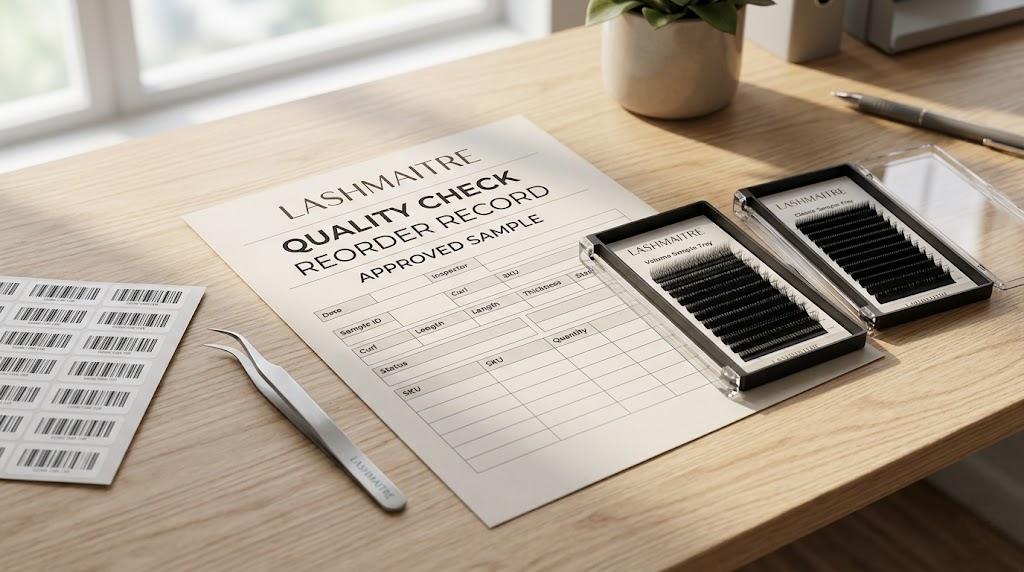
A reorder file should include:
- Product family
- Curl
- Thickness
- Length range
- Tray type
- Fan type, if volume
- Packaging version
- Approved sample ID
- First order quantity
- Correction notes
- Reorder date or reorder trigger
If the volume tray uses a specific fan structure or pickup feel, record that detail. If the classic tray has a best-selling curl and thickness, record that too. Reorder planning should protect the sample standard, not restart the comparison each time.
Check 8: Choose the First Order Mix
The first order does not need to prove every product idea. It should give the buyer enough information to decide what to keep, expand, or remove.
| If the buyer needs… | Start with… | Add later when… |
|---|---|---|
| Simple private label launch | Classic core range | Volume after sample feedback |
| Salon professional depth | Classic plus controlled volume samples | More volume SKUs after artist approval |
| Distributor catalog | Classic best sellers plus selected volume | Single lengths and deeper fan options after reorder data |
| Ecommerce content range | Clear classic range and one volume comparison | More styles after product pages prove demand |
Buyers can also read the LASHMAITRE classic lash core range planning, volume lash range planning, and volume lash starter range articles for deeper planning before final sample approval.
How LASHMAITRE Helps Buyers Compare Classic and Volume
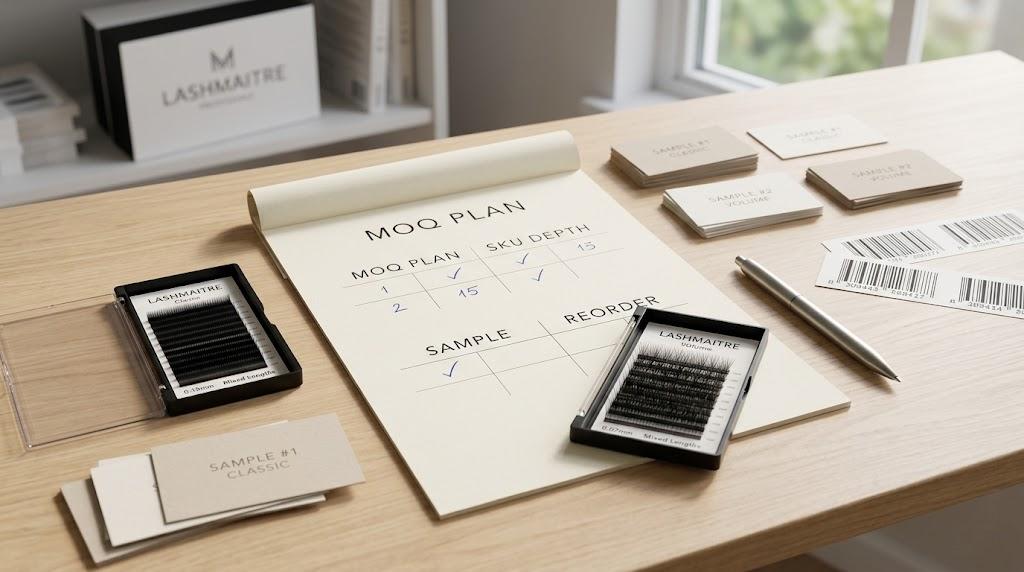
LASHMAITRE helps wholesale buyers turn product comparisons into sample-ready decisions. Instead of asking for a general quote, send a clear brief:
- Buyer type
- Target market
- Classic tray specs
- Volume tray specs
- Curl and thickness choices
- Length range
- Sample quantity
- MOQ target
- Private label needs
- Packaging reference
- Reorder plan
If you are still deciding between product families, review the types of eyelash extensions B2B guide first, then send a sample request through the wholesale lash extensions inquiry page.
FAQ: Classic vs Volume Lash Extensions
Which is better for a first wholesale lash range, classic or volume?
Classic is often easier for a controlled first wholesale range because the specs are simpler and the SKU plan is easier to manage. Volume can be added early if the buyer already has demand or artist feedback.
Should a new private label lash brand start with volume lashes?
A new brand can start with volume lashes, but it should keep the first range narrow and sample-driven. Volume products need clear fan, thickness, pickup, and quality records before bulk orders.
Do volume lash extensions require more MOQ planning?
Yes. Volume ranges can create more SKU depth because fan type, curl, thickness, density, and length choices can multiply quickly. MOQ should be planned before packaging and bulk approval.
What should buyers compare in classic and volume samples?
Buyers should compare curl, thickness, length range, tray type, row clarity, label accuracy, quality consistency, and reorder records. Volume samples should also include fan spread, base shape, and pickup feel.
Can classic and volume trays use the same private label packaging?
They can share the same brand system, but the spec fields should be different enough to avoid reorder confusion. Volume trays often need more product-format detail than classic trays.
Conclusion: Treat Classic vs Volume as a Range Planning Decision
Classic vs volume lash extensions should be decided through sample testing, MOQ planning, quality control, packaging clarity, and reorder records. Classic trays often give a cleaner first range. Volume trays can add catalog value when the buyer has enough product detail to repeat them.
Send LASHMAITRE your buyer type, classic and volume specs, target curl, thickness, length range, sample quantity, MOQ target, and private label needs. We can help turn the comparison into a sample-ready wholesale plan.

Lash Maitre: Your Trusted Partner in Eyelash extension Solutions
Lash Maitre is dedicated to providing professional insights and tips in the eyelash extension industry. Sharing the latest trends, techniques, and product knowledge, Lash Maitre helps lash artists and enthusiasts enhance their skills, stay inspired, and achieve the perfect lash experience.