Mixed Length vs Single Length Lash Trays: Wholesale Buying Guide
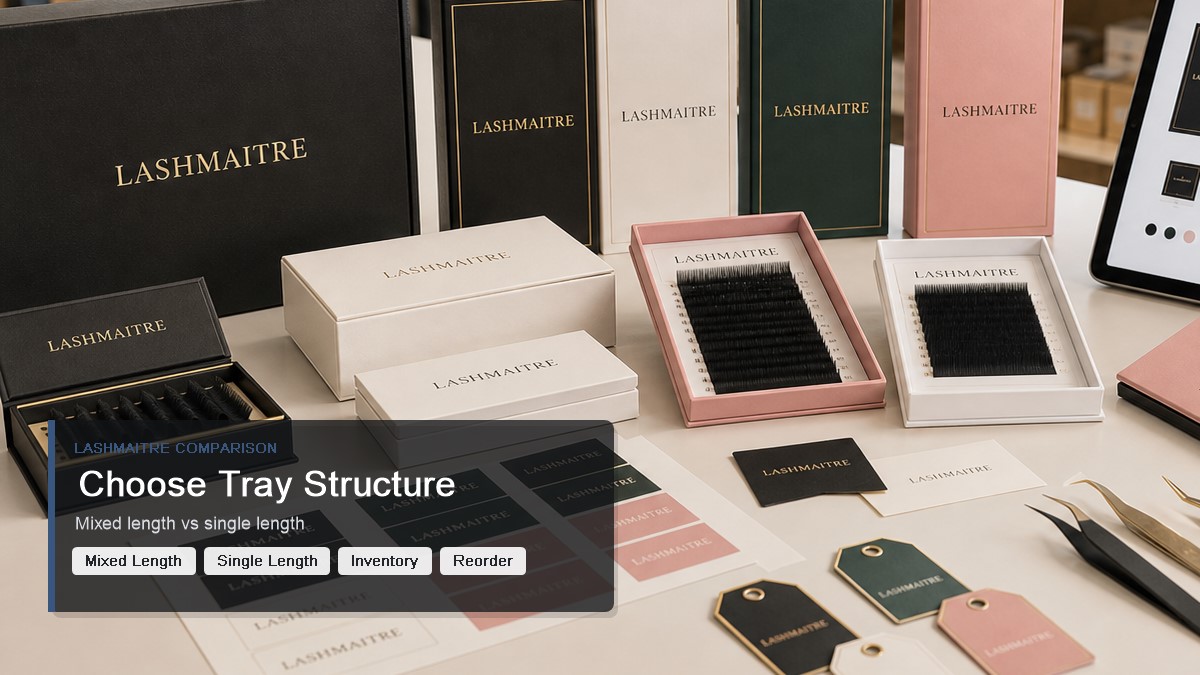
Share
A mixed length vs single length lash trays decision affects more than product selection. It changes SKU count, sample testing, inventory depth, label clarity, artist feedback, and reorder planning. For wholesale buyers, the right tray structure should match the buyer type, launch stage, sales channel, and reorder system.
Mixed length trays can simplify a starter range because each tray covers several lengths. Single length trays give artists and professional buyers more precision, but they also create more SKUs. A new lash brand, salon chain, distributor, or academy should compare both structures before placing a first bulk order. When exact-length demand is already visible, use the single length reorder plan to set tray depth, labels, replenishment triggers, and distributor reorder records.
The short answer: mixed length trays are often better for testing a focused first range, while single length trays are better when buyers need deeper professional control and proven reorder demand.
Direct answer: Mixed length trays are usually better for first sample tests, compact starter ranges, training kits, and early private label launches because they cover several lengths with fewer SKUs. Single length trays are better when reorder demand is proven, artists request exact replenishment, and the buyer can manage deeper inventory records.
For wholesale buyers, the best choice is not only about application style. It is about how many tray SKUs the buyer can test, label, store, approve, and reorder without confusion. A buyer can begin with mixed trays to learn demand, then move the best-selling lengths into single length trays when the reorder pattern is clear.
What Mixed Length Lash Trays Are
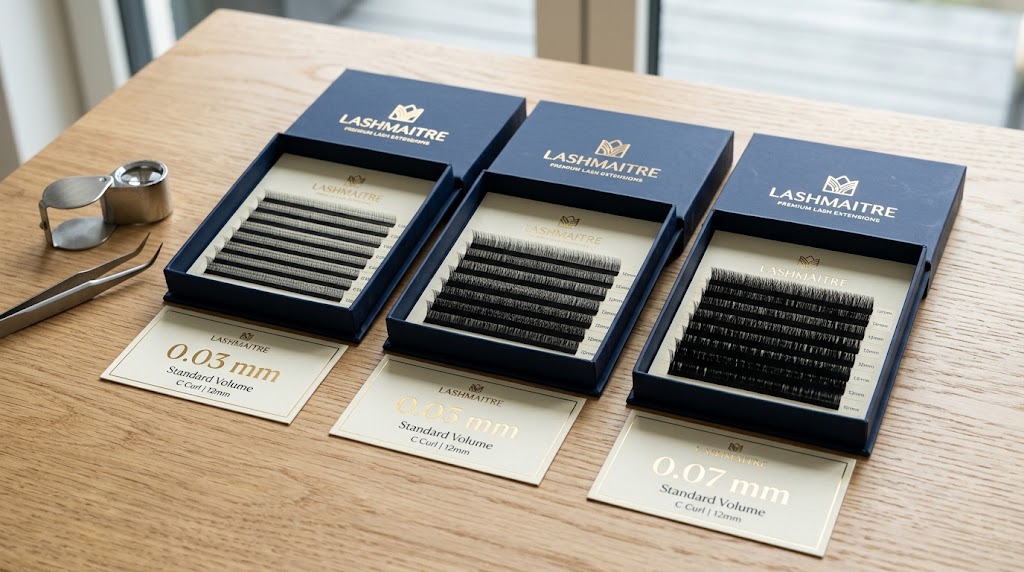
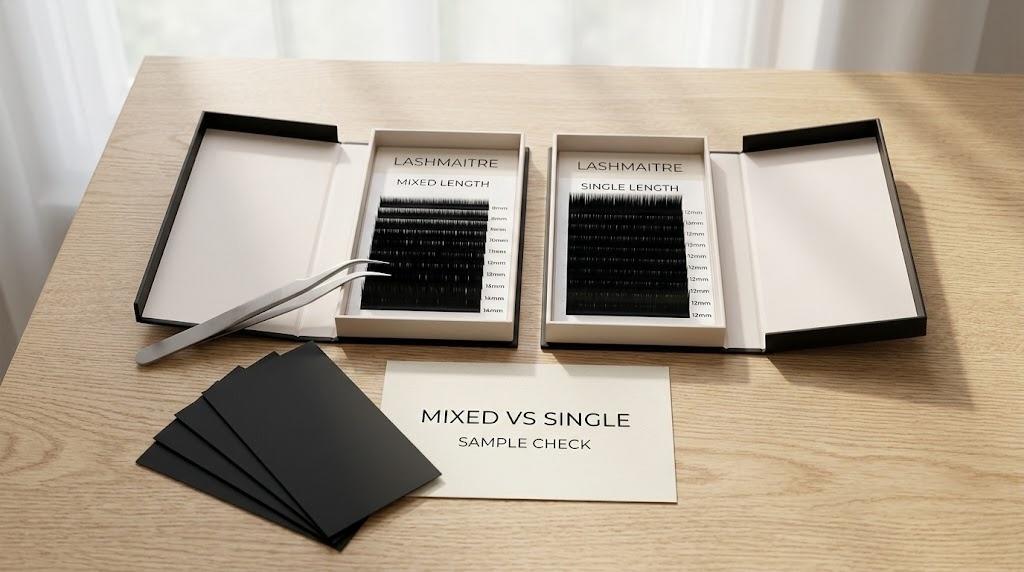
Mixed length lash trays include several lengths in one tray. A common tray may include a range such as 8-15mm or another length mix depending on the product type and buyer requirements. The exact row count and length layout should be confirmed with the supplier before sampling.
Mixed length trays are popular because they reduce early SKU complexity. Instead of buying one tray per length, the buyer can test a curl, thickness, and finish across multiple usable lengths.
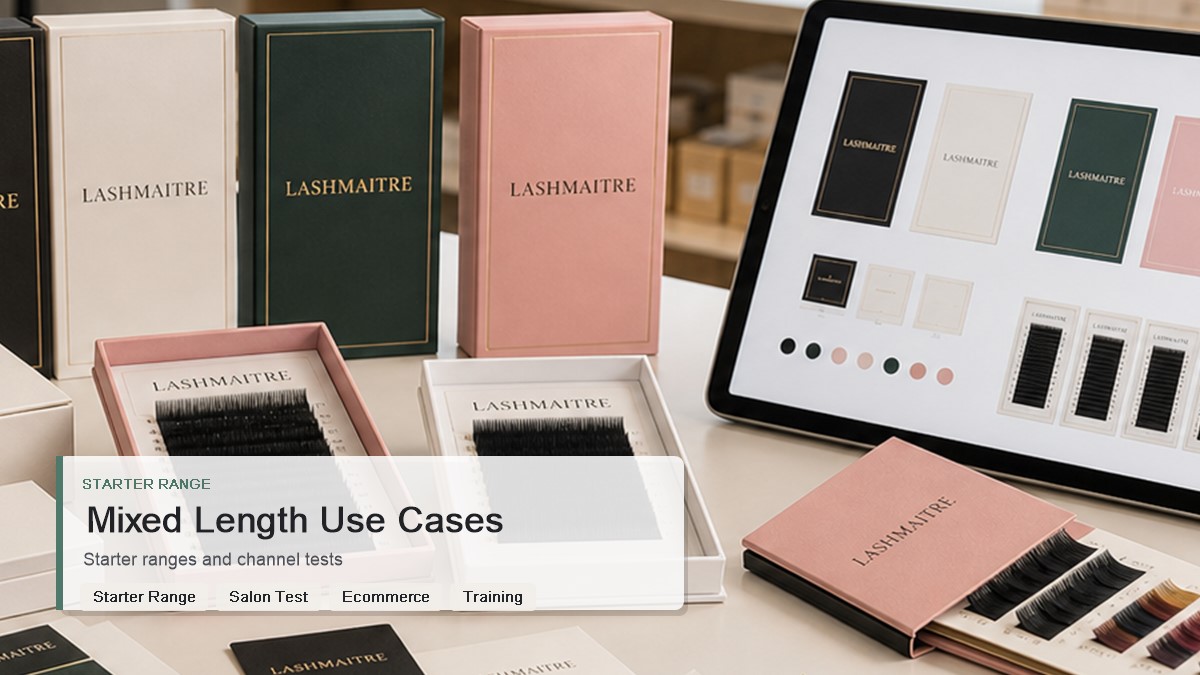
Mixed length trays can work well for:
- New lash brands testing a first range
- Salons that want practical starter trays
- Ecommerce stores building a compact product line
- Academies that need simple training-friendly options
- Buyers still learning which lengths sell best
Mixed trays are not always the final answer, but they are often a useful first step before deeper single length inventory.
What Single Length Lash Trays Are
Single length lash trays contain one length per tray. For example, a buyer may order C curl 0.07 in 9mm, 10mm, 11mm, and 12mm as separate SKUs. This gives lash artists more control, but it increases the number of trays, labels, reorder lines, and inventory decisions.
Single length trays are common when the buyer already knows which lengths are used frequently. They are also useful for professional salons and distributors whose customers expect precise replenishment.
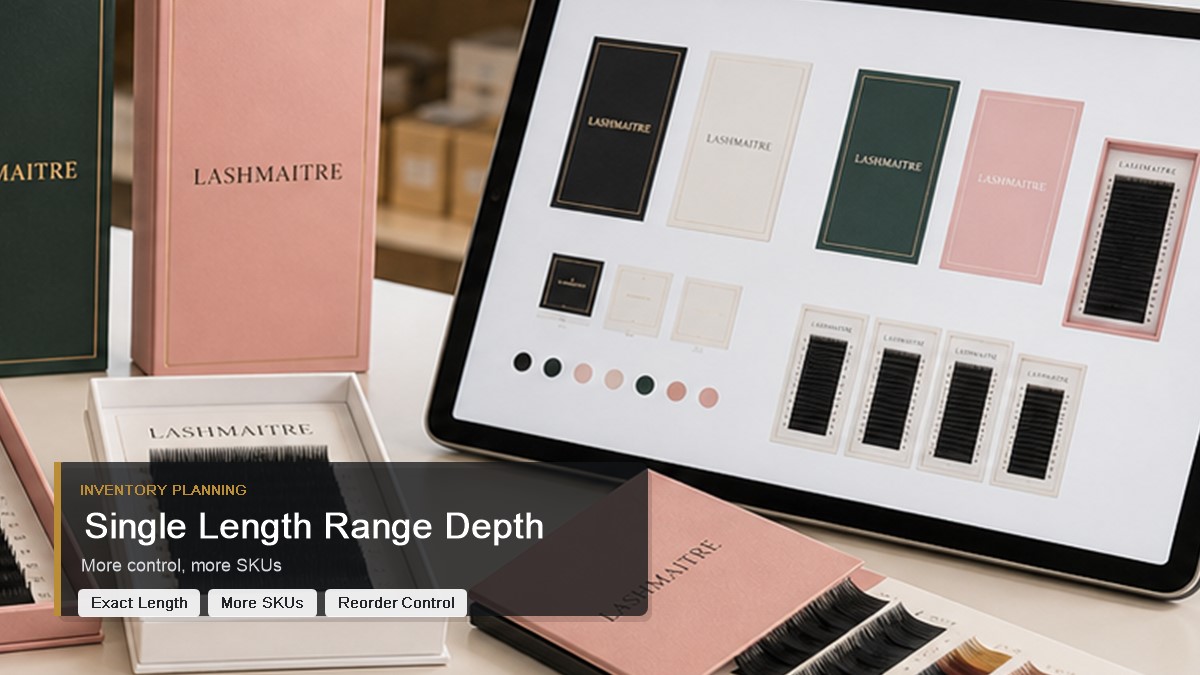
Single length trays can work well for:
- Established salons with known artist demand
- Distributors serving professional buyers
- Brands expanding after mixed tray feedback
- Advanced lash artists who use specific map structures
- Reorder programs built around exact SKU movement
The key is timing. Single length trays can strengthen a mature range, but they may be too much for a first order if demand is still uncertain.
Compare Use Cases by Buyer Type
Different buyer types need different tray structures. The best choice is not only about product preference. It is about how the buyer sells, stores, teaches, and reorders lash trays.
| Buyer type | Mixed length tray fit | Single length tray fit | Practical starting point |
|---|---|---|---|
| New private label brand | Strong fit for compact launch testing | Add later after demand is clear | Mixed first, then expand |
| Salon buyer | Useful for general daily use | Strong fit for specific artist needs | Mix of core mixed trays and best single lengths |
| Distributor | Good for starter catalog options | Needed for deeper professional catalog | Start with best sellers, then deepen |
| Academy buyer | Simple for training kits | Useful for advanced modules | Mixed first for basics |
| Ecommerce seller | Easier inventory and listings | More listings and inventory depth | Mixed first unless demand is proven |
If the buyer has limited budget or uncertain demand, mixed length trays usually reduce early risk. If the buyer already has sales history, single length trays may support stronger replenishment.
Buyer Decision Snapshot
| Buyer situation | Better first tray format | Why it helps | Next expansion step |
|---|---|---|---|
| New private label brand | Mixed length tray | Tests multiple lengths with fewer first-order SKUs | Move proven lengths into single length trays |
| Salon buyer with known artist demand | Core single length trays plus selected mixed trays | Artists can restock exact lengths while still testing range coverage | Add single lengths only where weekly use is clear |
| Distributor building a catalog | Mixed tray starter range plus best-selling single lengths | Balances catalog breadth with warehouse control | Deepen exact lengths after reorder data |
| Academy or training buyer | Mixed length tray | Simple for practice kits and repeat lessons | Add single lengths for advanced modules |
| Premade fan buyer | Controlled mixed fan sample first | Lets the buyer check fan base, spread, pickup feel, and length mix together | Separate single lengths only after approved sample demand is clear |
Compare Inventory and MOQ Impact
The tray structure affects MOQ and cash flow. A mixed length plan may allow a buyer to test fewer SKUs. A single length plan can multiply quickly because every curl, thickness, and length becomes a separate SKU.
For example, a buyer planning 3 curls, 2 thicknesses, and 5 single lengths may already be managing 30 SKU combinations before packaging versions are counted. If the same buyer starts with mixed length trays, the first order can be much easier to test.
The U.S. Small Business Administration advises new businesses to calculate startup costs, including inventory and other launch costs, before investing. Lash buyers can apply the same discipline to tray planning: inventory depth should match budget, channel demand, and reorder capacity. Reference: SBA startup cost guidance.
For more range planning context, review the lash extension SKU planning guide after it is published.
Compare Sample Testing and Artist Feedback
Samples should answer a practical question: which tray structure fits the buyer's real use case? Mixed and single length trays can both be sampled, but the feedback should be organized differently.
Mixed length tray feedback should check:
- Whether the included lengths fit the buyer's target service or customer
- Whether the length range feels practical
- Whether row clarity is easy for artists
- Whether the label makes the length mix clear
- Whether the tray can become a starter SKU
Single length tray feedback should check:
- Which exact lengths are used most often
- Whether artist demand supports separate inventory
- Whether the buyer can manage deeper reorder records
- Whether each label is clear enough to avoid length mistakes
- Whether the selected lengths justify MOQ and storage space
The LASHMAITRE lash extension samples page can help buyers plan a sample-first comparison before bulk production.
Compare Label and Reorder Requirements
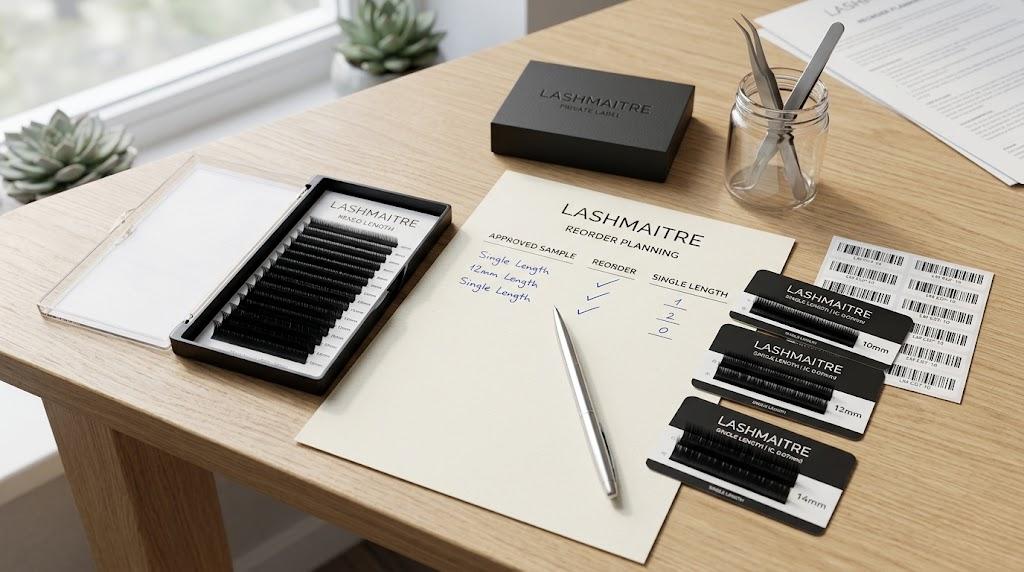
Mixed length and single length trays need different label clarity. A mixed length label should clearly show the length range and any row arrangement that matters. A single length label should make the exact length easy to read.
Label confusion can create reorder mistakes. If a buyer uses similar packaging for many curls, thicknesses, and lengths, the SKU name and visible label must be precise.
For mixed length trays, label records should include:
- Tray type
- Curl
- Thickness
- Length range
- Row count or length layout if needed
- Packaging version
For single length trays, label records should include:
- Tray type
- Curl
- Thickness
- Exact length
- Finish or color
- SKU code
- Packaging version
Good label and reorder records protect the second order. They also help a supplier repeat the approved sample instead of guessing from a chat history.
Decision Table for First Orders
Use this decision table before choosing mixed length or single length trays:
| Decision question | Choose mixed length if… | Choose single length if… |
|---|---|---|
| Is demand proven? | Demand is still being tested | Demand is already clear |
| Is SKU count limited? | Buyer wants fewer first SKUs | Buyer can manage deeper SKUs |
| Is the buyer salon-focused? | General service range is enough | Artists request exact lengths |
| Is packaging ready? | Labels should stay simple | SKU labels are already organized |
| Is reorder data available? | No sales data yet | Existing reorder data exists |
This table is not a rulebook. It is a starting point for a supplier conversation.
Common Mistakes When Choosing Tray Lengths
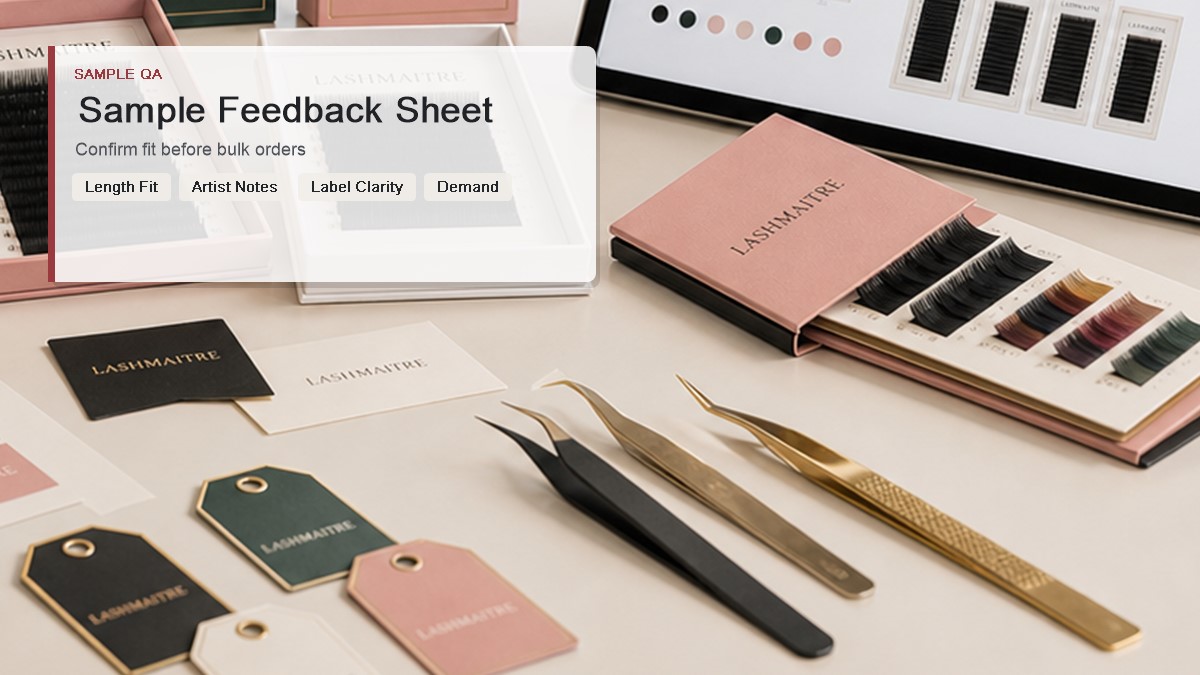
Wholesale buyers often make one of two mistakes. They either start too narrow and miss useful length coverage, or they start too wide and create a catalog they cannot manage.
Avoid these mistakes:
- Buying many single lengths before sample feedback.
- Using mixed trays without checking the exact length range.
- Comparing supplier quotes without matching row count and tray structure.
- Printing labels before the tray structure is final.
- Forgetting to record which sample was approved.
- Reordering based on product photos instead of written specs.
- Treating salon needs and ecommerce needs as the same.
If the buyer is unsure, sample both structures before bulk production.
If the buyer is still testing length demand, begin with lash extension samples before opening too many single length SKUs. A controlled MOQ 50 wholesale lash extensions plan can help buyers test mixed trays and selected single lengths before bulk approval.
Before repeat orders, connect the tray format with lash quality control, private label lash extensions, and the final wholesale lash extensions inquiry path.
How LASHMAITRE Helps Buyers Test Tray Structure
LASHMAITRE can help buyers compare mixed length and single length lash trays before choosing the first wholesale order. Send the target buyer type, tray type, curl, thickness, length range, packaging level, destination country, and expected quantity.
Compare the wholesale eyelash extension tray range first, then use this guide to decide whether each selected product should use mixed or single lengths.
To request a quote-ready comparison, use the wholesale lash extensions inquiry page. If you are not sure which structure belongs in your first range, ask for sample guidance before committing to bulk.
For buyers still deciding which rows belong in the first tray range, the lash extension lengths guide explains how to connect length ranges with samples, labels, MOQ and reorder records.
FAQ: Mixed Length vs Single Length Lash Trays
What is the difference between mixed length and single length lash trays?
Mixed length lash trays include several lengths in one tray. Single length lash trays contain one exact length per tray, which creates more precision but also more SKU depth.
Are mixed length lash trays better for new brands?
Mixed length lash trays are often better for new brands because they reduce early SKU count and help buyers test length demand before expanding.
When should salons buy single length lash trays?
Salons should buy single length lash trays when artists repeatedly use specific lengths and the salon can manage separate reorder records for those lengths.
Do single length trays require more inventory?
Yes. Single length trays usually require more inventory because every curl, thickness, and length can become a separate SKU.
How should I sample mixed and single length trays?
Sample mixed and single length trays with the same curl, thickness, and finish when possible. Compare artist feedback, length use, label clarity, and reorder potential before bulk ordering.
Are mixed length lash trays better for a first wholesale order?
Mixed length lash trays are often better for a first wholesale order because they let buyers test several lengths with fewer first-order SKUs. They are useful for new private label brands, training kits, compact salon ranges, and early distributor testing.
When should a buyer move from mixed trays to single length trays?
A buyer should move from mixed trays to single length trays when reorder demand is proven. If artists or customers repeatedly request exact lengths, single length trays can support more precise replenishment and cleaner inventory records.
What specs should be recorded for mixed lash trays?
A mixed lash tray record should include product family, curl, thickness, length range, row map, tray type, label wording, packaging version, sample ID, approval date, and any correction notes before reorder.
Should premade fan mixed trays be tested differently from classic mixed trays?
Yes. Premade fan mixed trays should be checked for fan base shape, spread, pickup feel, row consistency, length mix, and bulk repeatability. Classic mixed trays usually focus more on curl, thickness, length range, row clarity, and label accuracy.
Conclusion: Choose Tray Structure Around Demand, Not Habit
The mixed length vs single length lash trays decision should be based on buyer stage, sales channel, inventory depth, label clarity, and reorder needs. Mixed trays can simplify the first range. Single length trays can strengthen a mature catalog when demand is proven.
Send LASHMAITRE your target tray specs, buyer type, quantity range, packaging needs, and sample request so we can help choose a practical tray length structure before bulk production.
Related LASHMAITRE Sourcing Pages
Use these related LASHMAITRE pages to move from this guide into samples, specifications, packaging and wholesale inquiry planning.
Buyer next step: Buyers comparing mixed and single length trays can pair the trial list with the MOQ 50 wholesale lash extensions path before committing to deeper length inventory.
Buyer next step: When comparing mixed and single length trays, use LASHMAITRE lash quality control to confirm length accuracy, row order and batch notes before expanding the range.

Lash Maitre: Your Trusted Partner in Eyelash extension Solutions
Lash Maitre is dedicated to providing professional insights and tips in the eyelash extension industry. Sharing the latest trends, techniques, and product knowledge, Lash Maitre helps lash artists and enthusiasts enhance their skills, stay inspired, and achieve the perfect lash experience.