Lash Order Replacement or Credit: 4 Best Buyer Options
Share
Lash Order Replacement or Credit Buyer Summary
Choose lash order replacement or credit only after the buyer and supplier confirm the order, SKU, batch, affected quantity, usable stock, evidence, deadline, and commercial record. Use replacement for recoverable stock, remake for a wrong production specification, and credit when physical replacement is impractical or a documented shortfall is accepted.
Direct Answer
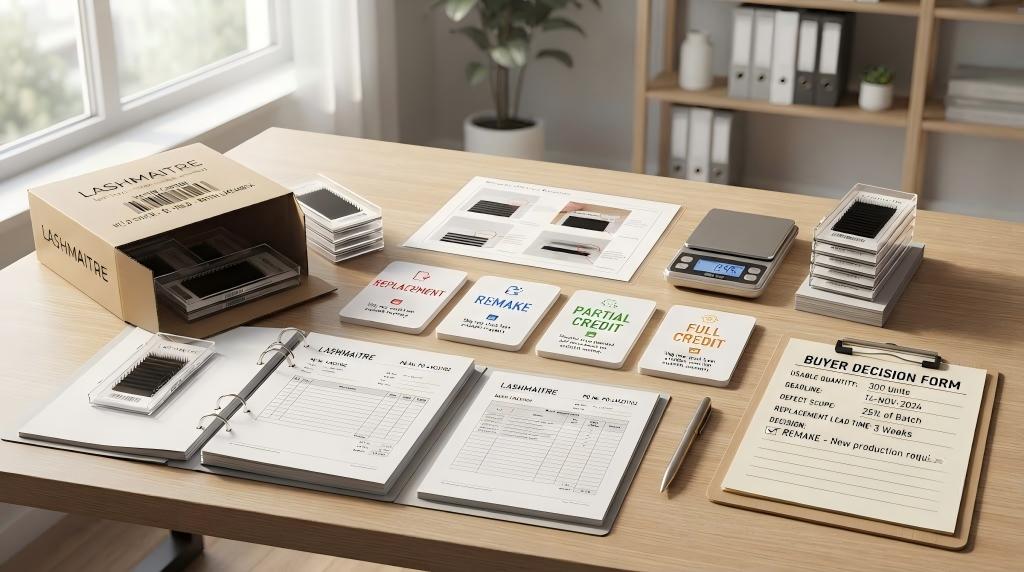
A lash order replacement or credit decision starts with the selling window and usable stock. Request a replacement when missing or affected stock can be restored within the required selling window. Request a remake when the production specification is wrong and the goods cannot be corrected. Consider a partial or full credit when replacement is impractical, the buyer accepts a documented shortage, or the affected goods have no usable commercial value. Make the decision only after the order number, SKU, batch, quantity, evidence, usable stock, timing, and accounting document are confirmed.
The right resolution is not determined only by defect severity. A technically replaceable tray may still miss a launch date, while a small label issue may be corrected locally without remaking usable lashes. The decision must protect inventory, customer commitments, and commercial records at the same time.
Verify the Problem Before Choosing the Remedy
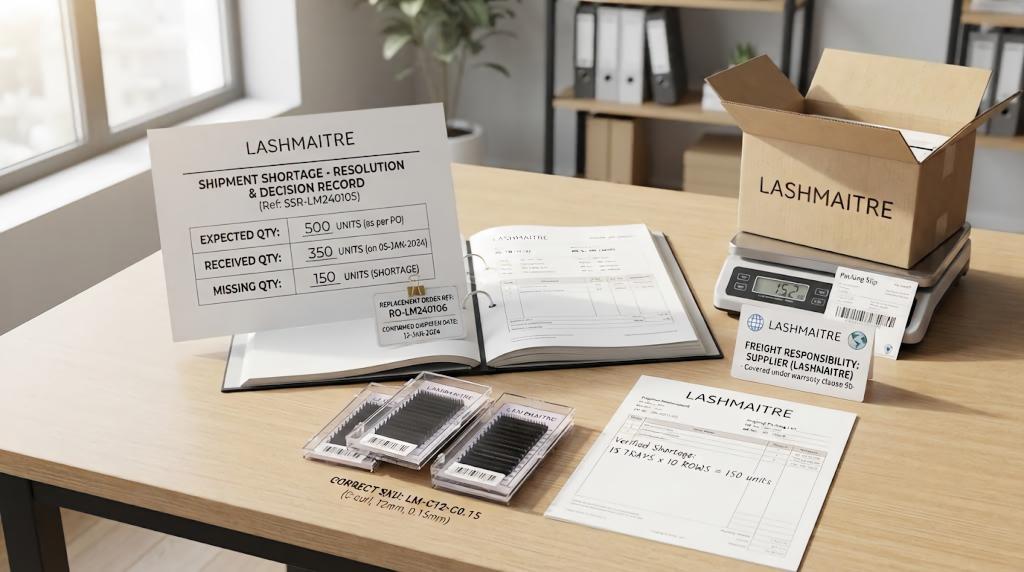
Keep the affected stock separate and record:
- purchase order or order number;
- SKU and batch ID;
- expected and received quantity;
- affected and usable quantity;
- approved sample or packaging reference;
- photos, labels, carton marks, packing list, and receiving record;
- defect or mismatch description;
- required resolution date;
- any temporary containment already taken.
Use the lash quality-control process to separate a verified product or packaging problem from an unsupported claim.
Replacement, Remake and Credit Decision Table
| Resolution | Best fit | Buyer should confirm | Main risk |
|---|---|---|---|
| Replacement | Missing quantity or isolated affected units can be restored quickly | Replacement quantity, batch, freight, and dispatch date | Replacement arrives after the selling window |
| Remake | Curl, thickness, length map, finish, strip, tray, or packaging was produced to the wrong approved specification | New production reference, lead time, QC gate, and shipment plan | The same error repeats without corrective action |
| Partial credit | Buyer accepts usable stock plus a documented shortage or limited defect | Accepted quantity, credit amount, document number, and inventory treatment | Credit does not cover operational loss |
| Full credit | Goods have no accepted use and replacement is not practical | Disposition, return or destruction instruction, freight, and final document | Stock and accounting records remain unresolved |
Choose Replacement When Stock Can Still Be Recovered
Replacement is practical when the supplier can provide the correct SKU or missing quantity within the buyer's required window. Confirm whether replacement units come from the same batch, a new batch, or held safety stock. Ask for QC and photo evidence when the original problem involved product consistency, labels, or packing.
Do not accept "we will add it to the next order" as the only record. Assign a replacement quantity, reference, owner, and deadline.
Choose Remake When the Product Was Made to the Wrong Specification
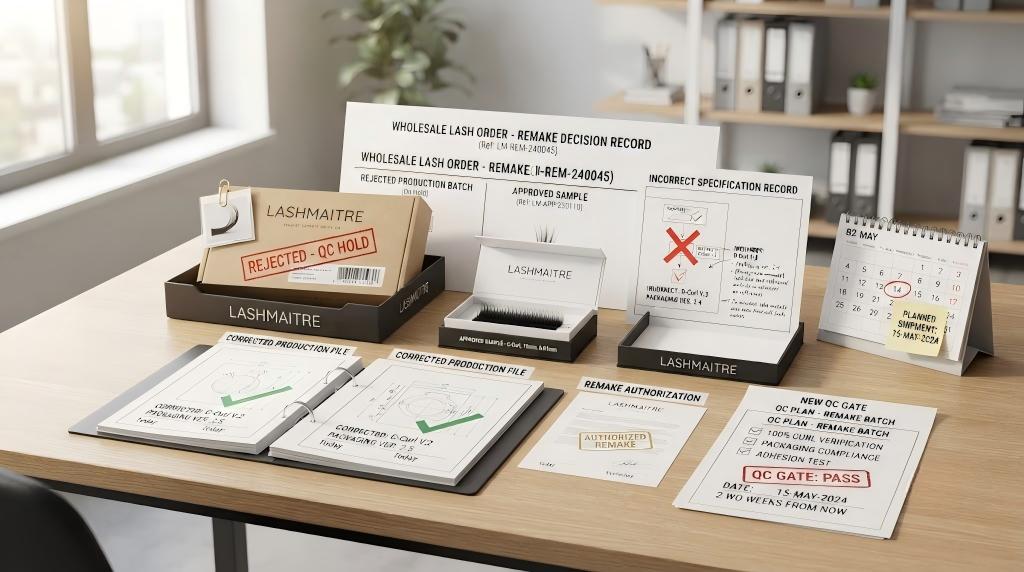
A remake is usually stronger than a simple replacement when the original batch was manufactured against an incorrect curl, thickness, length map, finish, strip, tray format, or packaging version. The supplier should identify the cause, correct the production file, and show that the new batch follows the approved reference.
Before approving the remake, confirm whether the original sample remains valid or whether a new approval is required. Review the lash extension samples page when the reference itself is disputed.
Choose Credit When Physical Replacement Is Not the Best Outcome
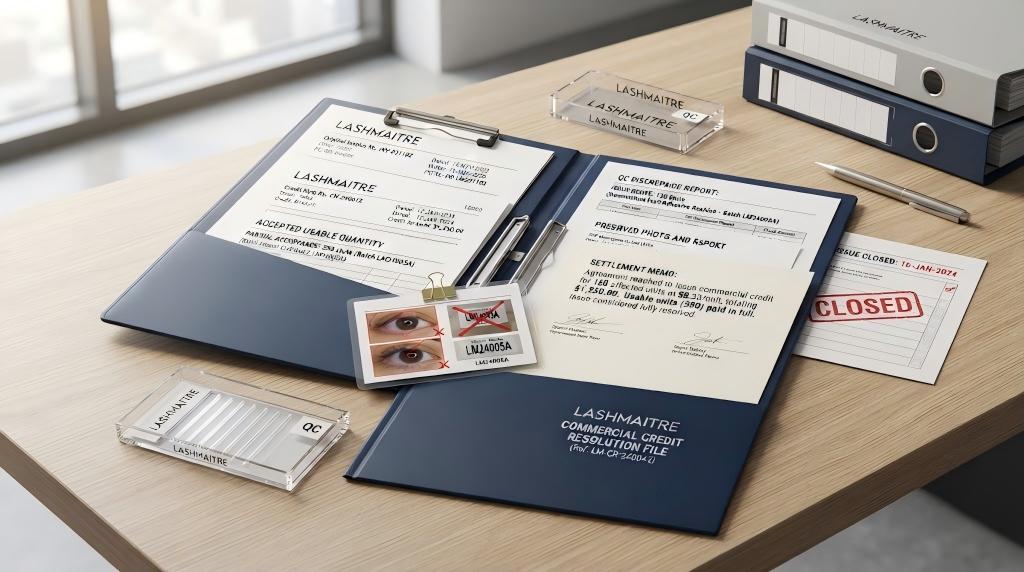
A credit may fit a documented short shipment, accepted cosmetic packaging variance, or affected stock that the buyer will not replace because the selling window has passed. The commercial document should link back to the original invoice or order and state the amount and reason.
General record guidance distinguishes corrected or replacement invoices from credit or debit notes and emphasizes retaining the original records. The GOV.UK VAT record guidance is cited only for that documentation principle. The correct tax and accounting treatment depends on the buyer's jurisdiction and professional advice.
Five Questions That Prevent the Wrong Resolution
- How much stock is actually usable? Separate accepted, held, and rejected quantity.
- Can the replacement arrive before the commercial deadline? Use a specific dispatch and delivery plan.
- Was the approved specification wrong or was production wrong? This determines whether the reference or the batch must change.
- Does the remedy include freight and handling? Replacement value alone may not settle the full operational cost.
- Which document closes the issue? Use a replacement order, remake record, credit note, or agreed settlement memo with a traceable reference.
Do Not Mix Corrective Action with Commercial Settlement
Commercial resolution answers what happens to the affected order. Corrective action answers how recurrence will be prevented. Buyers may need both. A credit can close an invoice difference without proving that the next batch is protected.
For a private label issue, also confirm whether the production file, artwork proof, barcode sheet, or carton record must be revised. The private label lash extension process helps keep the replacement or remake tied to the correct approved version.
Lash Order Replacement or Credit FAQ
Should a buyer request replacement or credit for a short shipment?
Request replacement when the missing stock is still commercially useful and can arrive on time. Consider credit when replacement is too late or the buyer accepts the shortage.
When is a wholesale lash remake appropriate?
A remake fits when the goods were produced to the wrong approved specification and cannot be corrected through sorting, relabeling, or limited replacement.
What evidence supports a replacement or credit request?
Provide the order number, SKU, batch, expected and received quantities, photos, carton labels, packing list, issue description, and the quantity being held or accepted.
Who pays freight for replacement goods?
Confirm responsibility in the settlement record. The answer depends on the verified cause, original order terms, urgency, and agreement between buyer and supplier.
Does a credit note replace the original invoice?
Do not erase the original commercial history. Keep the original record and the linked credit, replacement, or corrected document according to applicable accounting requirements.
Close the Issue With a Traceable Decision
Use the MOQ 50 wholesale lash planning page when a controlled replacement or validation batch reduces risk before a larger reorder.
Submit the order number, SKU, batch, quantity variance, evidence, required date, and preferred resolution through the wholesale lash inquiry page. LASHMAITRE can review whether replacement, remake, credit, or a controlled validation order provides the clearest path.

Lash Maitre: Your Trusted Partner in Eyelash extension Solutions
Lash Maitre is dedicated to providing professional insights and tips in the eyelash extension industry. Sharing the latest trends, techniques, and product knowledge, Lash Maitre helps lash artists and enthusiasts enhance their skills, stay inspired, and achieve the perfect lash experience.