Lash Extension SKU Planning Guide for Wholesale Buyers
Share
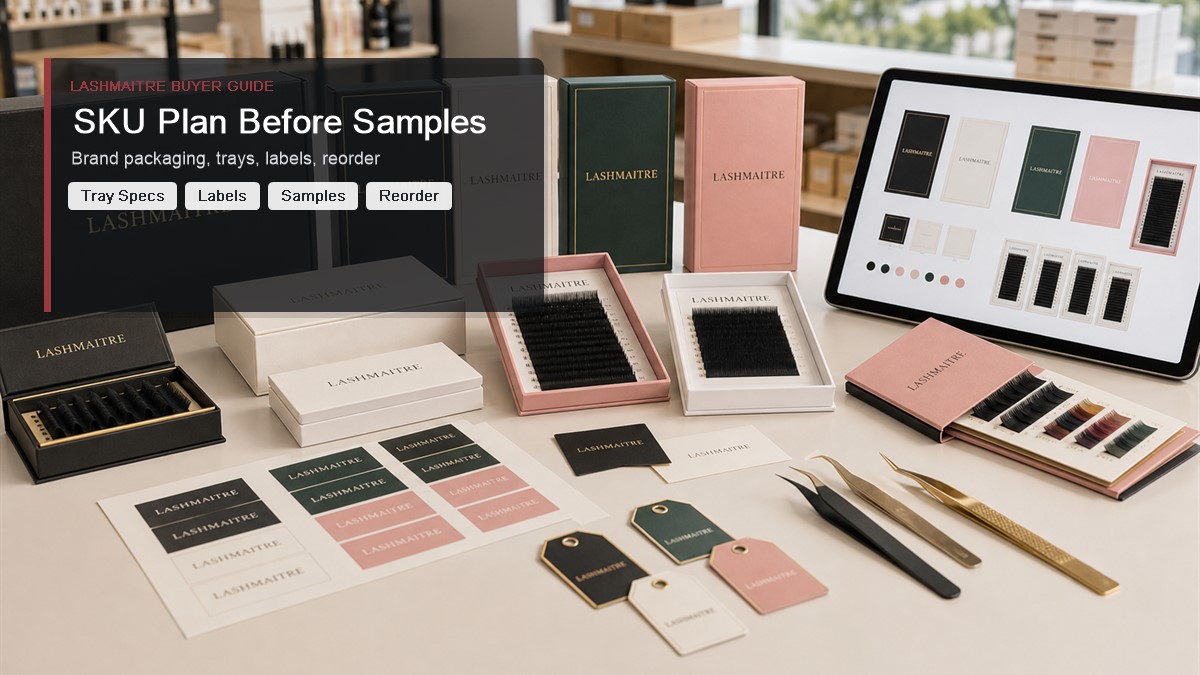
This lash extension SKU planning guide is written for wholesale buyers who need a focused product range before samples, packaging, or bulk orders. A SKU plan is not only an inventory spreadsheet. For a lash brand, salon buyer, distributor, or academy, SKU planning decides which tray types, curls, thicknesses, lengths, labels, and reorder records need to exist before money moves into production. Use a lash extension curl sample set when C, CC, D, M, and L curls need to be compared before the SKU range is approved. For thickness-specific range decisions, the lash thickness chart helps compare 0.03, 0.05, 0.07, 0.10, and 0.15 before labels and reorder files are locked.
This lash extension SKU planning guide can also work as a quick review checklist before buyers request samples. Keep the lash extension SKU planning guide close to the product file so tray specs, labels, and reorder notes stay connected.
The best lash extension SKU planning guide starts with the buyer's selling path. A new private label brand may need a small starter range that is easy to test. A salon chain may need reliable replenishment for best-selling curls and lengths. A distributor may need broader coverage, but still needs clear labels and repeatable reorder files.
In simple terms: a good lash SKU plan should make each tray easy to identify, sample, quote, sell, and reorder. If two trays cannot be clearly separated by product type, curl, thickness, length, finish, packaging, or buyer use, the range may be too vague for wholesale production.
What a Lash Extension SKU Should Include
A lash SKU should describe the exact product that will be sampled, sold, and reordered. It should not be a random code that only one person understands. Before assigning a SKU name, confirm the product details that matter to buyers and suppliers. For easy fan products specifically, the easy fan lash tray specs guide shows which curl, thickness, strip, tray, and packaging notes should be captured before repeat orders.
At minimum, a lash extension SKU record should include:
- Tray type
- Curl
- Thickness
- Length range or single length
- Row count if relevant
- Fiber finish or color
- Packaging version
- Label text
- Approved sample reference
- First order or reorder quantity
For example, a private label buyer might record a product as "Classic C 0.07 Mixed 8-15mm, matte black, logo label version 1." The visible label may use a shorter name, but the reorder file should hold the complete spec.
This is why SKU planning should happen before artwork approval. If the product spec changes after labels are designed, the buyer may need to revise tray labels, box labels, carton labels, and reorder files.
Start With Buyer Type Before Choosing SKU Count
Different buyers need different SKU depth. A new ecommerce lash brand should not plan the same first range as an established distributor. A salon chain should not copy a trend-heavy online catalog if its artists mostly use repeat core styles.
Use buyer type as the first filter:
| Buyer type | Best starter SKU direction | Main risk to control |
|---|---|---|
| New private label brand | Focused hero tray types and best-selling curls | Too many slow-moving SKUs |
| Salon buyer | Reliable curls, thicknesses, and length structures artists already use | Running out of core trays |
| Distributor | Wider coverage but clear product grouping | Confusing catalog and reorder errors |
| Academy or training buyer | Simple range with teaching-friendly specs | Students using inconsistent trays |
If the buyer is not sure which group fits, start smaller. A focused SKU range gives better feedback than a large catalog that is hard to sell, label, and reorder.
Build a Focused Starter Range
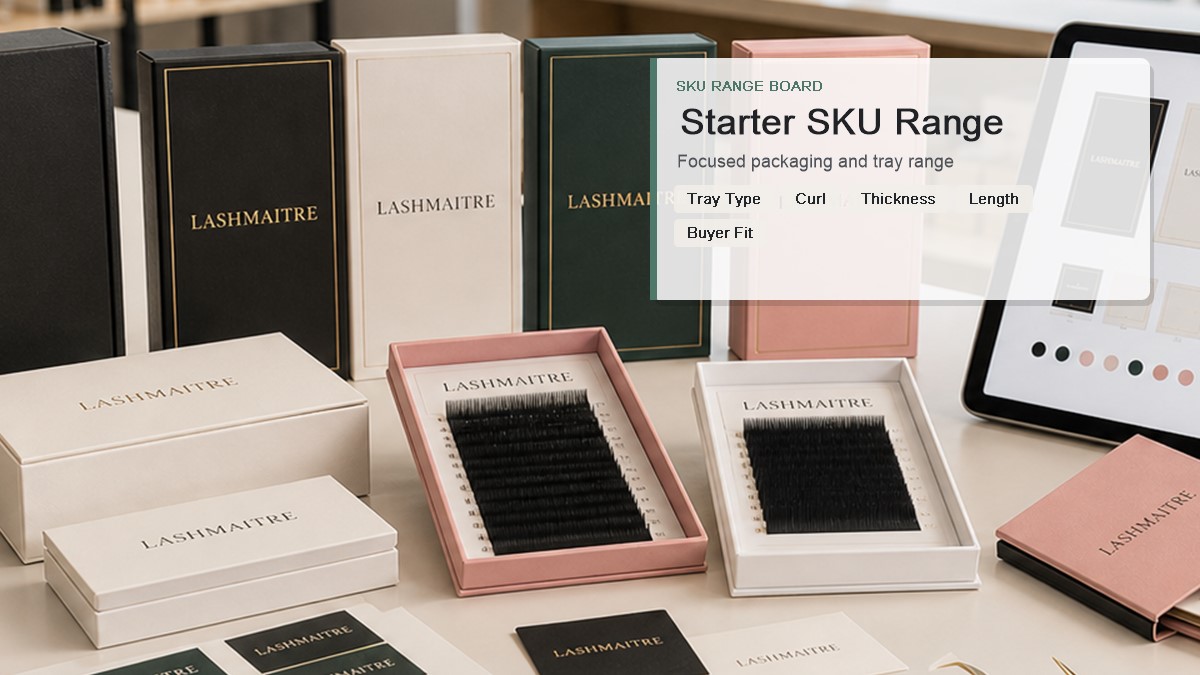
Many new buyers want a full catalog immediately. That usually creates more risk than value. The first range should be large enough to test demand, but small enough to understand which products are actually selling.
For most starter wholesale plans, buyers can begin with:
- One or two tray types.
- Two or three proven curls.
- One or two thickness families.
- Mixed length trays for broader testing.
- A small number of single length trays only where buyer demand is clear.
- One packaging direction instead of several untested label versions.
- A written reorder sheet tied to approved samples.
This approach also makes quote comparison easier. When the SKU range is focused, suppliers can quote the same tray type, curl, thickness, length mix, packaging level, and quantity assumptions. If the first inquiry contains too many uncertain SKUs, the quote becomes harder to compare.
For MOQ planning context, buyers can pair SKU planning with the existing lash extension MOQ guide. MOQ, samples, packaging, and SKU count should be planned together.
Decide When to Use Mixed Length Trays
Mixed length trays are often useful for a starter range because they give buyers broader length coverage with fewer SKUs. A single tray may cover several lengths, which can help salons, new brands, and online stores test demand before expanding.
Mixed length trays can be a good first choice when:
- The buyer is testing a new product category.
- The sales channel is not sure which lengths will move fastest.
- The buyer wants fewer SKUs for the first order.
- Packaging and label versions need to stay simple.
- The buyer wants easier sample review before expanding.
Mixed trays are not a shortcut for unclear planning. The buyer still needs to confirm curl, thickness, finish, row count, label text, and reorder naming. But mixed length trays can reduce early inventory risk when the buyer is still learning demand.
Decide When to Add Single Length Trays
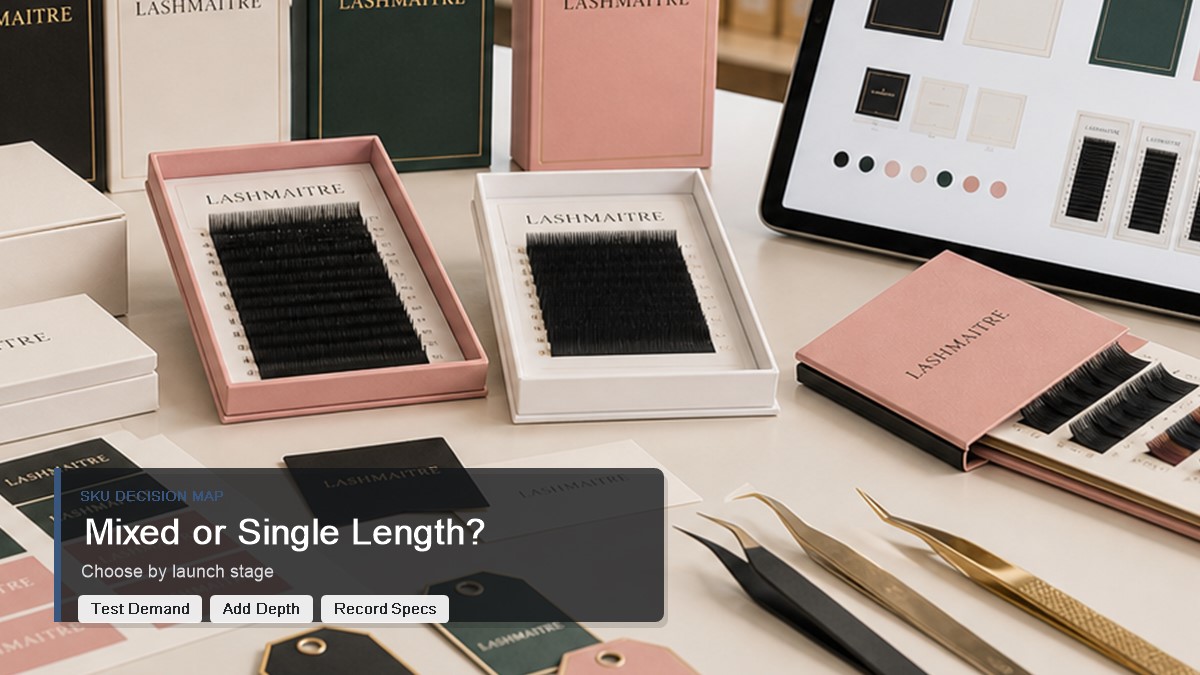
Single length trays give more control, but they create more SKU depth. A salon may need single length trays because artists use specific lengths often. A distributor may need them because buyers request precise replenishment. A private label brand may add single lengths after mixed length trays prove demand.
Single length trays usually fit better when:
- Artists repeatedly request specific lengths.
- The brand already knows its best-selling curls and thicknesses.
- Reorder volume supports deeper inventory.
- The buyer sells to professional salons that expect precise length control.
- Labeling and warehouse records are mature enough to prevent mistakes.
The risk is overexpansion. If a buyer adds many single length trays too early, each curl and thickness can multiply into a large inventory commitment. That may make MOQ planning, label printing, and storage harder than expected.
Connect SKU Names With Private Label Tray Labels
SKU planning and tray labeling should stay connected. The label does not need to show every internal detail, but it must make the tray clear enough for customers, warehouse teams, and reorder conversations.
A private label tray label may include:
- Brand name or logo
- Tray type
- Curl
- Thickness
- Length or length range
- Color or finish if needed
- Internal SKU or style name
- Barcode or GTIN if required by the buyer's retail channel
GS1 US notes that a SKU is an internal inventory number, while a GTIN is a globally unique product identifier used by trading partners and marketplaces. Buyers planning retail or marketplace expansion should understand that difference before printing labels. Reference: GS1 US cosmetics barcode guidance.
If barcodes are not needed yet, do not force them into the first label. But leave enough room in the label system so barcode planning can be added later without renaming the whole range.
Keep Approved Sample and Reorder Records
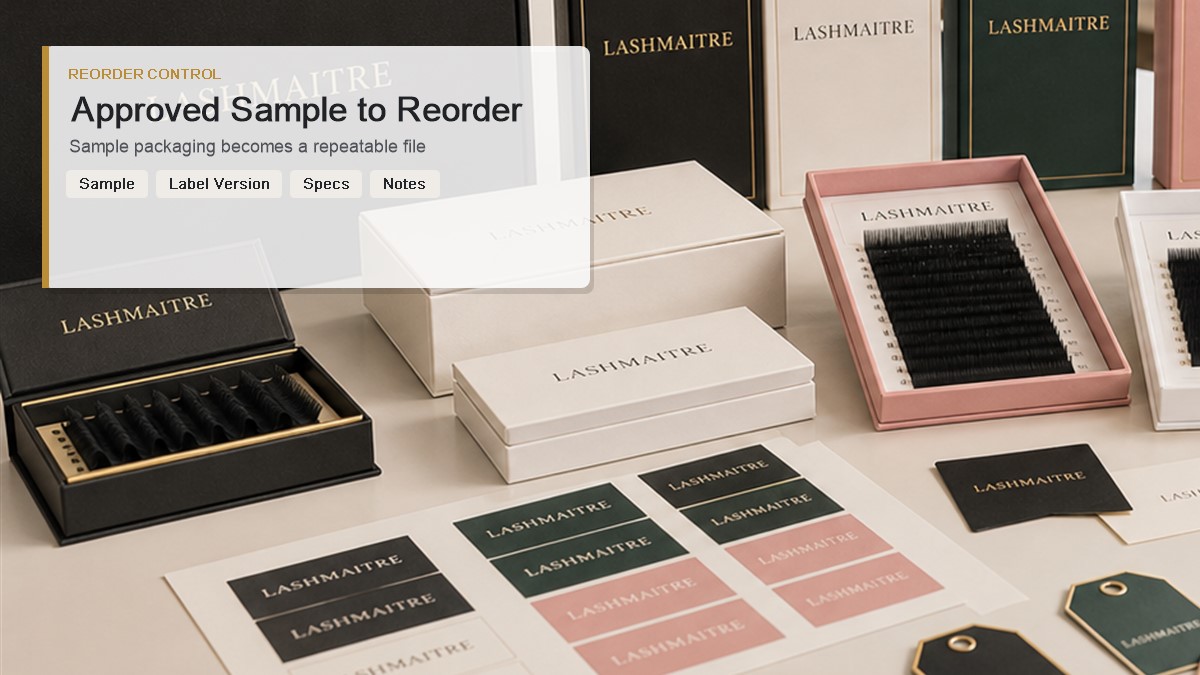
A SKU is only useful if it can be repeated. After samples are approved, the buyer should save the final spec, label version, packaging version, photos, and supplier notes in one reorder record.
The reorder record should answer:
- Which sample was approved?
- What exact tray specs were approved?
- What label artwork version was used?
- What box, insert, or carton label version was used?
- What quantity was ordered first?
- Were any changes requested before the next order?
Buyers can also use the wholesale lash trays guide as product context when deciding which tray types belong in the first SKU range.
Common Lash SKU Planning Mistakes
The most common mistake is launching too many SKUs before sample feedback is clear. The second mistake is naming SKUs around marketing ideas instead of physical product specs. A third mistake is approving private label artwork before curl, thickness, and length decisions are final.
Avoid these errors:
- Creating a full catalog before testing samples.
- Mixing different tray structures under one unclear SKU name.
- Using labels that do not show enough spec information.
- Forgetting to record packaging versions.
- Comparing supplier quotes for different SKU assumptions.
- Adding single length trays before demand is proven.
- Reordering from chat history instead of a written record.
Good SKU planning is not glamorous, but it makes the second order easier than the first.
How LASHMAITRE Helps Buyers Turn SKU Plans Into Samples
LASHMAITRE can help buyers turn a broad product idea into a focused sample and SKU plan. If you are not sure how many tray types, curls, thicknesses, or length structures to start with, share your buyer type and target sales channel first.
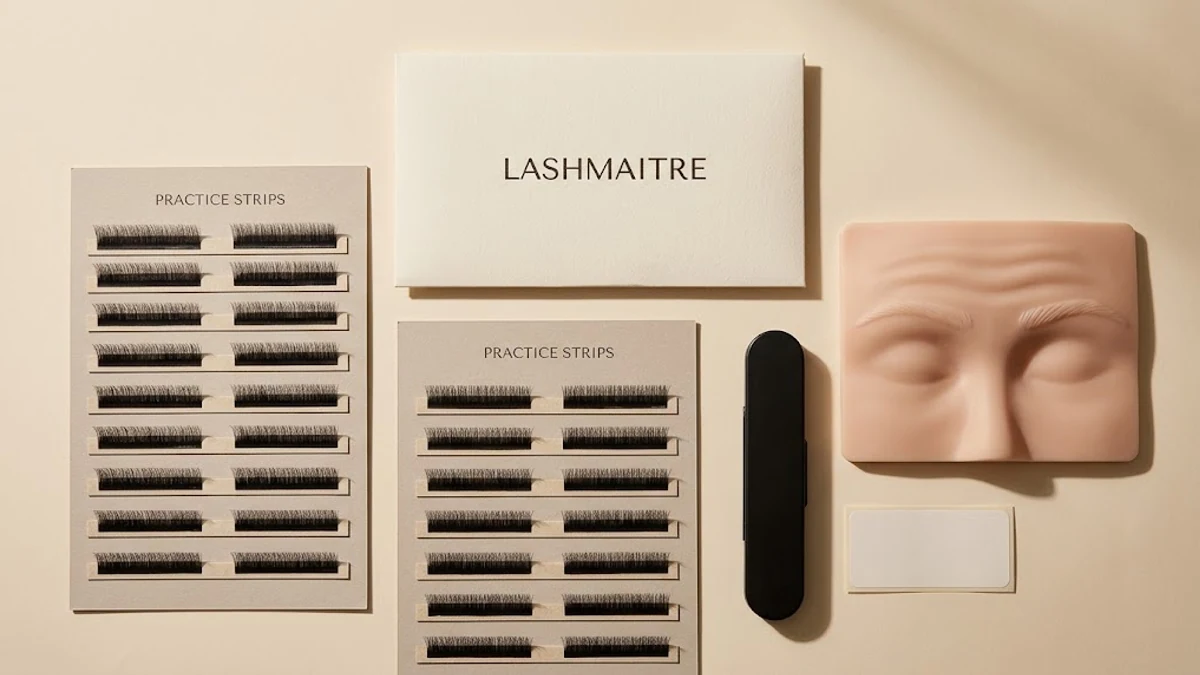
For sample planning, buyers can review the lash extension samples page. Samples should confirm product feel, curl, finish, strip release, tray alignment, label clarity, and packaging direction before bulk production.
To prepare a SKU-ready inquiry, send LASHMAITRE your target tray type, curl range, thickness range, length plan, quantity range, destination country, and packaging needs through the wholesale lash extensions inquiry page.
When SKU plans turn into repeat orders, buyers can also use the lash extension supply storage checklist to keep sellable stock, approved samples, labels, carton records and reorder notes connected.
FAQ: Lash Extension SKU Planning Guide
What should a lash extension SKU include?
A lash extension SKU should include tray type, curl, thickness, length or length range, finish, packaging version, label text, approved sample reference, and reorder notes.
How many lash SKUs should a new brand start with?
A new brand should start with a focused range instead of a full catalog. One or two tray types, a few proven curls, and controlled length options are usually easier to test and reorder.
Are mixed length lash trays better for a first order?
Mixed length lash trays can be useful for a first order because they offer broader length coverage with fewer SKUs. Buyers can add single length trays later when demand is clearer.
When should I add single length lash trays?
Add single length trays when artists or customers repeatedly request specific lengths, when reorder demand is proven, and when the buyer can manage deeper SKU inventory.
How should I name private label lash SKUs?
Name private label lash SKUs around physical specs first: tray type, curl, thickness, length, finish, and packaging version. Marketing names can be added, but the reorder record must stay precise.
Conclusion: A Smaller SKU Plan Can Create a Stronger First Order
A lash extension SKU planning guide should help buyers avoid overbuilding the first range. The best starter SKU plan is focused, sample-ready, label-ready, and easy to repeat. Mixed length trays can reduce early inventory risk, while single length trays can be added when demand is proven.
Send LASHMAITRE your product goals, buyer type, tray specs, packaging needs, and quantity range. We can help prepare a cleaner SKU plan before samples and bulk production.
Related LASHMAITRE Sourcing Pages
Use these related LASHMAITRE pages to move from this guide into samples, specifications, packaging and wholesale inquiry planning.
Buyer next step: When the SKU map is still being tested, use the MOQ 50 wholesale lash extensions option to start with a tighter first range before expanding slow-moving curls or lengths.
Buyer next step: Before a SKU plan becomes a reorder file, connect each approved tray with LASHMAITRE lash quality control so curl, thickness, length and packaging notes stay consistent across repeat orders.
After the range has collected real sales and stock evidence, use lash SKU rationalization to decide which products to keep, watch, consolidate or discontinue before the next MOQ commitment.

Lash Maitre: Your Trusted Partner in Eyelash extension Solutions
Lash Maitre is dedicated to providing professional insights and tips in the eyelash extension industry. Sharing the latest trends, techniques, and product knowledge, Lash Maitre helps lash artists and enthusiasts enhance their skills, stay inspired, and achieve the perfect lash experience.