Lash Freight Damage Claim: 8 Evidence Records to Keep
Share
Lash Freight Damage Claim Summary
A lash freight damage claim should preserve shipment identity, receiving condition, exterior and label photos, internal packaging, product damage details, reconciled quantities, proof of value, claim notice and chain-of-custody evidence before the carton or affected goods are moved or discarded.
A lash freight damage claim should begin at receiving: isolate the shipment, preserve the carton and internal packaging, photograph the damage and shipping label, reconcile affected quantities, record the tracking event, prove merchandise value, and file through the responsible carrier or contracting party before the applicable deadline.
Why Receiving Evidence Determines a Lash Freight Damage Claim
Damage claims often fail because the evidence was discarded, the affected quantity was not reconciled or the claimant cannot connect the damaged goods to a shipment and value. Carrier requirements vary, but the core file usually needs tracking identity, condition evidence, merchandise description and proof of value.
UPS, for example, instructs claimants to retain damaged contents and packaging and identifies photographs, invoice value, detailed merchandise descriptions and package dimensions as supporting evidence. Buyers should always check the actual carrier contract and deadline that governs their shipment.
8 Lash Freight Damage Claim Evidence Records
1. Shipment Identity Record
Capture the tracking or airway-bill number, shipper, consignee, service, dispatch date, delivery date and carton count. Link these fields to the purchase order and supplier shipment reference.
2. Receiving Condition Record
Note visible crushing, puncture, moisture, broken seals, retaping or carton deformation before unpacking. If possible, record the condition while the carrier handover is still being acknowledged.
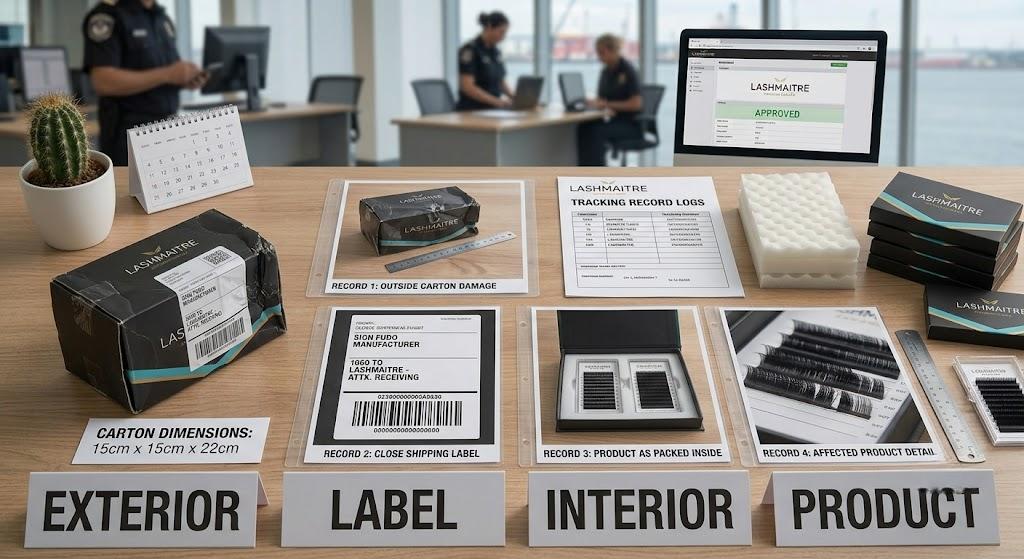
3. Exterior and Label Photos
Photograph every side of the affected carton, the damage area and a close-up of the shipping label. Include a scale or measurement when deformation or penetration depth matters.
4. Internal Packaging Photos
Show how trays and cartons were positioned, cushioned and separated inside the package. Do not rearrange the contents before the initial photo set is complete.
5. Product Damage Evidence
Photograph the affected lash trays, boxes or packaging components with SKU and lot identity visible. Record the defect type, such as crushed tray, bent strip, water exposure, broken case or contamination risk.
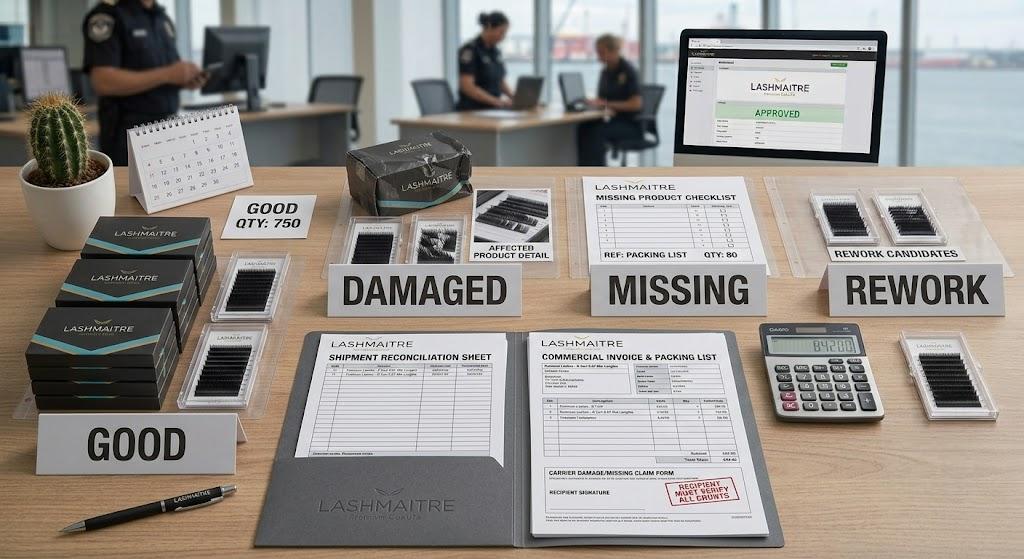
6. Quantity Reconciliation
Separate received-good, damaged, missing, reworkable and rejected quantities. Reconcile the total to the packing list and preserve representative samples where quality review is required.
7. Value and Cost Evidence
Provide the commercial invoice, purchase order or other evidence of merchandise value requested by the carrier. Separate product value from consequential losses unless the carrier contract expressly covers them.
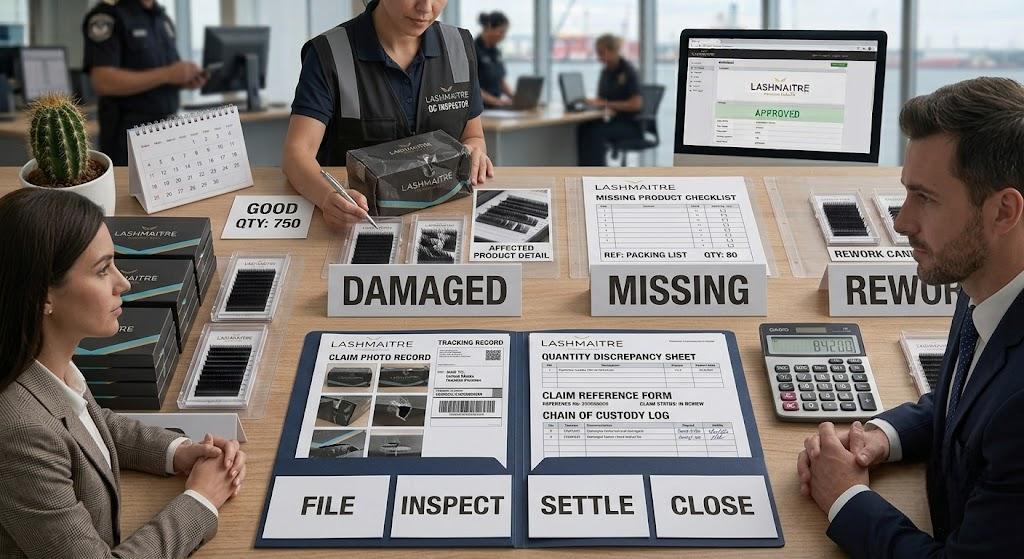
8. Claim Notice and Custody Log
Record who notified the carrier, when the claim was opened, the claim number and each document submitted. Keep the goods and packaging available for inspection until the carrier authorizes disposal or the claim closes.
Lash Freight Damage Claim Evidence Matrix
| Evidence | Minimum content | Control question |
|---|---|---|
| shipment | tracking, dates, parties | is this the correct shipment? |
| receiving | delivery condition | was damage recorded promptly? |
| exterior photos | carton and label | can the package be identified? |
| interior photos | cushioning and layout | was packing preserved? |
| product photos | SKU, lot, defect | is the damage measurable? |
| quantity | good/damaged/missing | does the total reconcile? |
| value | invoice or PO | is the claimed amount supported? |
| claim log | notice, reference, status | was filing timely and controlled? |
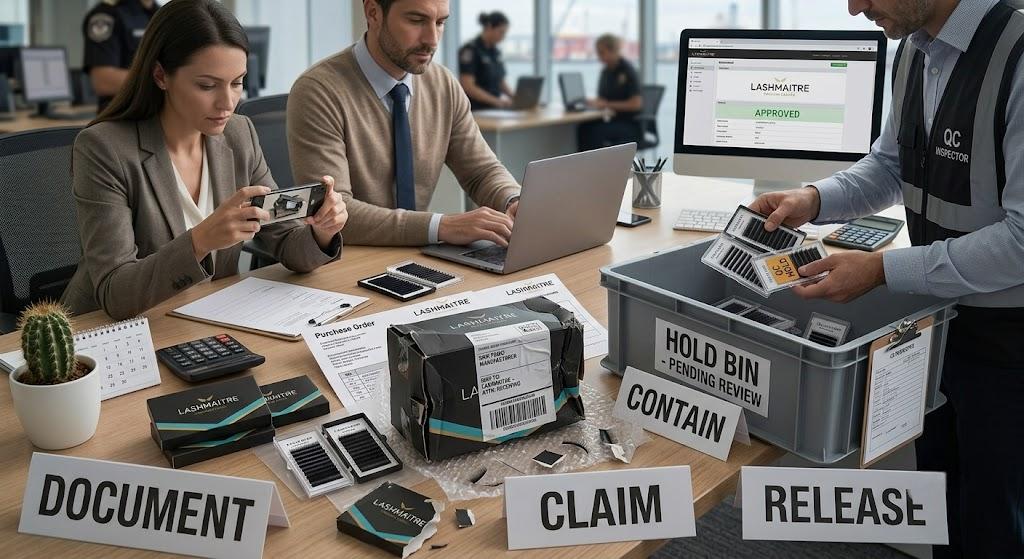
CONTAIN / DOCUMENT / CLAIM / RELEASE
CONTAIN places affected cartons and related lots on hold. DOCUMENT completes the photo, quantity, value and custody record. CLAIM submits the evidence through the correct contracting party. RELEASE occurs only after quality disposition and carrier instructions allow unaffected stock or packaging to move.
Mistakes That Weaken a Claim
- Throwing away the outer carton or cushioning.
- Photographing only the damaged product without the shipping label.
- Combining several shipments in one quantity count.
- Claiming the full invoice when only part of the shipment is affected.
- Using vague descriptions such as
lashes damagedwithout SKU, lot and defect. - Repairing or repacking before documenting the original condition.
- Missing the carrier's notice or filing deadline.
- Allowing quality release before the affected lot is segregated.
Keep claim evidence connected to the broader entry, invoice, packing, origin, payment, and broker file. Our lash import recordkeeping guide shows how to organize records for later retrieval.
Lash Freight Damage Claim FAQ
Who should file the claim—the buyer or supplier?
It depends on the carrier contract, account holder and shipping term. Confirm which party contracted the carrier and who the carrier recognizes as claimant.
Can the buyer discard the damaged carton after taking photos?
Not until the carrier or insurer permits it. A physical inspection may be requested.
What photographs are most important?
Capture the damaged item as packed, a close-up of the tracking label, and the outside of the package showing damage. Add wide and close views plus package dimensions.
Should quality-control findings be included?
Yes. A controlled inspection can distinguish cosmetic packaging damage from unusable or contaminated product and support the affected quantity.
Is a carrier claim the same as a supplier corrective action?
No. A carrier claim seeks recovery under transport terms; a supplier corrective action addresses causes within product or packaging responsibility. One event may require both files.
Build the Lash Freight Damage Claim Before Evidence Is Lost
The strongest claim file is created before the receiving area cleans up the evidence. Preserve, identify, photograph, reconcile, value and log the shipment before filing.
For incoming inspection and lot controls, review LASHMAITRE quality control. For packaging and order support, contact LASHMAITRE.
Authority reference: UPS supporting documents for claims.
For a private-label claim, compare the received goods with the controlled lash extension samples and the approved private label lashes packaging reference. If replacement or replenishment is needed, send the evidence pack through the wholesale lash extensions inquiry workflow.

Lash Maitre: Your Trusted Partner in Eyelash extension Solutions
Lash Maitre is dedicated to providing professional insights and tips in the eyelash extension industry. Sharing the latest trends, techniques, and product knowledge, Lash Maitre helps lash artists and enthusiasts enhance their skills, stay inspired, and achieve the perfect lash experience.