Lash Import Recordkeeping: 8 Records to Retain After Entry
Share
Lash Import Recordkeeping Summary
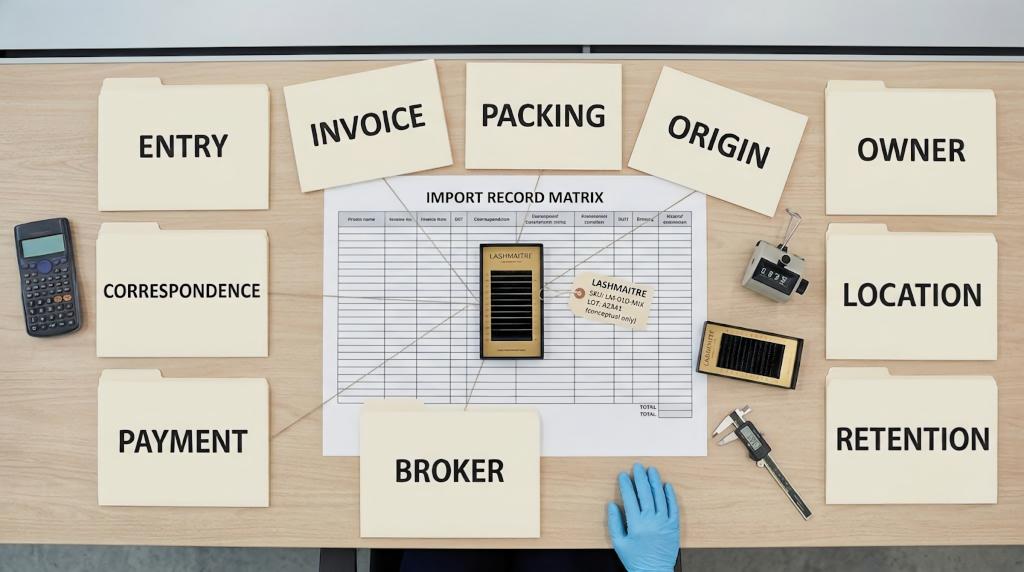
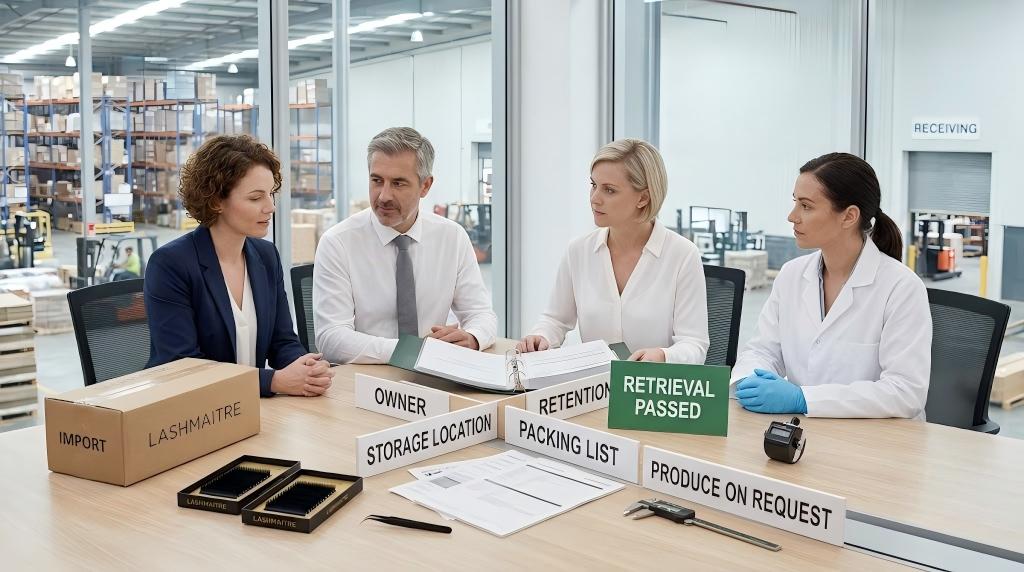
Lash import recordkeeping should connect every customs entry to the supporting invoice, packing list, origin evidence, payment record, broker correspondence and product file. Assign an owner, storage location, retention period and retrieval test so records can be produced when requested.
Lash import recordkeeping is the controlled retention of documents and data that show what was ordered, imported, classified, valued, released, received, and paid. A strong file lets an importer reproduce the entry quickly by entry number, importer identity, supplier, shipment, SKU, lot, and date.
Direct answer: how long should lash import records be kept?
U.S. customs records are generally required to be kept for five years, although the start date and treatment of specific record types can vary. Importers should apply a written retention schedule based on the applicable rule, preserve records in a retrievable format, and confirm exceptions with a licensed customs broker or customs counsel.
CBP's recordkeeping overview summarizes the general obligation, while 19 CFR Part 163 provides the governing federal recordkeeping rules. The operational goal is not simply storage; it is fast, complete production of the requested record.
1. Importer identity and authority records
Retain the legal name, importer number, addresses, tax documentation used for setup, responsible contacts, customs broker power of attorney, bond information, and changes to entity or bank data.
Keep the effective and revoked versions. A current authorization without its prior version may not explain who had authority when an older entry was filed.
2. Purchase order and supplier correspondence
Store the accepted purchase order, quote, pro forma invoice, change approvals, shipment instructions, and relevant correspondence. The file should explain the agreed SKU, quantity, price, currency, Incoterm, packaging, origin, delivery terms, and approved exceptions.
Use our wholesale lash extensions inquiry to establish these fields before an order is finalized.
3. Commercial invoice, packing list, and transport records
Preserve the final commercial invoice, packing list, bill of lading or air waybill, courier record, arrival notice, and warehouse receipt. Reconcile carton count, net and gross weight, line quantity, and shipment date.
If the shipment is split, consolidated, short, damaged, or rerouted, keep the revised documents and explanation rather than overwriting the original record.
4. Classification, valuation, and origin support
The entry file should show why each line used its tariff number, customs value, and country of origin. Include product specifications, material declarations, approved samples or photographs, valuation calculations, assists or additions, related-party analysis where relevant, and origin marking evidence.
For classification controls, see lash HTS classification. For bond planning, see customs bond for lash imports.
5. Entry and release documents
Retain broker entry data, entry summary, duty and fee calculations, release messages, examination notices, requests for information, corrections, protests, and liquidation-related records where applicable. Capture the entry number in the internal index so a file can be located without knowing the purchase order.
Do not rely solely on a broker portal. Export a controlled copy or establish contractual access and backup rules.
6. Receiving and quality evidence
Connect customs records to physical receiving evidence:
- arrival date and receiving location;
- carton identity, seals, weights, and photographs;
- actual quantities by SKU and lot;
- damage, shortage, or substitution records;
- quarantine, release, rework, or rejection decision;
- traceable sample and inspection results.
The lash quality control page explains how measurable product evidence supports receiving decisions.
7. Payment and reconciliation records
Maintain supplier invoice approval, payment confirmation, exchange-rate support, duty payment, broker invoice, freight and insurance charges, credit notes, debit notes, and claim settlements. Reconcile ordered, shipped, entered, received, accepted, and paid quantities.
A simple exception log should identify the owner, cause, amount, supporting evidence, corrective action, and closure date.
8. Retention index, access log, and retrieval test
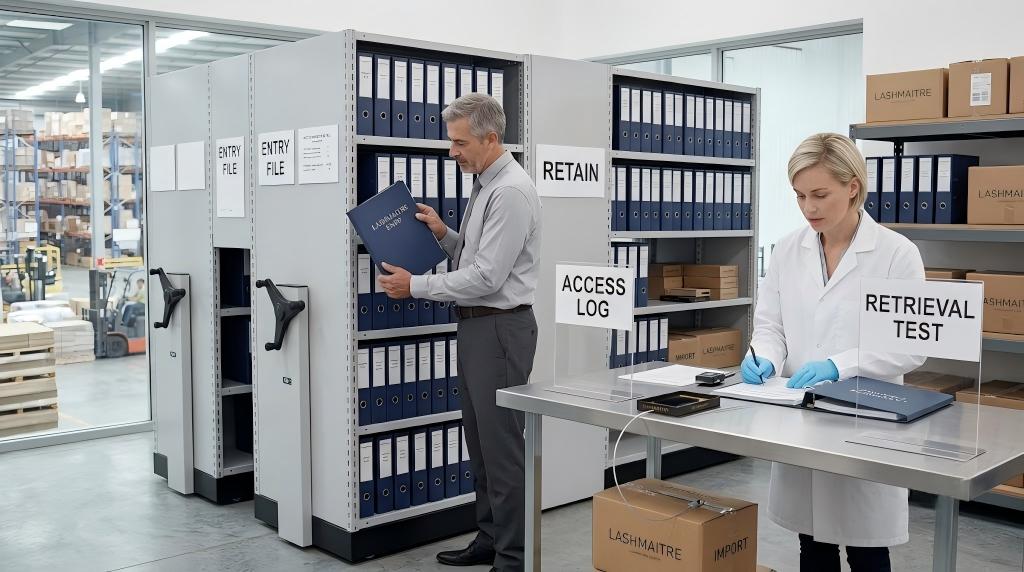
Create a record matrix listing each document, owner, storage location, retention trigger, disposition date, and confidentiality level. Restrict editing rights, preserve an audit trail, and test retrieval with sample entries.
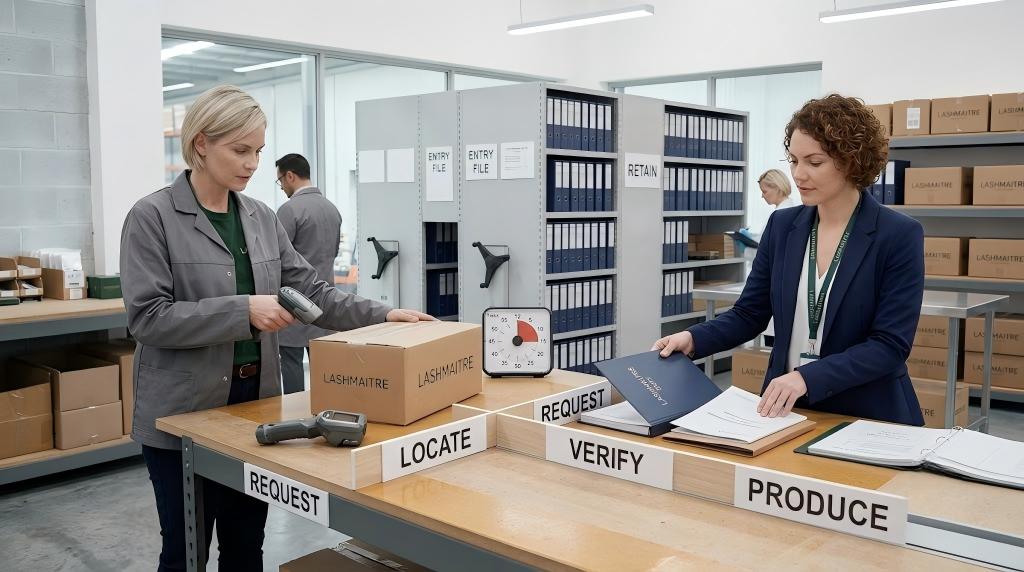
A useful test asks a team member to produce the complete entry file within a defined time using only the entry number or shipment reference. Record missing documents and correct the process before an official request occurs.
Import record matrix
| Record group | Examples | Retrieval key |
|---|---|---|
| Identity | importer setup, POA, bond | importer number, effective date |
| Commercial | PO, invoice, correspondence | PO, supplier, SKU |
| Logistics | packing list, transport, receipt | shipment and carton reference |
| Customs | HTS support, entry, release | entry number |
| Product | specification, sample, QC | SKU, revision, lot |
| Financial | payment, duty, broker charges | invoice and entry number |
| Exceptions | hold, damage, correction, claim | case or shipment reference |
Related LASHMAITRE resources
Lash Import Recordkeeping FAQ
Are digital customs records acceptable?
Electronic records can be practical when they remain accurate, protected, accessible, and reproducible for the required period. Confirm format and production requirements for the specific record.
Can the customs broker keep all records for the importer?
The broker keeps records required for its role, but the importer should not assume that this fully satisfies its own obligations. Define ownership, access, export, backup, and termination procedures in writing.
Should product photographs be stored with the entry?
Yes when they support identity, classification, origin marking, receiving condition, or a discrepancy. Label photographs with the SKU, lot, shipment, date, and viewpoint.
What happens when a supplier changes a specification?
Retain both revisions, the approval record, affected orders, effective date, and classification or marking review. Never replace the historical file with only the new version.
Build a file that can be produced on request
LASHMAITRE supports traceable product specifications, sample approvals, packaging evidence, lot records, and QC documentation for wholesale programs. Begin with LASHMAITRE lash extension samples on our sample approval page and connect the approved result to the import and receiving file.
This article provides operational information, not legal advice. Apply current CBP rules and obtain professional advice for the importer's specific facts and record categories.
If a shipment is selected, preserve the notice, custody trail, documents, inspection evidence, costs and final release in a controlled CBP cargo exam and import hold record.

Lash Maitre: Your Trusted Partner in Eyelash extension Solutions
Lash Maitre is dedicated to providing professional insights and tips in the eyelash extension industry. Sharing the latest trends, techniques, and product knowledge, Lash Maitre helps lash artists and enthusiasts enhance their skills, stay inspired, and achieve the perfect lash experience.