Lash Complaint Investigation: 9 Records to Trace a Batch Issue
Share
Lash Complaint Investigation Buyer Summary
A lash complaint investigation should preserve original evidence, identify the exact product and batch, review the order, specification, production, inspection, packaging, distribution and retained-sample records, assess scope and severity, then document containment, conclusion and follow-up.
A lash complaint investigation should preserve the original evidence, identify the exact product and batch, review order, specification, production, inspection, packaging, distribution and retained-sample records, assess scope and severity, then document containment, conclusion and follow-up.
What Counts as a Lash Product Complaint?
A complaint is any post-delivery report that a lash product, package, label, quantity or performance did not meet an expected or agreed requirement. It may come from a brand, distributor, salon, artist or end user and can involve visible quality, incorrect identity, damaged packaging, missing units, application behavior or an adverse reaction report.
Not every complaint proves a manufacturing defect. The purpose of investigation is to preserve facts, connect the report to traceable records and reach a supported conclusion without dismissing or overstating the issue.
FDA's cosmetics GMP checklist discusses maintaining consumer complaint files, identifying the associated product and code number, retaining reserve samples and maintaining distribution records. FDA also provides a current page for reporting cosmetic-product complaints. This article is an operational evidence checklist, not medical or legal advice, and it does not replace market-specific adverse-event or reporting obligations.
Start With Containment, Not Conclusions
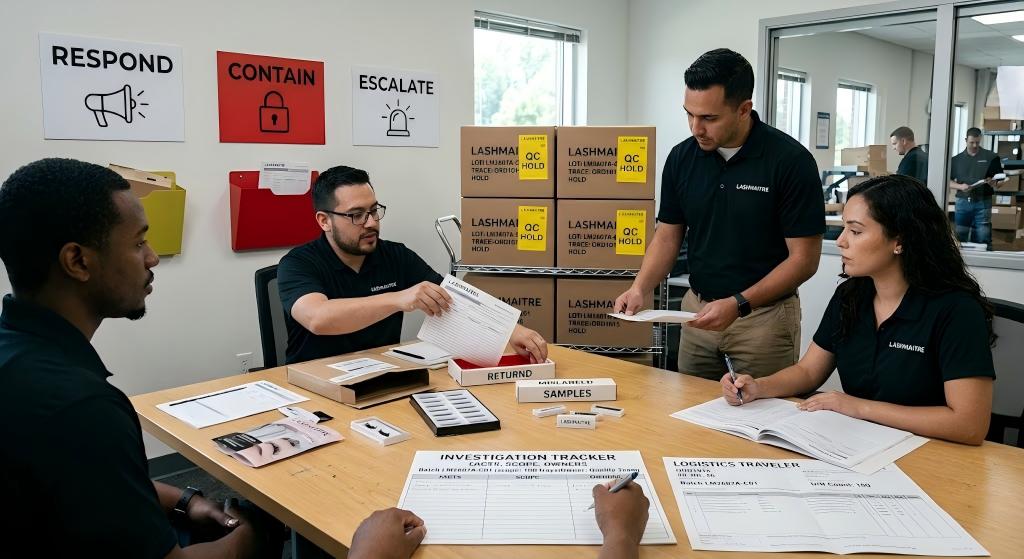
If a complaint could involve wrong identity, contamination, injury, widespread performance failure or another significant risk, identify potentially related inventory and shipments promptly. A temporary hold can preserve options while facts are collected.
Do not wait for a complete root-cause conclusion before protecting unaffected customers from a credible repeat risk. Equally, do not declare an entire batch defective based on one unverified image.
9 Records to Trace a Batch Issue
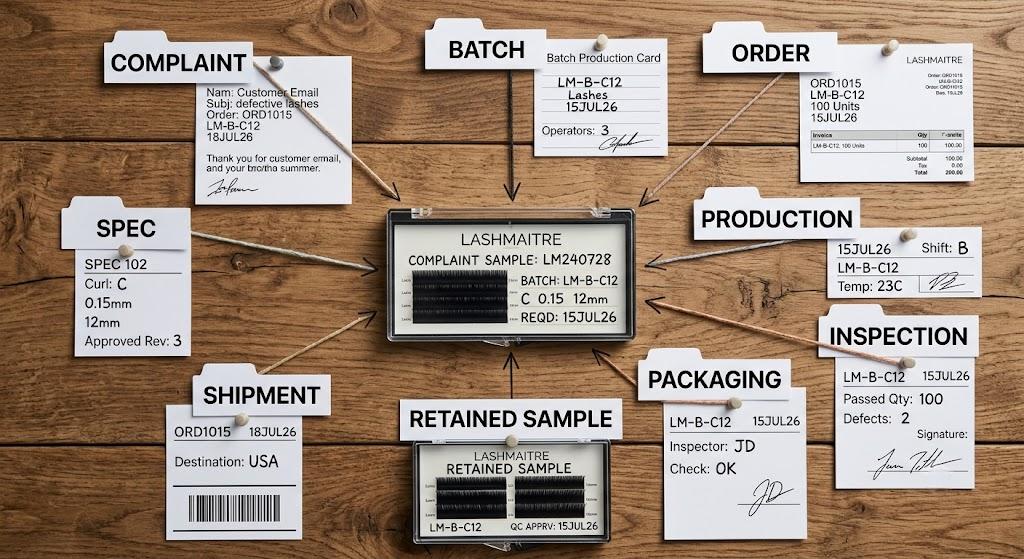
1. Original Complaint Record
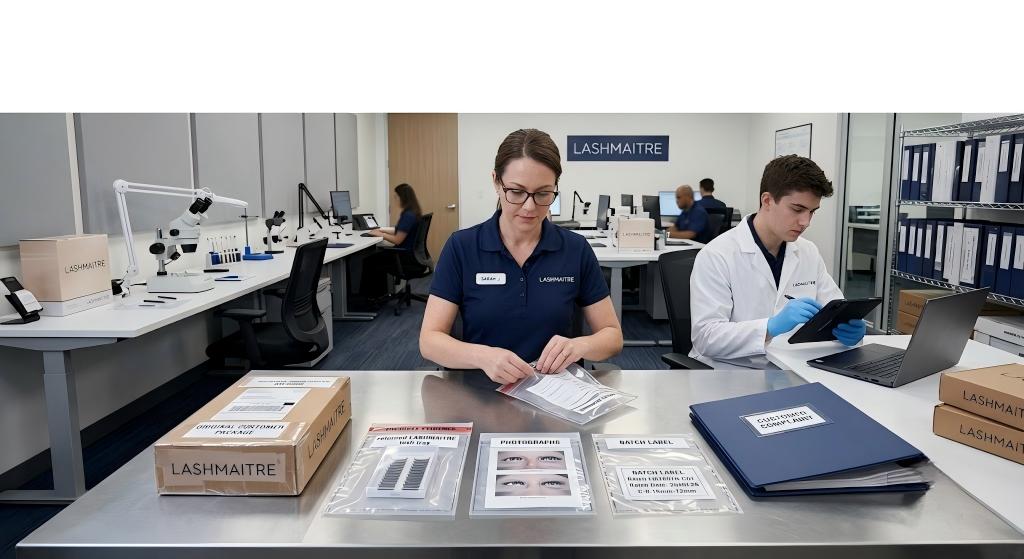
Preserve the date, reporter, contact channel, product description, observed issue, quantity, photographs, video, use conditions and any requested resolution. Keep original files rather than only a rewritten summary.
2. Product and Batch Identity
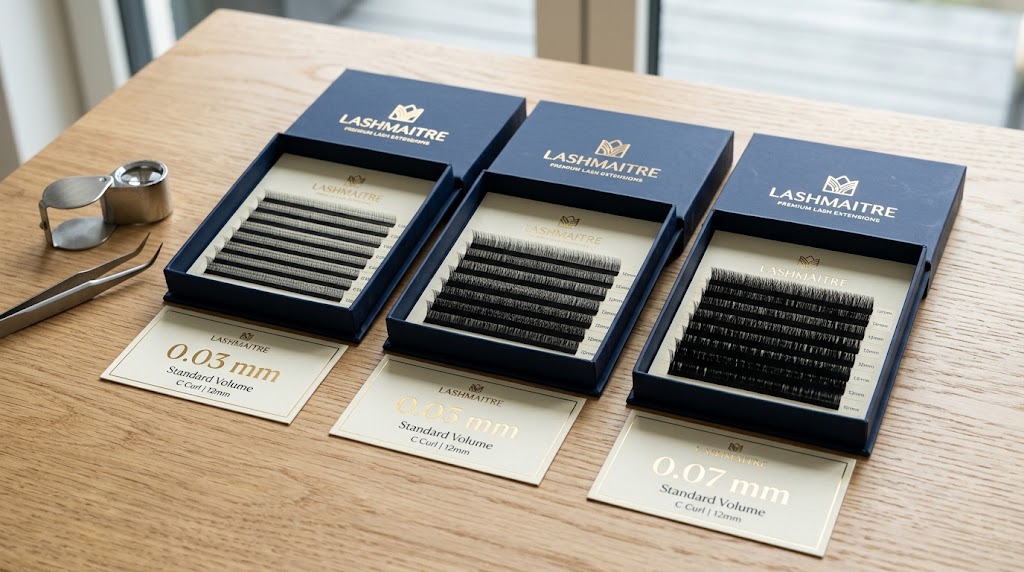
Capture SKU, curl, length or mix, tray or carton label, batch or lot code, barcode and purchase source. If the customer cannot locate a code, document that limitation.
3. Buyer Order and Acknowledgment
Compare the complaint with the confirmed purchase order, approved quantity, product configuration, packaging and shipping terms.
4. Approved Specification and Samples
Review the specification revision, master sample, artwork and approved packaging reference used for the affected order.
5. Production and Rework History
Review the production traveler, materials, operators, dates, equipment or stations, in-process checks, deviations and any authorized rework.
6. Final Inspection and Release
Check inspection plan, sample size, defect results, quantity reconciliation and batch-release approval. Confirm that records belong to the exact batch under review.
7. Packaging and Label Records
Verify line clearance, packaging BOM, label identity, label reconciliation, carton counts and shipping marks. Many “wrong product” complaints begin as a packaging or identification issue.
8. Distribution and Shipment Trace
Identify cartons, consignee, shipment date and other customers or warehouses that received the same batch. This defines the potential exposure without assuming every unit is affected.
9. Retained Sample and Comparison Results
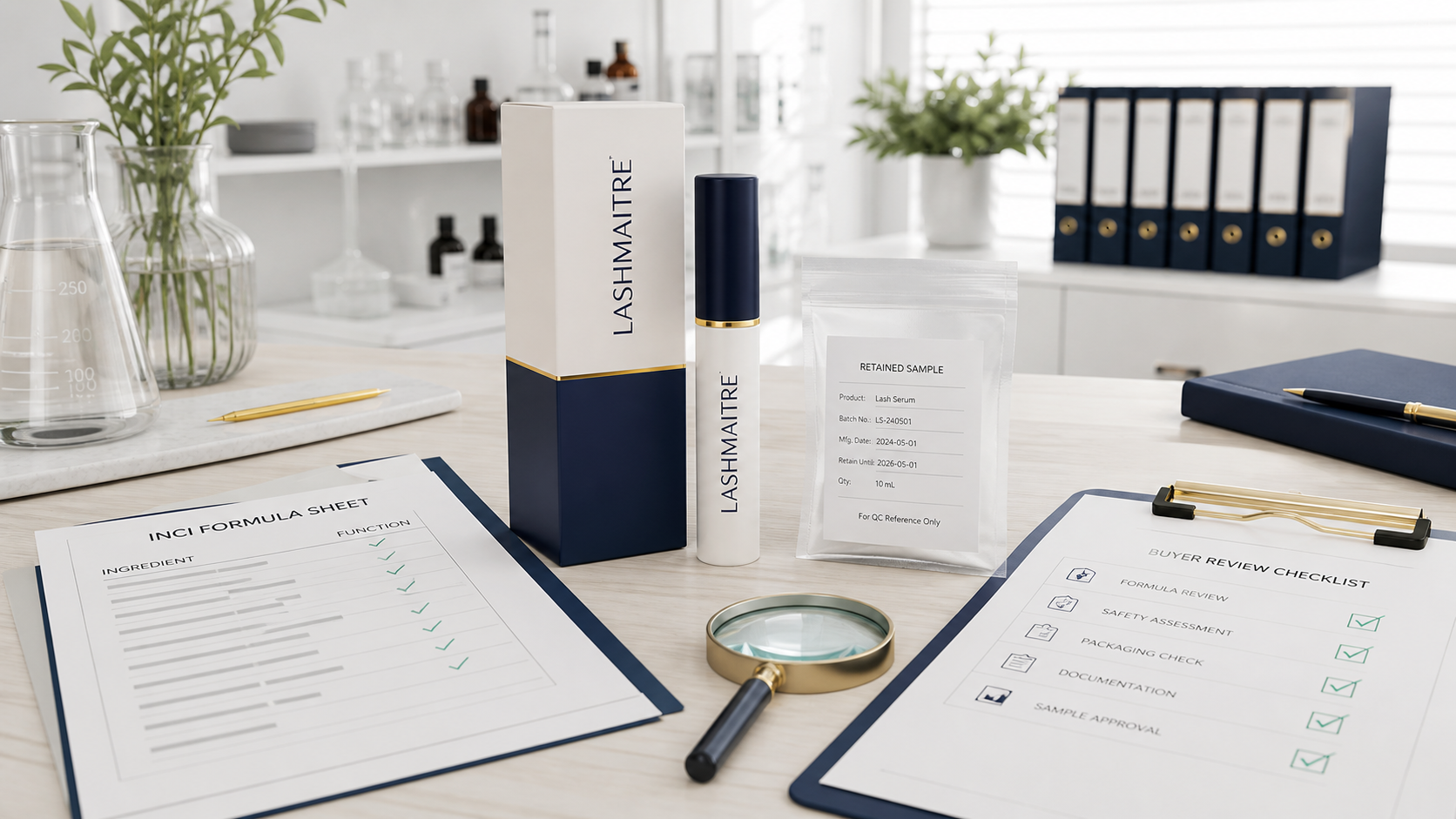
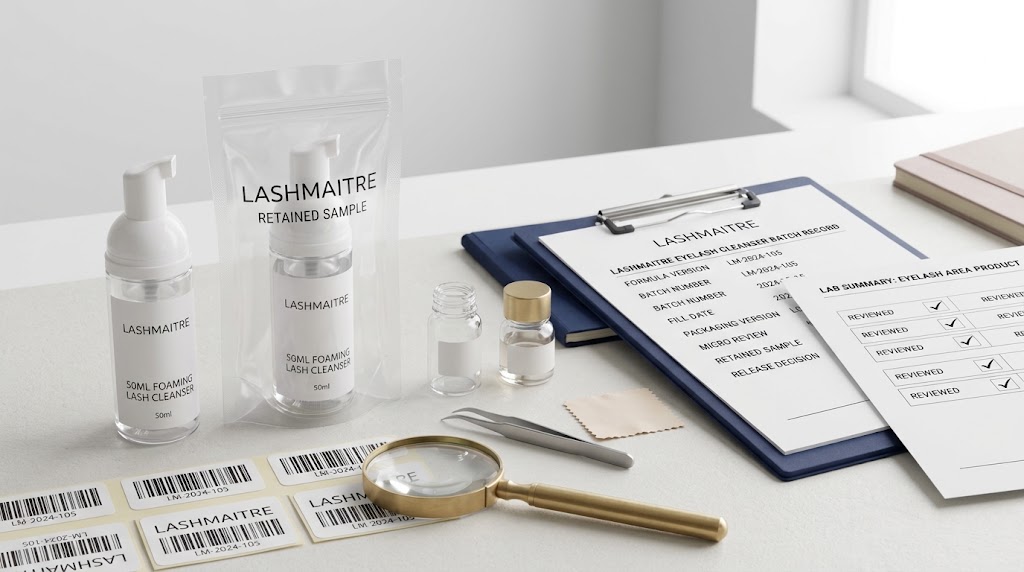
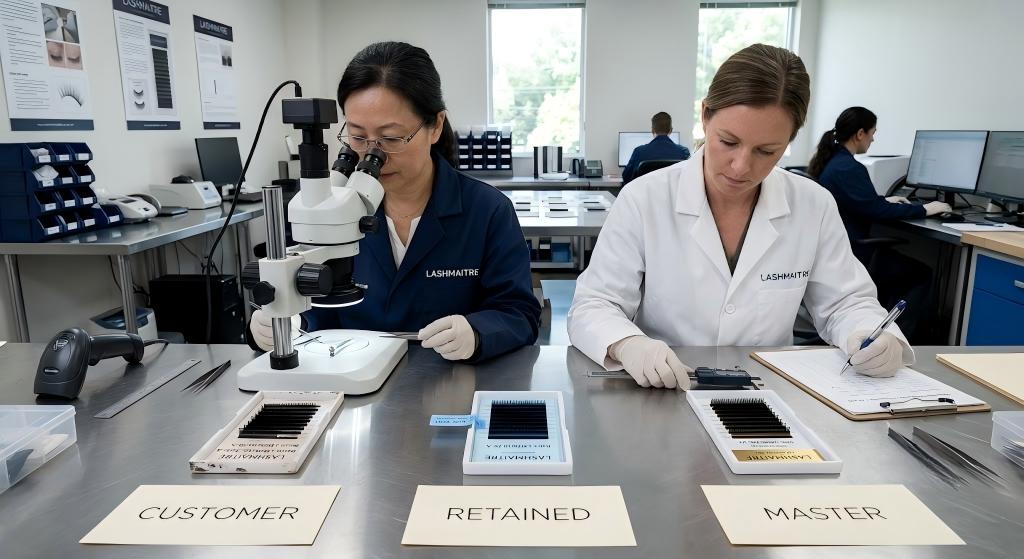
Retrieve the sealed retained sample for the exact batch, record access and compare it with the complaint evidence, master sample and current specification. A retained sample supports investigation but cannot recreate the customer's handling conditions by itself.
Complaint Triage Matrix
| Signal | Immediate action | Investigation focus | Escalation question |
|---|---|---|---|
| Isolated cosmetic difference | Acknowledge and preserve evidence | Sample, specification and batch comparison | Is it within the approved limit? |
| Wrong SKU or label | Hold related stock and trace shipments | Packaging, label and distribution records | Could other customers receive the wrong identity? |
| Repeat complaints | Expand scope across dates and lots | Trend, process and supplier history | Is there a systemic cause? |
| Injury or adverse reaction report | Preserve exact account and escalate promptly | Product identity, use details and applicable reporting process | Does a market-specific mandatory report apply? |
| Suspected contamination or widespread risk | Contain affected inventory and seek qualified guidance | Batch, materials, environment and distribution | Is recall or regulatory action required? |
How to Record the Investigation Conclusion
Separate confirmed facts, assumptions and unresolved items. State whether the complaint is confirmed, not confirmed or inconclusive; define affected scope; document containment; identify the evidence supporting the conclusion; and assign follow-up owners and dates.
If supplier corrective action is needed, open it as a linked process. The complaint record should still retain the original evidence, customer communication and final response.
Common Investigation Failures
- Asking the customer to discard the product before identity is captured.
- Saving screenshots but not original images or messages.
- Reviewing the master sample without retrieving the batch-specific retained sample.
- Comparing against the newest specification instead of the shipped revision.
- Ignoring packaging and distribution records when the complaint concerns wrong identity.
- Closing a complaint as “user error” without documented evidence.
- Promising a root cause before the investigation is complete.
- Missing applicable escalation or reporting obligations in the target market.
Lash Complaint Investigation FAQ
How do you investigate a lash complaint?
Preserve the original evidence, identify the product and batch, review the linked order, specification, production, inspection, packaging, distribution and retained-sample records, then document scope, conclusion and follow-up.
What if the batch code is missing?
Document the limitation and use available order, packaging, shipment and purchase-source evidence. Consider a wider hold if product identity cannot be reliably narrowed.
When should a complaint trigger a hold?
Use a hold when the report suggests a credible risk to other inventory or shipments, identity is uncertain, repeat issues exist or investigation evidence is incomplete.
Is a retained sample enough to close a complaint?
No. It is one evidence source. The investigation should also consider the customer's product, handling information and the complete batch and distribution record.
Build a Complaint File That Can Support a Decision
Connect complaint investigations to documented lash quality control, controlled lash samples, a traceable private label lash program and a complete wholesale lash inquiry.
Authority references: FDA cosmetics GMP guidelines and inspection checklist and FDA guidance on reporting cosmetic product complaints.
After complaint evidence and the affected batch are contained, use a structured lash root cause analysis to test material, method, tool and process hypotheses before assigning corrective action.

Lash Maitre: Your Trusted Partner in Eyelash extension Solutions
Lash Maitre is dedicated to providing professional insights and tips in the eyelash extension industry. Sharing the latest trends, techniques, and product knowledge, Lash Maitre helps lash artists and enthusiasts enhance their skills, stay inspired, and achieve the perfect lash experience.