Lash Golden Sample: 8 Controls Before Bulk Production
Share
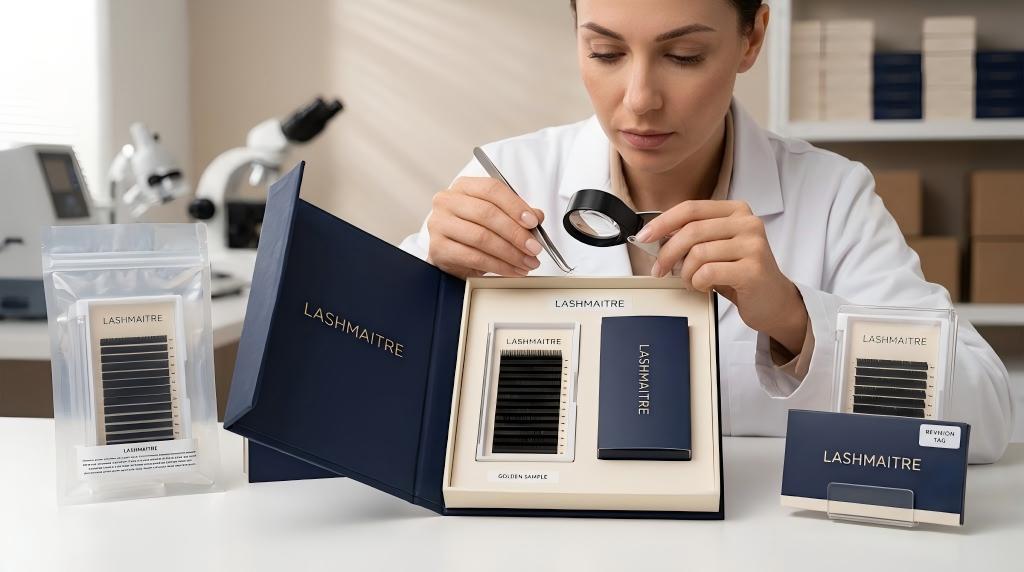
A lash golden sample is the final approved physical product that the buyer, supplier and quality team use as the comparison standard for production and reorders. It should be tied to a written specification, SKU, revision, approval date and custody record. A photograph alone is not enough: both sides need a controlled reference that shows exactly which lash tray, label and packaging version was approved.
What Is a Lash Golden Sample?
In general manufacturing, a golden sample is the final approved physical sample used alongside written specifications to judge later production. For a private-label lash order, the reference may include the lash tray, tray card, strip layout, curl and length mix, branded box, barcode label and any approved inserts.
The sample is not a promise that every later unit will be perfect. It is a practical reference for inspection. Production still needs a written tolerance sheet, sampling method, defect rules and traceable lot records.
For wholesale buyers, the most useful arrangement is normally a matching set: one controlled reference retained by the buyer and one retained by the supplier. Both should carry the same identification and revision. This master reference lash sample arrangement makes lash sample control practical across production, inspection and reorders.
Which Items Belong in the Golden Sample Set?
| Reference item | What it controls | Evidence to record |
|---|---|---|
| Lash product | Fiber finish, curl, length, thickness, taper and row presentation | SKU, specification revision and approval date |
| Tray card | Product naming, row labels and printed claims | Approved artwork version |
| Strip and backing | Release, spacing and attachment | Material or construction reference |
| Primary box | Color, finish, structure and product fit | Packaging revision and proof number |
| Labels | Barcode, SKU, batch fields and required buyer text | Label master and print proof |
| Approval record | Who approved what and under which conditions | Signer, date, comments and status |
The physical sample and its records should agree. If the box is revision 3 but the approval form names revision 2, the reference is not controlled.
8 Controls for a Lash Golden Sample
1. Give the Sample a Unique Reference Code
Assign a code that connects the physical item to the SKU and approval record. The code should distinguish product type, curl, thickness, length or mix, tray format and packaging revision where relevant.
Do not use a vague note such as approved sample. A buyer managing multiple curls and private-label versions needs to identify the exact reference without opening every archive pouch.
The existing LASHMAITRE guide to a lash sample reference code explains how to build that identification layer.
2. Keep Matching Buyer and Supplier Copies
Prepare two references from the same approved version whenever practical. Mark them as buyer copy and supplier copy without changing the product. Record the same reference code, revision, approval date and sealing method on both.
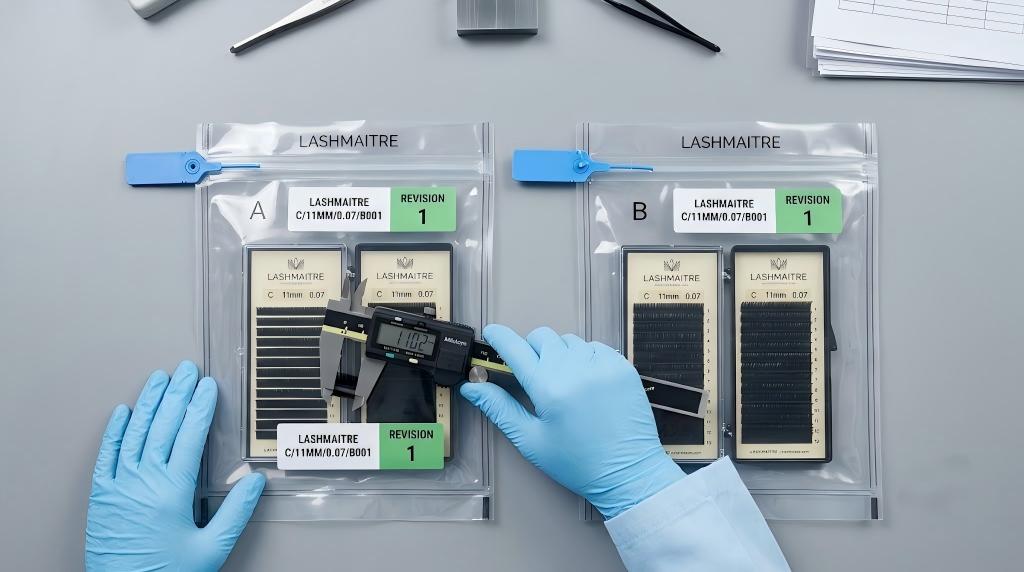
Matching copies reduce arguments caused by comparing a current shipment with different development samples. If only one physical sample exists, document who holds it, how the other party can inspect it and which photographs or measurements form the backup record.
3. Link the Sample to the Written Specification
A lash golden sample should never replace a specification sheet. Physical samples show appearance and handling; written specifications define measurable fields and tolerances.
Link the sample to the approved curl, thickness, length sequence, fiber finish, tray rows, strip construction, tray quantity, packaging materials, artwork version and label content. Buyers can use a lash specification tolerance sheet to separate target values from acceptable variation.
4. Seal and Photograph the Approved Condition
Place the reference in a protective pouch, box or controlled sample case. Use a tamper-evident tag or documented seal where practical. Photograph the product, packaging, reference code and seal at approval.
The aim is not security theatre. The seal helps show whether a reference was opened, handled, mixed with another version or physically changed after approval.
5. Record Custody and Storage
Store the sample where it is protected from dust, crushing, moisture, heat and unauthorized handling. Record the storage location and the person or role responsible for custody.
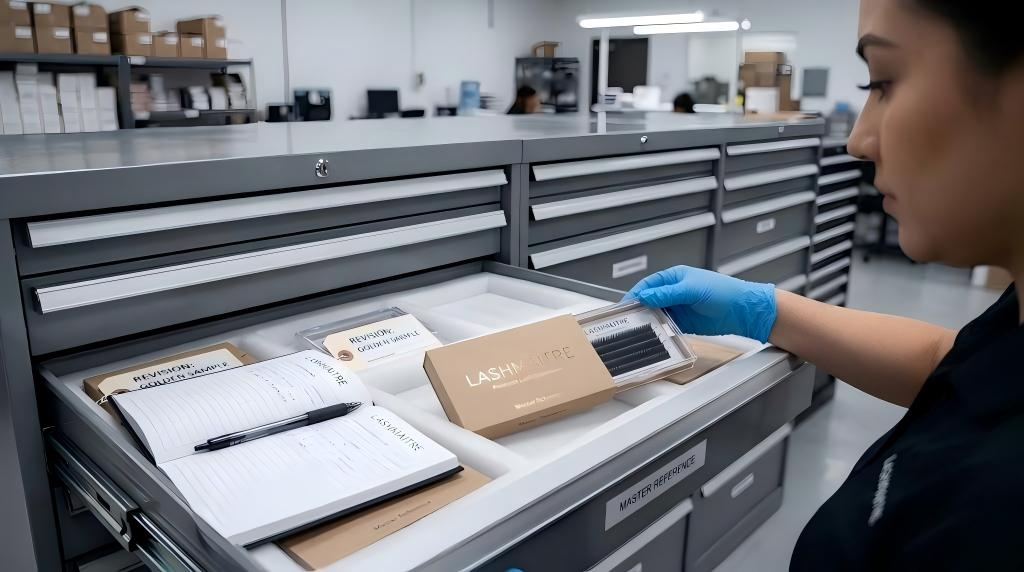
For a supplier archive, custody should make the sample available to production and QC without turning it into a casual demonstration tray. For the buyer, keep it separate from sellable stock, artist test trays and marketing samples.
6. Define When the Reference Must Be Used
State which events require comparison with the golden sample. Typical points include first normal production, packaging setup, in-process checks, pre-shipment inspection, receiving inspection and reorder investigation.
The reference should answer a specific question at each stage. During packaging setup, compare print, structure and product fit. During product QC, compare curl profile, fiber finish, row layout and other approved product characteristics.
7. Define Replacement and Reapproval Triggers
A golden sample should not be silently updated. Define which changes require a new reference: supplier, manufacturing location, fiber or strip material, product specification, tray card, box construction, artwork, label, barcode, packaging finish or approved deviation.
If the reference becomes damaged, contaminated, faded or no longer representative, quarantine it and create a documented replacement. Retain the superseded record so the history remains understandable.
8. Reconcile Every Reorder With the Active Revision
Before a reorder starts, confirm that the purchase order, artwork files, packaging inventory and supplier production file all point to the active golden sample revision.
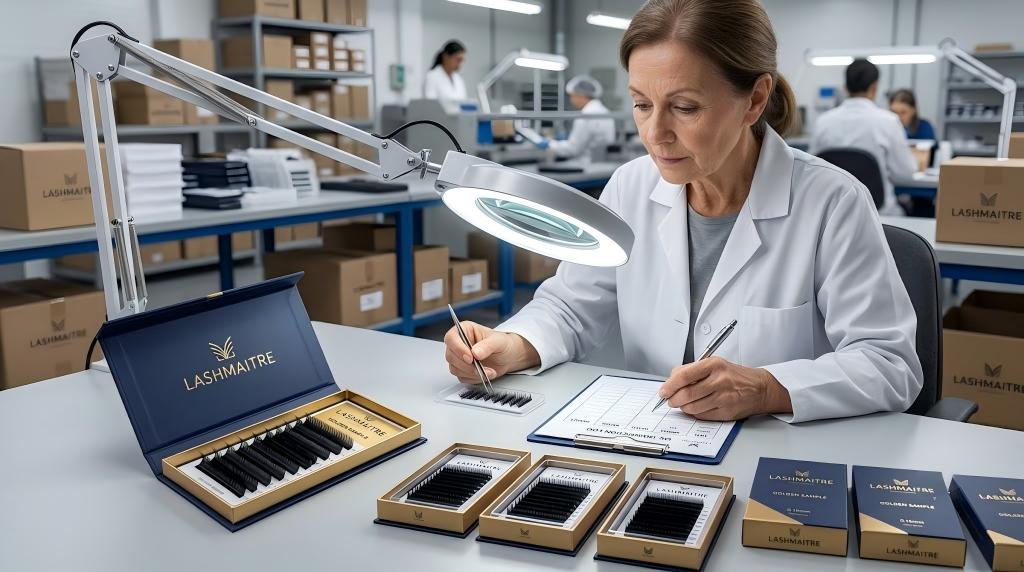
This is especially important when leftover packaging exists or when several similar lash SKUs share a visual design. The private label lash extensions workflow should keep product and packaging approvals separate but linked.
Golden Sample Control Record
| Control field | Buyer copy | Supplier copy | Release question |
|---|---|---|---|
| Reference code | Recorded | Recorded | Do both copies identify the same SKU? |
| Revision | Active version | Active version | Does it match the order and production file? |
| Approval | Name and date | Name and date | Is approval explicit and traceable? |
| Seal condition | Documented | Documented | Has either reference been altered? |
| Storage | Location and owner | Location and owner | Can the sample be retrieved for inspection? |
| Replacement rule | Agreed | Agreed | Would a change trigger reapproval? |
Common Golden Sample Mistakes
- Keeping only an approval photograph and no controlled physical reference.
- Allowing the factory and buyer to retain different sample versions.
- Treating the physical sample as a substitute for measurable specifications.
- Mixing a product reference with an unapproved packaging revision.
- Leaving the sample in open production storage without custody records.
- Using the reference for demonstrations until it is damaged.
- Replacing a sample without preserving the superseded revision history.
- Starting a reorder before confirming which reference is active.
To connect the retained golden sample with buyer feedback, approved specifications, version history and the reorder reference, use a documented lash sample approval framework.
FAQ: Lash Golden Sample
What is a lash golden sample?
It is the final approved physical lash product and, where applicable, matching packaging used as a controlled comparison reference for production, inspection and reorders.
Is a photograph enough for a golden sample?
No. Photographs help preserve evidence, but they cannot fully show curl profile, fiber finish, handling, strip release, material texture or packaging construction. Keep a controlled physical reference linked to written specifications.
Who should keep the approved lash sample?
Buyer and supplier should each retain a matching controlled copy when practical. Both copies need the same reference code, revision, approval date and custody record.
When should a golden sample be replaced?
Replace or reapprove it when the product, material, supplier, process, artwork, packaging or label changes, or when the physical reference is damaged or no longer representative.
Turn Approval Into a Reusable Production Standard
A reliable lash golden sample system connects a protected physical reference with written specifications, matching custody copies, active revision control and clear reapproval triggers. Buyers can request lash extension samples and use LASHMAITRE lash quality control to carry the approved reference into production and reorder checks.
Authority reference: Sofeast – Golden Sample in Manufacturing.

Lash Maitre: Your Trusted Partner in Eyelash extension Solutions
Lash Maitre is dedicated to providing professional insights and tips in the eyelash extension industry. Sharing the latest trends, techniques, and product knowledge, Lash Maitre helps lash artists and enthusiasts enhance their skills, stay inspired, and achieve the perfect lash experience.