Lash First Article Inspection: 8 Checks Before Production Release
Share
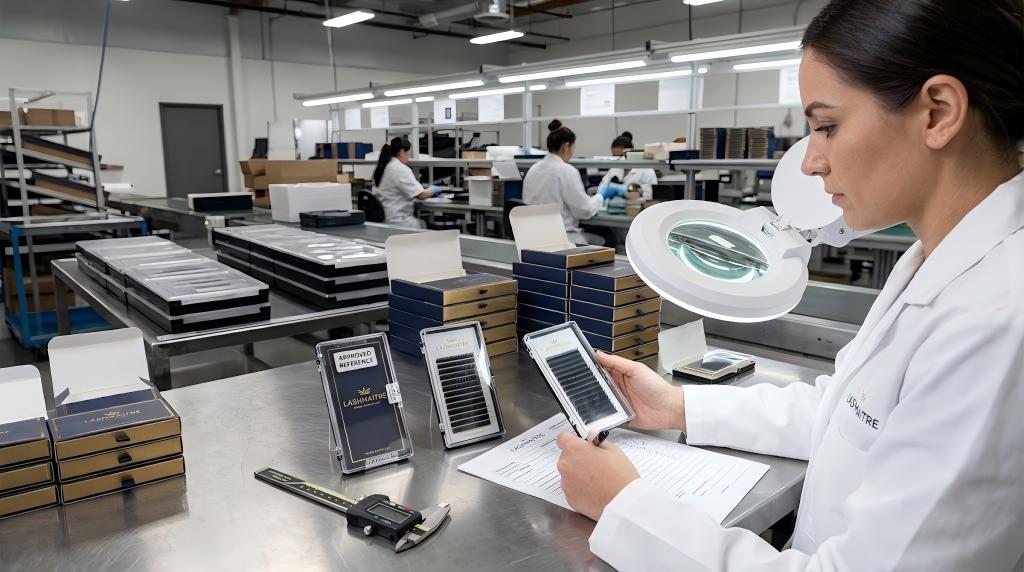
A lash first article inspection checks the first units made with the intended production materials, equipment, operators and packaging before the remaining order is released. The inspector compares those units with the approved reference, written specification and artwork files, records the evidence and gives a clear release, conditional release or hold decision. It catches setup mistakes before they spread across a full wholesale lash lot.
What Is a Lash First Article Inspection?
First article inspection, or FAI, is a controlled comparison of the first representative production output against the buyer's approved requirements. This first production lash check is also an initial production inspection of the process setup. For private-label lashes, the scope can include the lash product, tray card, row labels, strip performance, branded box, barcode and shipping identification.
The important word is representative. A hand-built showroom sample made outside the normal production route is not a reliable first article. The inspected units should come from the actual materials and process intended for the order.
FAI does not replace final sampling. It confirms that production starts from the correct setup; later AQL or pre-shipment inspection checks whether the completed lot remains acceptable.
Lash First Article Inspection vs AQL vs Pre-Shipment Inspection
| Control point | Main question | Typical timing | Typical result |
|---|---|---|---|
| Approved sample | Is this design and presentation acceptable? | Before production setup | Approval or revision request |
| First article inspection | Is the normal production setup making the approved item? | At the beginning of production | Release, conditional release or hold |
| In-process check | Is production staying stable? | During the run | Continue, correct or segregate |
| AQL or pre-shipment inspection | Is the finished lot acceptable under the sampling plan? | After completion or before shipment | Accept, reject or corrective action |
Buyers should define these gates separately in the purchase order and wholesale lash QC inspection report. Combining every control into one vague “QC passed” statement removes the evidence needed to make a release decision.
8 Checks Before Production Release
1. Confirm the trigger and inspection scope
Run a lash first article inspection for a new SKU, new supplier, new material, new production line or meaningful specification or packaging revision. Repeat it after a corrective action when the change can affect fit, form, function or labeling.
Define which components are in scope before production begins. A lash tray can pass while the wrong barcode, old artwork or incorrect row label still makes the finished unit unacceptable.
2. Verify a production-representative process
Record the line, material lot, operator or work cell, tooling, tray-card version and packaging version used for the first articles. The supplier should not substitute special materials or off-line preparation merely to obtain approval.
The first units should follow the same route planned for the remaining order. If a necessary process is not yet ready, label the result as a development sample rather than a production release.
3. Identify the first articles and production lot
Assign a traceable ID to each inspected unit and connect it to the purchase order, SKU, batch and inspection date. Photographs should show the identity label as well as the product.
Secure the inspected pieces after the decision. A retained approved unit helps the quality team resolve later questions without relying on memory or unlinked photos.
4. Compare the lash product with the approved reference
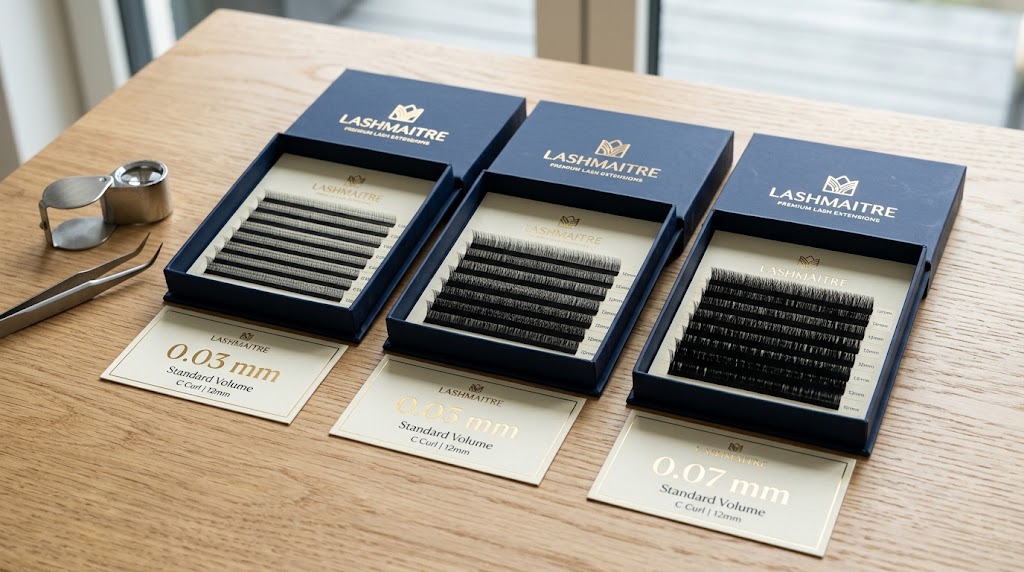
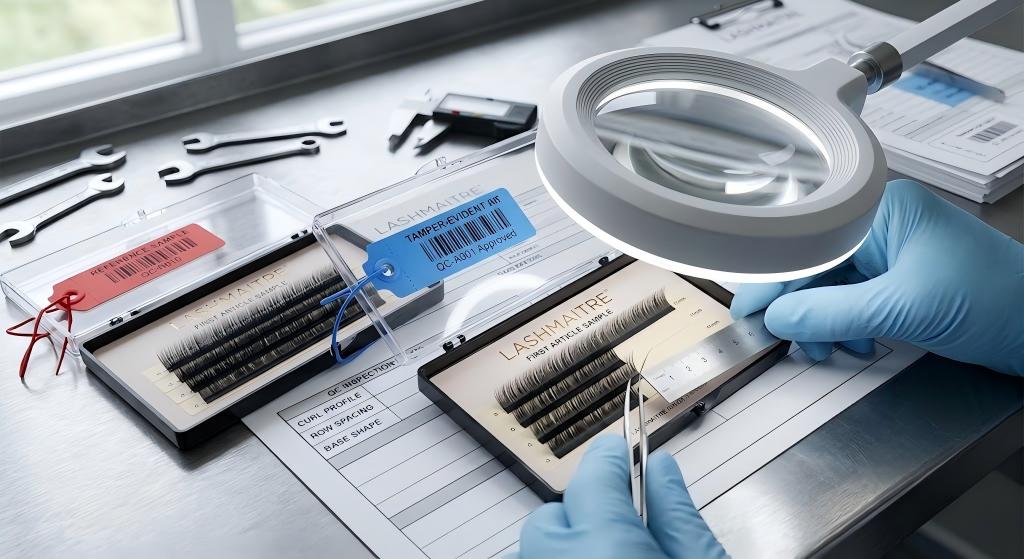
Use the active approved reference and written tolerances. Check the attributes that matter to the buyer and end user, such as:
- curl family and profile;
- length, diameter and mixed-length sequence;
- fiber color, finish and taper;
- fan or cluster construction where applicable;
- row count, spacing and presentation;
- strip attachment and clean release;
- visible contamination, damage or deformation.
The inspector should record actual observations, not only tick “same as sample.” Where measurement is feasible, include the tool, method and result.
5. Inspect the tray, label and packaging system
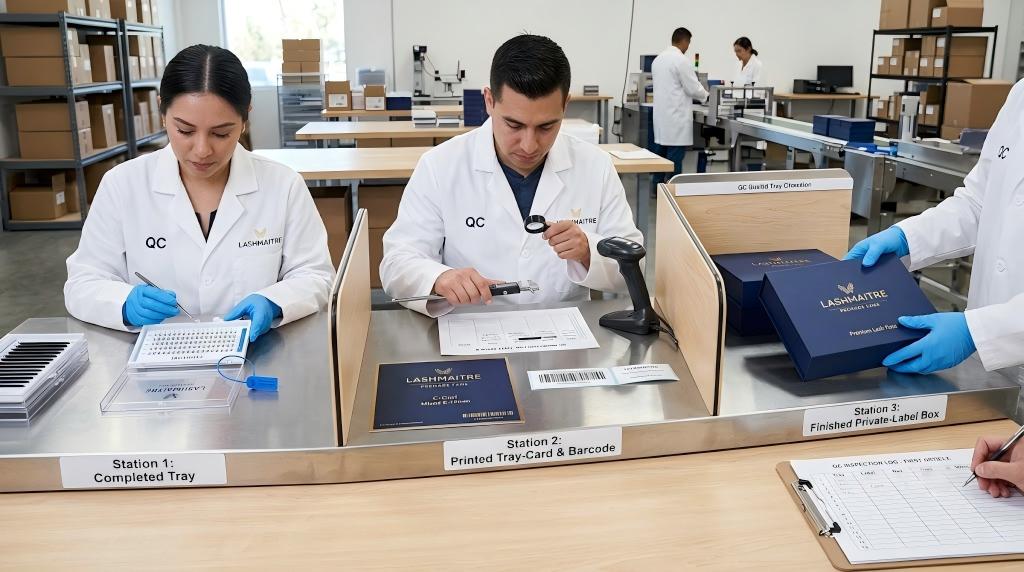
Compare the tray card, SKU naming, row labels, box construction, printed colors, barcode and mandatory buyer text against their approved masters. Scan barcodes rather than judging them only by appearance.
Check product fit and protection too. A visually correct box can still allow tray movement, crushed corners or product contact during shipment. The private-label lash extensions workflow should connect product and packaging approvals instead of treating them as unrelated files.
6. Record objective evidence
A useful report contains the requirement, inspection method, result, status and evidence reference. Include clear images of the whole unit, detailed defects, labels and measurement setup. Name files by PO, SKU, lot and inspection date.
| Evidence field | Minimum record |
|---|---|
| Order identity | PO, SKU and lot or batch |
| Reference | Specification and artwork revisions |
| Sample identity | Unit number or first-article tag |
| Inspection | Characteristic, method and actual result |
| Visual proof | Linked photo IDs with scale when relevant |
| Decision | Release, conditional release or hold |
| Authorization | Decision owner, date and conditions |
7. Control deviations and reinspection
Do not erase a failed first result after correction. Record the nonconformance, affected quantity, root cause or immediate cause, corrective action and new sample identity. This preserves the history needed for supplier improvement and future reorders.
A conditional release should be narrow and written. State which deviation is accepted, for which quantity or lot, and whether the next batch returns to the original specification. See the lash specification tolerance guide for separating measurable tolerances from unapproved changes.
8. Make an explicit release or hold decision
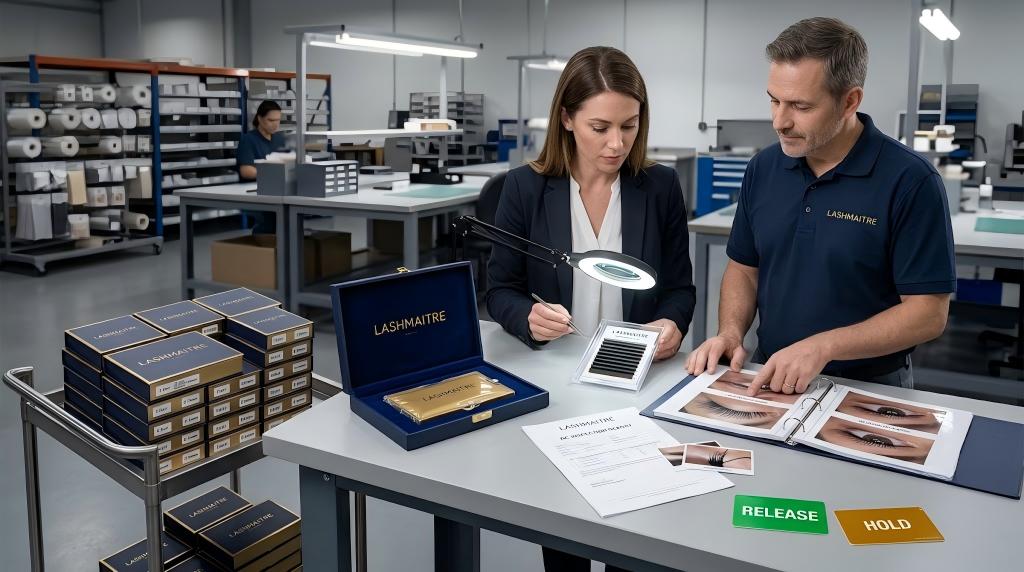
The decision should answer whether the supplier may continue the remaining production quantity. Avoid ambiguous messages such as “looks mostly fine.” Use a controlled status:
- Release: all required checks pass and production may continue.
- Conditional release: a documented exception is accepted for a defined scope.
- Hold: production or affected packing remains stopped pending correction and reinspection.
Name the buyer representative or authorized quality owner who can release the order. The supplier should acknowledge the decision and retain the same report revision.
Lash First Article Inspection Release Checklist
| Check | Pass evidence | Hold trigger |
|---|---|---|
| Identity | PO, SKU, lot and revision agree | Missing or conflicting identification |
| Process | Normal materials and route confirmed | Special or unknown process used |
| Lash specs | Results fall within approved limits | Wrong curl, length, diameter or construction |
| Tray presentation | Row count, labels and release acceptable | Mislabeling, poor release or contamination |
| Artwork and barcode | Active masters used and barcode scans | Old artwork, wrong SKU or unreadable code |
| Packaging | Correct structure, fit and protection | Wrong version or inadequate protection |
| Evidence | Report and images are traceable | Generic checklist without actual results |
| Authorization | Named owner signs release | No clear decision authority |
This checklist can be added to a buyer's lash pre-shipment inspection brief, while keeping the different inspection timing clear.
Common First Article Inspection Mistakes
Approving a non-representative hand sample
A development sample may show the intended appearance but not the stability of the normal process. Confirm that the inspected unit came from the production setup.
Checking only the lash fibers
Wholesale complaints often come from mixed labels, wrong artwork, barcode errors or poor packaging protection. Inspect the saleable unit, not an isolated component.
Using an obsolete reference
The inspector must verify the active specification and artwork revisions. A precise comparison against the wrong master still produces the wrong decision.
Releasing production through an informal chat
Chat can speed communication, but the controlled report should contain the final status, accepted conditions, responsible owner and timestamp.
Frequently Asked Questions (FAQ)
How many units are needed for a lash first article inspection?
There is no universal number. The buyer should select enough units to cover the relevant production setup, SKU variants and packaging versions. FAI is usually a targeted verification, not an AQL sample of the finished lot.
Is first article inspection the same as a golden sample approval?
No. The golden sample defines the approved reference. First article inspection verifies that the normal production setup can reproduce it with the correct specifications, labels and packaging.
Does a passed FAI guarantee the full lot will pass?
No. It confirms the initial setup and first representative output. In-process controls and final sampling are still needed to detect drift, mixed product or later handling damage.
When should a lash first article inspection be repeated?
Repeat it after changes that can affect the product or packaging, including new materials, tooling, line, supplier, artwork or corrective action. Define the triggers in advance.
Release Production With Traceable Evidence
A disciplined lash first article inspection connects the approved reference to real production output before the order grows. Buyers should verify the process, product, tray, label and packaging, preserve objective evidence and issue an explicit release or hold decision. LASHMAITRE buyers can align these requirements through the wholesale lash extensions inquiry and the broader lash quality control process.
Authority reference: SAP Help – First Article Inspection.

Lash Maitre: Your Trusted Partner in Eyelash extension Solutions
Lash Maitre is dedicated to providing professional insights and tips in the eyelash extension industry. Sharing the latest trends, techniques, and product knowledge, Lash Maitre helps lash artists and enthusiasts enhance their skills, stay inspired, and achieve the perfect lash experience.