Lash Batch ID Record: 8 Fields for Safer Lash Reorders
Share
Quick Answer
A lash batch ID record is the buyer-side traceability note that links a wholesale reorder to the approved sample, SKU, production batch, carton label, QC record and previous order details. It helps lash brands avoid "same product, different result" problems when reordering from a supplier.
Wholesale lash buyers should not rely only on product names such as "C curl mixed tray" or "premium volume lashes." The batch ID shows which approved version was produced and shipped.
This page is not a general batch consistency checklist. It focuses on how a buyer records the batch ID, SKU, carton label and reorder note so the next order can be matched to the correct production reference.
Why A Lash Batch ID Record Matters For Reorders
Reorders are supposed to be simple. In reality, they can become risky when the buyer and supplier do not know which version should be repeated.
A lash tray may have:
- The same product name but a different length map.
- The same curl but a different finish.
- The same packaging design but a new barcode.
- The same SKU but a changed carton label.
- The same order quantity but a different shipping method.
A lash batch ID record gives the buyer a reference point for repeat production.
What A Good Batch ID Record Includes
| Record field | Why it matters |
|---|---|
| Approved sample code | Shows the physical sample standard |
| Batch ID | Identifies the production batch |
| SKU or barcode | Helps warehouse and reorder control |
| Curl and thickness | Prevents spec mismatch |
| Length map | Prevents wrong row sequence |
| Finish or color | Helps compare matte, silk, brown or colored trays |
| Packaging proof version | Prevents wrong tray card or box |
| Carton label | Confirms quantity, destination and carton count |
| QC note | Records whether the batch passed inspection |
The batch ID record does not need to be complicated. It just needs to be complete enough that a buyer can reorder without asking the supplier to guess.
For buyers using formal warehouse labels, the SKU and batch fields can be connected to GS1 barcode standards or the buyer's internal barcode system.
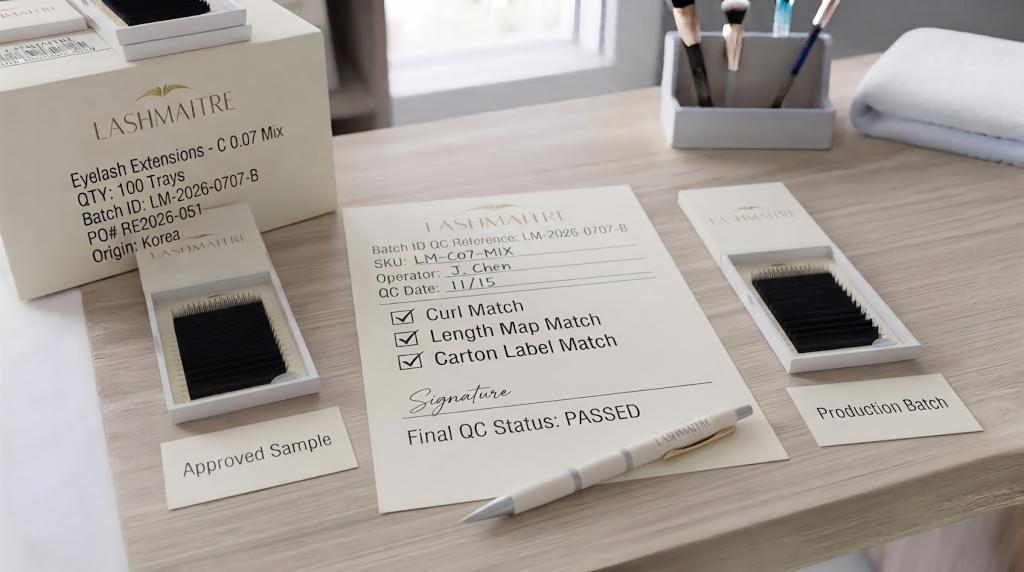
Batch ID Vs SKU
A SKU identifies the product. A batch ID identifies the production run.
For example:
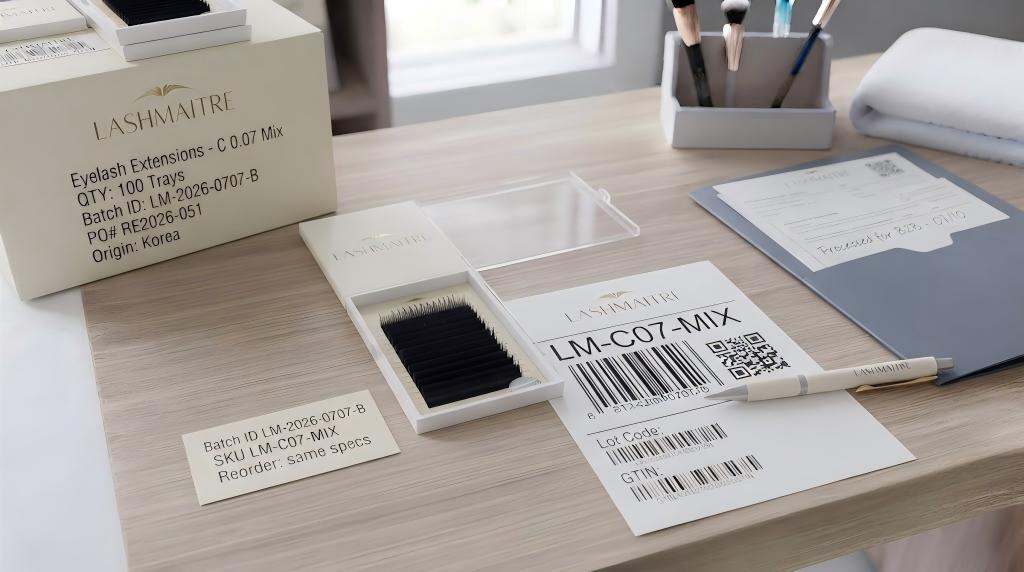
| Field | Example |
|---|---|
| SKU | LM-C07-MIX |
| Batch ID | LM-2026-0707-B |
| Product | C curl 0.07 mixed tray |
| Quantity | 50 trays |
| Carton | 1 of 1 |
The SKU may stay the same across repeat orders, while the batch ID changes each time a new production run is made. Both are useful.
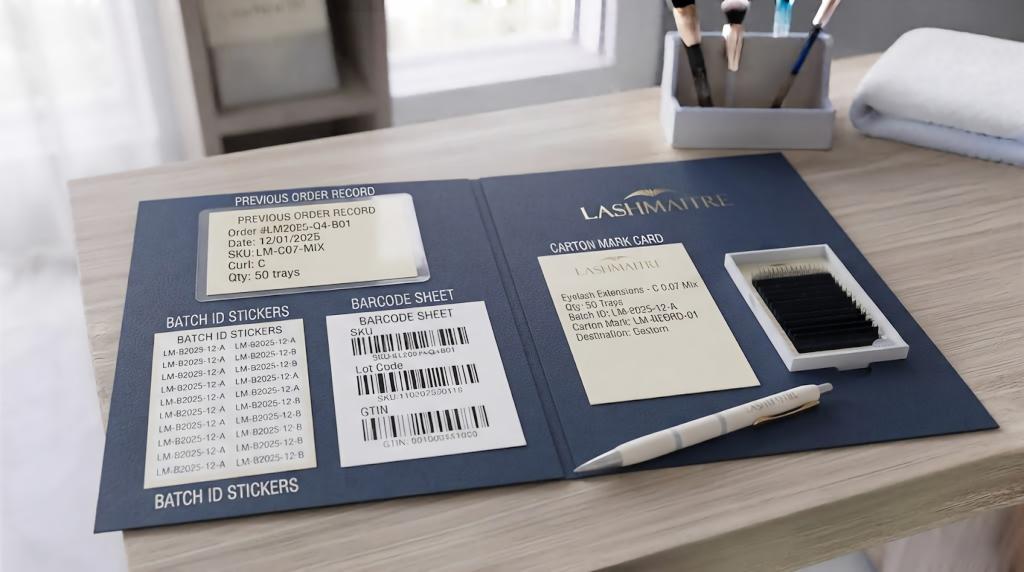
How Buyers Should Use It
Before reordering, compare the new order request with the previous batch ID record.
Ask:
- Is the approved sample still the same?
- Is the curl, thickness and length map unchanged?
- Is the packaging proof unchanged?
- Is the barcode or SKU unchanged?
- Is the carton label still correct for the destination?
- Did the previous batch have any QC notes?
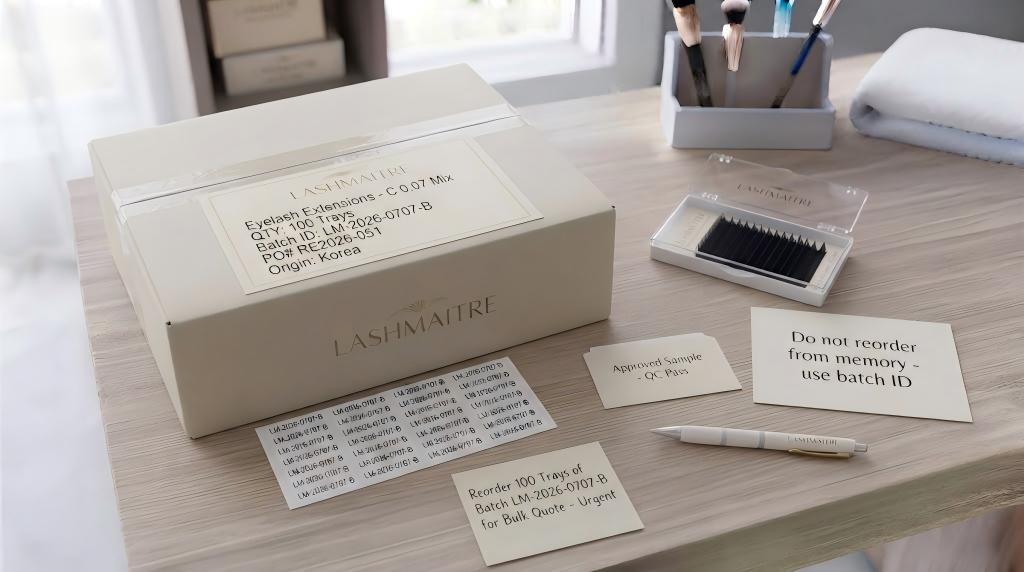
If the answer is unclear, do not send a simple "same as last time" reorder. Send the batch ID and the exact spec record.
Reorder Message Example
"Please reorder 50 trays based on batch ID LM-2026-0707-B and sample code LM-SAMPLE-C07-MIX-B2. Keep SKU, curl, thickness, length map, tray card and carton label the same. Please confirm whether any packaging or lead time change is needed."
This message is short but gives the supplier enough information to repeat the right product.
Common Mistakes
Avoid these reorder mistakes:
- Asking for "same as before" without batch ID.
- Sending only a product photo without SKU.
- Reusing an old packaging proof after the logo changed.
- Ignoring previous QC notes.
- Changing quantity without checking carton count or shipping cost.
CTA
If you are planning repeat wholesale lash orders, use LASHMAITRE QC records and MOQ 50 planning to keep approved samples, SKUs and batch IDs easy to repeat.
Core links:
- Use lash quality control to compare the approved sample with the production batch.
- Plan repeat quantities with MOQ 50 wholesale lash extensions when testing small reorder batches.
- Connect batch records with private label lash extensions when packaging, barcode or carton labels are involved.
FAQ
A lash batch ID record links a production batch to the approved sample, SKU, carton label, QC note and reorder details.
A lash batch ID record should be checked before a repeat order, before carton label printing and before shipment release. This helps the buyer confirm that the reorder follows the approved sample and the correct production batch.
No. SKU identifies the product, while batch ID identifies the production run. A reorder may keep the same SKU but receive a new batch ID.
Batch records help buyers repeat the same lash tray and trace any product, packaging or QC issue back to the correct production run.
Send the approved sample code, previous batch ID, SKU, specs, packaging proof version, quantity, destination and any QC notes from the last order.
—
FAQ
Why is a lash batch ID important for wholesale reorders?
A batch ID links a reorder to the approved production lot, carton label, SKU, barcode sheet, and QC record. It helps buyers avoid reordering from memory when the previous tray or packaging details need to be repeated.
What information should a lash batch ID record include?
A useful batch ID record should include the approved sample code, SKU, curl, thickness, length map, tray format, packaging version, carton mark, quantity, and QC status.
Can a supplier quote a reorder without a batch ID?
A supplier can quote from general specs, but the risk is higher. For safer wholesale reorders, the buyer should provide the batch ID or approved sample code so the factory can match the previous order record.
Connect each batch identifier to production, cartons, shipments and direct recipients through a practical lash product recall traceability plan.

Lash Maitre: Your Trusted Partner in Eyelash extension Solutions
Lash Maitre is dedicated to providing professional insights and tips in the eyelash extension industry. Sharing the latest trends, techniques, and product knowledge, Lash Maitre helps lash artists and enthusiasts enhance their skills, stay inspired, and achieve the perfect lash experience.