PBT Lash Fiber Quality: 8 Sample Checks Before Wholesale Orders
Share
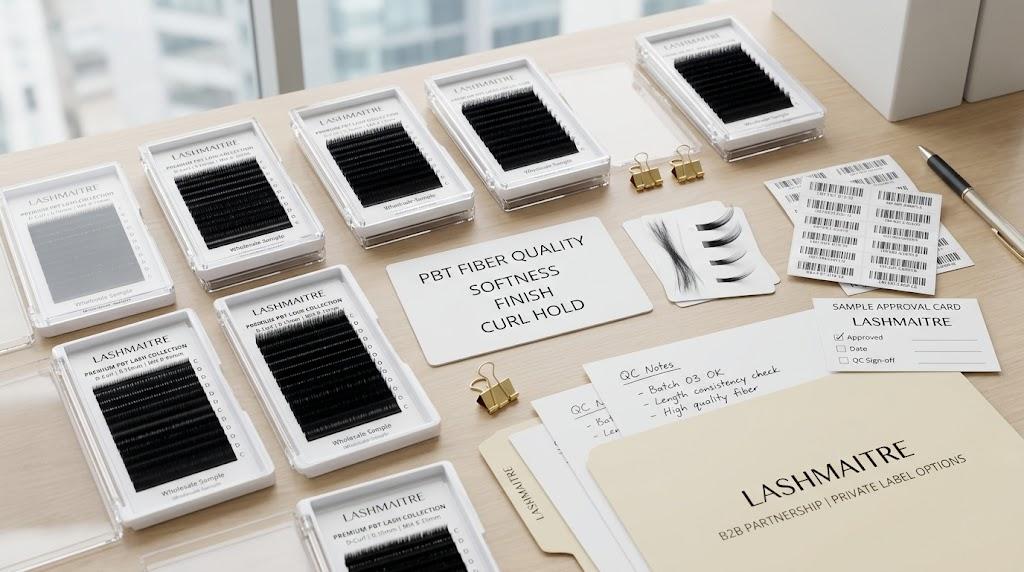
Direct answer:PBT lash fiber quality should be approved on finished sample trays by checking softness, finish, curl hold, thickness tolerance, strip release, tray labels and sample records before wholesale MOQ.
What Is PBT Lash Fiber?
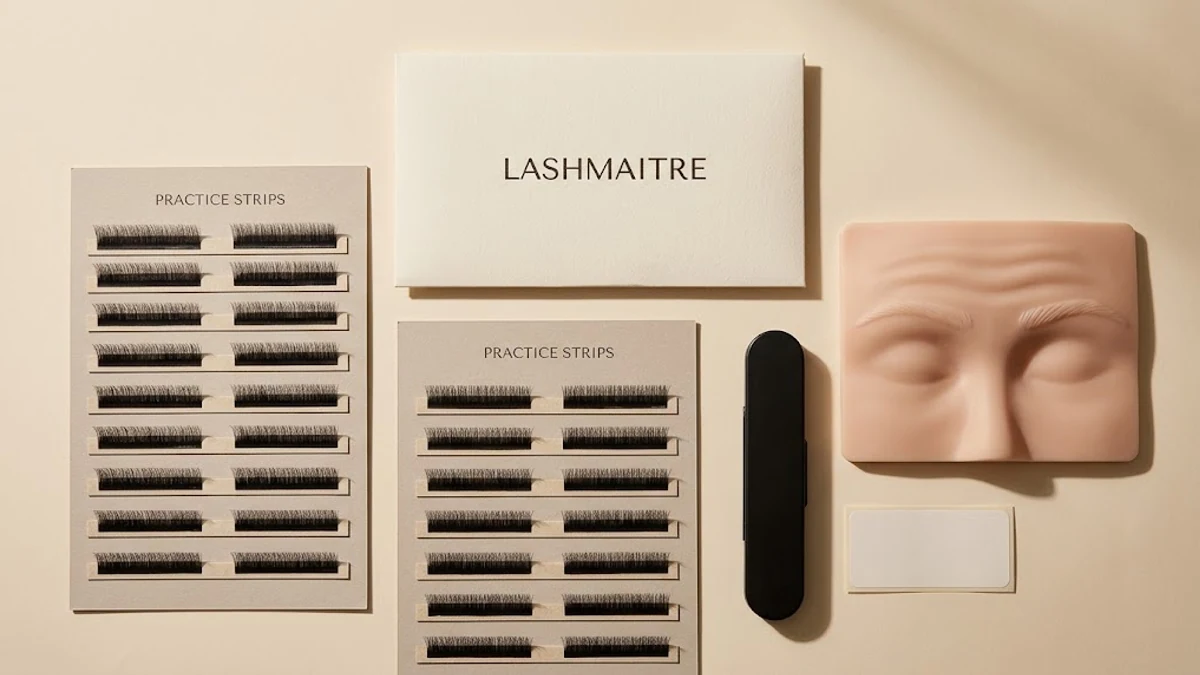
PBT lash fiber is a synthetic polyester-based fiber commonly used for eyelash extension trays. In wholesale buying, the important point is not only the material name. PBT lash fiber quality should be judged by the finished tray: softness, finish, curl hold, thickness accuracy, row alignment, strip release, label clarity and reorder records.
PBT is known in broader material references as a semi-crystalline engineering thermoplastic in the polyester family. That material background helps explain why suppliers mention PBT in lash products, but it does not tell a buyer whether a specific lash tray is right for their brand. The sample tray still has to be tested.
For LASHMAITRE buyers, the best approach is sample-first: compare the physical trays, approve the exact product family, then save the fiber and packaging record for reorder.
Use the same buyer path as any other lash extension samples project: approve the tray, record the QC result, and make the spec easy to reorder.
Why Material Names Alone Are Not Enough
Many lash suppliers use similar material wording. Buyers may see phrases such as PBT, Korean PBT, premium PBT, matte black, silk finish or cashmere feel. These words can be useful, but they are not a complete specification.
A wholesale buyer should ask:
- Does the tray feel soft enough for the target product line?
- Is the finish matte, glossy or soft black?
- Does the curl match the approved style?
- Is the thickness accurate for the intended service?
- Does the tray release cleanly during pickup?
- Can the same spec be reordered later?
The final buyer experience comes from the finished lash tray, not from a material label alone.
Check 1: Compare Softness by Product Family
Softness should be judged inside the correct product family. A classic lash tray, volume tray, flat lash tray and premade fan tray do not need to feel identical.
Use a simple comparison set:
| Product family | What to compare |
|---|---|
| Classic lashes | Individual fiber feel and curl shape. |
| Volume lashes | Fine diameter, lightness and pickup comfort. |
| Flat lashes | Softness plus base shape and finish. |
| Premade fans | Fan base, spread and fiber feel. |
If your brand plans to sell more than one family, approve each family separately. Do not approve a whole catalog based on one sample tray.
This is also where a buyer should connect fiber notes to the wider lash quality control file, not only to a sales name.
Check 2: Choose Matte, Silk or Cashmere-Like Finish
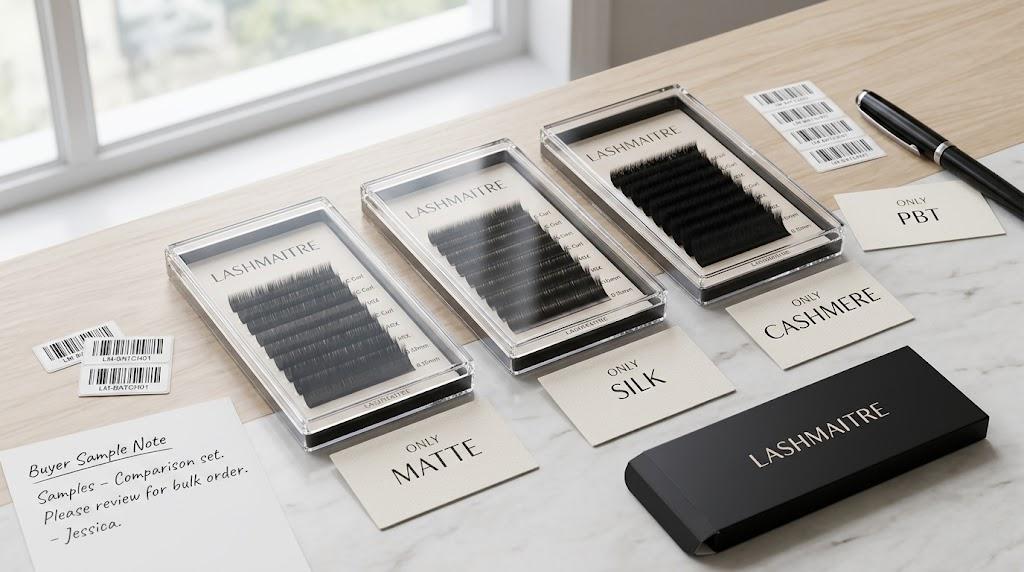
Finish changes the look of the range. A matte tray may feel more natural and soft in branding. A silk-like finish may look slightly more polished. A cashmere-like product usually needs to communicate softness and comfort.
Before choosing packaging names, compare the finish under normal daylight and product photography light. A private label brand should make sure the finish name matches what the buyer can see and feel.
For a deeper finish decision, compare the sample against the lash fiber finish checklist before approving the product name.
Check 3: Check Curl Hold in the Sample Tray
Curl hold is not only about the raw fiber. The finished tray has to match the curl shape that was approved for the product line. Compare C, CC, D or specialty curls against the approved sample card.
If your range includes mapping styles such as cat eye, doll eye, fox eye or wispy, curl choice affects the final look. The same length map can feel softer or more dramatic when the curl changes.
If the sample will be sold as a mapped style, connect curl notes to the approved lash mapping styles record.
Check 4: Confirm Thickness Accuracy
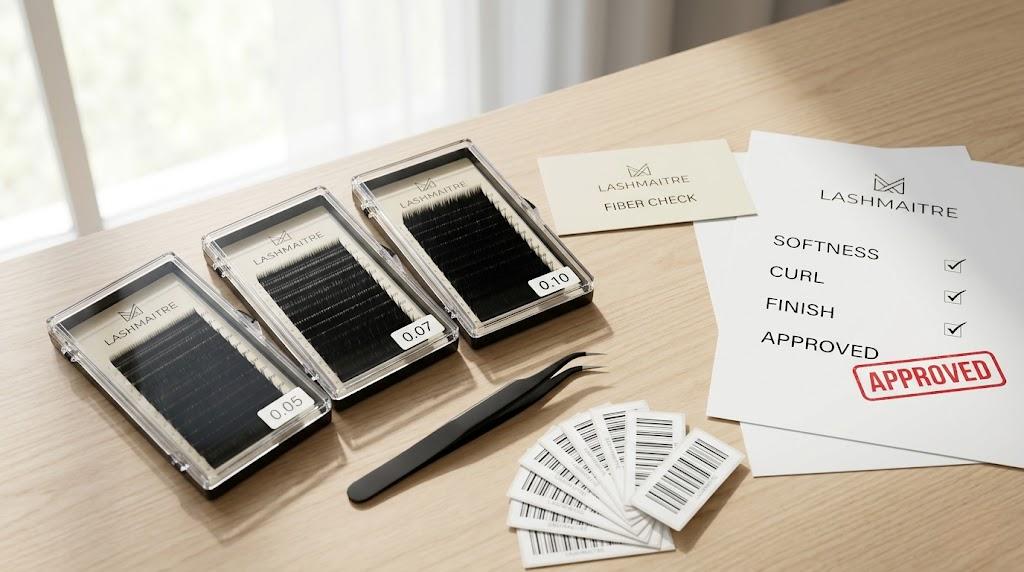
Thickness affects weight, darkness and technician expectations. A buyer should compare the actual sample tray against the label and reorder sheet.
Common checks include:
- Does the tray label match the thickness ordered?
- Does the product family make sense for that thickness?
- Does the tray feel too heavy or too light for the intended style?
- Is the thickness record clear enough for reorder?
For a first private label range, avoid approving too many thicknesses at once. A focused sample set is easier to test and reorder.
Check 5: Test Pickup and Strip Release
A tray that looks good on the card still needs to work during pickup. Strip release should feel controlled: not so strong that pickup becomes frustrating, and not so loose that rows shift too easily.
Ask the sample tester to note:
- Pickup feel.
- Strip release.
- Base neatness.
- Row stability after opening.
- Any difference between sample trays.
These notes can be kept in the QC file before the buyer approves a bigger MOQ.
Run a small confirmation order through the MOQ 50 wholesale lash extensions path before opening too many finish variations.
Check 6: Review Row Alignment and Tray Density
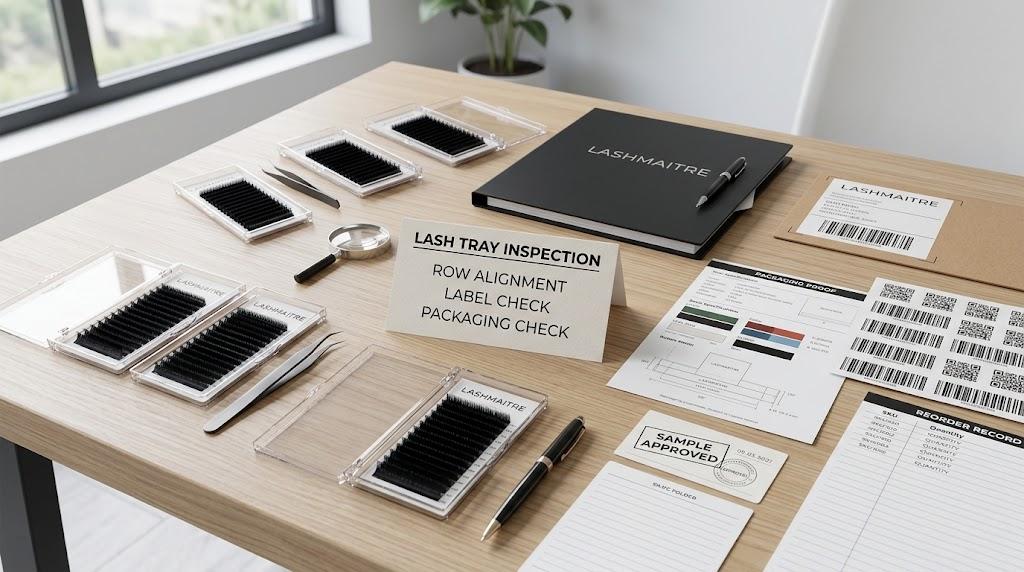
Row alignment is part of perceived quality. If the tray looks uneven, buyers may doubt the product even before application. Tray density should also match the approved presentation and price point.
For PBT lash fiber quality checks, review:
| Tray detail | Buyer question |
|---|---|
| Row alignment | Are rows straight and neat? |
| Lash direction | Do fibers face consistently? |
| Tray density | Does the tray look full enough? |
| Base neatness | Are bases clean and regular? |
| Length marking | Can the buyer read the spec easily? |
Check 7: Match Fiber Feel to Brand Positioning
A discount starter range, academy training kit, premium salon range and private label boutique range may require different fiber feel and finish choices.
Do not approve a sample only because it is described as premium. Approve it because it supports the selling position:
- Soft natural daily sets.
- Dark classic trays.
- Lightweight volume range.
- Matte private label collection.
- Specialty curls or style-map trays.
For private label lash extensions, the approved fiber feel should match the tray card name and packaging proof.
Check 8: Save the Approved Fiber Spec
Once the buyer approves a fiber sample, the record should be saved for production and reorder. The file should include curl, thickness, length range, finish, product family, tray card, packaging proof, label version and approval notes.
This is how a material choice becomes a repeatable wholesale product. Without the record, the next reorder may depend on memory, chat history or a product name that is too broad.
LASHMAITRE Buyer Checklist
| PBT lash sample check | Status |
|---|---|
| Product family confirmed | |
| Softness compared | |
| Finish selected | |
| Curl shape approved | |
| Thickness checked | |
| Pickup and strip release tested | |
| Row alignment reviewed | |
| Reorder spec saved |
FAQ
What is PBT lash fiber?
PBT lash fiber is a synthetic polyester-based fiber commonly used for eyelash extension trays. Buyers should still approve the finished tray, not only the material name.
Is Korean PBT better for lash extensions?
The phrase Korean PBT is often used in lash product marketing, but buyers should compare actual samples. Softness, curl hold, finish, thickness accuracy and reorder consistency matter more than a label alone.
How do wholesale buyers compare PBT lash fiber quality?
Compare softness, finish, curl shape, thickness, strip release, row alignment, tray density, label clarity and sample records. Keep the approved tray for future reorder checks.
Should a private label brand sample different lash finishes before bulk orders?
Yes. Matte, silk-like and cashmere-like finishes can change the way a product line feels and sells. Sample them before approving tray cards, packaging names or MOQ production.
Request a PBT Lash Sample Comparison
Ask LASHMAITRE for a PBT lash sample comparison so your team can approve softness, finish, curl, thickness and tray labels before wholesale production.
Use the wholesale lash extensions inquiry page when you are ready to send sample targets, finish preferences and reorder specs.
Authority and Source Notes
- PBT material reference: SpecialChem PBT material guide
- PBT engineering thermoplastic reference: NETZSCH PBT reference

Lash Maitre: Your Trusted Partner in Eyelash extension Solutions
Lash Maitre is dedicated to providing professional insights and tips in the eyelash extension industry. Sharing the latest trends, techniques, and product knowledge, Lash Maitre helps lash artists and enthusiasts enhance their skills, stay inspired, and achieve the perfect lash experience.