Eyelash Extension Packaging: 8 Proof Checks Before Private Label Reorders
Share
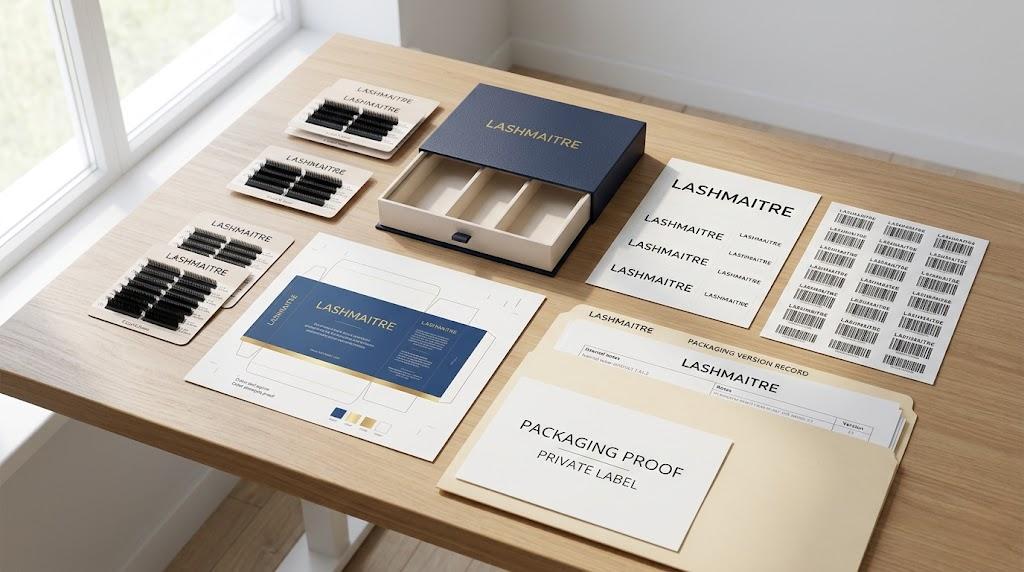
Eyelash extension packaging is more than a box design. For private label buyers, packaging proof checks protect the tray spec, brand presentation, barcode space, label wording, carton marks, and reorder version before bulk packaging is produced again.
A first packaging proof may look polished, but the reorder can still go wrong if the artwork file, tray card text, product spec, box size, barcode area, or carton label is not saved clearly. Packaging approval should be treated as a version-control step, not only a design step.
Direct answer: Before private label reorders, buyers should check eyelash extension packaging proofs for product-spec match, tray card text, box and sleeve fit, barcode or label space, claim wording, carton marks, approval photos, and packaging version records.
1. Match Packaging Artwork to the Approved Tray Spec
The packaging proof should match the product inside the tray. This sounds basic, but it is one of the easiest places for private label buyers to make mistakes.
Before approving artwork, compare the proof against the approved tray sample:
| Packaging field | What to confirm |
|---|---|
| Product family | Classic, volume, premade fan, flat, YY, W, or other approved type |
| Curl | Matches the approved tray sample |
| Thickness | Matches the tray and reorder file |
| Length | Shows the correct mixed range or single length |
| Tray type | Mixed tray, single length tray, sample tray, or other format |
| Finish or style name | Matches buyer's product naming system |
| SKU or style code | Matches warehouse and reorder records |
| Packaging version | Matches the latest approved artwork |
If the box says one thing and the tray label says another, the buyer creates a problem for sales, fulfillment, and repeat orders. This is why packaging should be reviewed with the physical tray sample, not only as a flat artwork file.
Buyers planning private label packaging can review LASHMAITRE custom lash packaging and private label lash extensions before approving the final proof. If the packaging proof is tied to a new product test, keep it connected with the buyer's lash extension samples record so the tray, label, and sample approval stay aligned.
2. Verify Tray Card and Box Text Before Reorder
Tray card text should be short, clear, and consistent. It should help customers understand the product and help the buyer reorder it later.
Check:
- Brand name
- Product name
- Curl
- Thickness
- Length range
- Tray type
- Quantity or row count if used
- SKU or internal code if used
- Distributor or market-specific label note if required
Private label buyers should be especially careful when the visible product name is more creative than the internal product spec. A product named "Soft Volume" or "Natural Black" may still need a clear internal SKU showing curl, thickness, length, and tray type.
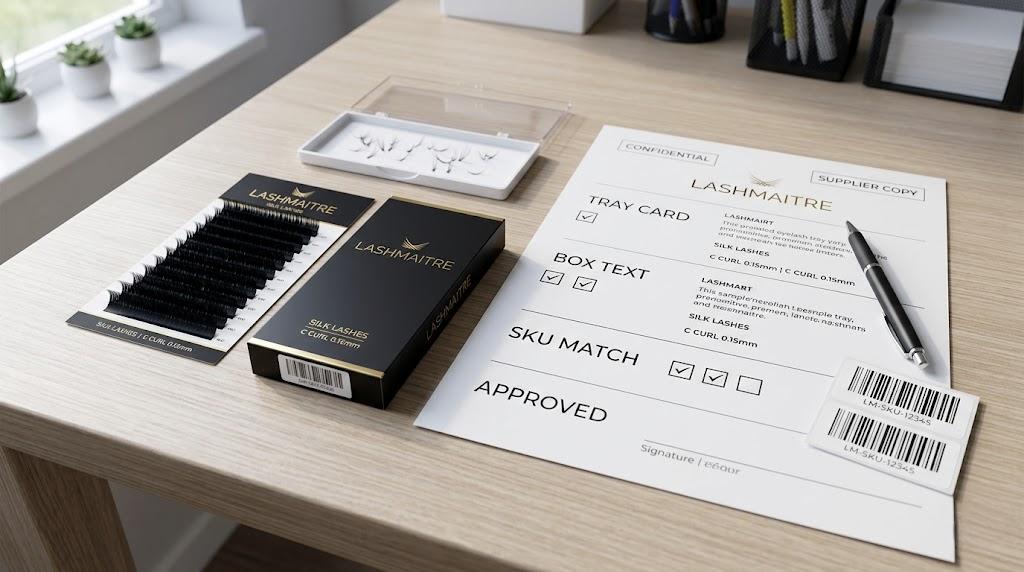
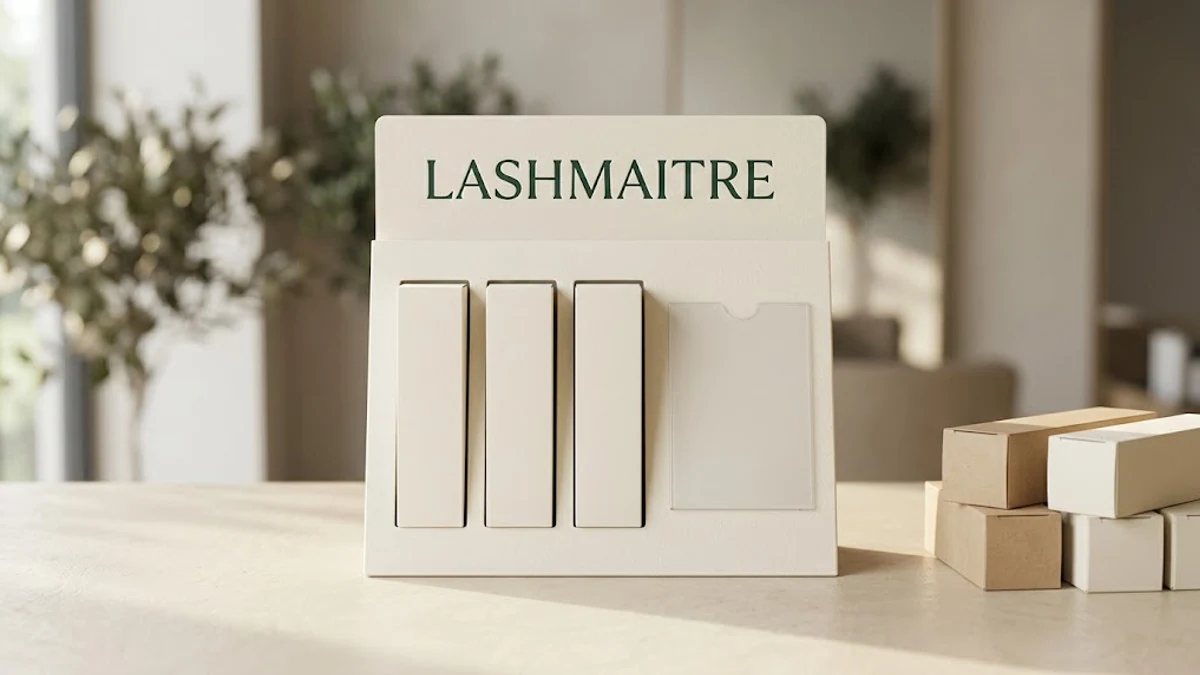
3. Check Box Size, Tray Fit, Sleeve Fit, and Material Finish
Packaging proof is not only a digital layout. The buyer should confirm how the physical packaging works with the tray.
Review:
- Does the tray fit the box or sleeve without shifting?
- Is the tray card visible and aligned?
- Does the box close cleanly?
- Is the material finish consistent with the approved sample?
- Does the packaging protect the tray during handling?
- Is the label position easy to scan, read, or store?
If a buyer changes tray size, box structure, or sleeve material after the first order, the packaging proof should be updated and saved as a new version. Do not assume that an old box proof still fits a new tray format.
For deeper packaging preparation, buyers can use the LASHMAITRE private label lash packaging design brief. If the buyer is testing packaging before a larger launch, the MOQ 50 wholesale lash extensions path can help keep the first private label proof run controlled before expanding styles.
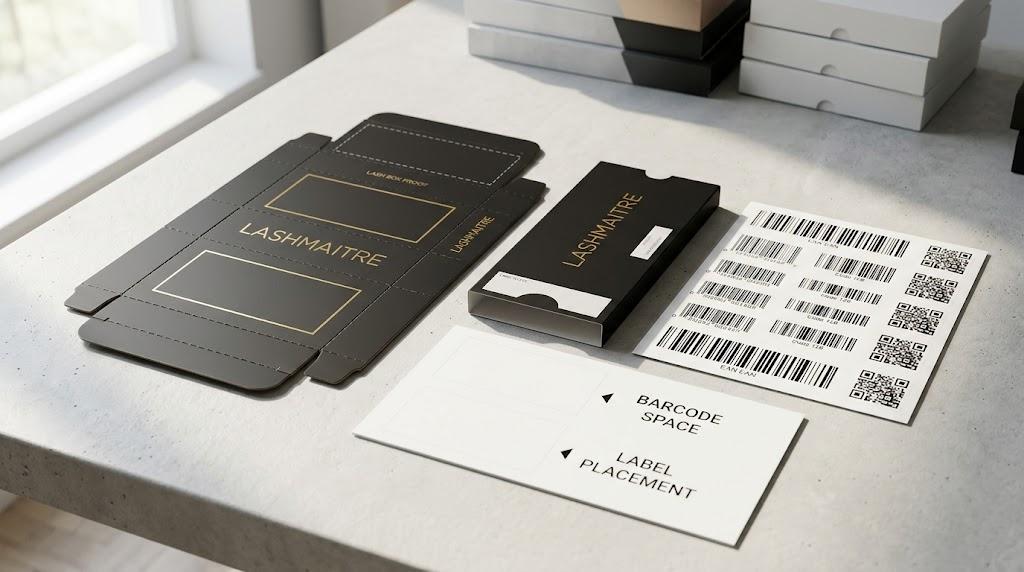
4. Reserve Barcode, QR, or Retail Label Space Early
Barcode and label space should be planned before final artwork approval. If the buyer adds barcode requirements after the design is finished, the artwork may become crowded or need to be reworked.
GS1 US explains that GTINs and barcodes help identify products and support inventory, retail, and supply chain processes for cosmetics and beauty brands. GS1 also advises against shrinking or changing barcode art in ways that may affect scanning and notes the need for clear space around the barcode. References: GS1 US barcodes for cosmetic products and GS1 US barcode placement guidelines.
For lash packaging, ask:
- Will this product need a barcode now or later?
- Does each variation need its own identifier?
- Is there space on the box, sleeve, or label?
- Will a marketplace or retailer request barcode information?
- Will the barcode be printed, stickered, or added to a carton label?
- Does the barcode area avoid critical design elements?
Not every startup needs retail barcodes from day one, but barcode space should not be an afterthought if the buyer plans to sell through retail, marketplaces, or distributors.
5. Review Claims and Market-Sensitive Wording Carefully
Packaging text should be accurate and appropriate for the buyer's sales market. The FDA notes that cosmetics labeling information and claims must be truthful and not misleading, and that some claims may create drug-related implications if they suggest treating or affecting the body. References: FDA Cosmetics Labeling Guide and FDA Cosmetics Labeling Claims.
For eyelash extension packaging, buyers should be careful with wording around:
- Safety
- Medical or treatment language
- Retention promises
- Hypoallergenic claims
- Country-of-origin wording
- Professional-only claims
- Cruelty-free or material claims
- Any claim that needs support in the target market
This article is not legal advice. Buyers should confirm labeling and claim requirements for their own market. The practical packaging point is simple: do not approve claim wording casually just because it looks good on a box.
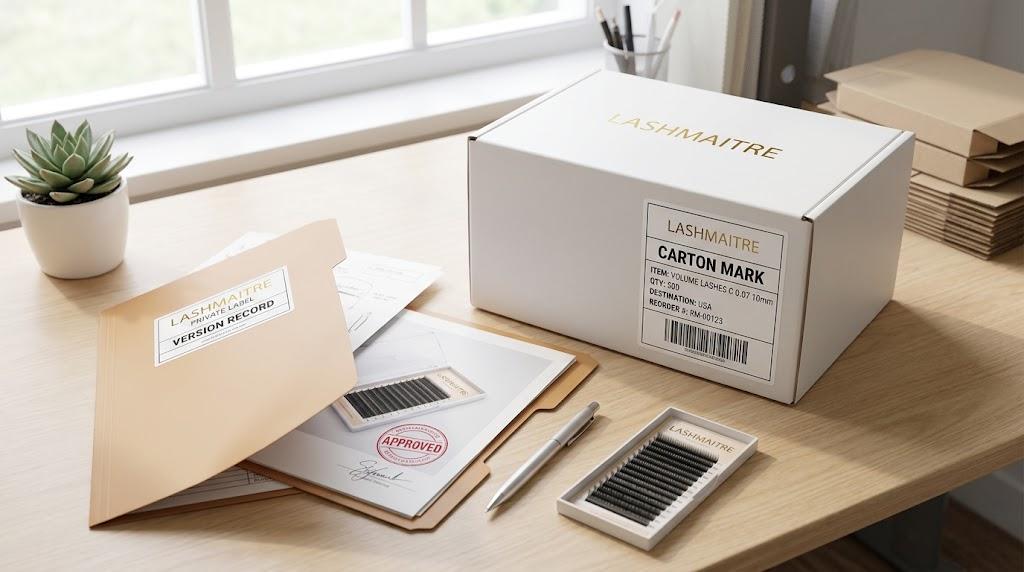
6. Match Carton Marks and Packing List References
Private label packaging does not stop at the retail box or tray card. Carton marks and packing references also need to match the order.
Carton-level information can help receiving teams confirm:
- Buyer name or code
- Product family
- SKU or style code
- Quantity
- Carton number
- Packaging version
- Order or invoice reference
- Destination or channel note if needed
Trade.gov explains that packing lists itemize package contents and may be used to check cargo. For buyers, this supports a simple habit: keep carton marks, packing references, and product records aligned before shipment and reorder. Reference: Trade.gov packing list.
If the retail packaging is correct but carton marks are vague, warehouse teams may still receive or store the goods incorrectly.
7. Save Proof Version, Approval Photos, and Reorder Notes
Every private label packaging proof should become part of a version record. Without version control, a buyer may not know whether the reorder should repeat tray card V1, box V2, sleeve V1, or a corrected label.
Save:
- Final artwork file
- Printed proof photo
- Tray card version
- Box or sleeve version
- Label sheet version
- Barcode placement note
- Carton mark photo
- Approval date
- Buyer approval name
- Correction notes
- Reorder decision
This matters when packaging evolves. A brand may update the logo, adjust label wording, add barcode space, change box material, or rename a style. Each change should have a version record so the next reorder is not based on an outdated file.
Packaging proof approval should also connect with the broader lash quality control process. A tray can pass product QC and still fail reorder readiness if the packaging proof, label wording, or carton mark is not the approved version.
8. Confirm What Changes Before Repeat Production
Before a private label reorder, ask what changed since the last production run.
| Reorder question | Why it matters |
|---|---|
| Did the product spec change? | Packaging text may need updates |
| Did the artwork change? | New proof and approval may be needed |
| Did barcode or label needs change? | Layout space may need adjustment |
| Did carton marks change? | Warehouse receiving may be affected |
| Did the market or channel change? | Label and claim review may be needed |
| Did the buyer request a correction? | Old proof should not be repeated |
| Is the approved sample still current? | Tray and packaging should match |
| Is the packaging version saved? | Reorder team needs the correct file |
This step protects both buyer and manufacturer. It turns a reorder into a controlled repeat instead of a fresh guessing process.
How LASHMAITRE Helps With Eyelash Extension Packaging Proofs
LASHMAITRE helps private label buyers connect product samples, tray cards, boxes, labels, carton marks, and reorder records. If you are preparing a new packaging proof, send the product specs, logo files, target packaging type, any barcode needs, and the approved sample reference.
If you are preparing a reorder, send the prior packaging version, correction notes, and any updated product spec. Buyers can also review lash tray logo labels and the lash tray labeling guide before approving packaging text.
When the packaging proof is ready for production discussion, send details through the wholesale lash extensions inquiry page.
FAQ: Eyelash Extension Packaging
What should buyers check in eyelash extension packaging proofs?
Buyers should check product family, curl, thickness, length, tray type, brand name, SKU, box fit, barcode or label space, carton marks, claim wording, and packaging version records.
How do private label lash brands avoid packaging reorder mistakes?
They should save the final proof version, approval photos, tray card text, box file, barcode placement note, carton label, and correction notes. Each reorder should confirm whether the same packaging version is being repeated.
Should barcode space be planned before lash packaging production?
Yes. Barcode or QR space should be planned before final artwork approval, especially if the buyer may sell through retail, marketplaces, distributors, or inventory systems that require product identifiers.
What records should be saved after approving lash packaging?
Save artwork files, proof photos, version numbers, product specs, label text, barcode placement, carton marks, approval date, buyer notes, and reorder instructions.
Can one packaging design work for several lash tray types?
It can share the same brand style, but each tray type should still show the correct product spec. Classic, volume, premade fan, mixed tray, and single length tray products may need different label fields.
Conclusion: Packaging Proofs Should Protect the Reorder
Eyelash extension packaging should make private label reorders easier, not harder. The best packaging proof connects design, product specs, label wording, barcode space, carton marks, and approval records in one clear file.
Before approving the next private label reorder, check the proof against the tray, the carton record, and the current brand file. A clean proof record today can prevent expensive confusion in the next production run.

Lash Maitre: Your Trusted Partner in Eyelash extension Solutions
Lash Maitre is dedicated to providing professional insights and tips in the eyelash extension industry. Sharing the latest trends, techniques, and product knowledge, Lash Maitre helps lash artists and enthusiasts enhance their skills, stay inspired, and achieve the perfect lash experience.