Types of Eyelash Extensions: B2B Product Line Guide for Lash Brands and Salons
Share
Definition:
Types of eyelash extensions refer to the product categories, styles, materials, curls, lengths, and application formats used by salons, lash brands, distributors, and beauty retailers. In B2B sourcing, the question is not simply which style looks attractive; the real decision is which lash types should become stable SKUs, sample kits, private label products, or repeat wholesale orders.
Author: Alex, LASHMAITRE – B2B eyelash extensions manufacturing & private-label programs (https://www.lashmaitretrade.com)
Why Product Type Planning Matters Before Bulk Orders
Many buyers ask for a full lash catalog before they decide what they actually need. That can create confusion. A new lash brand may not need every curl, every length, every color, and every specialty style on the first order. A salon supply buyer may need fewer SKUs but stronger consistency. A distributor may need broader coverage but clearer category labels.
This guide explains the main types of eyelash extensions from a wholesale buyer’s perspective. It is not written for consumers booking an appointment. It is written for buyers who need to choose products, test samples, organize SKUs, and build a repeatable lash product line.
For the broader sourcing process, start with the wholesale eyelash extensions buying guide. If you are comparing tray specs, also review the eyelash extension trays wholesale buying guide.
The Main Lash Extension Categories
The categories below are the ones most B2B buyers should understand before requesting samples or pricing. Each category serves a different buyer need.
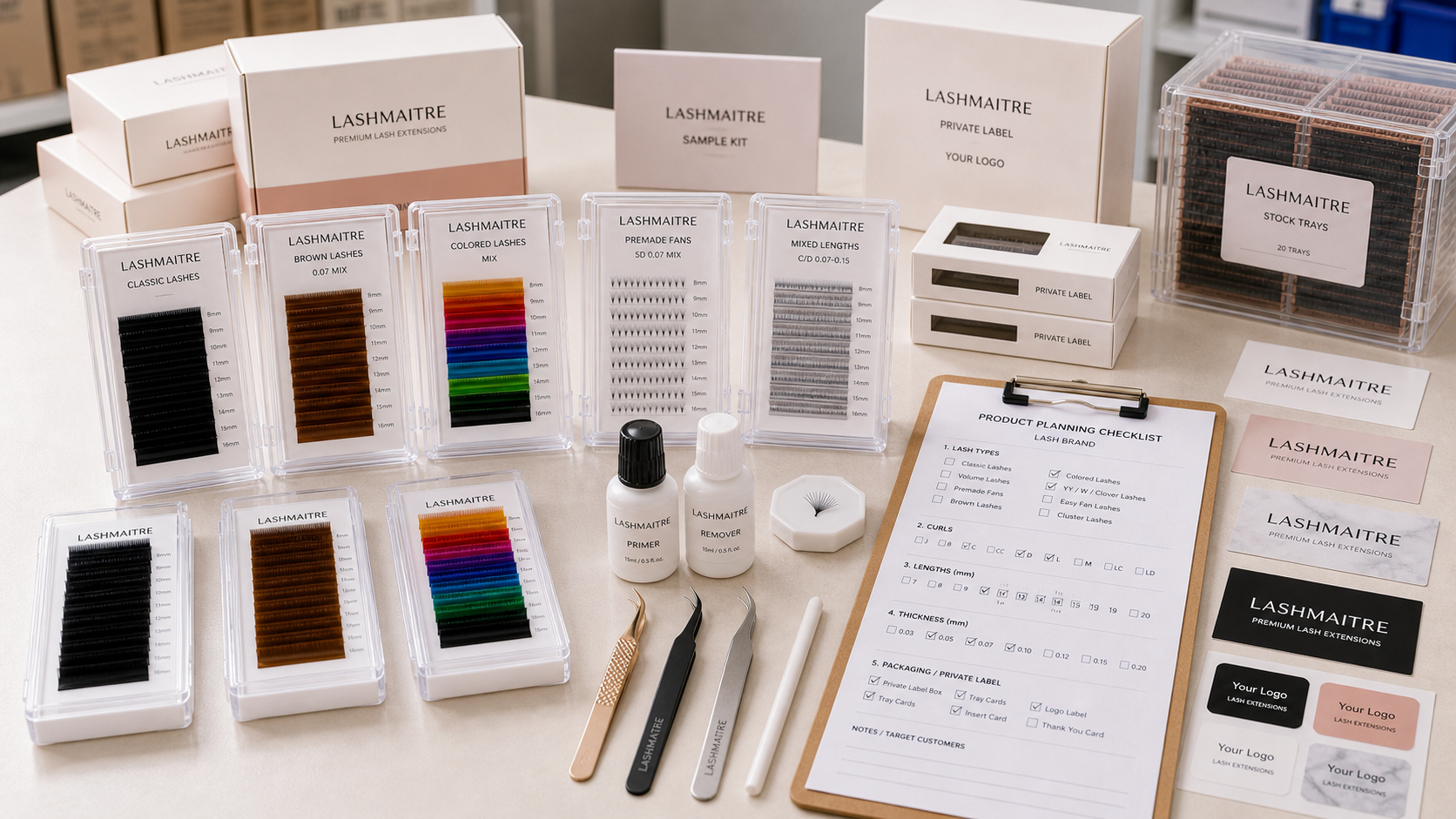
| Lash Type | Best For | B2B Buying Note |
|---|---|---|
| Classic lash extensions | Natural salon sets and baseline SKUs | Good starting point for new salons and brands |
| Volume lash extensions | Advanced artists and fuller looks | Requires careful thickness and fiber separation checks |
| Premade fans | Faster application and consistent fan shape | Base style and fan symmetry matter |
| Hybrid lashes | Mixed classic and volume look | Useful for salons with varied service menus |
| Cluster lashes | Retail kits and ecommerce beauty sellers | Packaging and instructions matter more |
| Brown lashes | Soft natural looks and blonde/light clients | Useful niche SKU for premium menus |
| Colored lashes | Trend styles, seasonal retail, creative salons | Best tested in small quantities first |
This does not mean every buyer should order every category. The right product mix depends on your customer type, price level, and reorder plan.
Explore LASHMAITRE’s eyelash extensions wholesale category to compare product categories and sample options.
Classic Lash Extensions: The Baseline SKU
Classic lash extensions are usually the first category buyers should understand. They are applied one extension to one natural lash, so they are often used for clean, natural-looking sets. For salons and lash brands, classic trays can become a stable baseline SKU because they are familiar, easy to explain, and useful across many markets.
When sourcing classic lash extensions, confirm:
- Curl options such as C, CC, D, L, or M
- Length range and mixed-length tray availability
- Thickness options such as 0.10, 0.12, or 0.15 depending on use
- Finish, such as matte black or dark black
- Tray label clarity for reorder and salon use
Classic lash extensions are not always the highest-margin category, but they can anchor a product line. If the baseline SKU is stable, buyers can add volume, premade fans, and specialty styles later.
Volume Lash Extensions: More Technical, More Sensitive to Specs
Volume lash extensions are used for fuller sets, usually by more experienced lash artists. In a wholesale context, volume lashes need stricter specification control because thickness, softness, strip tackiness, and pickup feel affect the artist experience.
For volume trays, buyers should pay attention to:
- Fiber separation
- Thickness accuracy
- Softness and flexibility
- Strip backing
- Curl memory
- Whether the tray supports handmade fan work
Volume lash extensions can help salons and brands serve clients who want fuller styles, but they should be sampled carefully. A product that looks good in a photo may not perform well during pickup and fan creation.
Premade Fans: Faster Application and Repeatable Fan Shape
Premade fans are a strong category for salons that want faster application and more consistent fan appearance. Instead of creating each fan by hand, the artist uses pre-arranged fans from the tray.
The key quality points are:
- Fan symmetry
- Base style
- Fan width
- Curl consistency
- Attachment point
- Stability during pickup
For B2B buyers, premade fans can be an important product line because they combine professional use with clearer product differentiation. Review LASHMAITRE’s premade fans wholesale options when comparing fan size, thickness, and tray format.

Hybrid Lashes: Useful for Salon Menus, Not Always a Separate Product
Hybrid lashes usually refer to a look that combines classic and volume techniques. In product sourcing, this can be handled in two ways:
- Sell separate classic and volume trays so salons create hybrid sets.
- Build mixed product recommendations for salons that promote hybrid services.
For a brand or distributor, hybrid is often more of a service positioning term than a single tray type. Buyers should avoid confusion by clearly defining what they are ordering: classic trays, volume trays, premade fans, or a mixed kit.
Cluster Lashes: Better for Retail and Ecommerce Kits
Cluster lashes are different from professional classic or volume lash trays. They are often used in retail kits, at-home beauty products, and ecommerce lash sets. For this reason, cluster lashes are more packaging-sensitive than salon tray products.
If you are sourcing cluster lashes, check:
- Cluster style and length mix
- Retail packaging format
- Instructions or insert card
- Adhesive compatibility if sold as a kit
- Private label box requirements
- Market positioning for beauty retailers or ecommerce sellers
Cluster lashes can be a strong category for private label sellers because the packaging and kit experience are part of the product value. See LASHMAITRE’s cluster lashes and kits page for related product direction.For B2B buyers building retail kits, this cluster lashes wholesale guide explains kit structure, private label packaging, sample approval, and reorder planning.
Brown and Colored Lash Extensions: Niche SKUs With Brand Value
Brown lash extensions and colored lash extensions are not always the first products a buyer should order, but they can help a brand feel more complete. Brown lashes are useful for softer natural looks, blonde clients, mature clients, or markets where harsh black lashes feel too strong. Colored lashes are better for creative salons, seasonal looks, and social-ready styles.
For wholesale buyers, the risk is over-ordering. These styles can support brand differentiation, but they should usually be tested in smaller quantities before becoming a core SKU.
If packaging is part of your launch strategy, review our custom lash packaging guide for box styles, tray labels, inserts, and approval steps.
How to Build a First Lash Product Line
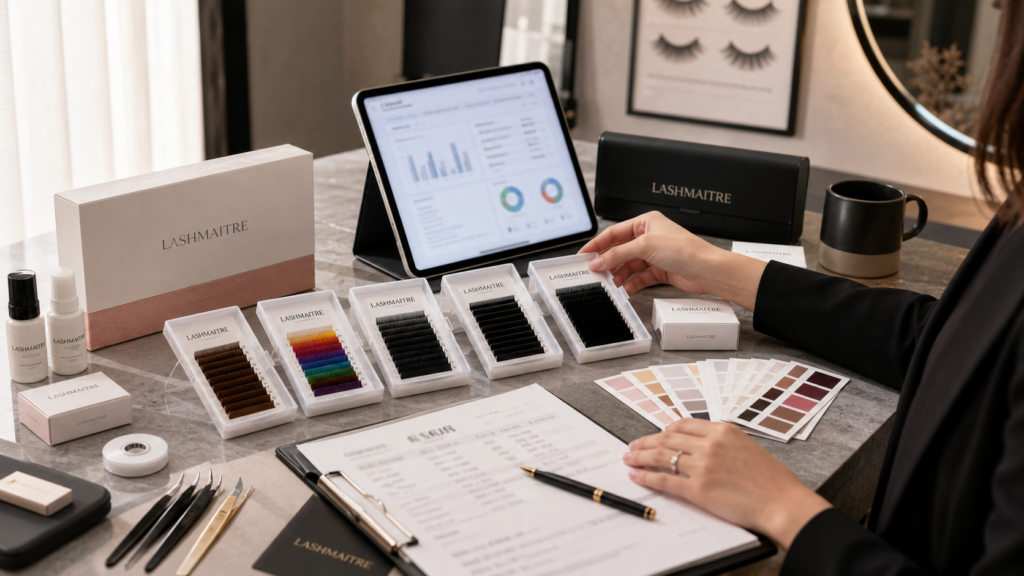
A strong first product line does not need to be huge. It needs to be clear, testable, and easy to reorder.After choosing your product types, the next step is building a brand-ready sourcing plan. See our private label lash extensions guide for OEM packaging, samples, and launch planning.
For a new lash brand or salon supply buyer, a practical first product line may include:
- 3-5 classic lash trays
- 2-3 volume or premade fan options
- 1 mixed tray for sample testing
- 1 brown lash option if the market fits
- Cluster lashes only if the buyer has retail or ecommerce plans
- Stock packaging first, then private label packaging after product approval
For distributors, the product line may be broader, but the same principle applies: approve samples, record specs, then scale the SKUs that have demand.
| Buyer Type | Recommended Starting Product Mix | What to Avoid |
|---|---|---|
| New lash brand | Classic trays, sample kit, one trend style, packaging test | Too many curls and colors before market feedback |
| Salon owner | Classic, volume, premade fan samples | Retail kit products that do not match services |
| Distributor | Core trays, premade fans, glue/liquids, accessories | Unlabeled products that are hard to reorder |
| Ecommerce seller | Cluster kits, private label packaging, trend styles | Professional-only products without retail explanation |
| Beauty retailer | Retail-ready lash kits and packaging | Bulk trays without shelf-ready presentation |
Sample First, Then Scale
The safest B2B path is to test samples first. A MOQ 50 sample kit can help buyers compare product categories without committing too early to a full product line.
Your sample request should include:
- Target buyer type
- Product categories
- Curl, length, thickness, and finish preferences
- Packaging direction
- Estimated quantity
- Destination country
- Whether you need private label or OEM support
If you are not sure which types of eyelash extensions to choose, use the wholesale lash extensions inquiry form and send your target market and product goals.
Sample Review Checklist Before a Bulk Order
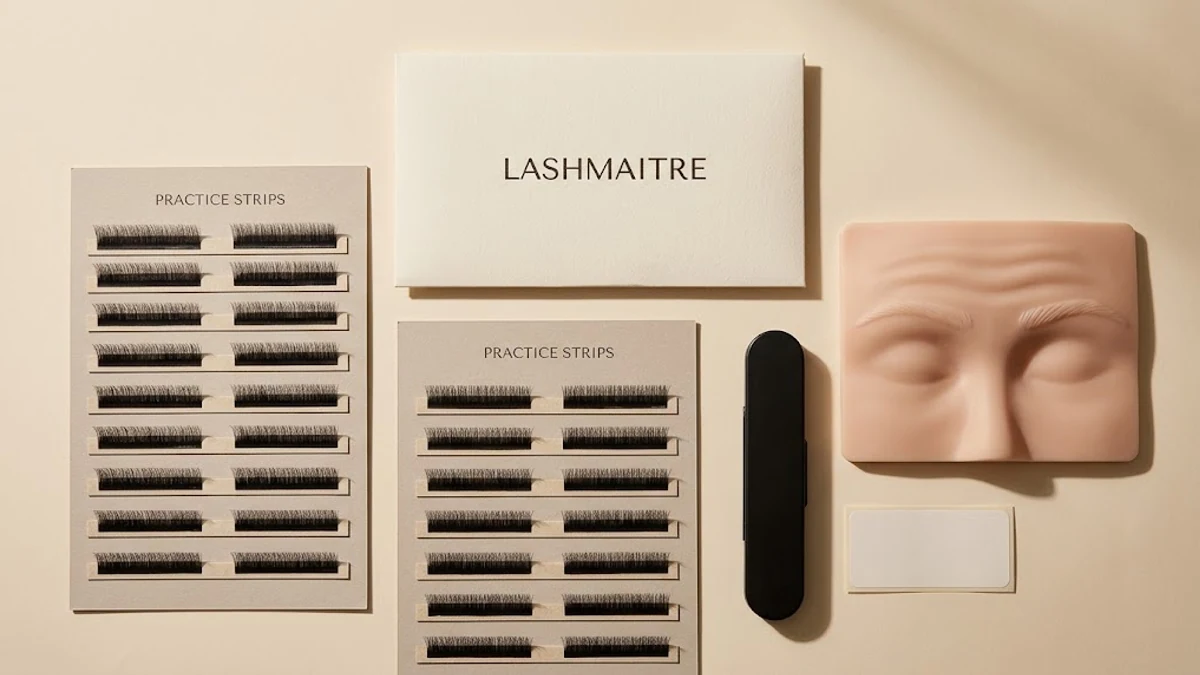
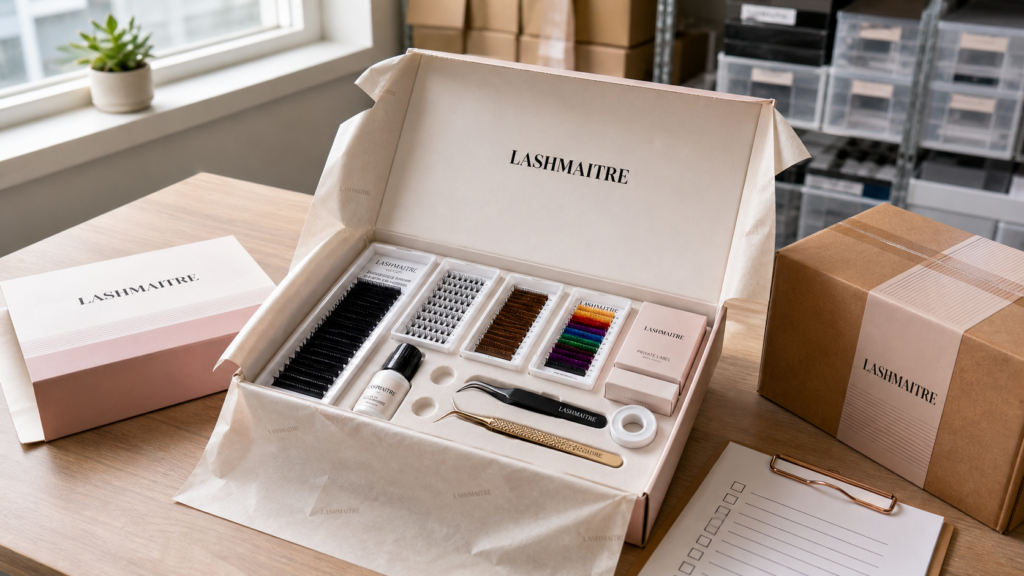
Sample testing should be treated like a small sourcing project, not only a product preview. A buyer should record the tray label, curl, length, thickness, finish, packaging option, and feedback from the person who tested the product. This makes reorder communication much cleaner and reduces the risk of changing specs by accident.
For professional lash trays, review pickup feel, curl consistency, strip release, fiber softness, tray label accuracy, and whether mixed trays match the real menu your customers need. For premade fans, check fan symmetry, base shape, and whether fans stay stable during pickup. For cluster lashes and retail kits, review packaging, instructions, tray layout, and whether the product looks clear enough for ecommerce photos.
A strong first order is not the biggest order. It is the order that proves which SKUs deserve repeat purchasing.
When comparing types of eyelash extensions, avoid approving only one perfect-looking sample photo. Ask the supplier to confirm whether the same specs, tray format, and packaging can be repeated in future production. If private label packaging is required, confirm artwork size, box structure, label material, and estimated lead time in writing before moving to bulk.
This sample-first process also helps the sales team answer buyer questions more confidently. Instead of saying “we sell many lash styles,” the brand can explain which lash extension categories were tested, why they were selected, and how customers should choose between classic, volume, premade fans, cluster lashes, brown lashes, and colored lashes.When the product line is ready to scale, bulk eyelash extensions should still be planned through samples, MOQ, packaging records, and SKU control.
Documentation and Claims: Keep the Product Language Accurate
Product category pages and packaging should describe what the product is without making unsupported claims. For lash trays, focus on specs, style, product category, packaging, and usage context. For lash glue, remover, primer, or aftercare liquids, documentation and compliance questions may be more complex.
Buyers selling into the United States should review FDA cosmetic guidance and MoCRA responsibilities for relevant cosmetic products. ISO 22716 is also often referenced when discussing cosmetics good manufacturing practice systems. Requirements depend on product type and market, so confirm with a qualified adviser when needed.
FAQ: Wholesale & OEM – types of eyelash extensions
What types of eyelash extensions should a new lash brand start with?
Most new brands should start with classic lash trays, a small number of volume or premade fan options, and one trend or niche style such as brown lashes. Cluster lashes are useful if the brand is focused on retail kits or ecommerce.
Are premade fans better than volume lash extensions?
They serve different needs. Premade fans help speed up application and provide consistent fan shape. Volume lash extensions give trained artists more control when creating handmade fans. Wholesale buyers should sample both before deciding.
Should cluster lashes be sold with professional lash trays?
They can be part of the same brand, but they usually target different buyers. Professional lash trays serve salons and trained artists. Cluster lashes are often better for retail kits, ecommerce sellers, and beauty consumers.
How many lash styles should I order first?
Start narrow. A practical first order should test the core product categories, packaging direction, and market response. Expanding too quickly can create slow-moving inventory and reorder confusion.
Conclusion: Choose Lash Types Based on Buyer Use, Not Catalog Size
The best product line is not the biggest catalog. It is the product mix that matches your buyers, supports repeat orders, and gives your brand room to grow.
For salons, start with reliable trays. For lash brands, test samples before private label packaging. For distributors, organize SKUs by category, specs, and reorder records. For ecommerce sellers, consider whether cluster lashes and retail kits fit your audience better than professional-only trays.
To request LASHMAITRE product recommendations, MOQ 50 sample kit options, wholesale lash supply, or private label lash packaging support, send your product category, specs, estimated quantity, target market, and packaging needs through https://www.lashmaitretrade.com.
References
- FDA: Cosmetics & U.S. Law – https://www.fda.gov/cosmetics/cosmetics-laws-regulations/cosmetics-us-law
- FDA: Modernization of Cosmetics Regulation Act of 2022 (MoCRA) – https://www.fda.gov/cosmetics/cosmetics-laws-regulations/modernization-cosmetics-regulation-act-2022-mocra
- ISO: ISO 22716:2007 Cosmetics – Good Manufacturing Practices (GMP) – Guidelines on Good Manufacturing Practices – https://www.iso.org/standard/36437.html
A types of eyelash extensions guide should help B2B buyers choose which lash categories belong in their wholesale catalog. Salons, academies, distributors and private label brands should compare lash types by application workflow, visual result, skill level, packaging needs and reorder potential.
Main Types of Eyelash Extensions for Wholesale Buyers
The best product mix depends on the buyer’s audience. A salon needs service-friendly trays, while an ecommerce brand may need packaging-led kits and niche styles that are easy to market.
| Lash Type | Best For | B2B Buying Notes |
|---|---|---|
| Classic lash trays | Natural and one-to-one extension services | Core salon SKU with steady repeat demand |
| Volume trays | Handmade fans and advanced artists | Requires more skill and lighter thickness planning |
| Premade fans | Fast volume services | Good for speed and consistency, sample base style carefully |
| Cashmere lashes | Premium soft matte positioning | Useful for luxury or natural-looking product lines |
| YY/W lashes | Textured, wispy and faster hybrid sets | Good differentiation for salons and distributors |
| Cluster lashes | Retail kits and DIY-style products | Should be packaged with instructions and liquids |
How to Choose Lash Types for a First Catalog
A first catalog should be focused. Buyers should start with products that match their sales channel and artist skill level, then expand after samples and customer feedback.
- Use classic and core volume trays for professional salon foundations.
- Add premade fans or easy fan lashes when speed and consistency matter.
- Use brown, cashmere or flat lashes for differentiated premium lines.
- Use cluster kits for retail, ecommerce and beauty kit channels.
- Keep product naming and SKU labels simple enough for reorders.
OEM and Private Label Planning
Private label lash type planning can include custom product names, tray labels, boxes, sample kits and launch bundles. Buyers should approve each product type with samples before committing to broad packaging.
Sample Testing and Reorder Control
Sample testing should compare each lash type in real use. Buyers should ask artists to rate pickup, softness, curl memory, strip release, visual result and packaging clarity.
Wholesale Buyer Checklist
- Define buyer channel: salon, academy, ecommerce, brand or distributor.
- Choose core lash types before adding every niche style.
- Request samples for the most likely best-sellers first.
- Compare service speed, skill requirement and client result.
- Plan packaging and SKU labels around each type.
- Use sales feedback to expand the catalog in stages.
Request Samples by Lash Extension Type
Tell LASHMAITRE which lash types you want to compare, your market and your packaging plan. We can recommend sample sets and wholesale product ranges for your launch.
FAQ
What are the main types of eyelash extensions for wholesale?
Common types include classic trays, volume trays, premade fans, cashmere lashes, flat lashes, YY/W lashes, brown lashes and cluster lash products.
Which lash type should a new brand start with?
A new brand should usually start with core classic or volume trays, then add one differentiated style such as cashmere, brown, premade fans or YY lashes.
Are cluster lashes the same as professional lash extensions?
No. Cluster lashes are usually retail or short-wear products, while professional extensions are applied individually by trained artists.
Can different lash types share one private label packaging system?
Yes. A consistent label and box system can cover multiple lash types as long as each SKU clearly shows curl, thickness, length and product category.
Related Guides
- Wholesale Eyelash Extensions
- Premade Fans Wholesale
- Cluster Lashes Wholesale
- Lash Extension Samples
- Product Range Planning Links
- Use these pages to turn lash extension type research into a practical wholesale or private label product range.
- Wholesale eyelash extensions for building the main tray and fan product range.
- Premium lash extensions for higher-grade product positioning.
- Premade fans wholesale for volume lash product programs.
- Cluster lash kit wholesale for retail kit and DIY lash programs.
- Lash extension glue and liquids for adhesive, remover and aftercare product expansion.

Lash Maitre: Your Trusted Partner in Eyelash extension Solutions
Lash Maitre is dedicated to providing professional insights and tips in the eyelash extension industry. Sharing the latest trends, techniques, and product knowledge, Lash Maitre helps lash artists and enthusiasts enhance their skills, stay inspired, and achieve the perfect lash experience.