Cashmere vs Silk Lashes: 8 Wholesale Finish Checks
Share
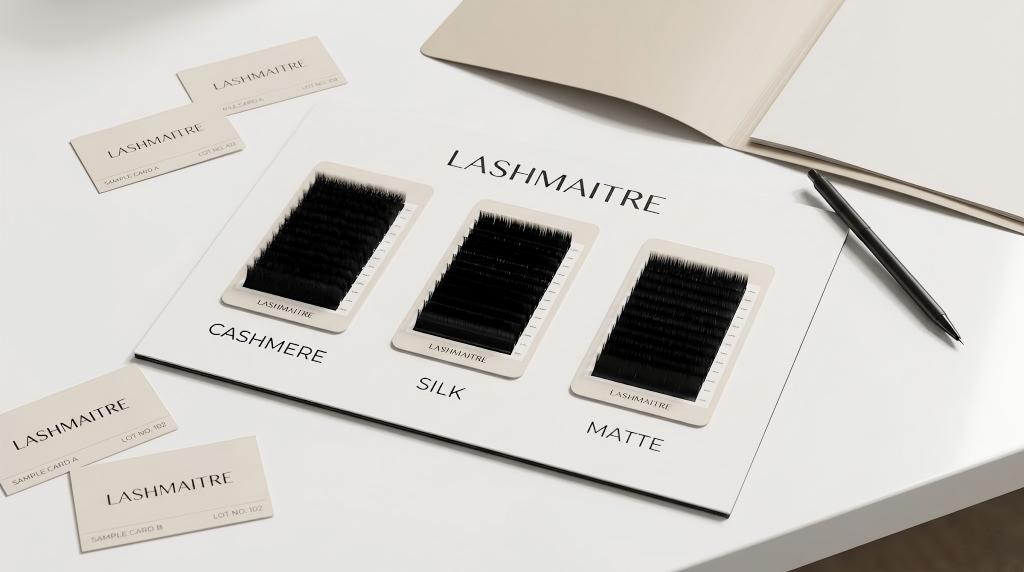
Cashmere vs silk lashes is often treated as a simple product-name decision. A buyer may ask for cashmere lash extensions because the name sounds soft, silk lash extensions because the name sounds premium, or matte lash extensions because the finish looks refined in product photos. For wholesale buyers, those names should start a sample discussion, not finish it.
Cashmere vs Silk Lashes Buyer Summary
Cashmere vs silk lashes should be approved through controlled samples, private label wording, sample photos and reorder notes before a wholesale buyer confirms packaging or bulk production.
Finish names are buyer-facing language. Unless a supplier provides clear documentation for material composition, cashmere and silk should not be treated as literal animal or textile fiber claims. In lash extension sourcing, the practical decision is how the tray looks and behaves: blackness, sheen, softness, curl stability, strip release, row alignment, label wording, and repeat consistency.
For a salon chain, distributor, academy, ecommerce brand, or private label buyer, the safest approach is to compare finish samples under controlled conditions. Keep curl, thickness, length, tray format, and sample method stable. Then judge the finish difference. If every variable changes at once, the buyer cannot know whether they prefer the finish, the curl, the thickness, or the tray behavior.
If the buyer is still choosing thickness before finish, use LASHMAITRE's lash thickness chart first. If the buyer is building the full product range, start with classic lash core range planning or volume lash range planning before choosing finish names.
What Cashmere vs Silk Lashes Usually Mean
Cashmere, silk and matte are usually used to describe finish positioning. They help buyers explain a product line, but they do not replace sample approval.
Use this practical comparison:
| Finish name | Common buyer expectation | Wholesale planning note |
|---|---|---|
| Cashmere | Soft, refined, comfortable, premium-feeling | Check softness, pickup feel, curl stability, and whether the name fits packaging claims |
| Silk | Smooth, polished, slightly glossier or premium-positioned | Check sheen, blackness, and whether it works for the buyer's service menu |
| Matte | Less shiny, soft black, refined, modern finish | Check blackness, photo appearance, and consistency across trays |
| Standard black | Familiar all-purpose finish | Useful when the buyer needs simple, broad catalog language |
The best finish name depends on the buyer's market. A training academy may care more about clear product behavior than premium naming. A private label brand may care more about packaging language and shelf positioning. A distributor may need finish names that are easy for customers to understand and reorder.
Do Not Overclaim the Material
The safest packaging language is careful and sample-based. A tray label can describe a finish direction, but it should not make unsupported material claims. If a buyer wants to use cashmere or silk language, the approved artwork should be reviewed before bulk packaging.
The FDA cosmetics labeling guide is a useful reminder that cosmetic labeling needs careful wording. For lash extension buyers, the practical takeaway is simple: keep label claims aligned with what the supplier can support and what the approved sample actually shows.
Better wording examples:
| Risky wording | Safer buyer-facing direction |
|---|---|
| Unsupported silk material wording | Silk-look finish or silk-style finish, if supported by the approved sample |
| Cashmere fiber lashes | Cashmere-soft finish or soft finish, if the buyer approves that wording |
| Unsupported superiority claim | Matte soft-black finish for a defined product line |
| Premium material guaranteed | Approved sample reference, finish name, curl, thickness, length and SKU code |
This is especially important for private label work. Once tray cards, boxes, inserts, carton labels and ecommerce descriptions are printed, changing wording becomes expensive.
Compare Finish Samples Under Controlled Specs
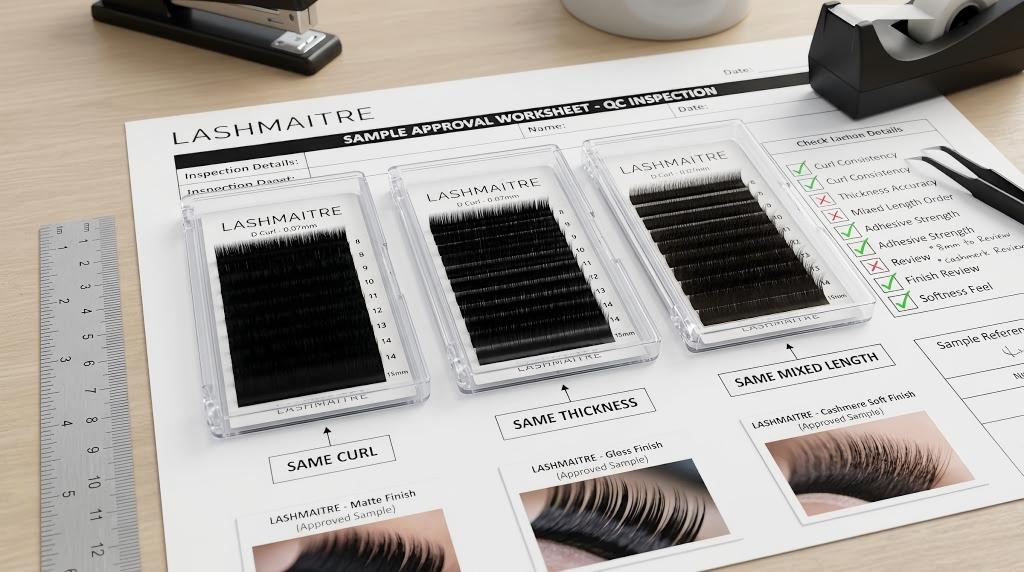
A clean cashmere vs silk lashes comparison should keep the sample conditions stable. If one sample is C curl 0.10 mixed length and another sample is D curl 0.07 single length, the buyer is not only comparing finish. The buyer is comparing a different product.
For controlled finish testing, keep these items stable:
| Sample variable | Recommended control |
|---|---|
| Curl | Use the same curl across finish samples |
| Thickness | Use the same thickness unless thickness is the test |
| Length | Use the same length range or same single length |
| Tray format | Use the same mixed or single length structure |
| Product family | Compare classic to classic, volume to volume, flat to flat |
| Label text | Use draft labels that show the exact finish name being tested |
| Test method | Use the same artist or QC method for pickup, curl and appearance notes |
The Shopify wholesale suppliers guide is helpful for thinking about supplier and inventory planning. For lash finish selection, that planning should include controlled samples, not only price and MOQ. Buyers who need a controlled tray comparison can also use LASHMAITRE's lash extension samples path before committing to private label packaging.
Match Finish to Buyer Type
Finish selection should support the buyer's product strategy. The name should help the buyer sell and reorder the tray clearly.
| Buyer type | Finish planning priority | Avoid |
|---|---|---|
| Salon chain | Consistent service menu fit and reorder reliability | Too many finish names for the same tray role |
| Distributor | Clear shelf names and repeatable supply | Vague premium language that customers cannot compare |
| Academy | Easy-to-understand sample behavior | Material claims that distract from training needs |
| Ecommerce brand | Strong product photos and simple product pages | Finish names that overpromise softness or material |
| Private label startup | Packaging-ready wording and sample records | Printing boxes before finish samples are approved |
Cashmere-style language may fit a soft, refined product line. Silk-style language may fit a smooth, polished presentation. Matte language may fit buyers who want a soft black, less glossy finish. The product still needs a sample record.
Use Finish Names Beside Product Family
Finish is only one part of the product. A buyer still needs to decide whether the tray is classic, flat/ellipse, premade fan, easy fan, or loose volume.
If the buyer is comparing shape and finish together, LASHMAITRE's ellipse lashes vs classic lashes guide can help separate product shape from finish language. A matte flat lash and a matte classic lash may not behave the same, even if both use the same finish direction.
A practical product name should connect:
- Product family.
- Curl.
- Thickness.
- Length format.
- Finish name.
- Tray label or SKU code.
- Approved sample version.
For example, a buyer may approve a "Matte Classic C 0.15 Mixed 8-15mm" sample. That is much easier to reorder than a vague "cashmere black tray" note.
Prepare Private Label Finish Wording
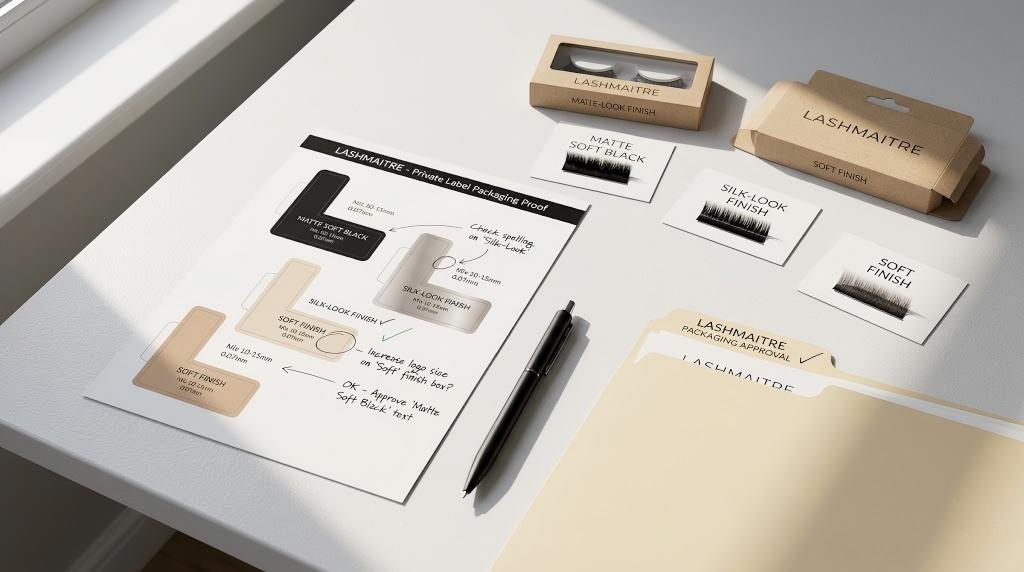
Private label buyers should prepare finish wording before box printing. The wording should match the approved sample and the buyer's product page language.
A simple finish naming file can include:
| Field | Example |
|---|---|
| Product family | Classic lash tray |
| Finish name | Matte soft black |
| Curl | C curl |
| Thickness | 0.15 |
| Length | Mixed 8-15mm |
| Tray label wording | Matte Classic C 0.15 Mixed |
| Packaging version | Box proof v1 |
| Approved sample | Sample photo and date |
| Reorder code | Buyer SKU and supplier SKU |
The ISO 9001 quality management systems standard is a broad reference for documented and repeatable requirements. In a lash buying workflow, the useful idea is that sample decisions should become written requirements, not memory.
Record the Approved Finish for Reorders
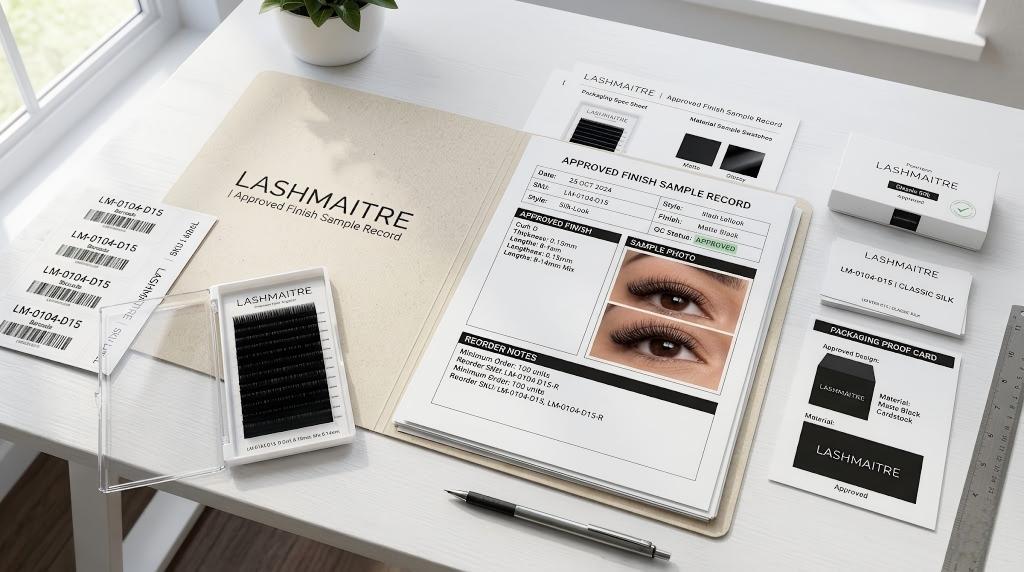
Finish drift can create customer complaints even when the tray label looks the same. A later reorder may appear glossier, softer, darker, lighter, or less consistent if the approved sample reference is not clear.
A finish reorder record should include:
- Approved sample photos in consistent lighting.
- Product family and finish name.
- Curl, thickness and length format.
- Tray label and packaging version.
- Buyer feedback notes.
- Supplier SKU or production reference.
- Reorder date and quantity.
- Any finish change request.
This file protects both buyer and supplier. It also helps the buyer decide whether a finish belongs in the permanent catalog or only in a limited test range.
Cashmere vs Silk Lashes Quick Review
- Cashmere, silk and matte should be treated as finish and positioning language unless material claims are documented.
- Compare finish samples under the same curl, thickness, length and tray format.
- Do not approve private label packaging before finish wording and sample records are stable.
FAQ: Cashmere vs Silk Lashes
Are cashmere lash extensions made from animal cashmere?
Do not assume that. In lash extension sourcing, cashmere is often used as a buyer-facing finish or softness term. Ask the supplier what the term means and keep packaging wording aligned with supported documentation and approved samples.
Are silk lashes made from textile silk?
Do not assume that either. Silk lash language is often used to describe a smooth or polished finish. Wholesale buyers should confirm supplier wording before using silk claims on private label packaging.
Is matte better than cashmere or silk?
Not always. Matte finish can fit a soft black or less glossy product line, but some buyers may prefer a smoother or more polished finish. The best option depends on buyer type, product family, sample results and reorder consistency.
How should buyers compare finish samples?
Keep curl, thickness, length, tray format and product family stable. Then compare finish appearance, blackness, sheen, softness, curl stability, strip release, label clarity and artist feedback.
What should a private label buyer send to LASHMAITRE?
Send the target finish names, product family, curls, thicknesses, length format, packaging wording, sample quantity, destination country and launch timeline. LASHMAITRE can help prepare a controlled finish comparison file before bulk production.
CTA
Send LASHMAITRE your target finish names, product family, curls, thicknesses, length format, packaging wording, sample quantity and first order plan. Use the wholesale lash extensions inquiry form when you are ready to prepare a controlled cashmere vs silk lashes comparison set before private label packaging or bulk production.
Buyer next step: If the finish name will appear on branded tray cards, align it with the private label lash extensions workflow before printing labels or cartons.
Buyer next step: Cashmere and silk finish comparisons should include LASHMAITRE lash quality control so buyers can check softness, darkness, curl memory and finish consistency before approving private label names.

Lash Maitre: Your Trusted Partner in Eyelash extension Solutions
Lash Maitre is dedicated to providing professional insights and tips in the eyelash extension industry. Sharing the latest trends, techniques, and product knowledge, Lash Maitre helps lash artists and enthusiasts enhance their skills, stay inspired, and achieve the perfect lash experience.