Ellipse Lashes vs Classic Lashes: Flat Lash B2B Checks
Share
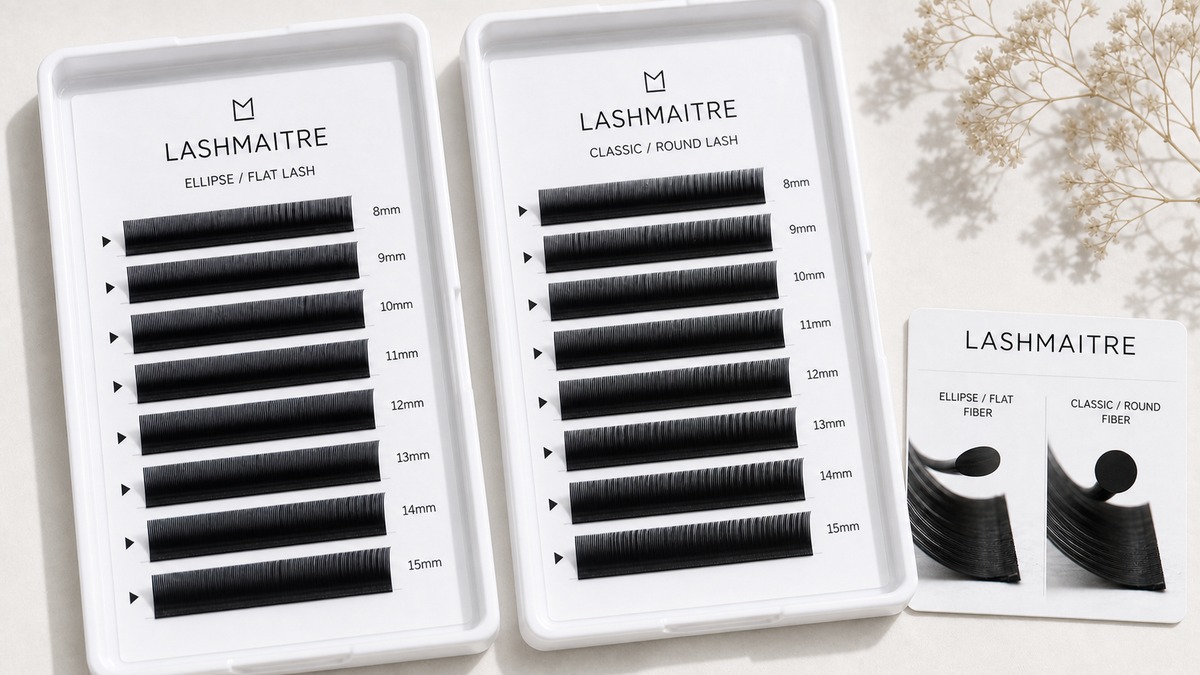
Ellipse lashes vs classic lashes starts with the fiber profile: ellipse or flat lashes use a flattened profile, while classic lashes use a more traditional rounder profile. For wholesale buyers, the better choice depends on product positioning, pickup behavior, salon familiarity and the reorder plan. Compare samples with the same curl, thickness and length before deciding whether to stock classic trays, ellipse trays or both.
Neither product is a premade fan. Neither should be described as a pre-bonded fan unit. The buyer's decision is about fiber profile, tray behavior, product naming, salon training, packaging, and reorder control.
If you need the broad flat/ellipse product overview, start with LASHMAITRE's wholesale flat lashes and ellipse lash extensions page. This comparison is for B2B buyers deciding whether ellipse lashes, classic lashes, or both should be in the line.
Start With the Product Definition
Before comparing performance, define what each tray family means in your catalog.
| Product family | Typical definition | B2B planning note |
|---|---|---|
| Classic lashes | Single lash extensions with a traditional rounder fiber profile | Often used as a core tray range |
| Ellipse lashes | Single lash extensions with a flattened or elliptical fiber profile | Often positioned as a darker-looking or lighter-feel alternative |
| Premade fans | Already formed volume fan units | Different product family, not part of this comparison |
This definition matters because labels, product pages, sample notes, and sales training should all use the same wording. If one team calls the product "flat classic," another calls it "ellipse," and the packaging says "volume," the buyer creates confusion before the tray reaches the salon.
Compare Fiber Profile, Not Only Finished Look
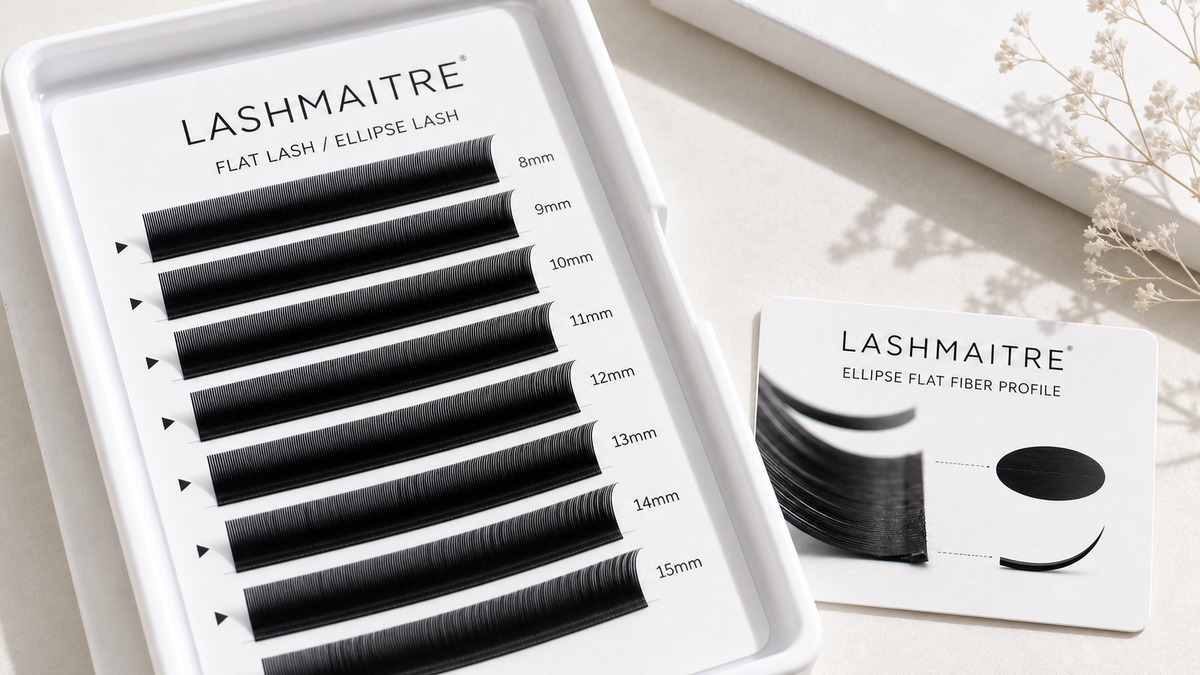
Many buyers compare ellipse lashes vs classic lashes by photos alone. That is not enough for wholesale planning. A finished set photo can show the visual result, but the product file should explain why the trays differ.
Check the fiber profile:
- Classic lashes usually have a rounder traditional profile.
- Ellipse lashes use a flattened or elliptical profile.
- The profile affects how the product is described, sampled, photographed, and positioned.
- The profile should be clear enough for the buyer's team to explain without making exaggerated claims.
For eye-area products, the FDA eye cosmetic safety page is a useful general reminder that buyers should treat products used around the eyes with care. In a wholesale workflow, that means accurate product information, sample testing, and responsible use notes are part of the buyer review.
Check Curl and Length Consistency
Ellipse lashes and classic lashes can both be offered in common curls such as C, CC, and D. The comparison should not assume one curl is automatically better. The question is whether the selected curl stays consistent across the tray and matches the buyer's product promise.
During sample review, compare:
- Curl direction across several rows.
- Curl consistency between trays.
- How the selected curl looks in the buyer's preferred length range.
- Whether tray labels match the actual curl and length.
- Whether visible length markers stay realistic, such as 8mm-15mm where a full range is shown.
If the buyer already sells classic trays, compare the ellipse sample beside the closest classic SKU. This keeps the test practical and prevents the buyer from judging a new fiber profile against an unrelated curl or length.
Compare Pickup and Tray Behavior
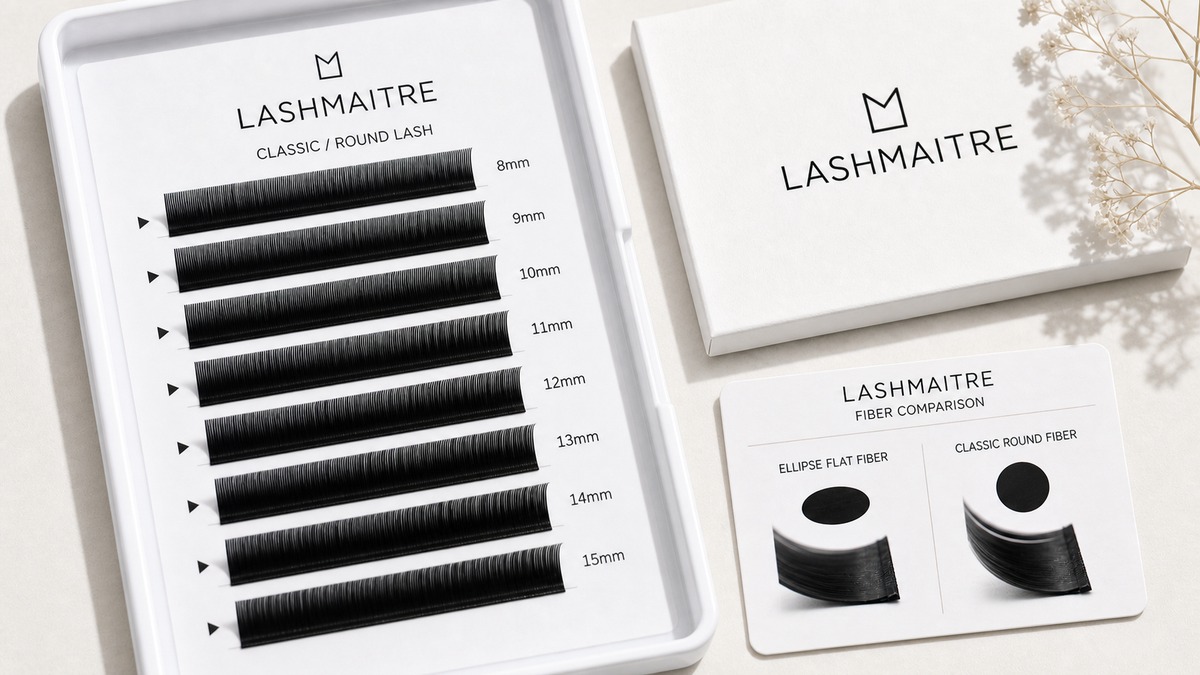
The tray should also be tested in use. Ellipse lashes and classic lashes are both strip-row products, so pickup, row alignment, and strip feel matter. A clean product photo is not enough.
Ask testers to record:
- Pickup control.
- Row spacing.
- Fiber alignment.
- Curl stability after pickup.
- Whether the tray releases lashes cleanly.
- Whether the product name matches what the artist expects.
The existing LASHMAITRE flat lash sample check before wholesale orders article can support the sample approval process. In this comparison, the buyer should keep the test simple: compare ellipse and classic trays under the same curl, length, and feedback form when possible.
Decide Whether Ellipse Lashes Replace, Support, or Extend Classic Lashes
Not every buyer should replace classic lashes with ellipse lashes. In many product lines, classic lashes remain the core range because salons already understand them. Ellipse lashes may support the line by giving buyers a second product family with a clearer visual or comfort-positioning story.
Use this B2B decision table:
| Buyer goal | Better first move | Reason |
|---|---|---|
| Keep the catalog simple | Maintain classic core, add limited ellipse samples | Reduces launch risk |
| Differentiate private label range | Add ellipse trays with clear fiber profile wording | Gives sales team a visible product angle |
| Serve salons asking for flat lashes | Add C, CC, or D ellipse trays based on demand | Aligns supply with buyer requests |
| Replace slow classic SKUs | Test ellipse version against the slow SKU first | Avoids changing the whole line too quickly |
| Build a distributor range | Keep both families separated by label and reorder code | Prevents packing and sales confusion |
For broader planning, the flat lash product line planning guide explains how ellipse trays can fit beside an existing range.
Compare Packaging and Label Requirements
Packaging should make the difference between ellipse lashes and classic lashes easy to understand. The buyer does not need overcomplicated claims. The buyer needs accurate naming, clear specs, and repeatable files.
For each tray, labels should include:
- Product family.
- Curl.
- Thickness.
- Length or length range.
- Fiber profile note when needed.
- Tray code or reorder code.
- Packaging version.
The FDA cosmetics labeling guide is a general reference for cosmetic labeling context. For private label lash buyers, the practical lesson is simple: keep product information organized, accurate, and consistent before printing packaging.
Build Training Notes for Sales and Salon Teams
Ellipse lashes vs classic lashes should also be explained to the people selling or using the product. If the sales team cannot describe the difference, the buyer may end up with two similar-looking trays and no clear reason for customers to choose one.
Training notes can cover:
- How the fiber profile differs.
- Which buyers should try ellipse lashes first.
- Which classic SKUs remain core products.
- How to explain the visual difference without overpromising.
- Which sample feedback points matter most.
- How to reorder the approved spec.
The existing classic eyelash extensions guide can support classic product education, while the flat/ellipse product page can support the new tray family.
Turn Buyer Feedback Into a Product Decision
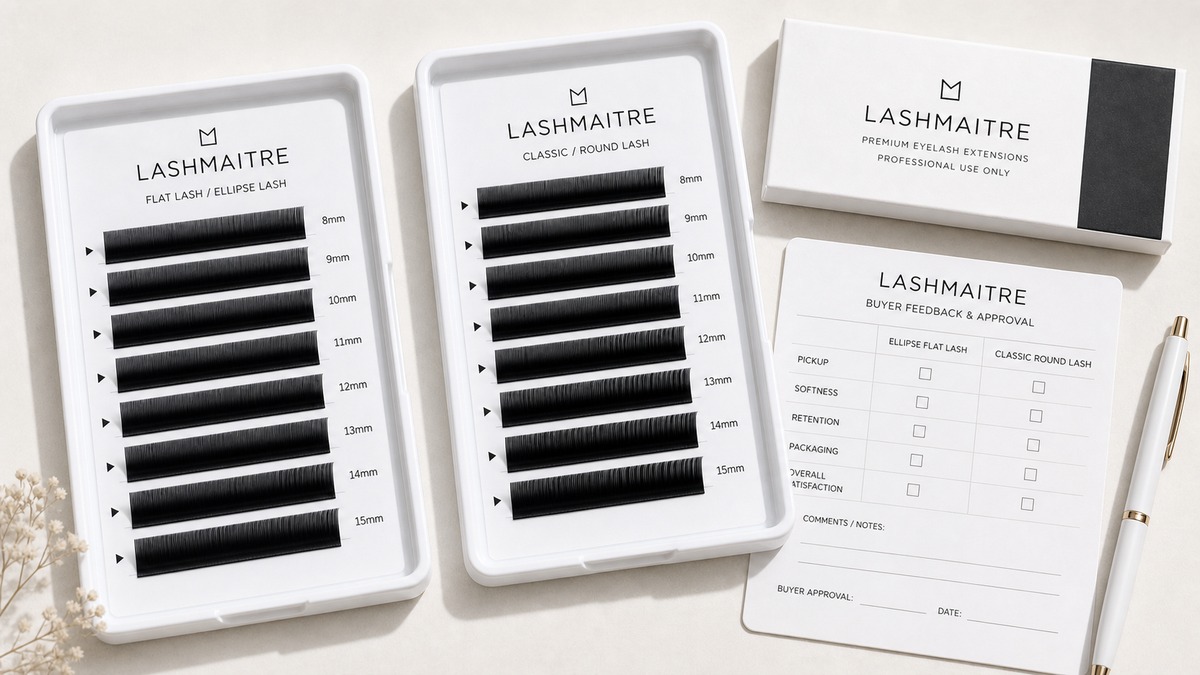
The final comparison should be written into a product decision file. Avoid relying on scattered messages like "classic is safer" or "ellipse looks better." Those notes are too vague for purchasing, packaging, and reorder work.
Use a buyer feedback sheet with:
- Buyer type.
- Current classic best sellers.
- Ellipse sample specs.
- Classic comparison specs.
- Curl and length notes.
- Pickup feedback.
- Visual feedback.
- Label and packaging comments.
- Final decision: stock ellipse, keep classic only, or test both.
The ISO 9001 quality management systems standard is a general reference for documented and repeatable requirements. For lash buyers, documentation helps make sure the next tray order matches the approved product decision. Reference: ISO 9001:2015.
Ellipse Lashes vs Classic Lashes Quick Review
- Use ellipse lashes vs classic lashes to compare fiber profile, not just finished look.
- Use ellipse lashes vs classic lashes to decide whether the buyer should stock classic trays, ellipse trays, or both.
- Use ellipse lashes vs classic lashes to keep label wording, sample feedback, and reorder codes separated.
FAQ: Ellipse Lashes vs Classic Lashes
Are ellipse lashes the same as flat lashes?
In many product ranges, ellipse lashes and flat lashes refer to lash extensions with a flattened or elliptical fiber profile. Confirm the naming before packaging and product pages are approved.
Are ellipse lashes premade fans?
No. Ellipse lashes are not premade fans. They are lash extensions arranged in strip rows, while premade fans are already formed volume fan units.
Should a brand stock both ellipse and classic lashes?
Many brands can stock both if each product has a clear role. Classic lashes can remain the familiar core range, while ellipse lashes can add a differentiated flat fiber profile option.
What should buyers compare first?
Compare fiber profile, curl, thickness, length range, pickup, row consistency, label wording, sample feedback, and reorder logic.
Do ellipse lashes need different packaging?
They need clear packaging. The package should separate ellipse or flat lash naming from classic naming and should show accurate curl, thickness, length, and tray code information.
Conclusion: Keep the Comparison Practical
Ellipse lashes vs classic lashes is a useful comparison only when it leads to a product decision. Define the fiber profile, compare similar specs, test sample trays, write simple training notes, and keep separate reorder files. That gives buyers a clear path instead of a confusing product overlap.
Send LASHMAITRE your current classic lash range, planned ellipse lash specs, buyer type, sample request, packaging needs, and first order plan so we can prepare a focused comparison set for your team.
LASHMAITRE buyer path: To move from comparison to launch, buyers can test lash extension samples, connect the selected tray format with private label lash extensions, and send final specs through the wholesale lash extensions inquiry path.
Buyer next step: When comparing ellipse and classic lashes, use LASHMAITRE lash quality control to check fiber profile, attachment surface, thickness accuracy and sample-to-bulk consistency.

Lash Maitre: Your Trusted Partner in Eyelash extension Solutions
Lash Maitre is dedicated to providing professional insights and tips in the eyelash extension industry. Sharing the latest trends, techniques, and product knowledge, Lash Maitre helps lash artists and enthusiasts enhance their skills, stay inspired, and achieve the perfect lash experience.