U.S. Lash Licensing Requirements Watch: What Wholesale Buyers Should Ask Suppliers
Share
Recent U.S. lash licensing requirements, eyelash extension licensing updates and state proposals are useful signals for wholesale lash buyers. They do not mean every salon follows the same rule, and this article is not legal advice. But they do show a clear direction: lash extension services are being discussed more specifically through licensing, sanitation, adhesive use, training, salon permits and client safety.
For LASHMAITRE buyers, the practical question is simple: before ordering lash glue, remover, cleanser, primer, bonder, sealer, lash trays or private label packaging, what should a salon brand, distributor or OEM buyer ask the supplier?
This buyer brief summarizes public U.S. lash licensing requirements and regulatory signals from Maryland, Rhode Island, Indiana, New York and FDA cosmetics monitoring, then turns them into a sourcing checklist for wholesale buyers.
Lash Licensing Requirements Buyer Snapshot
Use this lash licensing requirements snapshot as a procurement filter, not as legal advice. The goal is to help wholesale buyers connect lash licensing requirements with product labels, sample records, usage instructions and supplier documentation.
- Service rules: Check whether lash licensing requirements in the target state mention extensions, removal, lifts, tinting, training or establishment permits.
- Product roles: Match lash licensing requirements to the products salons actually use, including glue, remover, cleanser, primer, bonder and sealer.
- Supplier files: Ask how lash licensing requirements may affect label wording, storage notes, sample approvals, product documents and reorder records.
Why Lash Licensing Requirements Matter to Wholesale Buyers
Lash licensing requirements are usually written for service providers, salons, schools and technicians. Wholesale buyers are not applying the extensions inside the regulation text, but the rules still matter because they shape what salons expect from suppliers.
When licensing or sanitation rules mention eyelash services, adhesive use, remover, training, salon permits or client safety, buyers should treat those topics as supplier-evaluation questions. A lower price does not replace clear product labels, sample records, storage notes, usage instructions, packaging proof and a consistent reorder path.
For products such as lash extension glue wholesale, eyelash extension adhesive remover wholesale, eyelash cleanser wholesale and other Glue & Liquids, the safest sourcing process is sample first, document next, then packaging and reorder planning.
What Changed or Surfaced in Recent U.S. Lash Licensing Signals
| Source | What buyers should know | Wholesale sourcing implication |
|---|---|---|
| Maryland Board of Cosmetologists | Maryland’s temporary eyelash extension technician license became available on April 1, 2026, while a standard license and examination process are expected later in 2026. | Salons may ask for clearer product instructions, training support and supplier documentation as licensing becomes more specific. |
| Rhode Island S2858 proposal | The proposed Eyelash Services Licensing and Regulation Act would define eyelash services, create a technician license path, require establishment permits and add enforcement language if enacted. | Even proposed bills show the topics regulators watch: adhesive use, training, sanitation, business permits and client safety. |
| Indiana Department of Health | Indiana maintains an eyelash extension program for training program recognition, with a recognition list updated in May 2026. | Training and sanitation expectations can shape how salons choose product suppliers and education partners. |
| New York Department of State | New York’s procedure licensure chart includes false eyelashes/extensions and eyelash lift procedures in its appearance-enhancement classification context. | Buyers should separate product sourcing from service classification and avoid unsupported claims on packaging or training materials. |
| FDA cosmetics monitoring | No June 2026 lash-specific FDA update was found in this scan; FDA cosmetics pages remain a monitor for broader cosmetics rules. | Do not use unsupported wording such as `FDA approved` for lash products unless a source specifically supports that claim. |
Maryland: Temporary Eyelash Extension Technician License Is Now Available
Maryland is the clearest current example. The Maryland Board of Cosmetologists says the Temporary Eyelash Extension Technician License is now available and launched on April 1, 2026. The page says the license supports professionals already providing eyelash extension services while the standard license and examination process are implemented, expected later in 2026.
For wholesale buyers, the lesson is not only about Maryland. It is that lash extension services are being treated as a specialized professional category. If your customer base includes salons, training programs or multi-location lash studios, they may need better product documentation, salon-safe wording, aftercare instructions and repeatable sample approval records.
Rhode Island: A Proposed Eyelash Services Licensing Act Shows What Regulators Watch
Rhode Island S2858 is a proposal, not a final nationwide rule. The introduced bill text would create a new license for eyelash service technicians, define eyelash services to include extensions, removal, add-on services, lash lifts and eyelash tinting, and require establishment permits. The proposal also includes training, examination and enforcement language.
Because this is a proposed bill, buyers should not treat it as a current operating rule unless they confirm its status with Rhode Island sources or counsel. But it is still useful as a sourcing signal. It connects lash services with adhesive use, infections, vision-related injury concerns, training and inspection capacity. That is exactly the type of language wholesale buyers should consider when reviewing glue, remover, cleanser and aftercare products.
Indiana and New York: Training Recognition and Procedure Classification Still Matter
The Indiana Department of Health page for eyelash extensions says individuals who are not licensed estheticians or cosmetologists and want to apply eyelash extensions to the public must obtain certification from a program recognized by IDOH. The page also points to a recognition list updated in May 2026 and describes the program’s public-health purpose, including reducing hazards from unsanitary or unskilled eyelash extension services.
New York’s Department of State procedure licensure chart is another reminder that states may classify false eyelashes, eyelash extensions, lash lifts and chemical lash procedures differently. A wholesale buyer does not need to turn every product page into a legal memo, but the buyer should avoid vague or inflated claims that could create confusion for salons.
Supplier Questions Wholesale Lash Buyers Should Ask
| Buyer question | Why it matters | LASHMAITRE sourcing support |
|---|---|---|
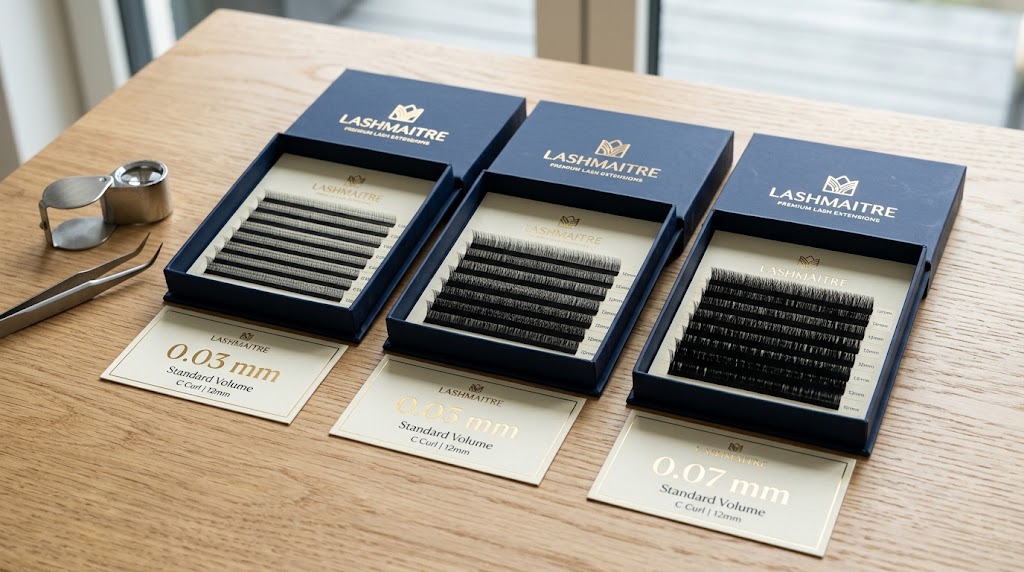
| Can I review samples before bulk ordering? | Licensing and sanitation signals make real salon testing more important than choosing by price alone. | LASHMAITRE can support sample-first evaluation for lash trays, glue/liquids and private label options. |
| Are product labels and usage instructions clear? | Salons need product names, use cases, storage wording and safe claim boundaries. | Private label buyers can discuss label direction, packaging proof and market-language needs. |
| Can the supplier separate glue, remover, cleanser, primer, bonder and sealer roles? | Service rules often distinguish application, removal, tinting, lifting and sanitation topics. | LASHMAITRE’s Glue & Liquids path helps buyers compare product roles before ordering. |
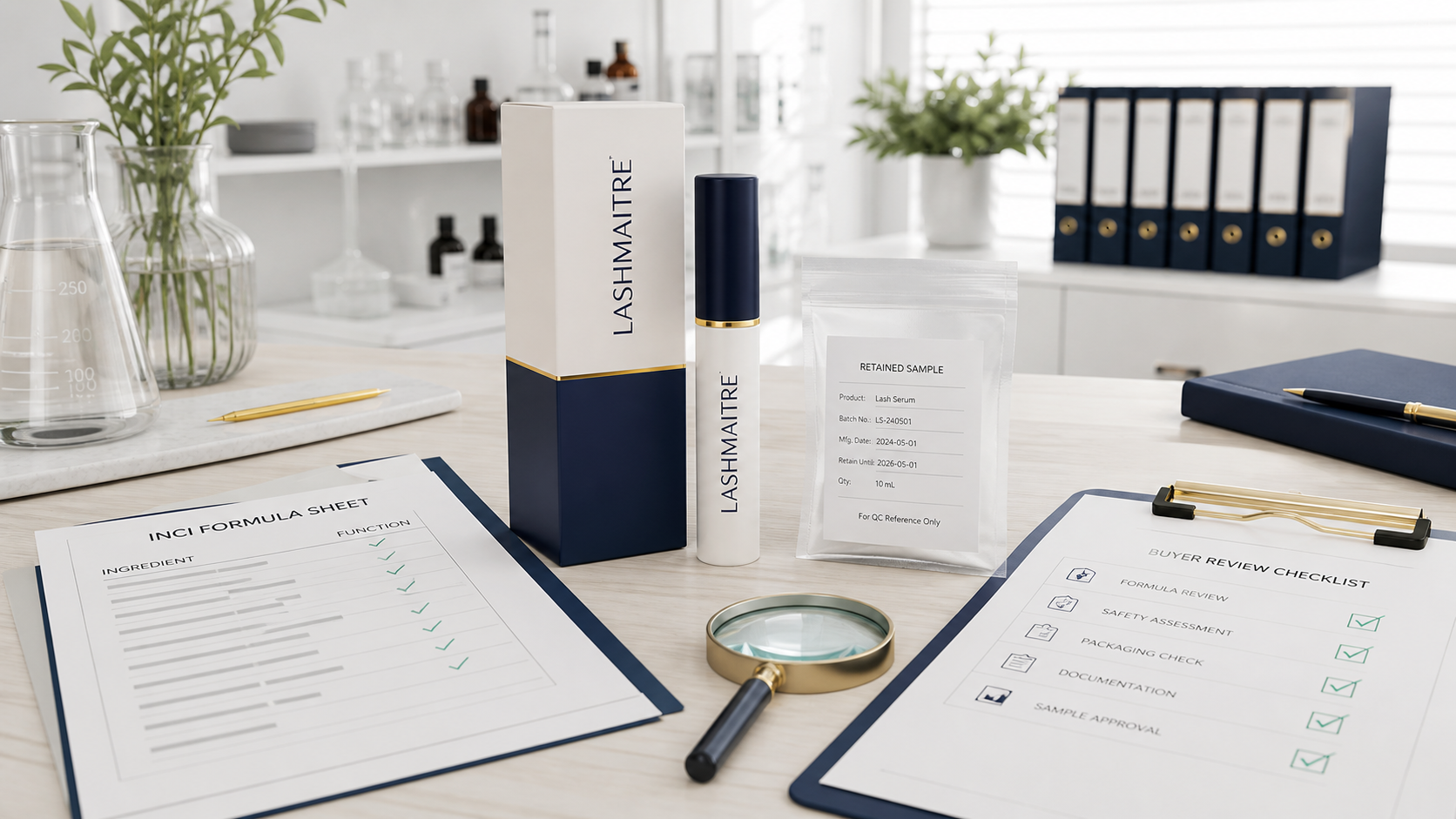
| What documentation can be requested? | Salons, distributors and private label buyers may need ingredient, storage, batch or product-support documents depending on market and formula. | Buyers should send product type, destination market and packaging plan through the inquiry process. |
| Is the reorder path consistent? | Compliance-oriented buyers need more than a one-time sample; they need stable SKU records and reorder communication. | LASHMAITRE can help buyers plan SKU notes, sample feedback and reorder details before bulk production. |
What to Avoid in Lash Product Sourcing and Packaging
- Do not use “FDA approved” language unless a specific source supports it for that product and claim.
- Do not rely on broad words such as “medical-grade”, “hypoallergenic” or “safe for everyone” without documentation and market review.
- Do not treat a state proposal as national law.
- Do not use one generic aftercare instruction for glue, remover, cleanser, primer, bonder and sealer.
- Do not approve private label packaging before checking product role, usage wording, language version and reorder SKU plan.
LASHMAITRE Buyer Checklist Before Ordering
| Step | What to prepare | Best next action |
|---|---|---|
| 1. Define the sales channel | Salon use, academy kit, retail aftercare, distributor catalog or private label brand. | Send target buyer type in the inquiry. |
| 2. Select product roles | Lash extensions, glue, remover, cleanser, primer, bonder, sealer, tools or aftercare kits. | Use the Glue & Liquids hub and product pages to shortlist options. |
| 3. Request samples | Sample quantity, test market, shipping destination and feedback timeline. | Request lash samples. |
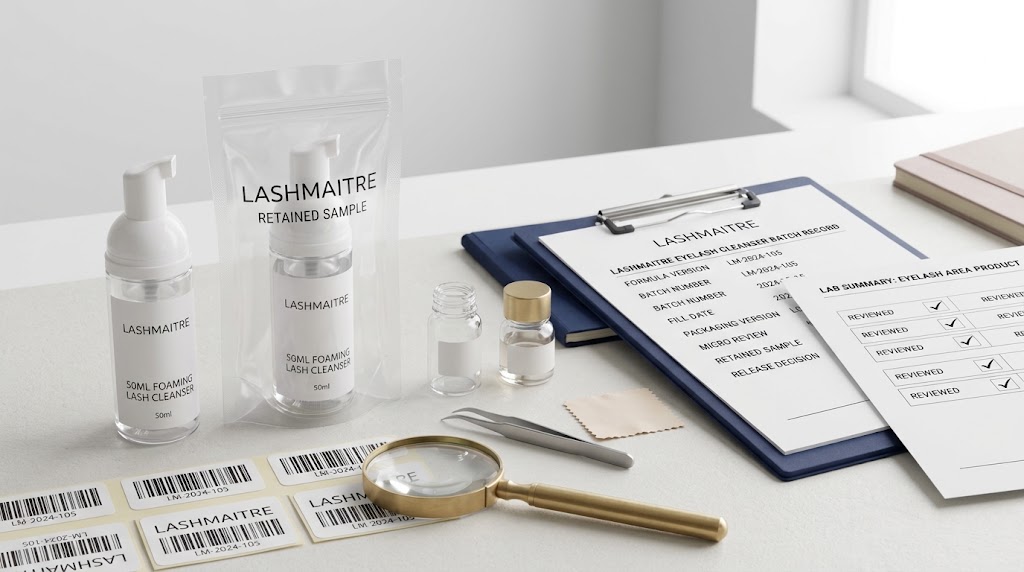
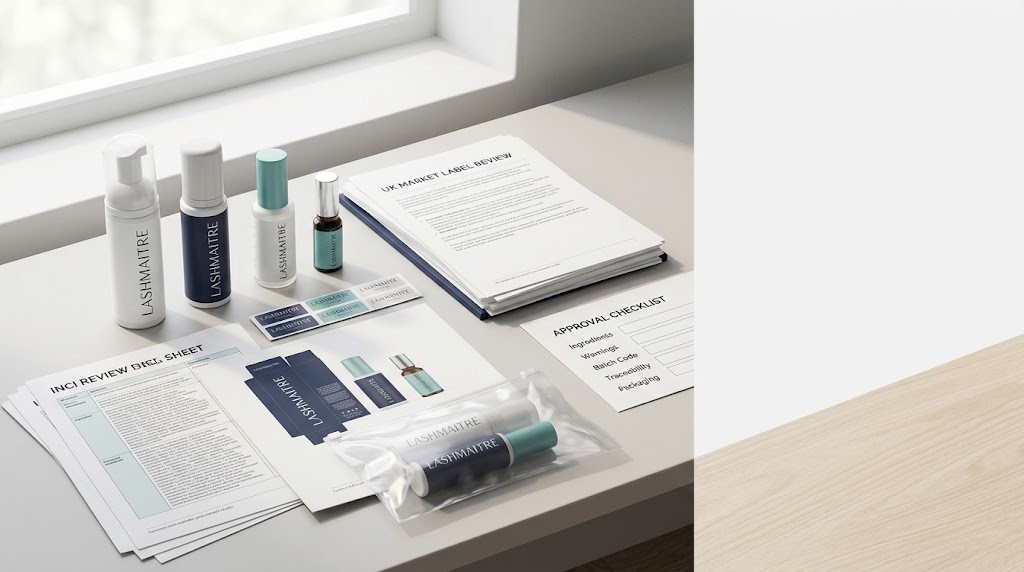
| 4. Review packaging wording | Product name, label claims, language version, barcode area, warning text and usage directions. | Discuss private label packaging before bulk confirmation. |
| 5. Confirm reorder records | SKU names, product variants, batch notes, carton plan and reorder contact path. | Use the wholesale inquiry page to send final specs. |
Bottom Line for Wholesale Lash Buyers
Use lash licensing requirements as a review lens for supplier comparison: ask whether each supplier can explain product role, sample path, label wording, storage guidance and reorder records. The strongest wholesale process treats lash licensing requirements as one input in product documentation, not as a reason to make legal claims on packaging.
U.S. lash licensing requirements and state-level service rules are not only salon paperwork. They are signals about how the market expects lash products to be labeled, explained, sampled and reordered. For wholesale buyers, especially distributors and private label lash brands, the better path is to treat compliance awareness as part of supplier selection.
LASHMAITRE can help buyers turn that awareness into a sourcing plan: compare product roles, request samples, prepare private label packaging, review usage wording and keep reorder records aligned with the final approved product.
FAQ
Are lash licensing requirements the same in every U.S. state?
No. Lash licensing requirements vary by state and may change over time. Buyers should check current state board or health department sources before making service, training or legal decisions.
Why should wholesale buyers care about eyelash extension licensing?
Licensing and sanitation rules affect what salons expect from suppliers. Clear labels, samples, product role explanations, storage notes and reorder records can make a supplier easier for professional buyers to work with.
Does LASHMAITRE provide legal advice about lash salon regulations?
No. LASHMAITRE does not provide legal advice. The sourcing team can help wholesale buyers prepare product samples, packaging questions, usage wording and supplier documentation requests for review in their own market.
What lash products should buyers review first?
Start with products that directly affect service and aftercare: lash glue, remover, cleanser, primer, bonder, sealer and lash trays. Buyers should confirm samples and product roles before approving private label packaging.
Sources and Notes
- Maryland Board of Cosmetologists, “Temporary Eyelash Extension Technician License – Now Available”, accessed June 4, 2026. Used for Maryland temporary license launch date, permit requirement, renewal path and standard license transition. Source: labor.maryland.gov.
- Maryland Department of Labor, “New license for eyelash extension technicians to launch in Maryland”, published October 21, 2025, accessed June 4, 2026. Used for the official explanation of the new limited license direction. Source: labor.maryland.gov.
- Maryland General Assembly, HB1223 fiscal note and bill text, accessed June 4, 2026. Used for legislative background and training/examination context. Source: mgaleg.maryland.gov.
- Rhode Island General Assembly, S2858 “Eyelash Services Licensing and Regulation Act”, introduced March 4, 2026, accessed June 4, 2026. Used as a proposed bill example; not treated as enacted law. Source: webserver.rilegislature.gov.
- Indiana Department of Health, “Eyelash Extensions”, accessed June 4, 2026. Used for official training program recognition and sanitation-purpose context. Source: in.gov.
- New York Department of State, “Procedure Licensure Chart”, accessed June 4, 2026. Used for appearance-enhancement procedure classification context for eyelashes/extensions and lash lift procedures. Source: dos.ny.gov.
- FDA, “Cosmetics News & Events”, accessed June 4, 2026. Used as a federal cosmetics monitoring source; no June 2026 lash-specific update was found in this scan. Source: fda.gov.
Buyer next step: Licensing and compliance checks should be kept separate from product inspection, but buyers can still use LASHMAITRE lash quality control to organize sample records, batch notes and supplier evidence before wholesale approval.

Lash Maitre: Your Trusted Partner in Eyelash extension Solutions
Lash Maitre is dedicated to providing professional insights and tips in the eyelash extension industry. Sharing the latest trends, techniques, and product knowledge, Lash Maitre helps lash artists and enthusiasts enhance their skills, stay inspired, and achieve the perfect lash experience.