Lash Extension Glue Wholesale Buyer Checks: SDS, Shelf Life and Samples
Share
Lash extension glue wholesale buyer checks should start before price comparison. A buyer needs to confirm product type, SDS availability, ingredient and label records, shelf life, storage conditions, sample performance, packaging readiness and market compliance before placing a bulk order.
This guide is written for salons, distributors, academies, ecommerce sellers and private label brands comparing lash adhesive suppliers. It is a sourcing checklist, not legal advice. Final product claims, labels and import requirements should be checked against your market rules before sale.
Editorial scope: Prepared by the LASHMAITRE sourcing team based on public regulatory references and wholesale sample-approval workflow. This guide supports buyer due diligence; it is not legal advice.
For bottle-size planning, compare 5 ml vs 10 ml lash adhesive by test volume, freshness, turnover and reorder frequency.
Quick Buyer Checklist
- Confirm whether the product is adhesive, bonder, sealer, remover, primer or cleanser.
- Ask for SDS, ingredient direction, batch records and label information before bulk payment.
- Check shelf life, unopened storage conditions and recommended use-after-opening notes.
- Test samples in your actual salon climate, humidity range and application routine.
- Separate performance claims from verified documents. Do not rely only on marketing phrases.
- Plan private label packaging only after sample approval and label review.
- Use one supplier record system for repeat orders, batch references and customer feedback.
| Product Type | Main Salon Use | Wholesale Buyer Checks | LASHMAITRE Page |
|---|---|---|---|
| Lash extension adhesive | Bonding extensions during professional application. | SDS, drying speed, viscosity, bottle seal, shelf life, storage, sample performance. | Glue & Liquids |
| Lash bonder | Used after application in some service systems to support curing workflow. | Application timing, packaging text, compatibility with adhesive, salon usage instructions. | Lash Bonder |
| Eyelash extension sealer | Aftercare or service add-on depending on salon routine. | Ingredient direction, retail label, bottle brush, usage claims, private label box proof. | Sealer |
| Adhesive remover | Professional removal of extensions. | Format, contact-use instructions, label warnings, packaging seal and technician feedback. | Remover |
| Eyelash cleanser | Aftercare, retail add-on or salon prep routine. | Foam bottle, brush or kit options, retail language, box design and reorder consistency. | Cleanser |
Why Lash Glue Wholesale Needs More Control Than Lash Trays
Lash trays can be checked visually for curl, thickness, length, color and strip release. Lash adhesive is different because the buyer also has to manage liquid stability, bottle storage, viscosity, drying speed, fumes, climate fit, label records and post-shipping performance.
For LASHMAITRE buyers, we treat lash extension glue wholesale as a sample-first product group. A buyer should not approve a large private label run only because the bottle design looks good. The adhesive should be tested by a real technician with the buyer’s lash trays, room humidity, temperature, client flow and aftercare routine.
1. Confirm Product Type and Intended Use
Do not group all lash liquids under one buying standard. Adhesive, lash bonder, eyelash extension sealer, adhesive remover and eyelash cleanser serve different steps in the salon workflow.
Before you compare lash glue wholesale pricing, write down the intended user, service type, target drying speed, bottle size, color, viscosity, storage requirement and packaging plan. This keeps the quote clear and prevents a supplier from sending a product that is technically available but not right for your market.
2. Ask for SDS and Product Records Before Bulk Orders
For chemical products, buyers should request safety and handling documents before approving bulk production. OSHA describes Safety Data Sheets as a standardized way to communicate chemical hazard, handling and emergency information. For a lash adhesive buyer, the SDS is part of the sourcing file, not an afterthought.
A practical supplier file should include SDS, product name, supplier name, batch or lot reference, ingredient direction, storage notes, shelf-life notes, label draft, packaging artwork proof and sample approval date. If you are building a private label lash line, keep these records together with your tray specifications and packaging artwork.
3. Check Shelf Life, Storage and Shipping Conditions
For wholesale orders, record unopened lash adhesive shelf life, the period after opening and the remaining shelf life on arrival separately. Use the selected product’s written instructions and batch information. Another brand’s expiry guidance is not a specification for your order.
| Record | What to confirm |
|---|---|
| Unopened shelf life | The supplier’s expiry date or shelf-life calculation basis, batch reference and required storage conditions. |
| Period after opening | The instructions for the selected adhesive and a place to record the bottle’s opening date. Do not treat the unopened expiry date as the only opened-bottle limit. |
| Remaining shelf life on arrival | The batch expiry information and expected receipt date. Agree on any minimum remaining-life requirement before confirming the order. |
For inventory planning, compare the expected delivery date, planned storage time and likely sell-through with the batch expiry information. Confirm storage and transport requirements in writing. Calendar time remaining does not by itself establish that a bottle has been stored correctly or is suitable for use.
Keep the product name, batch or lot number, arrival date, bottle-seal condition and supplier instruction version in the approval record. Resolve missing or inconsistent dates with the supplier before approving the order quantity; do not substitute an assumed universal number of months.
4. Run Sample Tests in Real Salon Conditions
A supplier can describe drying speed, but only your technicians can confirm whether it fits your routine. Test samples in your normal humidity and temperature range. Use the lash trays you actually sell or apply. Record pickup feel, placement time, retention feedback, visible residue, fume comfort and how the adhesive behaves after the bottle has been opened for several days.
For wholesale buyers, one good sample test is not enough. Compare at least two working days, preferably with more than one technician. If you are planning a private label product, keep written approval notes so the repeat order can match the approved sample.
| Test Field | What to Record | Why It Matters |
|---|---|---|
| Room condition | Temperature, humidity range and whether the room uses air conditioning or dehumidifying. | Adhesive behavior can change when salon climate changes. |
| Application feel | Pickup, bead shape, placement time, stringing, fumes and technician comfort. | Technicians need a product that fits their actual service speed. |
| Opened-bottle check | Day 1, day 3 and day 7 viscosity, cap seal and drying feel. | Wholesale buyers need repeatable performance after opening, not only first-use results. |
| Retention feedback | Client feedback, service type, lash tray used and aftercare routine. | Retention notes help separate product fit from technique or aftercare issues. |
| Packaging condition | Bottle seal, label adhesion, outer box, batch mark and carton condition on arrival. | Packaging problems can become distributor complaints even when the liquid is acceptable. |
5. Verify Packaging Before Private Label Printing
Private label lash glue packaging needs more than a logo. The buyer should check bottle size, cap seal, inner plug, outer box, label material, barcode plan, language version, warning text, usage directions, storage notes and carton marks. Do not approve mass packaging before the final text has been reviewed for your target country.
LASHMAITRE can help buyers prepare stock packaging, logo labels and private label boxes. For early-stage brands, a sample-first path is usually safer: approve the product first, then confirm the packaging proof, then move to a controlled MOQ order.
6. Check Market Rules Before Making Claims
In the United States, FDA explains that cosmetic products and ingredients are generally not FDA-approved before they go to market, except for color additives where approval is required. That means buyers should avoid unsupported phrases such as “FDA approved lash glue” unless a specific regulatory basis applies.
For buyers selling in the European market, official EU-related guidance describes duties around a Responsible Person, Product Information File and product notification before placing cosmetic products on the market. If your brand is importing or selling under your own label, confirm who carries those responsibilities before printing packaging.
7. Compare the Complete Liquids Range, Not Only Adhesive
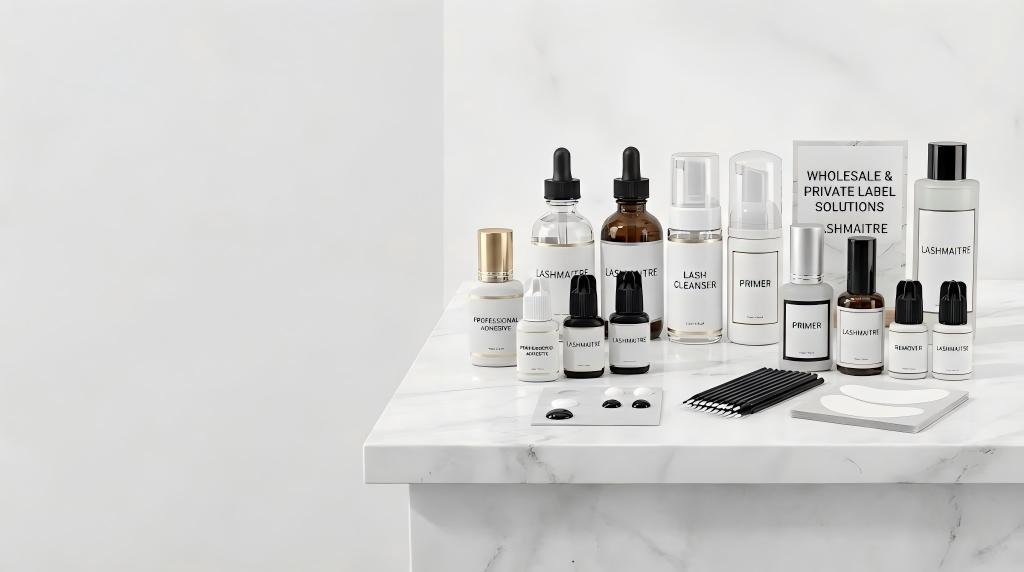
Many salons want a matched service system. That can include adhesive, bonder, sealer, remover and aftercare cleanser. A wholesale buyer should decide whether to launch only glue first or build a complete lash liquids line. The second route can support private label branding, but it needs tighter SKU planning and more packaging control.
Start from your customer problem. If your buyers mainly ask for retention, adhesive and bonder may be the first focus. If they ask for aftercare and retail add-ons, cleanser and sealer can support repeat sales. If they offer professional removal services, remover format and instructions become important.
| Buyer Information | Example Details | How It Helps the Quote |
|---|---|---|
| Target market | United States, EU, UK, Australia, Middle East or local distributor market. | Helps prepare label language, packaging direction and document expectations. |
| Product scope | Adhesive only, or adhesive plus bonder, sealer, remover and cleanser. | Clarifies whether the project is one SKU or a full lash liquids range. |
| Performance target | Drying speed, color, viscosity, bottle size and expected salon climate. | Helps choose sample options before bulk pricing. |
| Private label needs | Logo label, bottle color, outer box, barcode, insert card and language version. | Separates product sample approval from packaging production cost. |
| Order plan | Sample quantity, first MOQ, launch date, reorder expectation and shipping country. | Helps estimate production schedule, packing plan and freight path. |
LASHMAITRE Sample Approval Workflow
- Send your target market, product type, bottle size, drying speed and packaging plan.
- Request sample options through the wholesale inquiry form.
- Test samples in your real salon or distributor environment.
- Record feedback for drying speed, retention, storage and packaging.
- Approve product and packaging before MOQ production.
- Keep batch and reorder records for repeat orders.
If you are still building your product range, review the main lash extension glue and liquids wholesale page, then pair your liquid plan with sample approval, custom lash packaging and private label lash extensions.
Source Notes
Sources checked on June 2, 2026:
- FDA, eye cosmetic safety guidance: fda.gov.
- FDA, cosmetic regulation and approval scope: fda.gov.
- OSHA, Safety Data Sheet communication under Hazard Communication: osha.gov.
- HPRA, Responsible Person for cosmetic products: hpra.ie.
- HPRA, Product Information File overview: hpra.ie.
For incident documentation and supplier escalation, use the eyelid swelling after lash extensions buyer checklist without treating procurement records as a diagnosis.
FAQ
What should I ask before buying lash extension glue wholesale?
Ask for product type, SDS, storage notes, shelf-life notes, batch record method, sample options, packaging requirements and target-market label needs before bulk approval.
Should I approve private label lash glue before sample testing?
No. Approve the liquid performance first, then approve label and box artwork. Packaging should follow the approved product, not lead the decision.
Can LASHMAITRE help with glue, bonder, sealer, remover and cleanser together?
Yes. LASHMAITRE can help wholesale buyers plan a lash liquids range, compare sample options and prepare private label packaging after product approval.
Related LASHMAITRE Sourcing Pages
Continue from this glue wholesale guide into the most relevant product and sourcing pages.
Next Buyer Guide
Compare Lash Bonder vs Lash Sealer
After checking adhesive SDS, shelf life, samples and packaging, compare whether bonder or sealer should be the next Glue & Liquids SKU in your wholesale range.
Read the bonder vs sealer guideBuyer next step: Glue sample checks should stay connected to LASHMAITRE lash quality control so SDS review, shelf life, bottle labels, residue notes and batch compatibility can be recorded before reorder.

Lash Maitre: Your Trusted Partner in Eyelash extension Solutions
Lash Maitre is dedicated to providing professional insights and tips in the eyelash extension industry. Sharing the latest trends, techniques, and product knowledge, Lash Maitre helps lash artists and enthusiasts enhance their skills, stay inspired, and achieve the perfect lash experience.