Brown Eyelash Extensions: Wholesale SKU Planning for Lash Brands and Salons
Share
Definition:
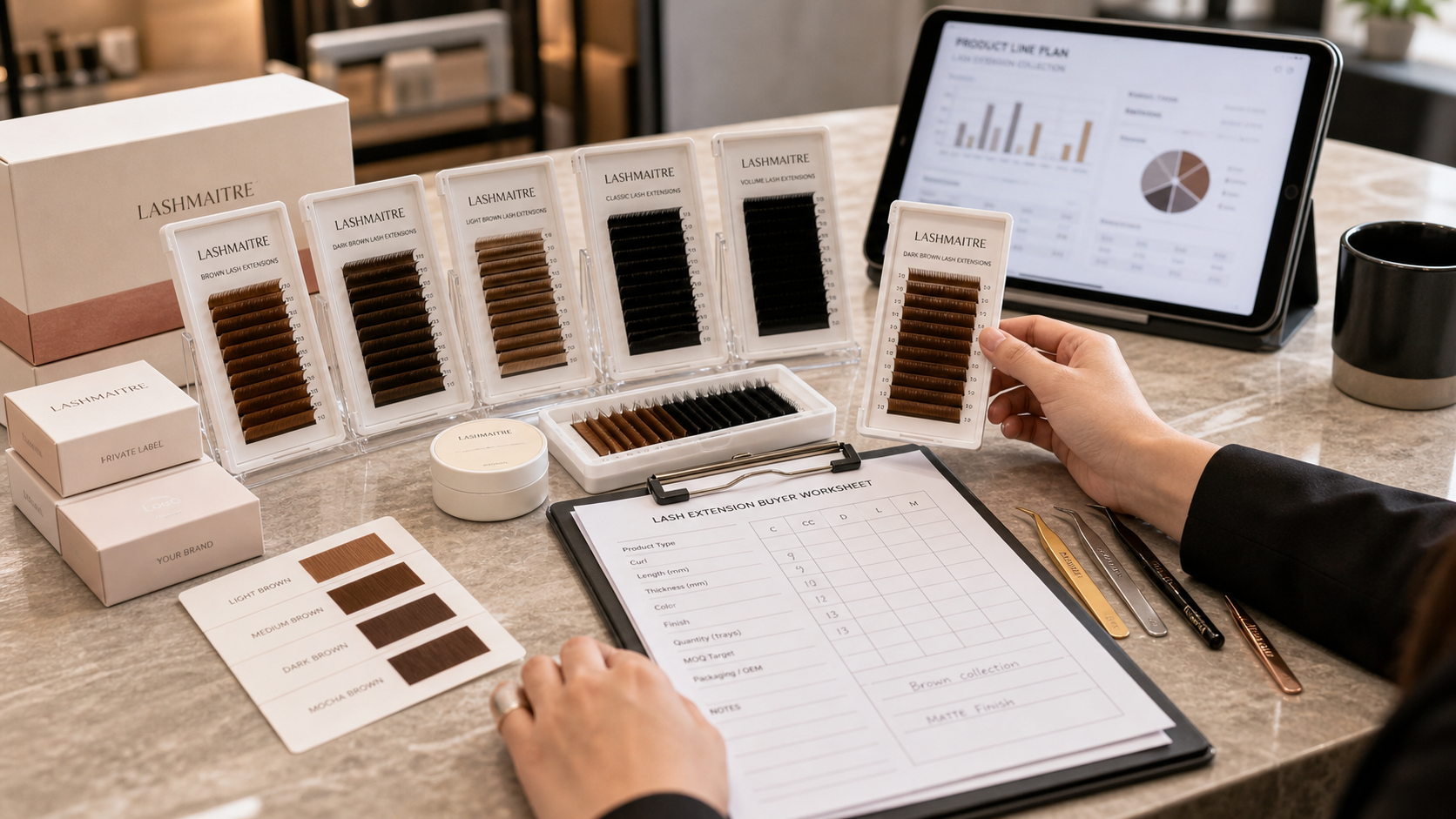
Brown eyelash extensions are professional lash extension trays made in brown or soft brown tones instead of standard deep black. For B2B buyers, they are not only a style option; they are a product line decision that affects SKU planning, salon menu positioning, private label packaging, sample testing, and reorder strategy.
Author: Alex, LASHMAITRE – B2B eyelash extensions manufacturing & private-label programs (https://www.lashmaitretrade.com)
Why Brown Lashes Deserve a Separate SKU Decision
Many lash brands start with black classic trays, volume trays, and premade fans because those products serve the broadest demand. That is the right first move. The mistake happens when a buyer adds brown eyelash extensions only because they look trendy in photos, without asking whether the market can reorder them consistently.
Brown lashes should be treated as a controlled SKU expansion. They work best when a buyer already understands the core black lash extension line, has tested curl and thickness preferences, and wants a softer product category for clients who do not want a high-contrast black lash look.
This article is written for salons, lash brands, distributors, importers, and ecommerce sellers. It is not a consumer appointment guide. The goal is to help B2B buyers decide when brown lash trays belong in the catalog, how to test them with samples, and how to position them without overstocking slow-moving inventory.
For broader category planning, start with the wholesale eyelash extensions buying guide and the types of eyelash extensions product line guide.
The Buyer Problem: Softer Looks, Smaller Forecasts
Brown lash extensions usually serve a more specific customer than black lash extensions. They can be excellent for natural-style services, blonde clients, mature clients, light makeup looks, and salons that promote soft beauty instead of dramatic glam. That makes the product attractive, but it also means the buyer should forecast carefully.
A distributor may sell black trays across almost every salon account. Brown lash trays may perform better with salons that already educate clients on natural styling. An ecommerce seller may need strong product photos and clear naming to explain why a brown set looks different from black lashes. A private label brand may use brown lashes to create a softer premium line, but should not assume every black lash customer will reorder brown at the same volume.
Brown lashes can raise brand sophistication, but only when the SKU plan is narrow enough to test and repeat.
The practical question is not whether the brown style is beautiful. The question is which curls, lengths, thicknesses, and packaging formats can become repeatable wholesale SKUs.
Where Brown Eyelash Extensions Fit in a Product Line
Brown lashes should usually sit after the buyer has tested core black tray categories. A practical product line can be built in layers:
- Core black classic lash trays
- Volume or premade fan trays
- Mixed trays for sample testing
- Brown lash extensions for soft natural looks
- Colored lashes or trend styles after customer demand is clearer
This order helps buyers avoid a common inventory problem: too many niche styles before the main reorder products are stable. Brown lashes can be a high-value addition, but they should support the core lash extension line instead of replacing it.
Wholesale eyelash extensions buying guide
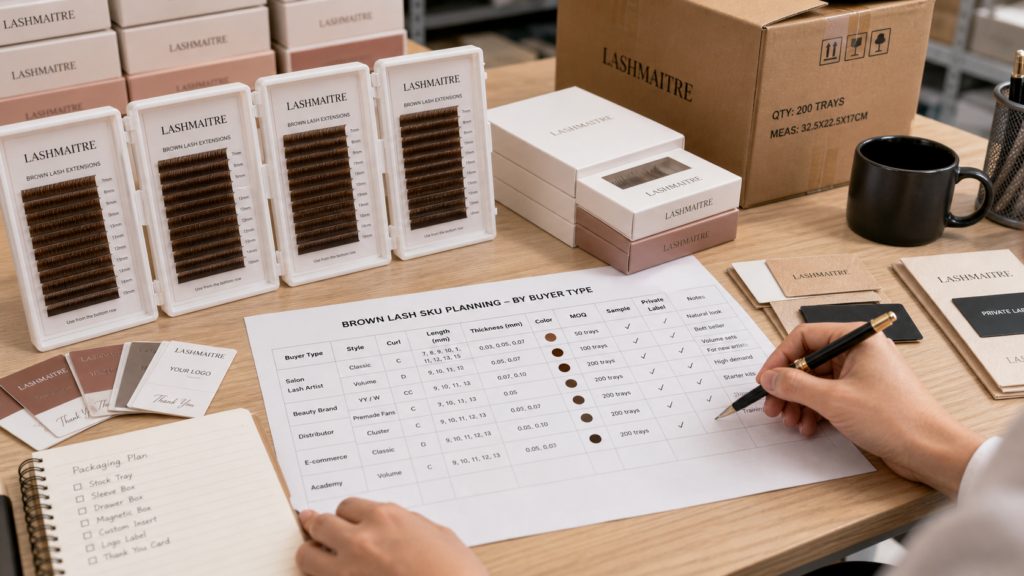
Table 1: Brown Lash SKU Planning by Buyer Type
| Buyer Type | Best Brown Lash Use Case | Recommended Starting Range | Main Risk |
|---|---|---|---|
| Salon owner | Soft natural sets and lighter client profiles | 1-2 curls, limited lengths, classic or light volume | Buying too many lengths before demand is proven |
| Lash brand | Premium natural line or soft glam collection | Brown classic trays plus one volume or premade option | Weak product naming that does not explain the look |
| Distributor | Add-on SKU for salons already buying black trays | Start with sample packs and selected core specs | Slow inventory if the market is not educated |
| Ecommerce seller | Visual product story for natural or clean beauty audience | Brown trays or retail kit with strong photos | Poor conversion if product difference is unclear |
| Academy / trainer | Demonstration for color and style selection | Small training batch | Treating training demand as wholesale demand |
This table shows why brown eyelash extensions should not be ordered as a full catalog on day one. The first order should prove which buyer group responds, which specs move, and which packaging language converts.
Choosing Brown Lash Specs: Curl, Thickness, Length, Finish
A brown lash product line should be easy to explain and easy to reorder. Buyers should not start with every possible curl and thickness. They should choose a controlled set of options that match the intended buyer.
Curl
C and CC curls are often easier for broad salon use because they fit natural and soft glam positioning. D curl can work for more visible styles, but if the entire point of brown lashes is softness, too much curl may reduce the natural effect. L curl or specialty curls should be tested only if the buyer already has a clear market need.
Thickness
For classic brown lash trays, thickness should be chosen with natural styling in mind. For volume or premade fans, lighter diameters may better support a soft finish. Exact specs should be confirmed with samples, because product naming alone does not prove how the lash will look in real salon use.
Length
A narrow length range is usually safer at the beginning. If the target buyer is natural-style salons, shorter and medium lengths may matter more than dramatic long lengths. Mixed trays can help buyers test before ordering full single-length trays.
Finish
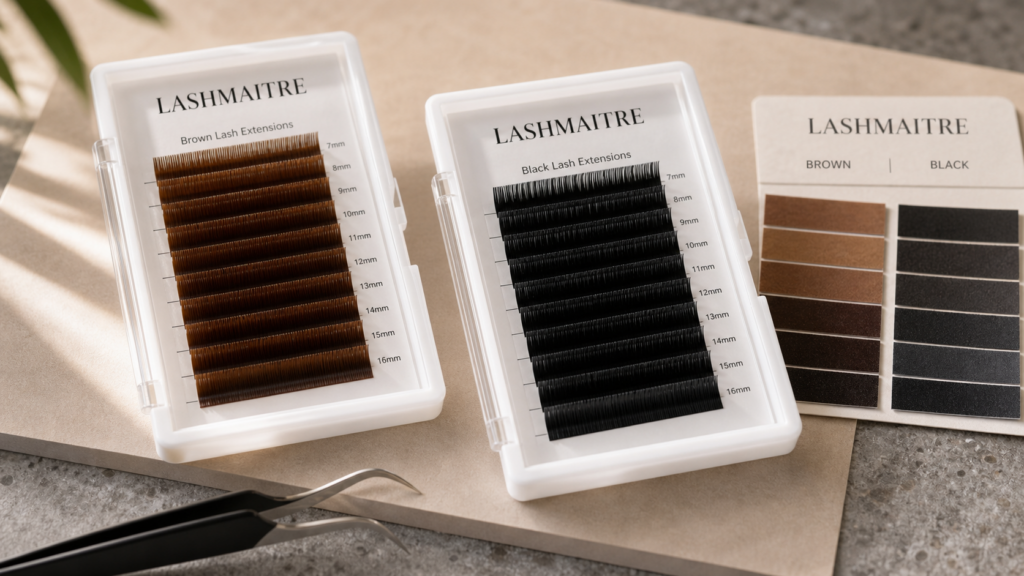
The finish should support the brand position. Some buyers want a soft matte brown effect; others want a slightly richer espresso tone. Avoid vague names without sample confirmation. Ask the factory to confirm color tone under normal daylight, salon lighting, and product photography conditions.
Brown vs Black Lash Extensions: A B2B Positioning Comparison
Brown and black lash extensions do not compete in the same way across all markets. Black lashes remain the core professional product. Brown lashes add nuance, style differentiation, and brand storytelling.
| Product Category | Buyer Positioning | Best For | Reorder Potential |
|---|---|---|---|
| Black classic lash extensions | Core salon and wholesale staple | Daily lash services, training, broad market | High |
| Black volume / premade fans | Fuller salon services and advanced artists | Glam, bridal, volume menus | High |
| Brown classic lash extensions | Soft natural SKU | Natural looks, lighter clients, mature clients | Medium to high after education |
| Brown volume or premade fans | Soft fullness without harsh contrast | Premium soft glam menus | Medium, test first |
| Colored lash extensions | Creative or seasonal SKU | Content, retail, trend campaigns | Variable, market-dependent |
This comparison helps a buyer avoid overstating the role of brown lashes. They are not a replacement for black lashes. They are a strategic extension of the product line.
Private Label Brown Lashes: Packaging and Naming Matter
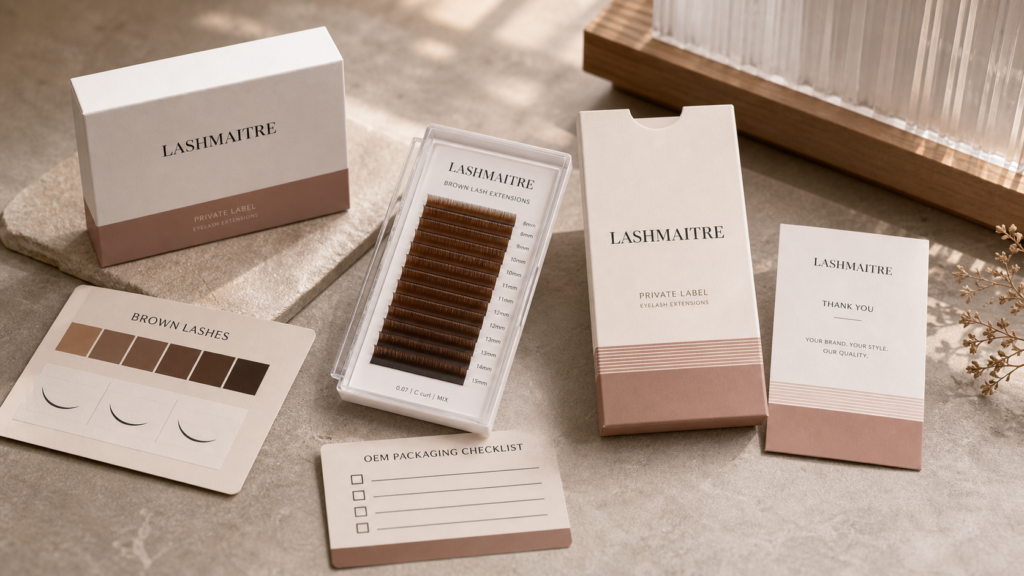
Private label brown lashes need more careful naming than standard black trays. A buyer can call the product brown, soft brown, dark brown, espresso brown, chocolate brown, or natural brown, but the name should match the real color and customer expectation.
For B2B packaging, keep the front label simple:
- Brand name
- Product category
- Curl
- Length
- Thickness
- Color tone
- Tray type
- Quantity or line count if relevant
Avoid unsupported claims such as medical, hypoallergenic, FDA-approved, or guaranteed retention claims unless verified by applicable documentation and legal review. For lash fibers, the safer language is product-specific: color, curl, material, finish, packaging, and intended professional use.
Wholesale lash extensions inquiry
Sample First: How to Test Brown Lash Extensions Before Bulk Orders
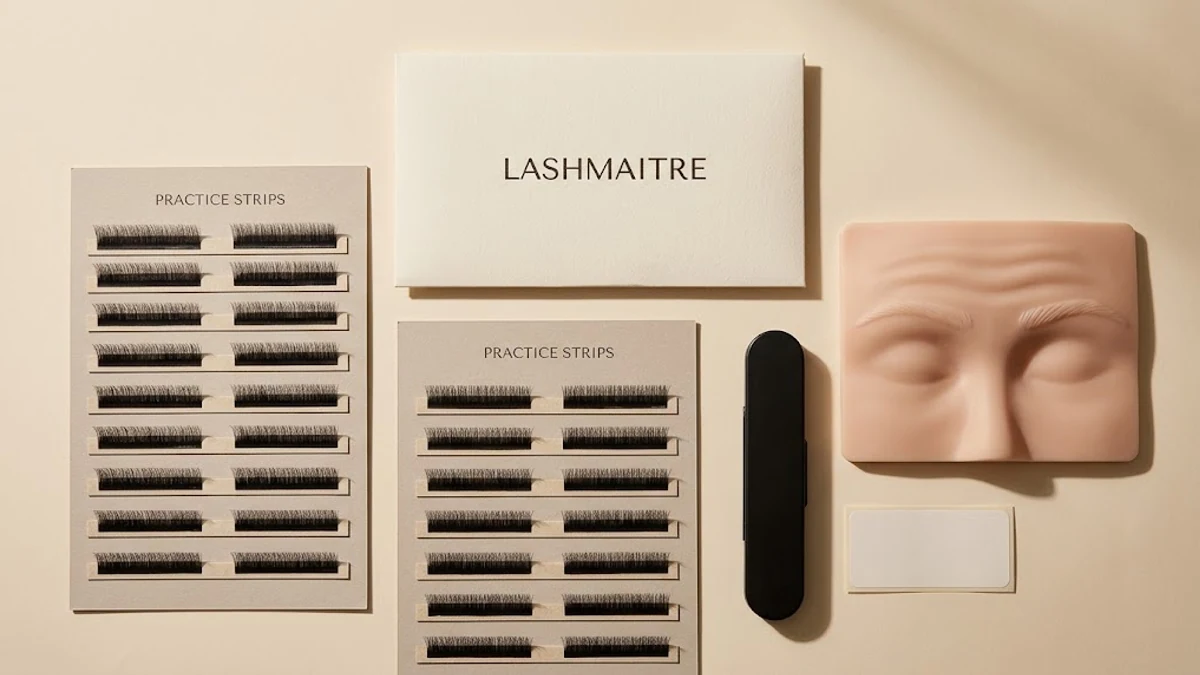
A MOQ 50 sample-first approach is useful because brown lashes require visual approval. A buyer should not approve them only from a supplier catalog image. The sample should be checked under real conditions.
Review these points before bulk ordering:
- Does the brown tone match the brand’s visual direction?
- Does the color look too red, too gray, too light, or too close to black?
- Does the curl match the buyer’s existing black tray system?
- Can the tray label clearly separate brown from black SKUs?
- Does packaging make the color difference obvious?
- Can product photos show the brown tone without heavy editing?
- Will salons understand who the product is for?
For distributors, add one more step: show samples to a small group of existing salon buyers. Their feedback is more useful than guessing from social media trends.
How to Write Product Copy for Brown Lash Extensions
The strongest product copy for brown lashes should explain the buyer use case, not only the color. A weak product line says: “Brown lash trays available.” A stronger B2B product line says: “Soft brown lash extensions for natural salon sets, lighter client profiles, and private label lash brands building a softer product range.”
Useful copy angles include:
- Natural enhancement without the sharp contrast of black lashes
- Soft glam for salons serving daily-wear clients
- A premium add-on SKU after core classic trays are tested
- Private label brown lashes for brands building a clean beauty look
- Sample-first testing before bulk orders
Product copy should sound like a buyer guide, not a keyword list. Use the main phrase in important places, then rely on natural terms such as brown lash trays, soft brown lashes, natural lash extensions, and private label brown lashes.
Operational Questions to Confirm With the Factory
Before ordering brown lash extensions in bulk, send the supplier a written request that covers product and packaging details. This reduces confusion later.
Ask for:
- Available brown tones
- Tray format options
- Curl, length, and thickness range
- Mixed tray availability
- Private label packaging options
- MOQ for stock tray and private label packaging
- Sample cost and sample lead time
- Bulk lead time range
- Whether color tone can remain stable across repeat orders
- Label and carton marking options
Do not rely only on chat messages when confirming final specs. Use a written quote, spec sheet, or order confirmation.
Common Mistakes When Adding Brown Lashes
The first mistake is over-ordering. Brown lashes are attractive, but not every buyer needs a full tray range immediately.
The second mistake is poor visual content. Brown lashes can look black in low-quality photos, which makes the product harder to sell online. Product photography should show the color difference clearly while staying realistic.
The third mistake is copying consumer language. B2B buyers need specs, packaging, MOQ, sample policy, and reorder clarity. They do not need vague lifestyle phrases that fail to support purchasing decisions.
The fourth mistake is mixing brown lashes with unrelated products in the same product page. If the page is about brown lash extensions, the images and internal links should support that exact topic.
FAQ: Wholesale & OEM – brown eyelash extensions
Should a new lash brand start with brown eyelash extensions?
Most new brands should start with core black lash trays first, then add brown eyelash extensions after testing customer demand. Brown lashes are a strong second-stage SKU for natural or soft glam positioning.
What specs should I test first for brown lash trays?
Start with a narrow range of common curls, medium lengths, and practical thickness options. Mixed trays are useful for sample testing before committing to multiple single-length trays.
Are brown lashes suitable for private label packaging?
Yes. Brown lashes can work well for private label brands, especially when the packaging clearly communicates the soft natural look, color tone, tray specs, and intended salon use.
How do I avoid slow-moving brown lash inventory?
Use sample-first ordering, limit the first SKU range, test product photos, and collect feedback from salons or ecommerce customers before scaling into more curls and lengths.
References
- FDA cosmetics guidance and MoCRA information: https://www.fda.gov/cosmetics
- ISO 22716 cosmetics good manufacturing practice overview: https://www.iso.org/standard/36437.html
- U.S. Federal Trade Commission advertising guidance: https://www.ftc.gov/business-guidance/advertising-marketing
Conclusion: Add Brown Lashes With a Clear SKU Strategy
Brown eyelash extensions can help lash brands, salons, distributors, and ecommerce sellers build a softer and more differentiated product line. The key is not to treat brown lashes as a random trend. Treat them as a controlled SKU expansion supported by samples, clear specs, realistic product photos, and private label packaging that explains the buyer value.
If you are planning a brown lash extension line, send your target market, preferred curl and length range, packaging plan, and estimated quantity to LASHMAITRE at https://www.lashmaitretrade.com. Our team can help you compare sample options, MOQ 50 starter orders, private label packaging, and wholesale product planning before bulk production.

Lash Maitre: Your Trusted Partner in Eyelash extension Solutions
Lash Maitre is dedicated to providing professional insights and tips in the eyelash extension industry. Sharing the latest trends, techniques, and product knowledge, Lash Maitre helps lash artists and enthusiasts enhance their skills, stay inspired, and achieve the perfect lash experience.