Lash Retail Shortage Claim: 9 Records Before a Dispute

Share
Lash Retail Shortage Claim: Direct Answer
A lash retail shortage claim occurs when a retailer says fewer units or cases were received than the supplier invoiced. Before disputing it, classify the claim as valid, partially valid or unsupported, then reconcile the deduction notice, PO, item master, packing record, ASN, invoice, BOL/POD, carton evidence and retailer receiving data. Submit only evidence that belongs to the exact PO, shipment and claim code.
A shortage claim is not automatically the same as a carrier freight claim or a compliance chargeback. The source may be an actual packing error, case-pack mismatch, invoice timing issue, receiving error, unscanned carton or incomplete custody record. Root cause determines the correct owner and response.
What Is a Retail Shortage Claim?
Retailers may call it a shortage deduction, quantity variance, goods billed not shipped or freight bill signed short. SPS Commerce's explanation of Code 24 carton shortage illustrates how a mismatch between invoiced quantity and received quantity can require a signed BOL or POD, PO reference, invoice and ASN evidence.
Always follow the retailer's current claim code, portal, deadline and document requirements. This operational checklist does not guarantee recovery and does not replace the retailer agreement, carrier contract or legal advice.
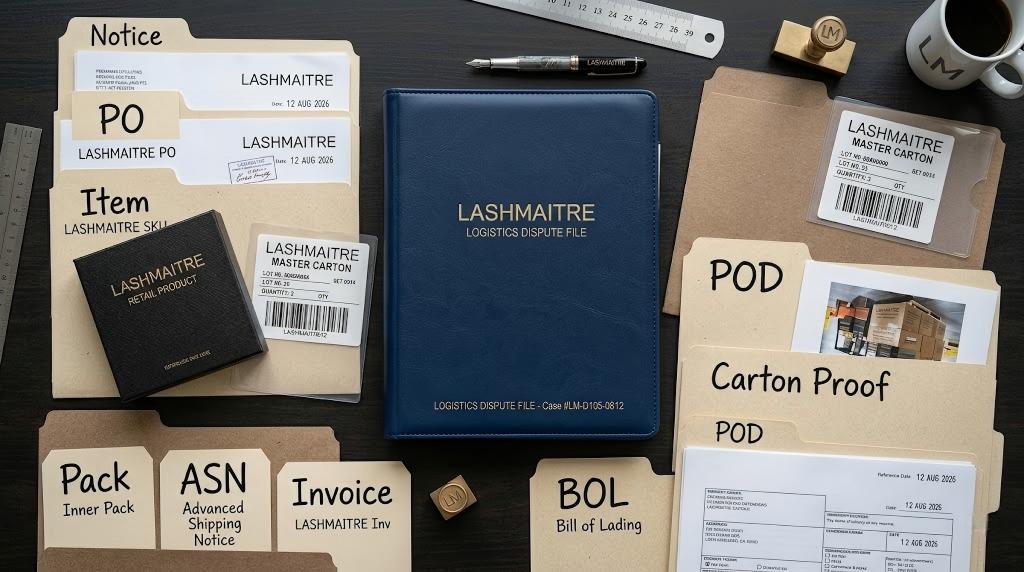
Nine Records to Build the Evidence Pack
| Record | Key question | Common weakness |
|---|---|---|
| 1. Deduction notice | What exact code, amount, item, quantity and deadline apply? | Team disputes a different issue than the retailer raised |
| 2. Purchase order | What quantity, UOM, pack and destination were ordered? | Obsolete PO version is used |
| 3. Item and case master | How do each, inner and case quantities convert? | Retailer and supplier use different pack logic |
| 4. Pick/pack record | What was physically packed and checked? | Spreadsheet shows plan, not final load |
| 5. ASN and acknowledgement | What quantity and hierarchy were transmitted and accepted? | Rejected or late ASN treated as accepted |
| 6. Invoice | What quantity, UOM and price were billed? | Full PO billed after partial shipment |
| 7. BOL or carrier acceptance | What load did the carrier accept at pickup? | No signature or count qualification understood |
| 8. POD and receiving proof | What arrived and what exceptions were noted? | Unreadable signature or missing PO/destination |
| 9. Carton and portal evidence | Can labels, photos and retailer receipts trace the disputed units? | Files are incomplete, blurry or from another shipment |
1. Read the Deduction Notice Before Gathering Files
Record retailer, claim code, invoice, PO, item, amount, claimed quantity, notice date, deadline and portal status. Separate shortage, damage, pricing, compliance and allowance issues. One deduction may contain multiple lines that need different conclusions.
Create a case ID and assign an owner. Preserve the original notice before adding comments or screenshots.
2. Lock the Current Purchase Order Version
Retrieve the final accepted PO and any changes. Confirm ordered item, UOM, quantity, price, destination and delivery window. If the retailer changed the order, identify when the change was received and whether the shipment followed the updated version.
Do not dispute from a PDF exported before the last PO change. The claim decision depends on the controlling order at shipment release.
3. Reconcile Item and Case-Pack Data
Compare retailer item number, supplier SKU, GTIN/UPC, each quantity, inner-pack count and case quantity. A pack-level mapping error can create an apparent shortage even when the physical shipment was complete.
Use the approved lash product master data and lash case pack configuration. Confirm that the data version was effective for the disputed shipment.
4. Prove What Was Actually Packed
Retrieve final pick lists, packing verification, scale or carton count, QC release and loading record. Planned quantities are not proof. The record should identify who verified the load, when and against which PO/version.
For mixed styles or assortments, reconcile by item and carton. A complete total count does not prove that each SKU was packed correctly.
5. Review the ASN and Its Acknowledgement
Compare the accepted lash advance shipping notice with the final physical shipment. Check PO, item, UOM, quantity, case hierarchy, SSCC, carrier and transmission time.
Preserve technical and application acknowledgements. A sent file is not necessarily accepted. If an ASN was rejected or arrived after delivery, state that accurately and investigate whether it contributed to the receiving mismatch.
6. Match the Invoice to the Shipment
Review the EDI 810 or portal invoice by PO line. Confirm billed item, quantity, UOM, price and invoice timing. If the supplier billed the full PO while shipping only part, the shortage may be valid even if the remaining goods shipped later.
Use the related lash EDI 810 invoice control to prevent the next mismatch. Add the contextual link only after the new page is published and publicly verified.

7. Interpret the BOL or Carrier Acceptance Correctly
Retrieve the signed BOL, small-parcel manifest or carrier acceptance scan. Check PO, handling-unit count, weight, pickup date and any shipper-load/count notation. A signature may confirm custody without proving every item inside sealed cartons.
The related lash bill of lading checklist helps control pickup evidence. Add the contextual link only after the new page is published and publicly verified.
8. Retrieve POD and Receiving Evidence
For prepaid freight, the POD, delivery receipt, gate stamp or appointment record may be central. Verify destination, delivery date, signer, exception notation and legibility. For collect freight, pickup evidence may carry more weight, subject to retailer and carrier rules.
If the receiver noted shortage or damage, do not hide it. Determine whether the issue arose before pickup, in transit or during receiving and route the case accordingly.
9. Assemble Carton, Label and Portal Proof
Collect time-stamped loading photos, pallet/carton labels, SSCC records, seal numbers, package tracking, retailer receipt data and portal screenshots where relevant. Every file should show enough identity to connect it to the disputed PO and shipment.
SPS Commerce notes in its guidance on systematic deduction disputes that BOLs, PODs, ASNs, invoices and retailer communications need to be centralized and retrievable before the dispute window closes.
Valid, Partial or Unsupported?
| Finding | Recommended action |
|---|---|
| Supplier packed or billed short incorrectly | Accept the valid amount, correct controls and prevent recurrence |
| Some units are supported and some are not | Dispute only the supported portion with a line-level reconciliation |
| PO, shipment, invoice and custody evidence all support full delivery | Submit the retailer-required evidence before the deadline |
| Critical document is missing or ambiguous | Escalate internally, obtain permitted supporting data and assess recoverability before filing |
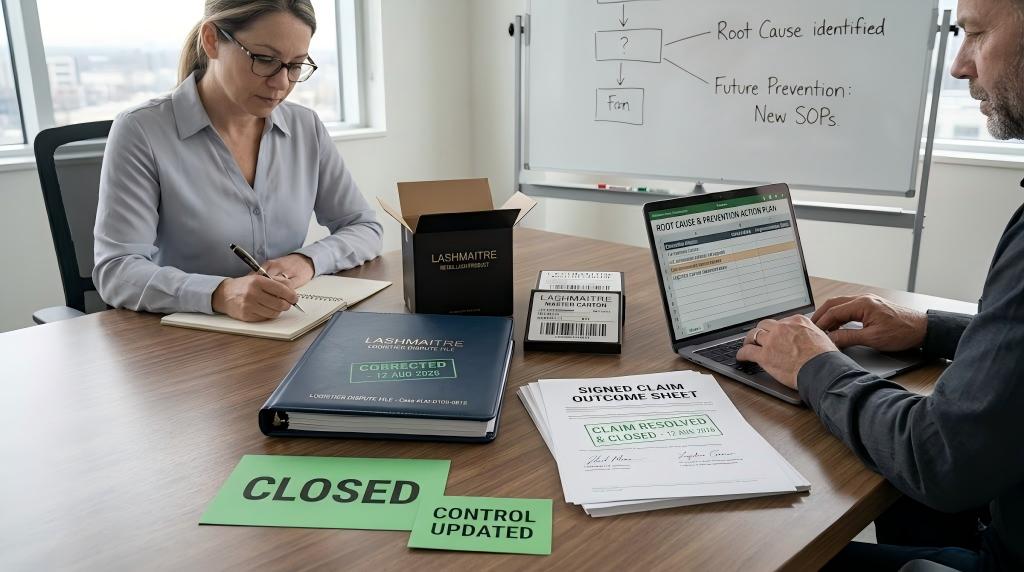
Do not submit a large bundle with no explanation. Lead with a one-page reconciliation showing claimed quantity, supported quantity, documents and conclusion.
Lash Retail Shortage Claim FAQ
What is the difference between a shortage claim and a chargeback?
A shortage claim usually concerns quantity invoiced versus quantity received. Chargeback can be a broader term for operational noncompliance, and retailer terminology varies.
Is a signed BOL enough to win a shortage dispute?
Not always. The value depends on shipment terms, signatures, count qualifications and retailer requirements. Item-level packing, ASN, invoice and receiving evidence may also be needed.
What if the POD says received subject to count?
Treat it as qualified evidence rather than automatic proof of full receipt. Retrieve retailer receiving data, carton records and other permitted documentation.
Should every shortage be disputed?
No. Validate the claim, amount, evidence strength, deadline and recoverability. Accept valid shortages and focus disputes on supported discrepancies.
How can future shortage claims be prevented?
Control item/UOM mapping, final pack counts, carton labels, accepted ASN data, invoice timing and BOL/POD evidence through the lash retail chargeback prevention process.
Next Step
Send the deduction notice, final PO, item/case mapping, packing record, ASN result, invoice, BOL/POD and retailer receiving evidence through the wholesale lash extensions inquiry page. Compare physical goods against approved lash extension samples and connect the case to LASHMAITRE lash quality control records.

Lash Maitre: Your Trusted Partner in Eyelash extension Solutions
Lash Maitre is dedicated to providing professional insights and tips in the eyelash extension industry. Sharing the latest trends, techniques, and product knowledge, Lash Maitre helps lash artists and enthusiasts enhance their skills, stay inspired, and achieve the perfect lash experience.