Lash Product Master Data: 10 Fields Before SKU Release

Share
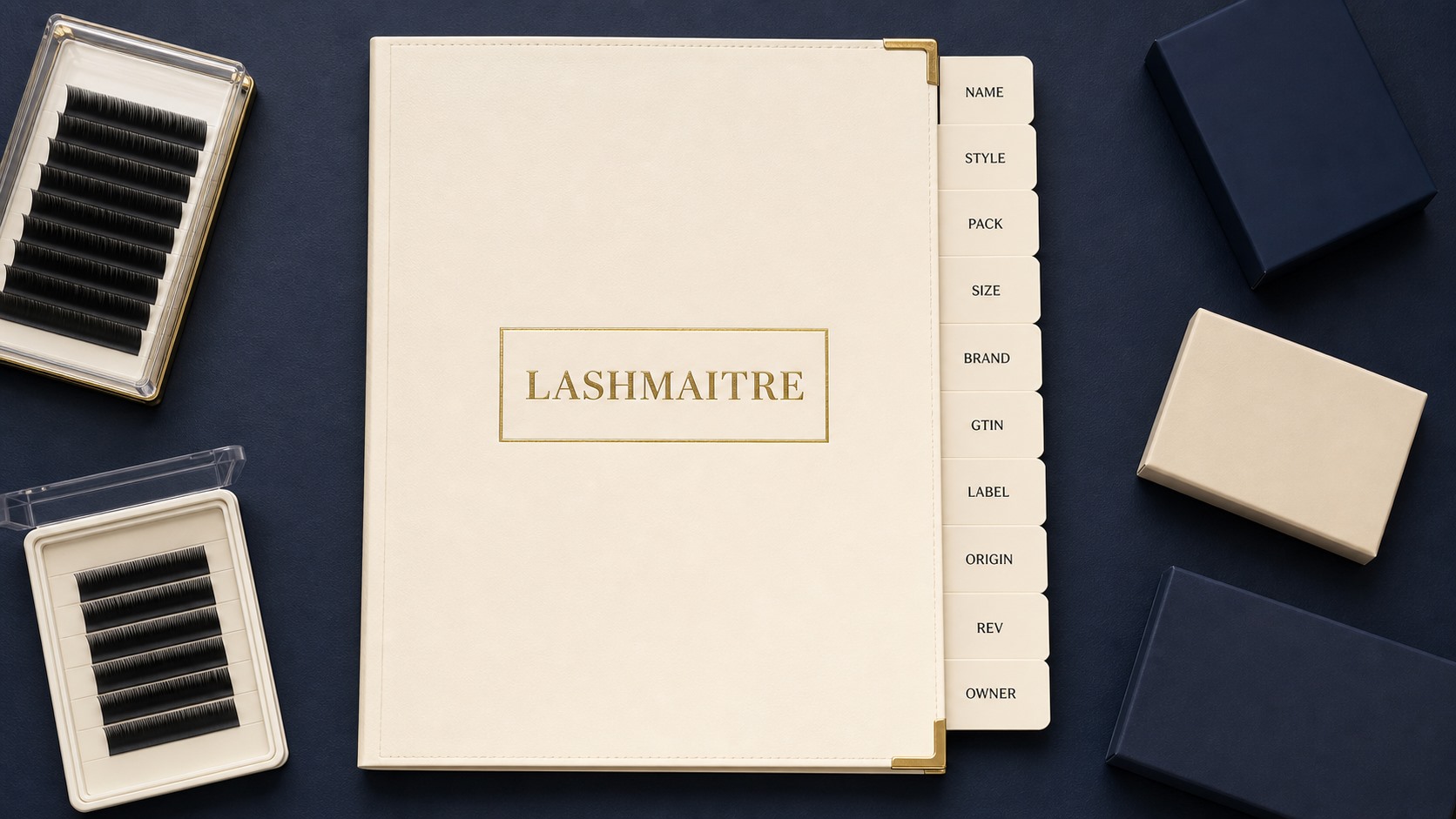
Lash product master data is the controlled set of facts that identifies one sellable or orderable product across specifications, purchase orders, packaging, barcodes, cartons, inventory, and online listings. Before releasing a SKU, approve at least its identity, variant attributes, pack configuration, dimensions, brand ownership, GTIN, label facts, country of origin, revision status, and data owner.
One source record prevents teams from separately typing “the same” product in multiple systems and creating mismatches. GS1 US explains that product master data includes attributes such as weight, description, brand name, product information, GTIN, and manufacturer information. Its electronic information-sharing guidance also describes continuous synchronization as a way for trading partners to access the same accurate information.
Lash Product Master Data: Direct Answer
Create one approved master record for every SKU and packaging level. Assign a named owner, define which system is authoritative for each field, require evidence and approval before release, and distribute changes through a controlled revision process. Purchase orders, artwork, labels, barcodes, cartons, warehouse records, and listings should consume the approved data rather than recreate it.
Master data is not the full product specification. The specification contains detailed requirements and tolerances; the master record stores the stable fields needed to identify, transact, label, pack, and synchronize the product, with links to the detailed evidence.
Why Lash SKU Data Drifts
Private-label lash products combine many visually similar variants. A one-character difference in curl, diameter, length, color, tray count, or pack level can change the product customers receive. Drift often starts when sales, sourcing, artwork, logistics, and ecommerce teams maintain separate spreadsheets.
Common symptoms include:
- Purchase order says 16 rows while packaging says 18 rows.
- Retail box and carton use different product names.
- GTIN is assigned to the wrong variant or reused at another level.
- Net quantity, dimensions, or weights differ across systems.
- Origin statement or responsible-company information changes in artwork but not the master.
- A discontinued revision remains available for ordering.
The solution is governance, not another uncontrolled spreadsheet.
Ten Fields to Approve Before SKU Release
| Field | Minimum content | Primary evidence |
|---|---|---|
| 1. Identity | SKU, controlled name, category | Product master request |
| 2. Variant | Curl, diameter, length, color, style | Approved specification/sample |
| 3. Pack configuration | Rows, trays, units, case quantity | Packaging and pack spec |
| 4. Dimensions and weights | Product and packaging measurements | Measured approved sample |
| 5. Brand and responsible company | Brand, legal display name, contact data | Brand/legal approval |
| 6. GTIN and barcode | Number, level, symbol, owner | GTIN allocation record |
| 7. Label facts | Identity, quantity, ingredient or warning fields as applicable | Regulatory/artwork review |
| 8. Country of origin | Manufacturing origin and approved wording | Supplier and origin evidence |
| 9. Revision and effective status | Current version, release and end dates | Change-control record |
| 10. Owner and approvals | Field owner, approvers, timestamp | Workflow audit trail |
1. Controlled Product Identity
Assign one permanent internal SKU and one clear controlled name. Avoid names based only on a marketing campaign or customer nickname. The identity should distinguish the product from its packaging components and from case-level items.
Mark aliases and legacy numbers as references, not competing primary IDs. Search systems for duplicates before issuing a new SKU.
2. Variant Attributes
Store the exact attributes buyers and production teams use to distinguish lash products: material, construction, curl, diameter, length, mix, color, band or stem characteristics, and style. Use controlled values rather than free text such as “natural-ish” or “same as last time.”
Link the master to the approved lash extension sample and specification. If an attribute changes the product customers order, evaluate whether the change requires a new SKU or GTIN under the applicable rules.
3. Pack Configuration
Define rows per tray, trays per retail unit, retail units per inner pack, inners per master carton, and any assortments. State the unit of measure at every level. This prevents a quantity such as “20” from being interpreted as rows, trays, boxes, or cartons.
Create separate records for packaging levels that are independently ordered, priced, scanned, or shipped.
4. Dimensions and Weights
Measure the approved physical sample in a documented orientation. Keep product, retail package, case, and shipping-carton dimensions separate. Record unit, method, date, and sample revision.
GS1 US notes that even small package-measurement misunderstandings can be compounded at pallet level and create catalog discrepancies, rejected shipments, and correction costs. Do not copy estimated design dimensions into the released master without physical verification.
5. Brand and Responsible-Company Data
Control the brand name, legal company name used on labeling, address or contact data, trademark treatment, and authorized claims. Separate the factory's company information from the brand or responsible company shown to customers.
Restrict who can change these fields. A packaging supplier should not “correct” them from memory.
6. GTIN and Barcode Data
Store the GTIN as text so leading zeros are preserved. Record the assigning organization, packaging level, barcode type, artwork location, allocation date, and status. Reconcile the decoded production barcode to the master before shipment.
Do not use one image file as the only barcode record. Keep the numeric value and the controlled generated artwork reference. Use the companion lash barcode verification workflow to connect approved product data with physical print checks.
7. Label and Regulatory Facts
Store the approved product identity, net quantity, ingredient or warning fields where applicable, responsible-company information, and links to the full artwork approval. FDA's cosmetics labeling summary explains core U.S. labeling concepts, including product identity, net quantity, and name and place of business.
False eyelashes, eyelash extensions, and their adhesives are cosmetic products under FDA's eye cosmetic safety guidance. However, the exact label fields vary by product and market. Use qualified regulatory review instead of turning a generic master-data template into legal advice.
8. Country of Origin
Record country of manufacture based on approved evidence, not supplier address, export port, or brand headquarters. Store the approved consumer and carton wording and link it to the current artwork revision.
If manufacturing origin changes, stop release and assess labeling, customs, GTIN, customer, and inventory effects before updating the master.
9. Revision, Status and Effective Dates
Give every record a revision, status, approval date, effective date, and—when superseded—end date. Valid statuses might include draft, under review, approved, active, on hold, discontinued, and archived.
Never overwrite history. Orders and complaints must remain traceable to the record that was effective at the time.
10. Data Owner and Approval Trail
Assign a business owner for each critical field and a master-record custodian for the complete SKU. Product, quality, regulatory, packaging, logistics, and commercial teams may approve different sections.
Record who requested, reviewed, approved, released, and distributed each change. Shared accountability should not mean anonymous changes.
Build One Source-to-Channel Map
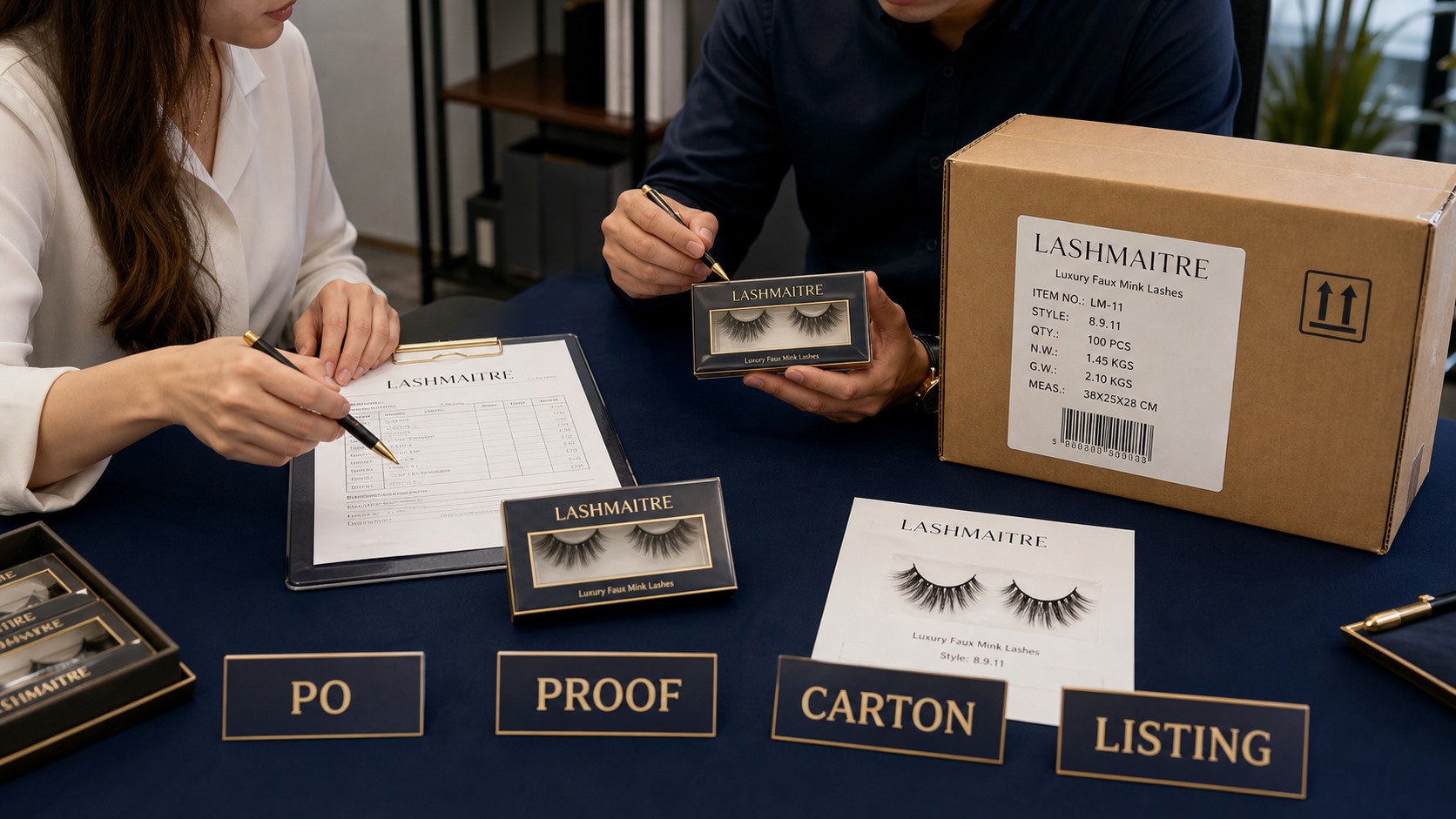
Map every downstream use to the authoritative field:
| Downstream use | Master fields consumed | Release check |
|---|---|---|
| Purchase order | SKU, name, variant, pack, supplier | Matches approved order template |
| Packaging proof | identity, brand, label facts, origin, GTIN | Artwork revision approved |
| Carton label | SKU, quantity, lot, dimensions, GTIN as applicable | Physical sample reconciled |
| Warehouse | SKU, unit, pack hierarchy, status | Receiving test passed |
| Ecommerce listing | name, variant, quantity, dimensions, brand | Listing compared to master |
| Customer data feed | identifiers and agreed attributes | Export validated |
GS1 US describes GDSN as a protocol for sharing product master data with continuous updates through certified data pools. Its GDSN introduction emphasizes an authoritative source and consistent information across internal systems and trading partners. A small lash brand may not use GDSN, but the same governance principle applies: approve once, distribute consistently, and control changes.
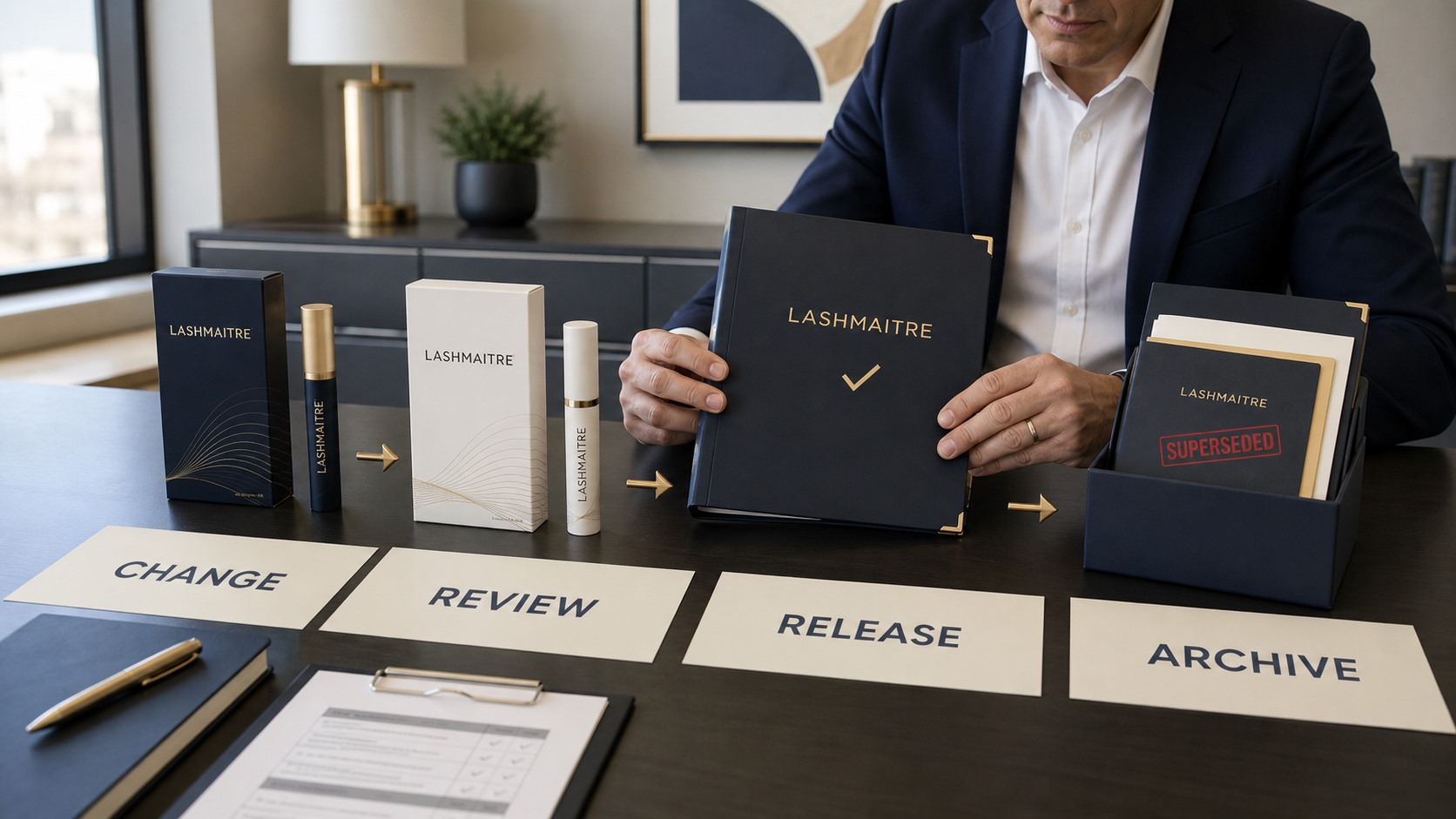
Use a Controlled Change Process
- Request the change and state the reason.
- Identify affected SKUs, packaging levels, inventory, orders, and channels.
- Attach evidence and proposed effective date.
- Review GTIN, labeling, origin, specification, and customer implications.
- Approve the new revision with named owners.
- Update the authoritative record.
- Regenerate dependent artwork, documents, feeds, and labels.
- Verify each downstream channel.
- Hold or disposition obsolete inventory and files.
- Archive the prior revision and close the change.
Use LASHMAITRE quality control to connect master-data release with physical sample, packaging, and shipment evidence.
Lash Product Master Data FAQ
Is product master data the same as a product specification?
No. The master record contains controlled identifying and transactional attributes and links to supporting documents. The specification contains detailed product and process requirements, tolerances, methods, and acceptance criteria.
Who should own lash SKU master data?
Assign one accountable custodian, with field-level approvals from product, quality, packaging, regulatory, logistics, and commercial owners as needed. Avoid anonymous shared-file edits.
Should a carton have the same GTIN as the retail lash box?
Not automatically. Packaging levels may be separate trade items. Apply the brand's allocation process and current GS1 and trading-partner rules before assigning numbers.
What should trigger master-data review?
Review proposed changes to product attributes, pack quantity, dimensions, brand information, manufacturing origin, labeling, barcode, supplier site, artwork, or sales channel before implementation.
Conclusion: Approve Once, Use Everywhere
Reliable lash product master data gives every team the same approved product identity and pack facts. Control the ten core fields, assign owners, link evidence, preserve revisions through a supplier document control process, and verify that purchase orders, packaging, cartons, systems, and listings all consume the current record.
Review LASHMAITRE private-label lash services and send your product inquiry with controlled SKU, variant, pack, packaging, and labeling requirements.
After the authoritative SKU record is approved, use a controlled lash retailer item setup process to map product data, images, measurements and dates into each trading-partner template.

Lash Maitre: Your Trusted Partner in Eyelash extension Solutions
Lash Maitre is dedicated to providing professional insights and tips in the eyelash extension industry. Sharing the latest trends, techniques, and product knowledge, Lash Maitre helps lash artists and enthusiasts enhance their skills, stay inspired, and achieve the perfect lash experience.