Lash Supplier Transition Plan: 10 Controls Before Moving Production

Share
Lash Supplier Transition Plan Buyer Summary
A lash supplier transition plan should transfer controlled specifications, approved samples, artwork, packaging inventory, open orders, lot records and quality responsibilities before production moves. A pilot lot, documented cutover boundary and early-lot monitoring period protect product consistency while the replacement supplier stabilizes.
A lash supplier transition plan should protect continuity, product identity, approved references, buyer-owned property and open orders while production moves from an outgoing supplier to a replacement source. The move is not complete until the new supplier passes sample, packaging, pilot-lot and traceability gates and the old supplier's stock and obligations are closed.
What Is a Lash Supplier Transition Plan?
A lash supplier transition plan is a controlled timetable for moving defined products, records, approvals, property and purchasing activity between sources. It can support a planned contract end, poor-performance exit, capacity shift, geographic diversification or emergency replacement.
Switching the PO recipient is only one step. The buyer must decide which specification is current, who owns artwork and tooling, where packaging stock is located, which supplier finishes open orders and how lots remain distinguishable during overlap.
UK government procurement-risk guidance recommends agreeing exit obligations, information or asset transfer, communication, continuity and transition support through the contract lifecycle. Those principles are useful for lash sourcing, but they do not replace legal review of the buyer's agreements.
Why Supplier Changes Create Hidden Product Risk
A replacement supplier can match a photo while using a different fiber, curl former, adhesive process, tray tension, packaging component or inspection method. At the same time, the outgoing supplier may still hold printed packaging, approved samples, open work and confidential files.
The transition therefore needs two synchronized tracks: close the old source without losing evidence, and qualify the new source without assuming equivalence.
10 Controls Before Moving Production
1. Define Scope and Trigger
List the exact SKUs, packaging versions, regions and orders affected. State whether the change is temporary, partial, dual-source or permanent and name the decision owner.
2. Review Contract and Ownership
Confirm notice periods, open commitments, confidentiality, intellectual-property rights, artwork, tooling, buyer-owned inventory, final payment and transition assistance. Obtain qualified legal advice where required.
3. Freeze the Current Product Baseline
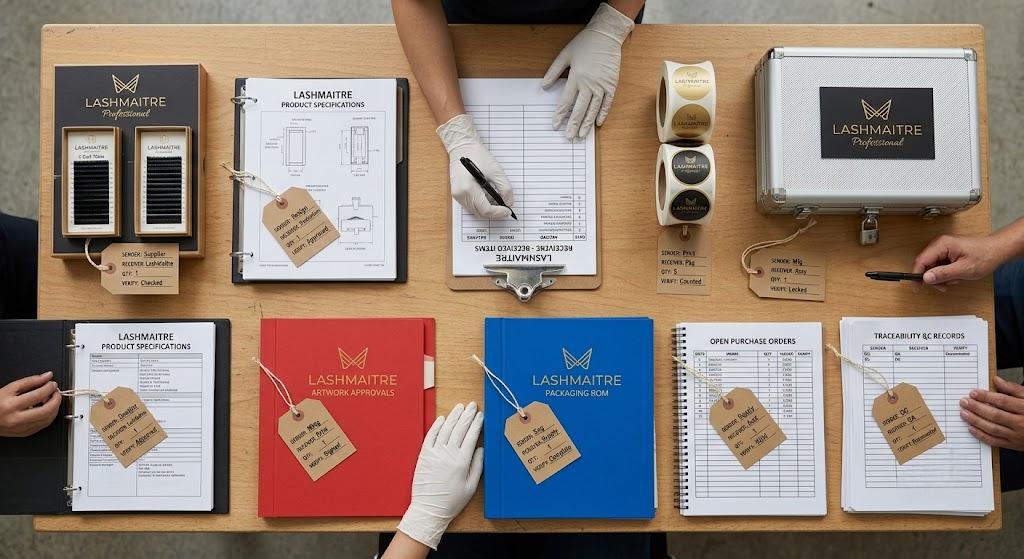
Collect the approved specification, master sample, packaging BOM, artwork, inspection plan and accepted deviation history. Give each item an identifier and revision before transfer.
4. Reconcile Open Orders and Inventory
Decide which supplier completes each PO and lot. Count finished goods, work in process, raw materials and buyer-owned packaging; authorize return, transfer, consumption or disposal.
5. Qualify the Replacement Supplier
Verify legal identity, factory, approved scope, capability, capacity, quality system, communication route, logistics and business-continuity controls. Do not treat a quotation as qualification.
6. Transfer Requirements and Property
Use a controlled handover list for files, physical samples, artwork, packaging, tooling, labels and records. Record sender, receiver, quantity, condition, date and acceptance.
7. Reapprove Product and Packaging
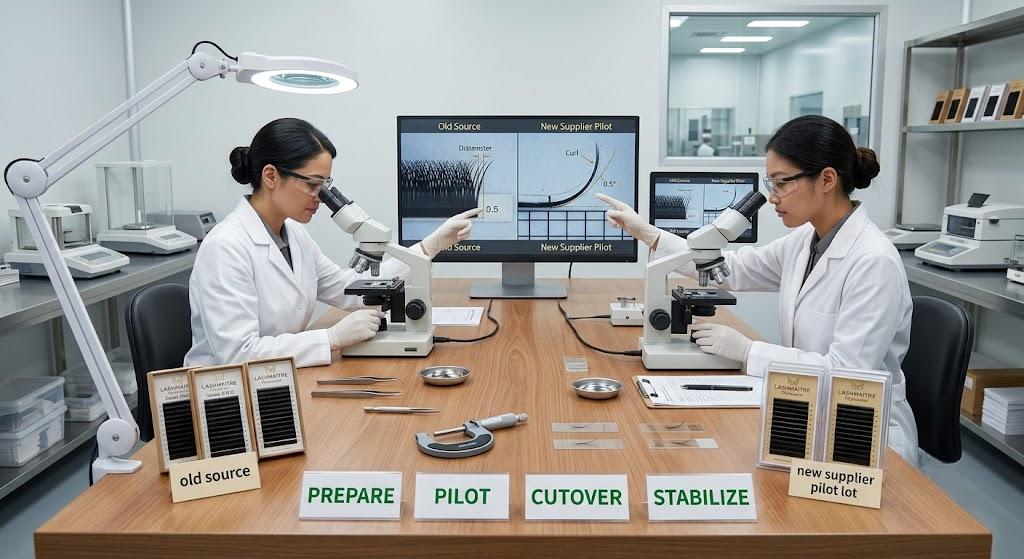
Run samples against the frozen baseline. Approve curl, diameter, length, fiber, finish, fan or strip construction, tray presentation, printed artwork and pack assembly at the new source.
8. Run a Pilot Lot
Use a limited commercial-scale lot to verify materials, processes, inspection, packaging, yield, quantity reconciliation, traceability and delivery before full cutover.
9. Control the Overlap and Cutover
Define last order at the old supplier, first approved order at the new supplier, allowed overlap, stock segregation and customer-facing identification. Never mix lots under one identity.
10. Stabilize and Close
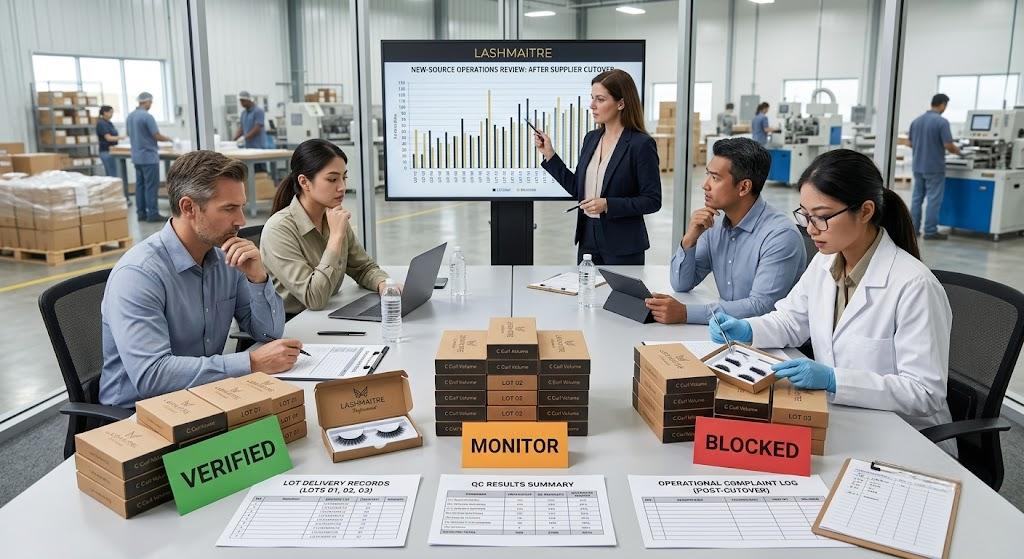
Monitor the first agreed number of lots or days, review quality and delivery, close open issues, archive the exit record and confirm that unauthorized files, packaging and access have been removed or returned.
PREPARE / PILOT / CUTOVER / STABILIZE
| Phase | Evidence | Exit gate |
|---|---|---|
| PREPARE | scope, ownership, baseline, open-order and stock map | transfer package is complete |
| PILOT | approved sample, packaging proof, pilot record and inspection | new source can reproduce the requirement |
| CUTOVER | dated PO map, lot segregation and logistics plan | no order or stock has ambiguous ownership |
| STABILIZE | enhanced checks, delivery review and issue closure | replacement source performs consistently |
Build a Transition Register
Create one register with item, current owner, outgoing location, receiving owner, required revision or quantity, due date, status, evidence and approval. Include at minimum contracts, specifications, samples, artwork, BOMs, packaging stock, tooling, open orders, work in process, finished stock, quality issues, shipment records and system access.
Use NOT STARTED, IN TRANSFER, RECEIVED, VERIFIED, CLOSED and BLOCKED. A shipment tracking number proves movement, not verified receipt.
Common Transition Failures
- The buyer starts the new supplier before freezing the old baseline.
- Artwork files transfer, but ownership and print specifications do not.
- Buyer-owned packaging remains at the outgoing factory without a count.
- The new source copies appearance without validating materials or performance.
- Old and new lots are mixed in one carton or inventory code.
- The outgoing supplier closes before complaint and traceability records are secured.
- The first full order becomes the unplanned pilot lot.
Lash Supplier Transition Plan FAQ
When should a buyer start planning a supplier transition?
Before continuity is threatened. Define exit and property-transfer expectations during onboarding, then activate the detailed plan as soon as a contract end, performance trigger or strategic move becomes credible.
Can the buyer use the outgoing supplier's master sample at the new factory?
Only if the buyer has the right to use and transfer it and the reference is clearly identified. The new factory still needs its own approved production reference linked to the same requirements.
Should old and new lash suppliers overlap?
A controlled overlap can reduce stockout risk, but it needs a dated order map, separate lot identities, clear approval status and a defined final cutover. Uncontrolled overlap creates traceability and packaging-mix risks.
What should be checked after cutover?
Review the first lots more closely for specification match, process consistency, packaging accuracy, quantity, documentation, delivery and complaints. Close the transition only after agreed stabilization evidence is complete.
Move Production Without Losing the Product Standard
Use approved lash extension samples, the lash quality control framework, private label lash requirements and a documented wholesale lash inquiry to build the transfer package. Ask LASHMAITRE to scope a sample and pilot plan before moving commercial volume.
Authority reference: UK government guidance on procurement risk and exit management.

Lash Maitre: Your Trusted Partner in Eyelash extension Solutions
Lash Maitre is dedicated to providing professional insights and tips in the eyelash extension industry. Sharing the latest trends, techniques, and product knowledge, Lash Maitre helps lash artists and enthusiasts enhance their skills, stay inspired, and achieve the perfect lash experience.