Lash Packaging Inventory Control: 9 Records for Buyer-Owned Stock
Share
Lash Packaging Inventory Control Buyer Summary
Lash packaging inventory control should identify every buyer-owned box, tray, card, seal, label and insert by part number, revision, received quantity, storage location, issue quantity, waste, returned quantity, balance and approved disposition. The physical count and ledger should reconcile before each private-label production release.
Lash packaging inventory control means keeping buyer-owned boxes, tray cards, sleeves, inserts, labels and seals physically segregated and recorded by owner, part, revision, quantity, condition, location and disposition. Every receipt, production issue, damage, return and disposal should reconcile before the next private-label order.
What Is Lash Packaging Inventory Control?
Lash packaging inventory control is the system for protecting and reconciling private-label components stored at a supplier. It matters when a buyer prepays for packaging, ships components to the factory, or carries printed stock between production runs.
The components may be physically inside the supplier's warehouse while remaining commercially owned by the buyer. That distinction should be written into the purchase terms and inventory ledger rather than assumed from who paid the invoice.
SAP describes material provided to a subcontractor as stock held at the vendor and consumed from the stock assigned to that vendor. The same control logic is useful for buyer-owned lash packaging, although this article does not require SAP or define legal title under every contract.
Why Buyer-Owned Packaging Gets Lost
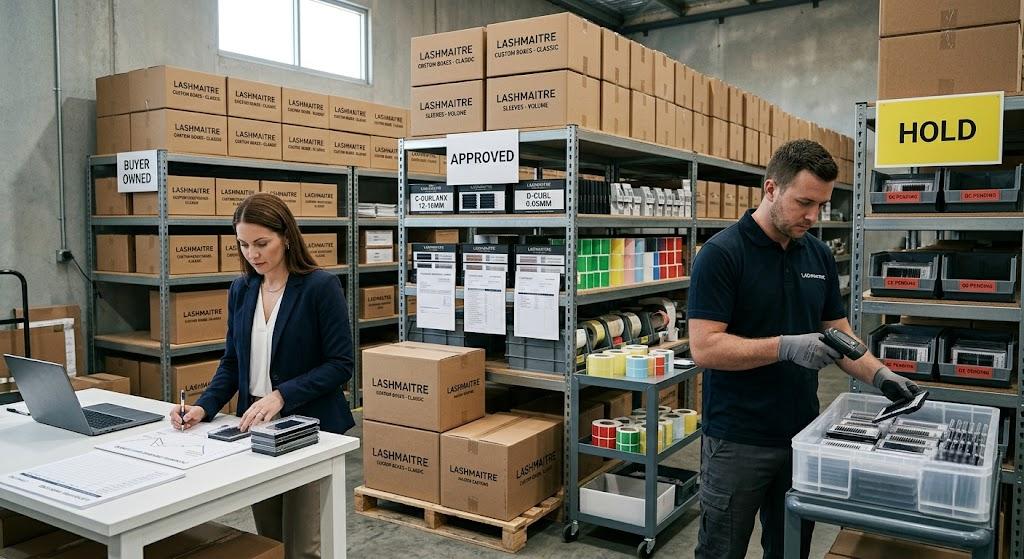
Printed components often arrive in a different quantity from finished lashes. A box printer may deliver 5,000 sleeves, while the next lash order uses only 1,200. Without a separate ledger, leftovers can be mixed with another revision, damaged in storage, consumed without a job number or forgotten when the supplier relationship changes.
The solution is not a single end-of-year count. Control begins at receipt and follows every movement.
9 Records for Buyer-Owned Stock
1. Ownership and Agreement
Record the legal or contractual owner, the supplier's custody responsibility, approved uses, insurance expectations and what happens at termination. Resolve this before paying for bulk packaging.
2. Component Identity
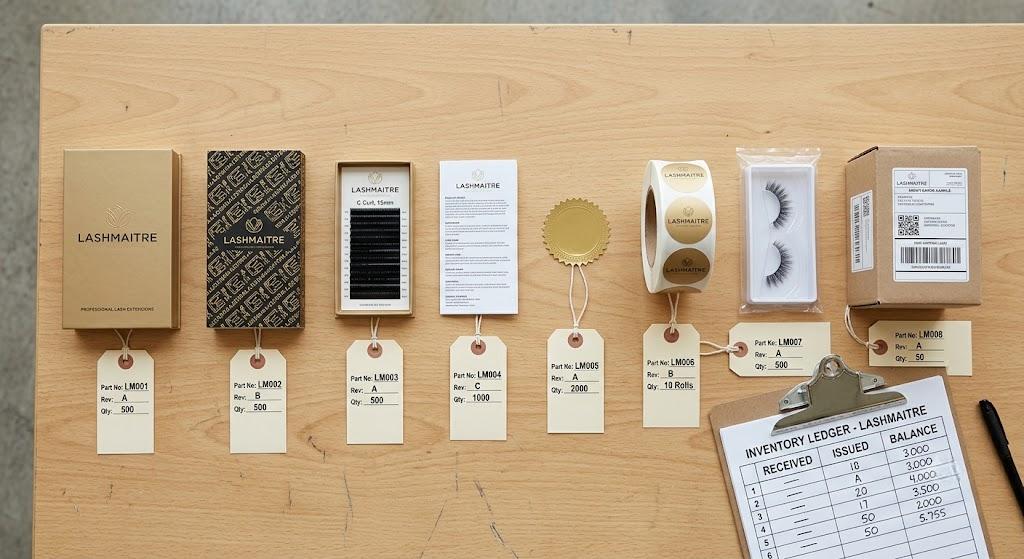
Assign a part number and description to each box, sleeve, tray card, insert, seal, label and shipping carton. Do not use color or a photo as the only identity control.
3. Artwork and Physical Revision
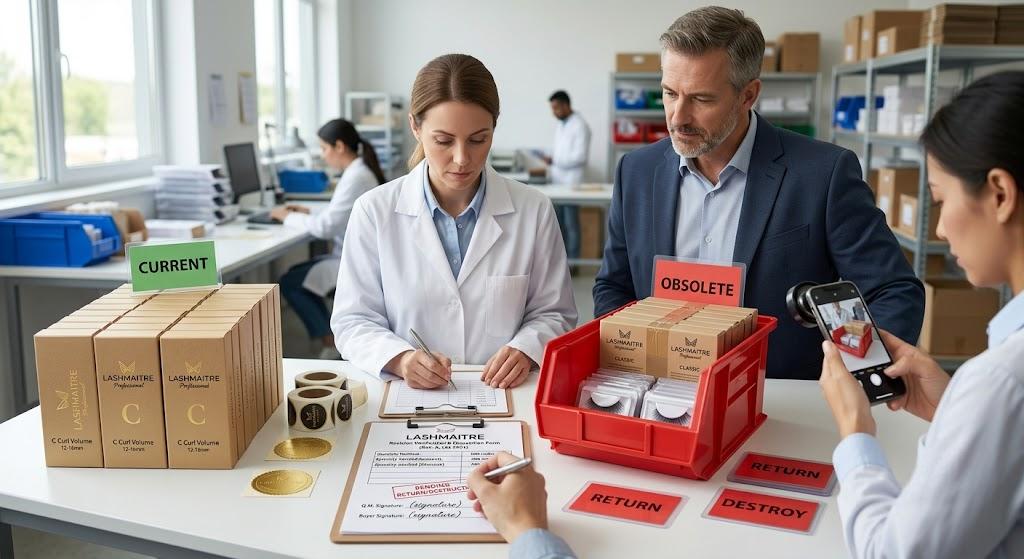
Link each physical component to approved artwork, dieline, finish and effective revision. Obsolete printed stock must remain distinguishable from current stock.
4. Receipt Quantity and Condition
Record supplier, delivery reference, received quantity, accepted quantity, damage, date and inspector. Photograph pallets or cartons when ownership or damage could be disputed.
5. Storage Location and Status
Use a defined bin, rack or cage and a visible status such as APPROVED, HOLD or OBSOLETE. Separate buyer brands and incompatible revisions.
6. Production Issue
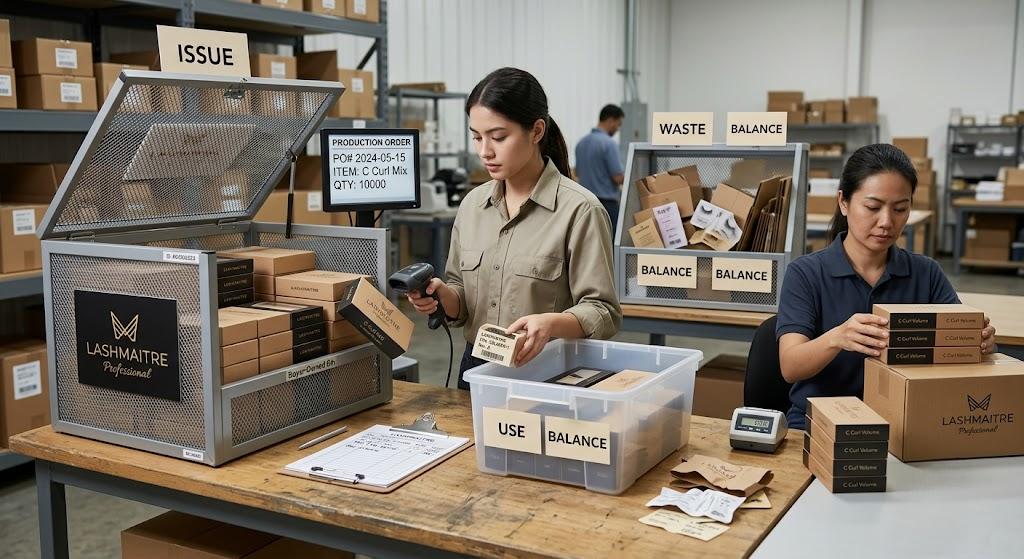
Record job, PO, SKU, lot, quantity issued and issuer. The packaging BOM should define expected consumption per finished unit.
7. Consumption and Variance
Reconcile finished accepted quantity with expected component use. Explain setup waste, print defects, damage, rework and samples instead of hiding them in one adjustment.
8. Return, Transfer and Disposal
Require buyer authorization before returning, moving or destroying controlled components. Preserve quantity, method, date and evidence.
9. Balance and Review Date
Maintain book balance, verified physical balance, variance, last count date, next review date and responsible owner. Increase count frequency for high-value, fast-moving or revision-sensitive items.
RECEIVE / SEGREGATE / ISSUE / RECONCILE / DISPOSE
| Stage | Minimum evidence | Control outcome |
|---|---|---|
| RECEIVE | PO, component, revision, quantity, condition | only identified stock enters the ledger |
| SEGREGATE | owner, status and location | brands and revisions cannot mix |
| ISSUE | job, SKU, lot and quantity | stock use links to production |
| RECONCILE | accepted output, expected use, waste and balance | variance becomes visible |
| DISPOSE | buyer approval, quantity, method and evidence | obsolete stock cannot re-enter use |
A Minimum Packaging Inventory Ledger
Use one row per component and revision. Include owner, part number, description, revision, supplier, unit of measure, received, accepted, issued, damaged, returned, destroyed, book balance, physical balance, variance, location, status, last movement, last count and owner approval.
A blank quantity is not the same as zero. Zero means verified none remains; blank means the status is unknown.
Common Failure Modes
- The buyer paid for packaging but ownership terms were never written.
- Multiple artwork revisions share one inventory code.
- Components are counted by cartons without verifying units per carton.
- Production receives packaging without a condition or quantity check.
- Unexplained waste is deducted as an adjustment.
- Obsolete printed stock remains beside current stock.
- The supplier transition starts before buyer property is reconciled.
Connect Packaging Counts to Quality Control
Packaging balances should also feed the documented lash quality control process so damaged, obsolete, mixed-revision, or unverified components cannot enter a released order.
Lash Packaging Inventory Control FAQ
Who owns custom lash packaging stored at the factory?
Ownership depends on the purchase and custody terms, not only physical location. State when title transfers, who carries risk, how stock may be used and what happens to leftovers.
How often should buyer-owned packaging be counted?
Use a risk-based schedule. Count before and after each production issue for revision-sensitive components, and perform periodic independent counts for slower or high-value stock.
Should packaging samples and setup waste be counted?
Yes. Define authorized sample and setup quantities, then record actual use. Small unrecorded losses become large unexplained variances over multiple orders.
What happens when packaging artwork changes?
Freeze the old revision, count it, decide whether it can be reworked or must be destroyed, approve the disposition and update the effective BOM before releasing the new revision.
Protect Packaging Before the Next Private-Label Order
Connect the ledger to your private label lash program, approved lash extension samples, MOQ 50 planning and wholesale lash inquiry. Ask LASHMAITRE to confirm the packaging BOM, ownership rule and verified opening balance before production.
Authority reference: SAP provision of components to a subcontractor.

Lash Maitre: Your Trusted Partner in Eyelash extension Solutions
Lash Maitre is dedicated to providing professional insights and tips in the eyelash extension industry. Sharing the latest trends, techniques, and product knowledge, Lash Maitre helps lash artists and enthusiasts enhance their skills, stay inspired, and achieve the perfect lash experience.