Lash Quality Hold Procedure: 8 Controls Before Disposition
Share
Lash Quality Hold Procedure Buyer Summary
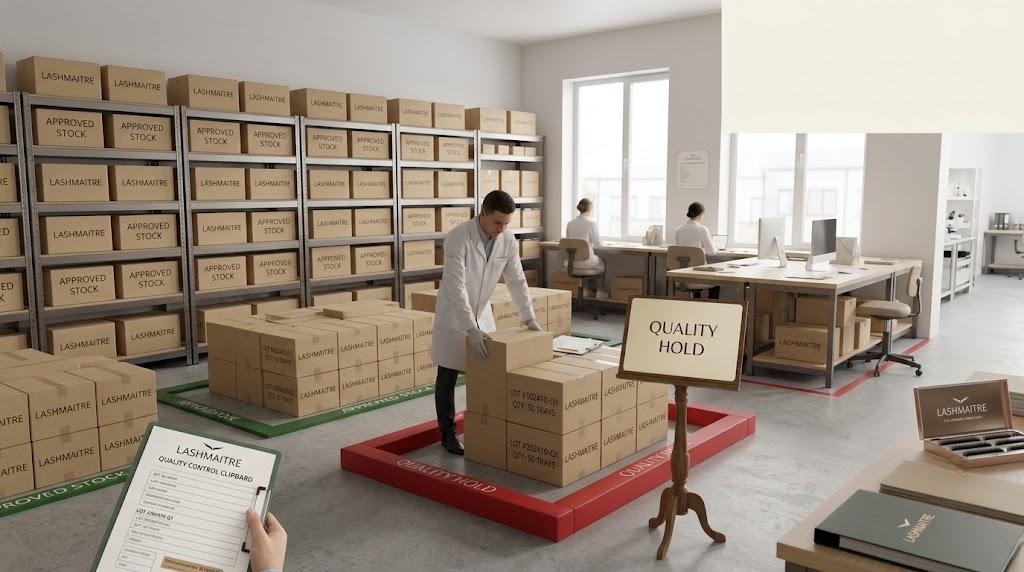
A lash quality hold procedure should identify the affected lot, define the hold scope, segregate physical and digital stock, protect evidence, control access, investigate against the approved reference, authorize one documented disposition and verify the result before release or shipment.
A lash quality hold procedure should identify the affected product, segregate it, label its status, protect it from mix-up, reconcile its quantity, restrict access, investigate the issue and require authorized disposition before any unit returns to production or shipment.
What Is a Lash Quality Hold Procedure?
A lash quality hold procedure is the controlled process used when lash trays, packaging components, materials or finished lots cannot continue through the normal workflow. The hold may begin after an inspection failure, identity mismatch, damaged packaging, missing approval, unexplained quantity difference, complaint signal or other unresolved risk.
The procedure does not decide automatically that the product is defective or must be destroyed. It creates a protected decision window. During that window, the affected scope stays visible and unavailable while the supplier and buyer gather evidence and authorize a disposition.
FDA's cosmetics GMP inspection checklist says materials that do not meet acceptance specifications should be properly identified and controlled to prevent use. It also calls for material containers to show identity, lot identification and control status. A lash factory can translate those principles into a practical hold system, while the exact roles and forms remain part of the buyer-supplier quality agreement.
Why a Verbal Hold Is Not Enough
Telling a team member “do not use this” is not a controlled hold. The instruction can be forgotten, the product can move to another shift, and a visually similar tray can be returned to approved stock without evidence.
A reliable hold creates a physical and documentary boundary. Anyone encountering the lot should be able to see what is held, why it is held, how much is affected, who owns the decision and what evidence is still missing.
8 Controls Before Disposition
1. Define the Trigger
Record the observation that started the hold. Use a specific statement such as “tray card revision does not match approved artwork” or “curl result exceeds the agreed comparison limit.” Avoid vague labels such as “quality problem.”
2. Identify the Exact Scope
Connect the hold to the supplier, PO, SKU, batch or lot, component revision, quantity, production dates and current location. If scope is uncertain, begin with the widest credible boundary and reduce it only when traceable evidence supports the change.
3. Physically Segregate the Product
Move affected units to a marked hold area, locked cage, controlled rack or system-blocked location. Separate held product from approved stock, work in process, samples, rework and returns. Where movement could damage evidence, create a visible boundary around the original location.
4. Apply Clear Status Identification
Attach a durable hold tag or electronic status that shows the lot, quantity, reason, date and owner. The tag should not cover the original identity label. Every partial carton, tray group or component container must remain traceable to the same hold record.
5. Protect Evidence and Quantity
Count or estimate the held quantity using a documented method, then reconcile movements. Preserve complaint samples, inspection photos, rejected pieces, labels and relevant records. Do not rework, relabel, sort or discard material before authorization if doing so would erase evidence.
6. Restrict Access and Movement
Define who may enter the hold area, remove samples, update quantity or change status. Record every movement. Warehouse convenience, production urgency or shipment pressure must not override the controlled release boundary.
7. Investigate and Assess Risk
Compare the held product with the approved sample, current specification, artwork, batch records and inspection criteria. Determine whether the issue is isolated or systemic and whether other lots, components, orders or shipments may share the condition.
8. Authorize a Documented Disposition
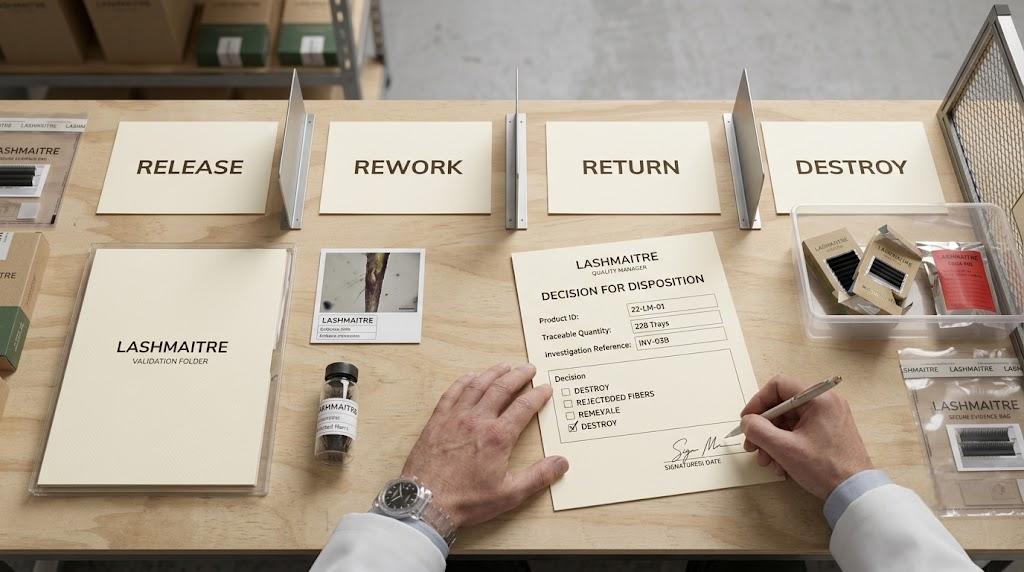
Use a named authority to approve release, rework, sorting, return to supplier, concession, downgrade or destruction. The decision should state the affected quantity, required work, verification method and final destination. A disposition is not complete until the physical stock and system status agree.
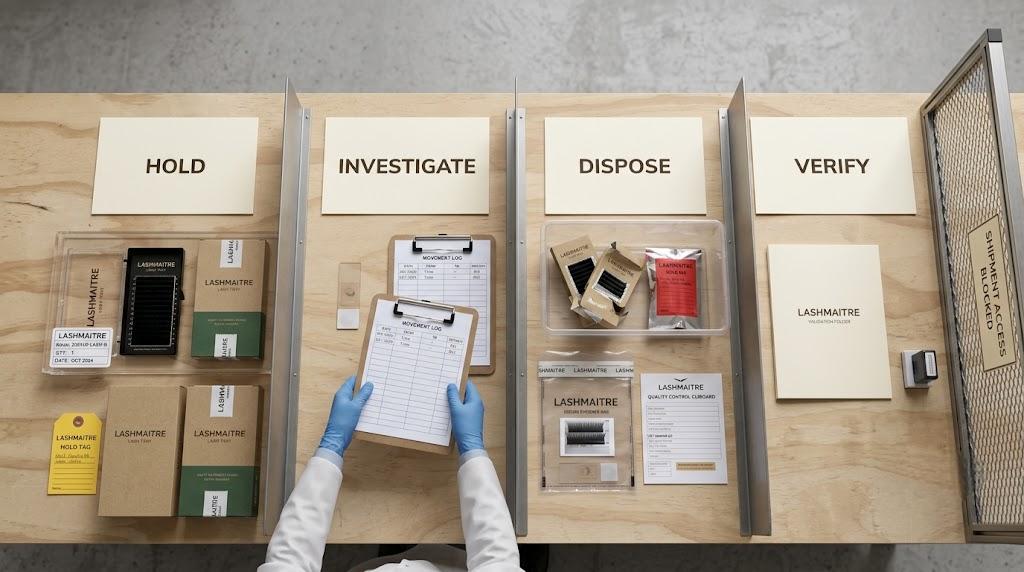
HOLD / INVESTIGATE / DISPOSE / VERIFY
| Stage | Required evidence | Release boundary |
|---|---|---|
| HOLD | trigger, identity, scope, quantity, location and owner | product cannot be used or shipped |
| INVESTIGATE | approved reference, inspection evidence, records and risk assessment | scope may change only with evidence |
| DISPOSE | signed decision, quantity and method | action may begin only after authorization |
| VERIFY | completed action, recount, inspection and status update | product returns to normal flow only after verification |
Common Hold-Control Failures
- A red tag is attached, but the lot remains mixed with approved stock.
- Only the outer carton is tagged while open inner packs are unmarked.
- The hold quantity changes without a movement log.
- A team sorts or reworks product before preserving evidence.
- Electronic inventory says
RELEASEDwhile the physical product saysHOLD. - A buyer concession is treated as permission to use a different SKU or lot.
- A hold is closed by email without updating the warehouse location.
- Destruction is recorded without quantity reconciliation or witness evidence.
What Buyers Should Ask to See
Ask the supplier to show one recent closed hold record from trigger through disposition. Verify that the product identity, photos, quantities, investigation, approval and final stock movement form one chain. A polished form is less important than consistent evidence.
For higher-risk private-label programs, agree in advance which conditions require immediate buyer notification, which dispositions need buyer approval and how long unresolved stock may remain on hold.
Lash Quality Hold Procedure FAQ
When should a lash lot be placed on hold?
Place a lot on hold when identity, specification, approval status, inspection result, quantity, packaging, traceability or safety remains unresolved and normal use or shipment could create risk.
Is held product automatically rejected?
No. Hold is a temporary controlled status. Investigation may support release, rework, sorting, return, concession or rejection, but the disposition must be documented and authorized.
Can a supplier release part of a held lot?
Only when evidence defines a separable conforming scope and an authorized record identifies the released quantity. The remaining quantity must stay controlled and independently traceable.
Who can remove a lash lot from hold?
The quality agreement or internal procedure should name the authorized role. Production or warehouse staff should not remove status controls merely because an order is urgent.
Build a Hold Process Buyers Can Verify
Connect hold decisions to controlled lash quality control, an identified lash extension sample, a documented private label lash program and a complete wholesale lash inquiry. Define the trigger, approval boundary and evidence package before production so a quality issue cannot disappear into ordinary inventory.
Authority reference: FDA Good Manufacturing Practice Guidelines and Inspection Checklist for Cosmetics.

Lash Maitre: Your Trusted Partner in Eyelash extension Solutions
Lash Maitre is dedicated to providing professional insights and tips in the eyelash extension industry. Sharing the latest trends, techniques, and product knowledge, Lash Maitre helps lash artists and enthusiasts enhance their skills, stay inspired, and achieve the perfect lash experience.