Lash Acceptance Sampling Plan: 8 Buyer Decisions Before Inspection
Share
Lash Acceptance Sampling Plan Buyer Summary
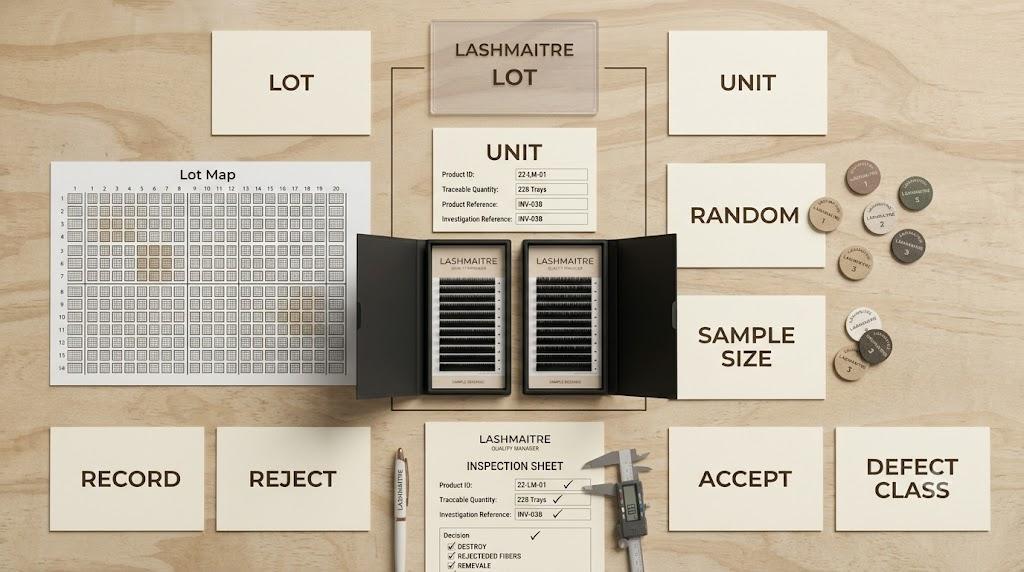
A lash acceptance sampling plan should define the lot, inspection unit, random selection method, sample size, defect classes, inspection records, accept-reject numbers and escalation rule before inspection starts so the result cannot be adjusted after defects are seen.
A lash acceptance sampling plan should define the lot, inspection unit, random selection method, sample size, defect classes, acceptance and rejection numbers, escalation rules and required records before inspection begins.
What Is a Lash Acceptance Sampling Plan?
A lash acceptance sampling plan is an agreed method for selecting part of a defined lash lot and using the inspection results to decide whether that lot is accepted, rejected or escalated. It is a lot-disposition tool, not proof that every uninspected tray is defect-free.
NIST describes lot acceptance sampling as a sampling scheme plus decision rules. A sample is selected from a lot, defects are counted or measurements are assessed, and the result is compared with predetermined acceptance criteria. The plan must be chosen before the result is known.
There is no single sample size or AQL that automatically fits every lash product, defect and buyer risk. The correct plan depends on the agreed lot definition, defect severity, inspection method and producer-versus-consumer risk. Buyers should not copy an unexplained number from another product category.
Why Buyers Must Decide Before Inspection
If the sample size, defect classes or acceptance number changes after defects appear, the process becomes negotiation rather than sampling. The supplier may inspect more units only when the first result is unfavorable, or a buyer may apply a stricter threshold to a shipment already produced.
Pre-agreed rules protect both parties. They also make repeat orders comparable and give the factory a stable target for process improvement.
8 Buyer Decisions Before Inspection
1. Define the Lot
State which units form one decision population: one SKU and batch, one production window, one packaging revision and one shipment status. Do not combine lots with different materials, curl settings, artwork revisions or process histories merely to reduce inspection work.
2. Define the Inspection Unit
Decide whether one unit means a lash tray, pair, row, fan card, inner pack or finished retail box. The unit used for sampling must match the unit used for defect counting and commercial disposition.
3. Choose a Random Selection Method
Select across cartons, pallet positions, production times and locations so the sample represents the lot. Avoid choosing only the top layer, the cleanest cartons or units prepared specifically for inspection.
4. Set the Sample Size
Choose a documented sample size based on the sampling system, lot size, inspection level and agreed risk. Record whether the plan is single, double or another controlled scheme. Do not describe a convenience sample as a statistically designed acceptance plan.
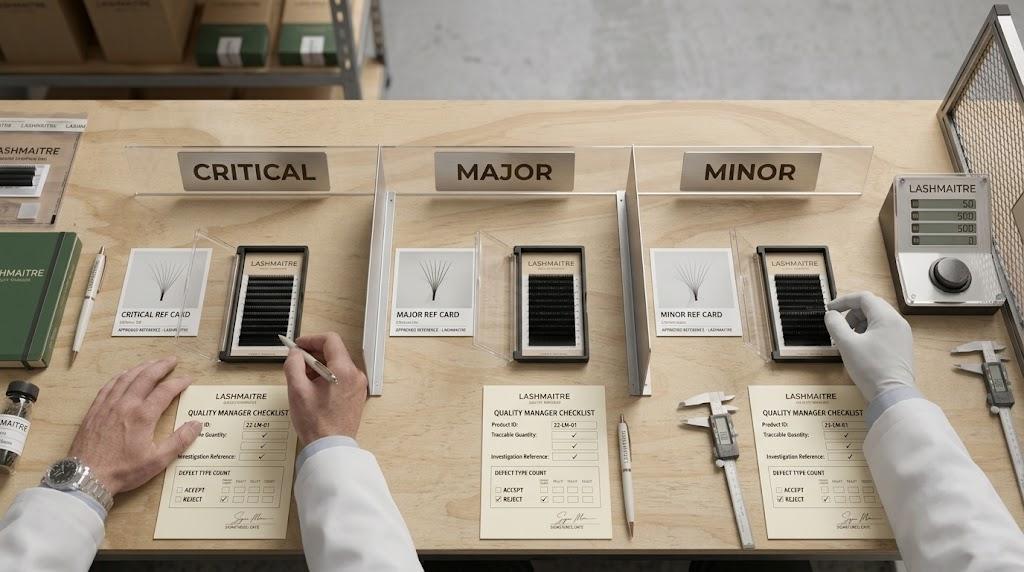
5. Define Defect Classes
Separate critical, major and minor conditions with product-specific examples. For lashes, examples may address identity errors, contamination, wrong curl or length, poor fan construction, damaged tray cards, label defects and cosmetic packaging marks. Severity must reflect the agreed use and risk, not just visual prominence.
6. Set Acceptance and Rejection Numbers
Write the maximum result that permits acceptance and the result that requires rejection or further action. If critical defects have zero tolerance under the agreement, say so explicitly. Avoid using “AQL” as a label without recording the actual plan and decision numbers.
7. Define Escalation Rules
State what happens after a failed or inconclusive result: hold the lot, take a second sample under a defined double-sampling rule, perform 100% sorting, request rework, reject, or seek buyer disposition. Never add an unplanned second sample solely to erase a failed result.
8. Control the Inspection Record
The record should identify lot, sample source, plan, sample size, defect criteria, counts, measured results, inspector, date and decision. Photos and retained samples should link to the same lot and defect classification.
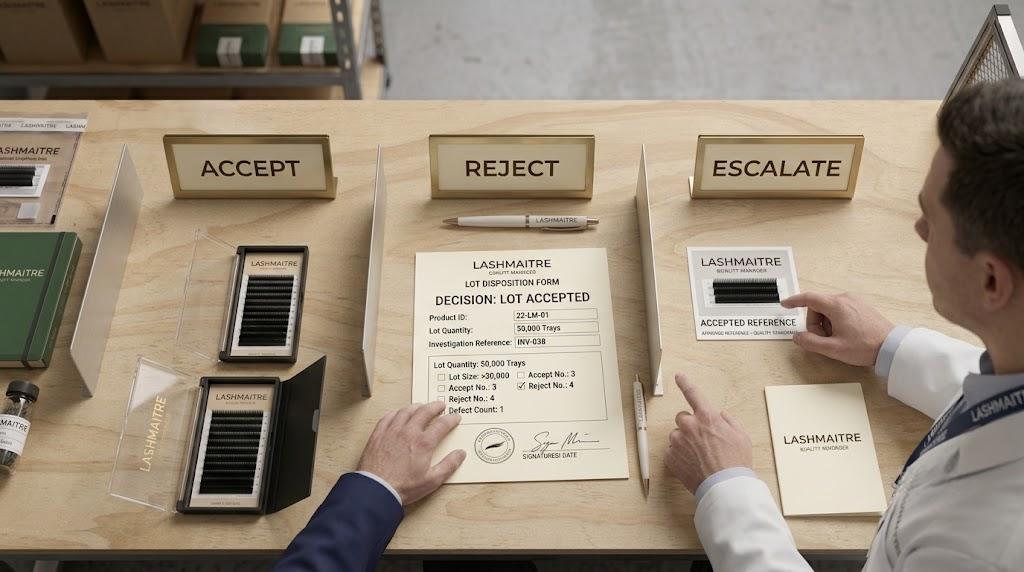
The LOT / SAMPLE / RESULT / DECISION Chain
| Element | Buyer question | Evidence required |
|---|---|---|
| LOT | What population will this decision cover? | SKU, batch, revision, quantity and location |
| SAMPLE | How were units selected and how many? | randomization method and approved sample size |
| RESULT | What defects or measurements were found? | criteria, counts, photos and measured values |
| DECISION | Which rule converts the result into action? | acceptance/rejection numbers and authorized disposition |
Example Without Inventing an AQL
Suppose a buyer orders one lot of private-label C-curl trays. Before production, both parties define a tray as the inspection unit, agree to random selection across cartons, choose a documented single-sampling plan, classify wrong SKU identity as critical, and define exact accept/reject numbers for other defect classes.
At inspection, the supplier follows those fixed rules. The example does not assign universal AQL values because the plan must reflect the buyer's quality agreement and chosen risk model.
Common Sampling Mistakes
- Inspecting a supplier-prepared “golden carton” rather than random units.
- Combining different SKUs or revisions into one lot.
- Counting multiple defects on one unit inconsistently.
- Changing a major defect to minor after the sample fails.
- Using the word AQL without the plan, inspection level or decision numbers.
- Taking an extra sample after rejection without a defined double-sampling rule.
- Treating sample acceptance as evidence that no defects exist anywhere in the lot.
- Failing to link inspection results to the shipped batch.
Lash Acceptance Sampling Plan FAQ
How many lash trays should a buyer inspect?
There is no universal number. Use an agreed sampling system that considers lot size, inspection level, defect risk and acceptance criteria. Record the sample size and decision numbers before inspection.
Does AQL mean the buyer accepts that percentage of defective products?
Not exactly. AQL is used in designing sampling plans and relates to acceptance probability and risk. It is not permission to intentionally ship a fixed percentage of defects.
Can a failed lot be sampled again?
Only under a predefined double- or multiple-sampling rule or after an authorized disposition such as verified sorting or rework. An unplanned resample should not replace the original result.
Is acceptance sampling the same as process control?
No. Acceptance sampling decides lot disposition from a sample. Process controls monitor and improve production so the lot is more likely to conform consistently.
Set Sampling Rules Before the Lot Arrives
Connect the sampling plan to lash quality control, approved lash extension samples, the exact private label lash configuration and a detailed wholesale lash inquiry. Share the lot definition, defect classes and decision rules before inspection so both parties interpret the same result in the same way.
Authority references: NIST Lot Acceptance Sampling overview and NIST acceptance sampling plan types.

Lash Maitre: Your Trusted Partner in Eyelash extension Solutions
Lash Maitre is dedicated to providing professional insights and tips in the eyelash extension industry. Sharing the latest trends, techniques, and product knowledge, Lash Maitre helps lash artists and enthusiasts enhance their skills, stay inspired, and achieve the perfect lash experience.