Lash Quality Escalation Matrix: 8 Triggers for Buyer Notification

Share
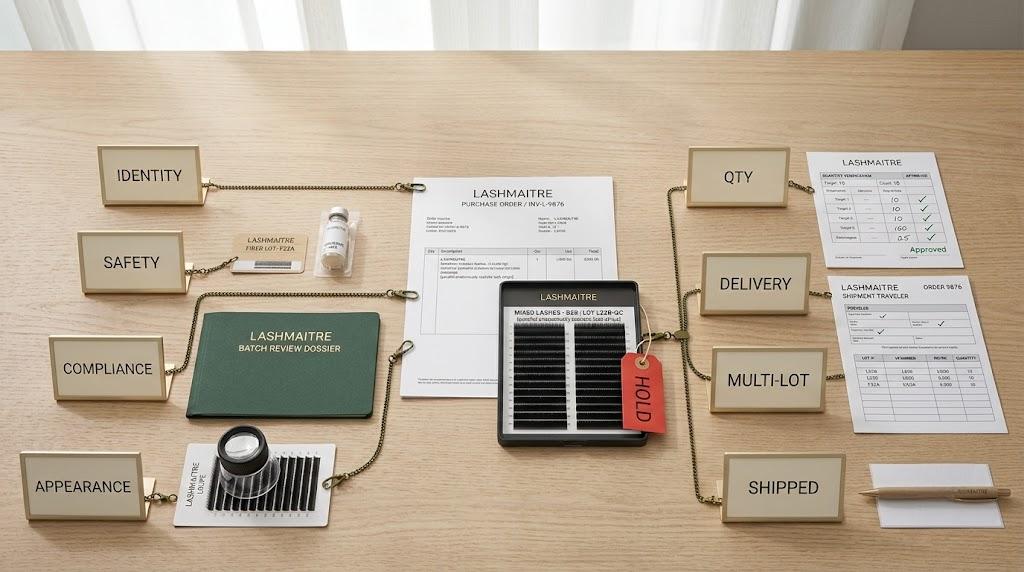
A lash quality escalation matrix should require buyer notification when an event can affect product identity, safety, compliance, approved appearance, quantity, delivery, multiple lots, released shipments or an agreed approval boundary, with facts, containment, scope, decision needed, owner and next update time in every escalation.
What Is a Lash Quality Escalation Matrix?
A lash quality escalation matrix is a pre-agreed decision table that tells a supplier which quality events require internal escalation, buyer notification or regulatory review, who owns the message and how quickly it must be sent.
It prevents two common failures: hiding a material issue until the shipment date and overwhelming the buyer with every minor internal correction. The matrix links severity and customer impact to a defined response.
Operational buyer notification is not the same as a legal report. FDA's current MoCRA page states that a responsible person must report serious adverse events associated with cosmetic products in the United States within 15 business days. Companies must separately assess applicable legal duties, responsible-person roles and market requirements. This article is an operational supplier-buyer framework, not legal or medical advice.
Notify on Facts, Not on Final Certainty
Do not wait for a completed root cause when a credible event may affect the buyer's product, launch, inventory or customers. An early notification can state that the cause is under investigation while still defining the known product, lot, containment and next update.
Equally, avoid speculative language. Separate confirmed facts, suspected scope and unresolved questions.
8 Triggers for Buyer Notification
1. Product Identity Is Uncertain
Escalate wrong SKU, curl, length, diameter, color, tray configuration, barcode, carton mark or product-label mismatch. Identity uncertainty can widen scope rapidly because other orders may share components or packing operations.
2. Safety or Adverse-Event Information Appears
Preserve the original report and escalate immediately to qualified quality and regulatory owners. Do not diagnose the event or promise causation. Determine whether market-specific reporting, record access, recall or customer communication requirements apply.
3. Legal, Regulatory or Claim Compliance May Be Affected
Notify when labeling, ingredient or material declarations, country-of-origin marks, mandatory warnings, substantiation records or agreed compliance documents may be incorrect or incomplete.
4. The Approved Appearance or Performance Cannot Be Met
Escalate confirmed departures from the approved master sample or specification that the supplier cannot correct within agreed limits. Examples include curl profile, fan symmetry, base condition, color, finish or packaging appearance.
5. Quantity or Delivery Commitment Is at Risk
Notify when accepted quantity, ship date, partial-shipment plan or launch-critical milestone may change. Give the buyer usable options such as approved partial quantity, corrected delivery date or alternative configuration.
6. More Than One Lot, Order or Customer May Be Affected
Escalate a repeated defect, shared material issue, common packaging revision or process failure that may cross the first detected batch. Define confirmed and potential scope separately.
7. Product Has Already Been Released or Shipped
If affected product crossed the release boundary, notify the buyer promptly with lot, carton and consignee traceability. Do not delay while waiting for every returned sample.
8. An Approval Boundary Requires Buyer Decision
Escalate any change that the quality agreement reserves for buyer approval: specification, sample, artwork, packaging component, rework method, quantity tolerance, shipment consolidation or deviation acceptance.
Buyer Notification Matrix
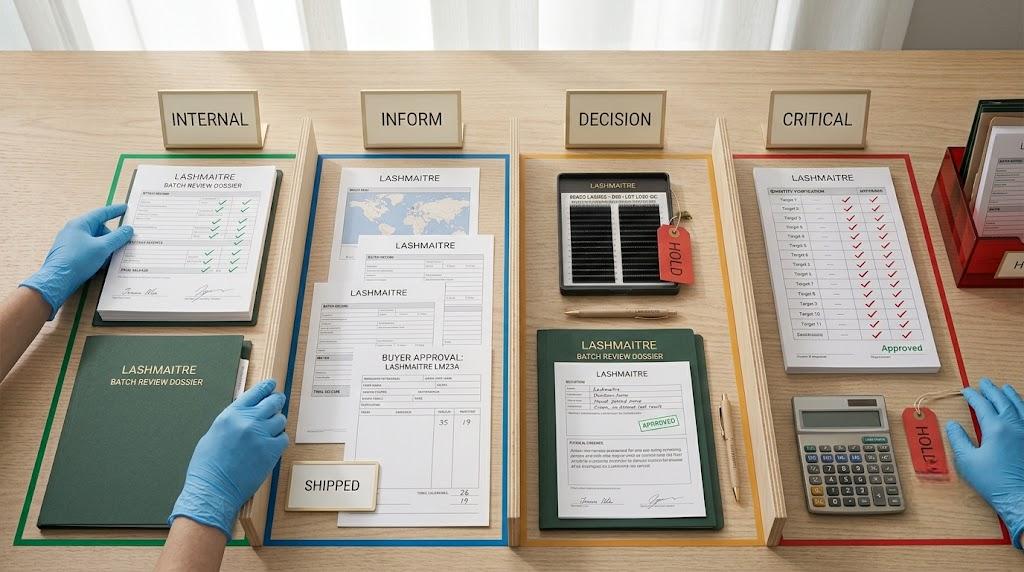
| Level | Typical trigger | Initial action | Buyer timing | Owner |
|---|---|---|---|---|
| Level 1 – Internal | Minor contained issue within approved limits; no order impact | Correct and record | Routine summary if agreed | Production or QC |
| Level 2 – Inform | Contained issue may affect schedule or requires visibility | Hold affected units and verify scope | Same business day or agreed interval | Account and quality |
| Level 3 – Decision | Specification, sample, quantity, packaging or ship-plan approval needed | Present controlled options | Before work or shipment continues | Quality manager plus account owner |
| Level 4 – Critical | Safety signal, wrong identity, released affected product or broad systemic risk | Contain, trace and convene qualified team | Immediate operational escalation; assess legal timing separately | Senior quality/regulatory leadership |
The matrix should be written into the quality agreement or supplier onboarding file. Terms such as “immediate” and “material issue” need concrete definitions, time zones and after-hours contacts.
What Every Escalation Message Should Include
- Clear subject with order, SKU and lot.
- Confirmed facts and date detected.
- Requirement or approval affected.
- Quantity and shipment scope confirmed so far.
- Containment already completed.
- Risk that remains under investigation.
- Decision or information needed from the buyer.
- Named owner and next update time.
Keep the first message concise, then attach controlled evidence. Do not bury the decision request inside a long investigation narrative.
Decision Rule: Inform, Ask or Stop
- INFORM: no approval boundary is crossed, but the event may affect visibility, timing or confidence.
- ASK: buyer authorization is required for a change, deviation, quantity or shipment option.
- STOP: identity, safety, compliance or released-product risk is unresolved; hold affected activity until authorized owners decide.
Common Escalation Failures
- Waiting for a final root cause before reporting a serious or shipment-impacting event.
- Calling the buyer before product, lot and current containment are identified.
- Sending raw internal speculation as confirmed cause.
- Offering an unapproved substitution as the only option.
- Failing to define the next update time.
- Updating the account team but not the quality owner.
- Treating buyer notification as a substitute for applicable regulatory reporting.
- Closing the escalation without recording the buyer's decision and implementation evidence.

Lash Quality Escalation FAQ
When should a lash supplier notify the buyer?
Notify when identity, safety, compliance, approved appearance, quantity, delivery, multiple lots, released shipments or a buyer-controlled approval boundary may be affected.
Can notification wait until root cause is confirmed?
Not when the buyer may need to contain product, protect a launch or make a time-sensitive decision. Send confirmed facts, current scope and containment, then update the cause when evidence supports it.
What should a quality escalation include?
Include the order, SKU, lot, facts, affected requirement, confirmed and potential scope, containment, decision needed, owner and next update time.
Is buyer notification the same as regulatory reporting?
No. Buyer notification is an operational and contractual communication. Regulatory reporting depends on the product, market, event and responsible legal entity and should be assessed separately by qualified owners.
Define the Escalation Path Before Production
Tie notification thresholds to documented lash quality control, controlled lash extension samples, an approved private label lash program and a complete wholesale lash inquiry. Agree contacts, approval boundaries and response times before the first production lot so a real issue can be handled without delay.
Authority reference: FDA Modernization of Cosmetics Regulation Act of 2022 (MoCRA).

Lash Maitre: Your Trusted Partner in Eyelash extension Solutions
Lash Maitre is dedicated to providing professional insights and tips in the eyelash extension industry. Sharing the latest trends, techniques, and product knowledge, Lash Maitre helps lash artists and enthusiasts enhance their skills, stay inspired, and achieve the perfect lash experience.