EU Small Parcel Duty: 7 Lash Sourcing Checks
Share
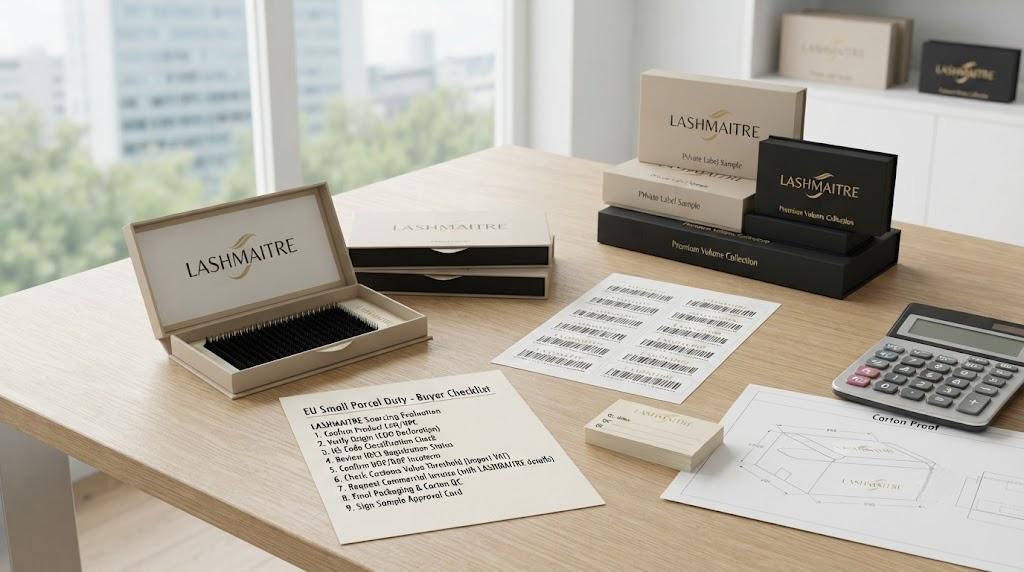
Direct answer: EU small parcel duty became a practical sourcing issue for ecommerce lash buyers on July 1, 2026. The EU says a temporary EUR 3 customs duty applies per item to low-value consignments up to EUR 150 imported from outside the EU. For lash buyers, the immediate action is not panic. It is to review landed cost, SKU records, product identifiers, packaging labels, sample approval and reorder timing before relying on cheap small-parcel testing.
The European Commission says the temporary duty applies until July 1, 2028, when normal customs duties will apply depending on the type of good. It also says product identifiers become mandatory from November 1, 2026 to improve traceability. For ecommerce lash brands, this connects directly to how tray cards, SKU labels, carton records, barcode sheets, packaging proofs and reorder plans are prepared before launch.
This article is for B2B sourcing education and is not legal advice. Lash sellers should confirm customs, tax and product compliance details with qualified advisors or local import partners.
Why EU small parcel duty matters for lash buyers
Many new lash ecommerce brands begin with small test shipments. They may buy a few lash trays, packaging samples, private label sleeves or lash aftercare items before committing to a larger wholesale order. That sample-first path is still useful, but it should be more structured when selling into the EU.
The key risk is not only the EUR 3 duty. The larger risk is messy purchasing data. If a buyer has inconsistent SKU names, unclear carton labels, missing product identifiers or packaging that does not match the product listing, a low-cost test order can create confusion later when the brand tries to scale.
For lash products, this matters across several categories: individual lash trays, volume lash trays, flat lashes, private label packaging, sample boxes, carton labels, aftercare kits and reorder batches.
What changed on July 1, 2026?
The EU rule targets low-value ecommerce consignments imported from outside the EU. The Council of the EU states that a fixed EUR 3 customs duty applies to small parcels valued under EUR 150 from July 1, 2026. The European Commission explains that the duty is a temporary flat fee applied per item, based on tariff classification, and product identifiers become mandatory later in 2026.
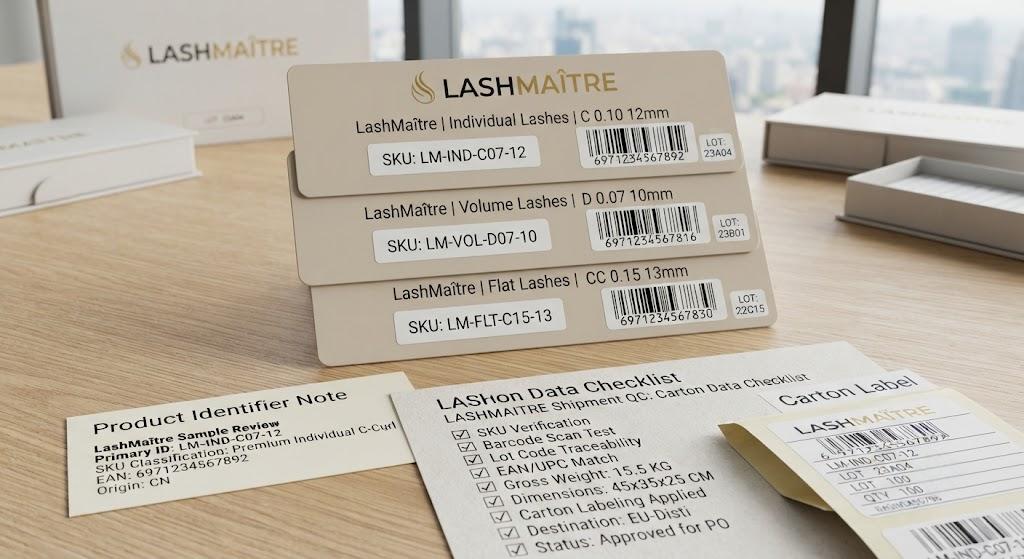
For B2B lash buyers, the important point is operational: small parcels are no longer just a shipping choice. They are part of a larger data and compliance chain. SKU description, classification, origin, barcode, lot code, carton label and packaging proof should be reviewed together.
7 checks before relying on small-parcel lash imports
| Check | What to review | Why it matters |
|---|---|---|
| 1. Consignment value | Confirm whether the order is under the EUR 150 low-value threshold. | This helps buyers understand whether the temporary duty may affect the order flow. |
| 2. SKU naming | Keep product names consistent across tray cards, invoices, barcode labels and ecommerce listings. | Inconsistent SKU names can create customs, warehouse and reorder confusion. |
| 3. Product identifiers | Prepare SKU codes, barcodes, lot codes and product identifier records early. | The EU timeline makes traceability a stronger buyer checkpoint. |
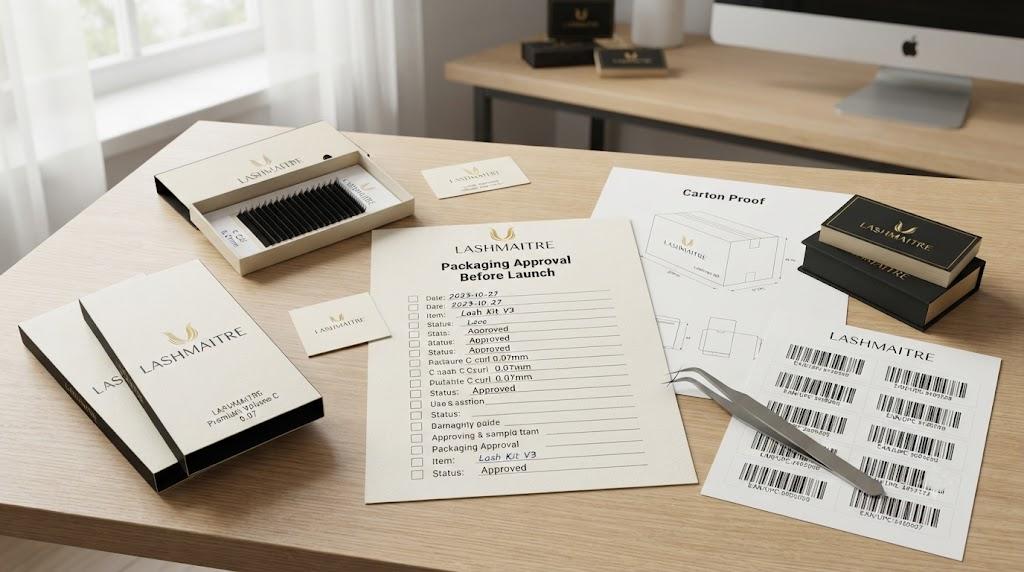
| 4. Packaging approval | Match tray sleeve proof, carton proof and product listing before launch. | Packaging mistakes are expensive to fix after a public launch. |
| 5. Sample notes | Connect physical sample approval with batch records and reorder notes. | Buyers need a repeatable standard, not only a nice first sample. |
| 6. Landed cost | Estimate duty, shipping, packaging and reorder cost together. | A cheap test parcel may not represent the cost of a stable sourcing plan. |
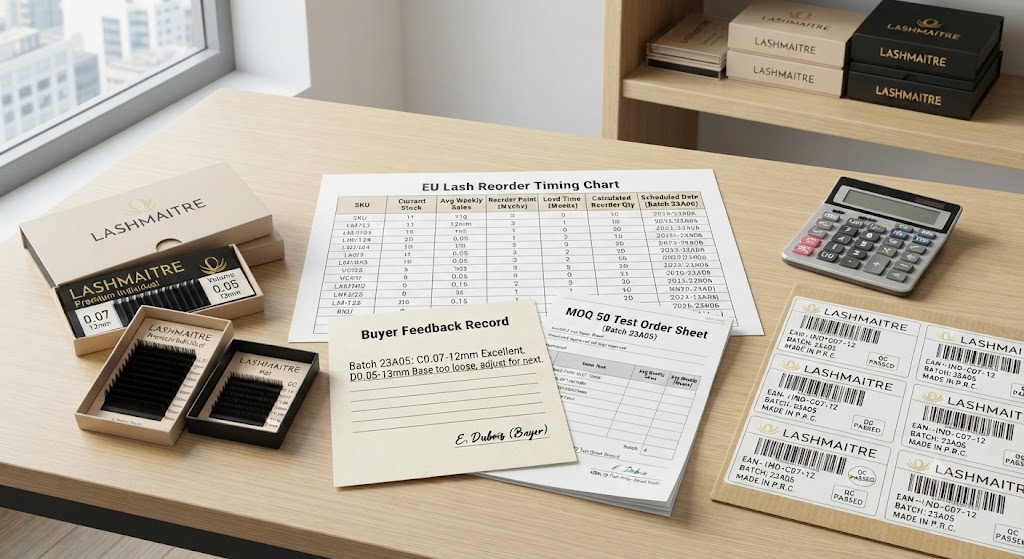
| 7. Reorder timing | Plan when to move from test order to MOQ 50 or wholesale stock. | Better timing reduces stockouts, rushed shipping and batch mismatch risk. |
Which lash products need closer sourcing review?
The rule is not written for lash products specifically, but lash ecommerce buyers should use it as a reason to tighten purchasing records.
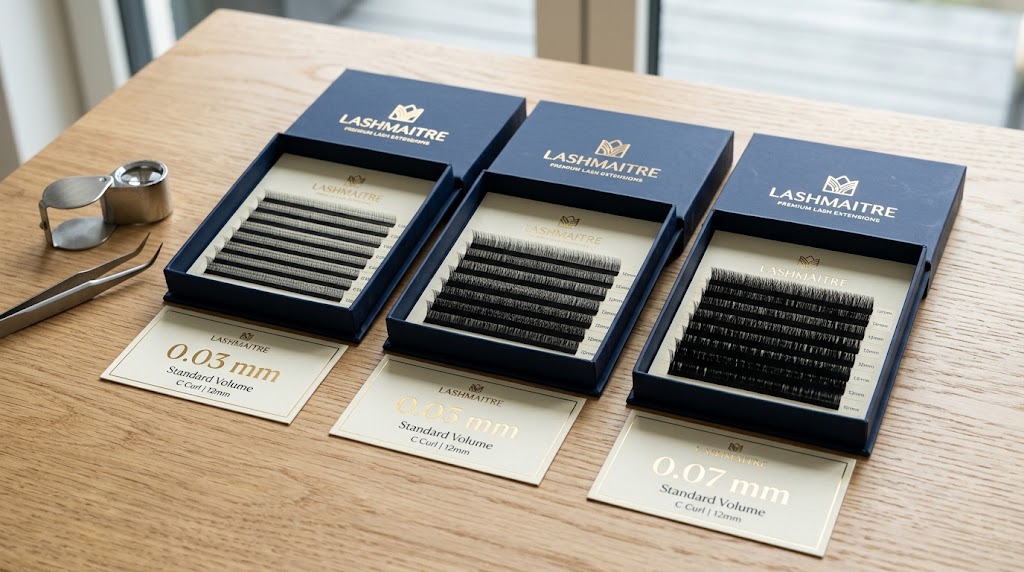
- C curl, D curl, L curl and mixed curl lash trays
- 0.05 and 0.07 volume lash trays
- flat lash and individual lash trays
- private label sample boxes and packaging sleeves
- carton labels and barcode sheets
- lash cleanser, remover, primer and aftercare kits
- refill and reorder batches for ecommerce stores
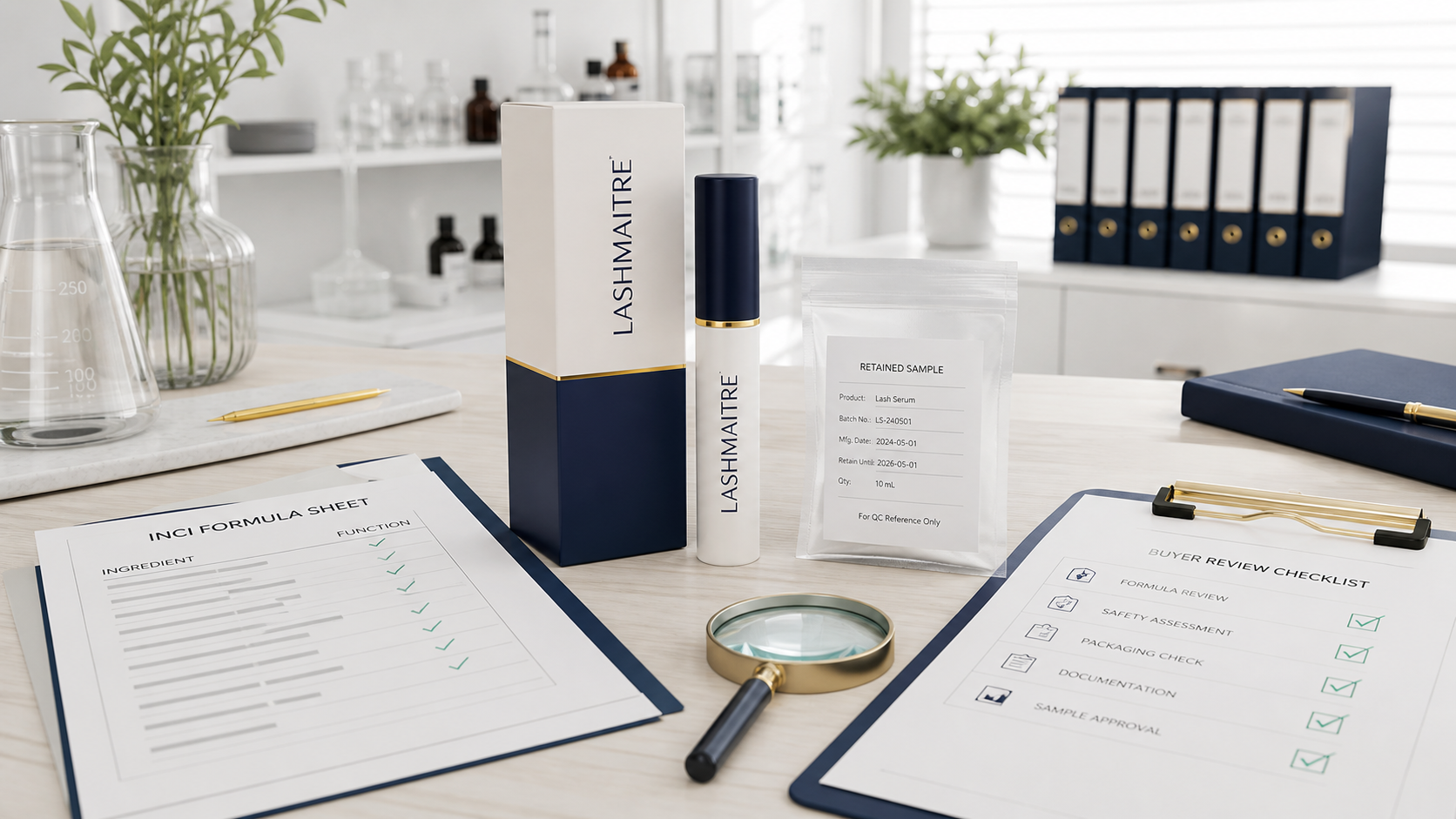
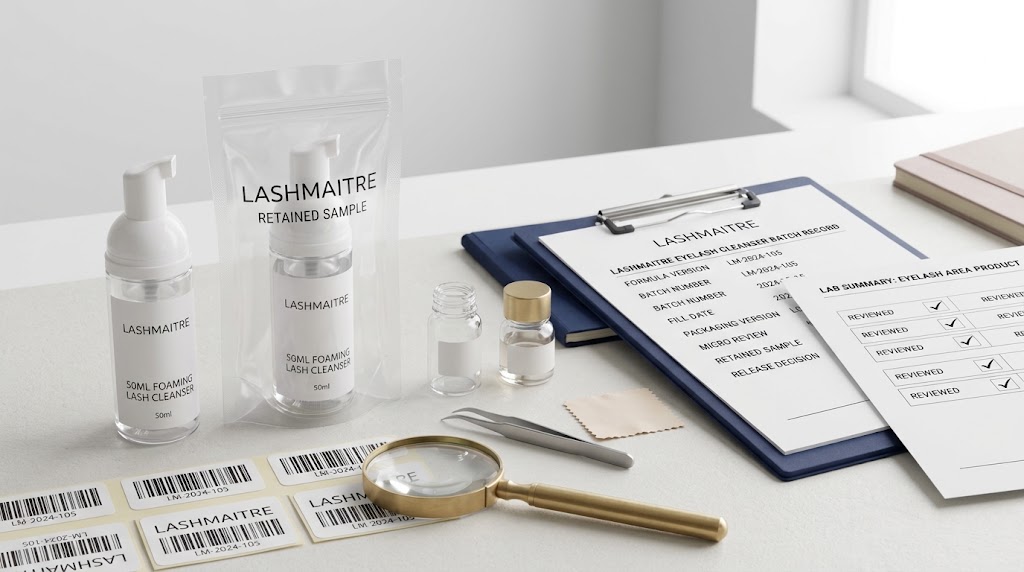
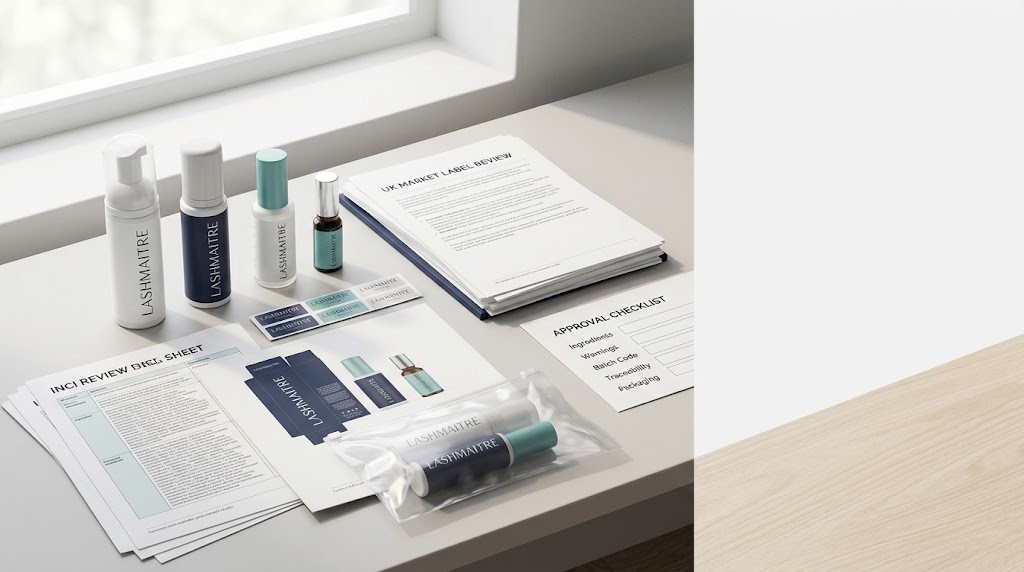
For tray products, the buyer should check curl, diameter, length mix, tray label, SKU code and carton label. For packaging products, the buyer should check artwork proof, barcode placement, carton proof and lot code area. For lash liquids or aftercare products, buyers should also review ingredient and market-specific labeling requirements.
Product identifiers are becoming a buyer-side habit
The European Commission says product identifiers can be declared voluntarily from July 1, 2026 and become mandatory from November 1, 2026. Even when the exact import process is handled by a seller, marketplace, logistics provider or importer, lash buyers should treat identifiers as a sourcing discipline.
A practical lash sourcing file should include product name, SKU code, curl and diameter, length range, tray label version, barcode number, lot code format, carton label proof, origin, supplier record and buyer approval date. This protects the buyer when the same product needs to be reordered, relabeled or shipped through a different channel.
How sample-first sourcing should change
Sample-first sourcing is still the right path. The change is that samples should not be treated as isolated products. Each sample should be tied to a future commercial SKU.
Before approving a lash sample, buyers should ask whether the sample card is labeled with the exact intended product name, whether the tray label matches the future product listing, whether curl and diameter are recorded, whether barcode or SKU format makes sense, whether packaging proof is approved before a larger batch, and whether the supplier keeps batch records for repeat production.
This turns a sample from a loose test into a controlled procurement record.
MOQ 50 can be safer than scattered small parcels
The EU small parcel duty is a reminder that very small test shipments are not always the cleanest long-term sourcing model. For a lash brand, scattered small parcels can create multiple versions of packaging, inconsistent tray labels, unclear landed cost and weak reorder records.
A structured MOQ 50 test order can be more useful when the buyer wants to validate real selling conditions. It allows the brand to test several SKUs, confirm packaging, record buyer feedback and prepare for repeat order planning.
What LASHMAITRE buyers can prepare before inquiry
Before asking for a quote or sample plan, prepare the details that affect the EU ecommerce sourcing path: target market, product category, curl and diameter, expected SKU count, packaging style, barcode or SKU format, carton label needs, sample quantity, expected launch date and reorder timeline.
LASHMAITRE can then support a clearer sample-first sourcing path, including lash samples, MOQ 50 planning, private label packaging, quality control and repeat order planning.
CTA: If you are preparing lash products for EU ecommerce sales, send your target market, SKU list, packaging needs and sample plan through the wholesale inquiry page. You can also review lash samples, MOQ 50 support, quality control, private label packaging, repeat order planning and packaging approval.
Official references
- European Commission guidance on the temporary flat fee on low-value imports
- Council of the EU press release on small parcel customs duty
FAQ
What is EU small parcel duty?
EU small parcel duty is a temporary EUR 3 customs duty that applies from July 1, 2026 to low-value consignments up to EUR 150 imported from outside the EU, according to EU official guidance.
Does EU small parcel duty apply to lash products specifically?
The rule is not lash-specific. It affects low-value ecommerce import consignments generally. Lash ecommerce buyers should use it as a reason to review SKU data, product identifiers, packaging labels and landed cost.
Why should lash ecommerce brands care about product identifiers?
Product identifiers help connect product listings, SKU records, barcode labels, carton labels and customs data. For lash trays and private label packaging, this reduces confusion when the same product is reordered or shipped at scale.
Should buyers stop using small test parcels?
No. Small test parcels can still be useful. The safer approach is to connect each sample to a SKU record, packaging proof, batch note and reorder plan so the buyer can scale without losing control.
What should buyers ask LASHMAITRE before ordering?
Share your target market, product type, SKU list, curl and diameter needs, packaging style, barcode requirements, sample quantity and launch timeline. This helps build a more reliable sourcing plan.

Lash Maitre: Your Trusted Partner in Eyelash extension Solutions
Lash Maitre is dedicated to providing professional insights and tips in the eyelash extension industry. Sharing the latest trends, techniques, and product knowledge, Lash Maitre helps lash artists and enthusiasts enhance their skills, stay inspired, and achieve the perfect lash experience.