Low-Cost Lash Glue Risk: Wholesale Buyer Checklist
Share
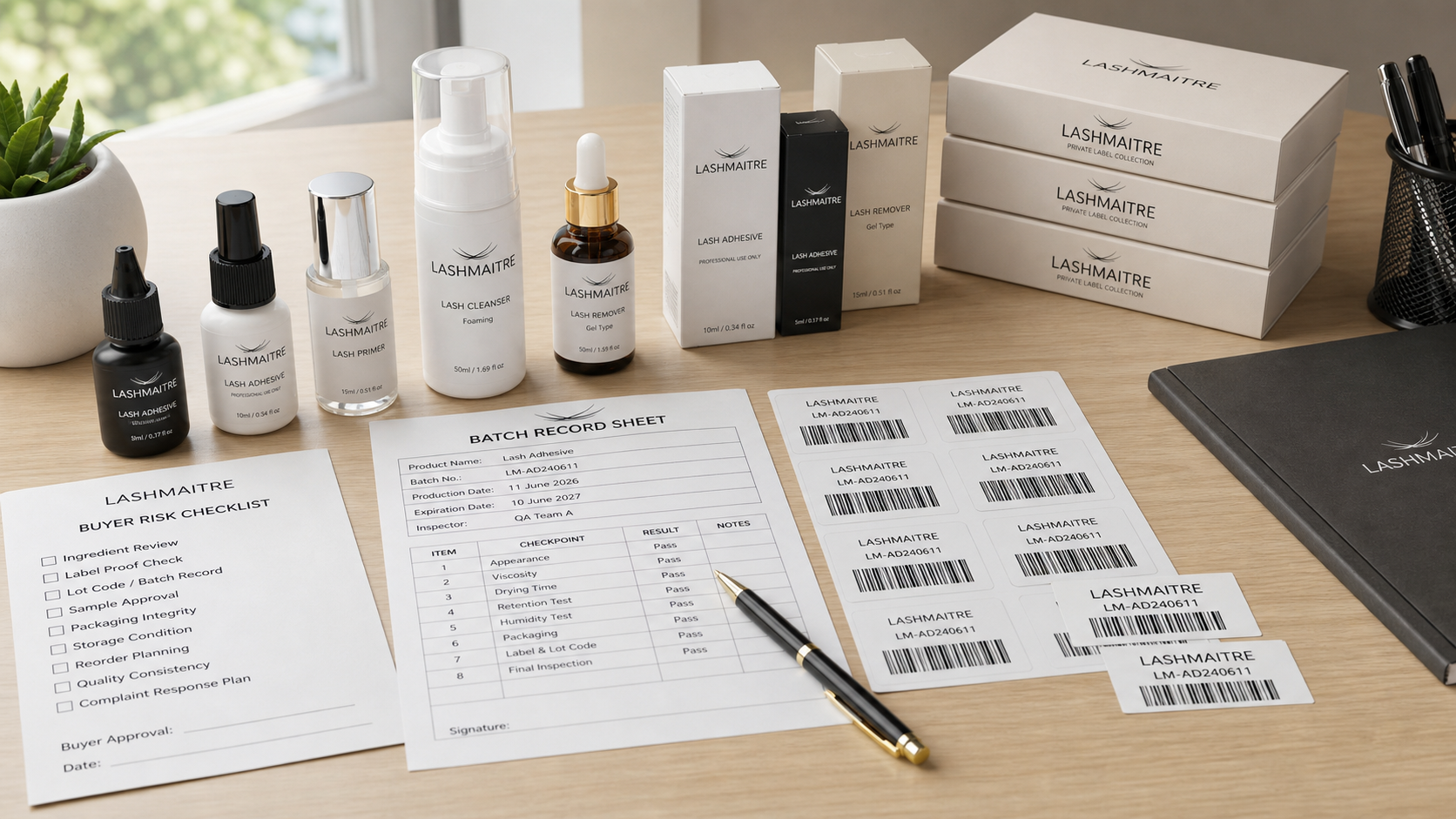
Low-cost lash glue risk is not only a consumer safety issue. It is a wholesale buyer procurement issue. A recent low-cost lash glue incident reported online is a useful reminder that lash adhesive products should not be approved only by price, packaging mockup or fast delivery.
The incident involved a consumer who reported painful skin and eye-area reactions after using an inexpensive lash adhesive. Individual reports should be read carefully and not treated as a full category judgment, but the buyer-side lesson is clear: lash adhesives sit close to the eye area, so private label buyers need a controlled approval process before placing repeat or bulk orders.
Why Low-Cost Lash Glue Risk Matters For Wholesale Buyers
Low cost is not automatically unsafe. Many buyers need accessible entry pricing, especially when testing a new SKU. The problem starts when price becomes the only selection standard.
For lash brands, salon distributors and ecommerce sellers, the real risk is not just one bad review. It is a chain of preventable sourcing problems: unclear ingredients, weak label review, missing batch records, inconsistent sample approval and no documented complaint-response plan.
The FDA notes that false eyelashes, eyelash extensions and their adhesives are cosmetic products. For B2B buyers, that means eye-area product sourcing should be handled with more care than a normal packaging comparison.
What To Check Before Private Label Lash Adhesive Orders
| Risk control point | What buyers should request | Why it matters |
|---|---|---|
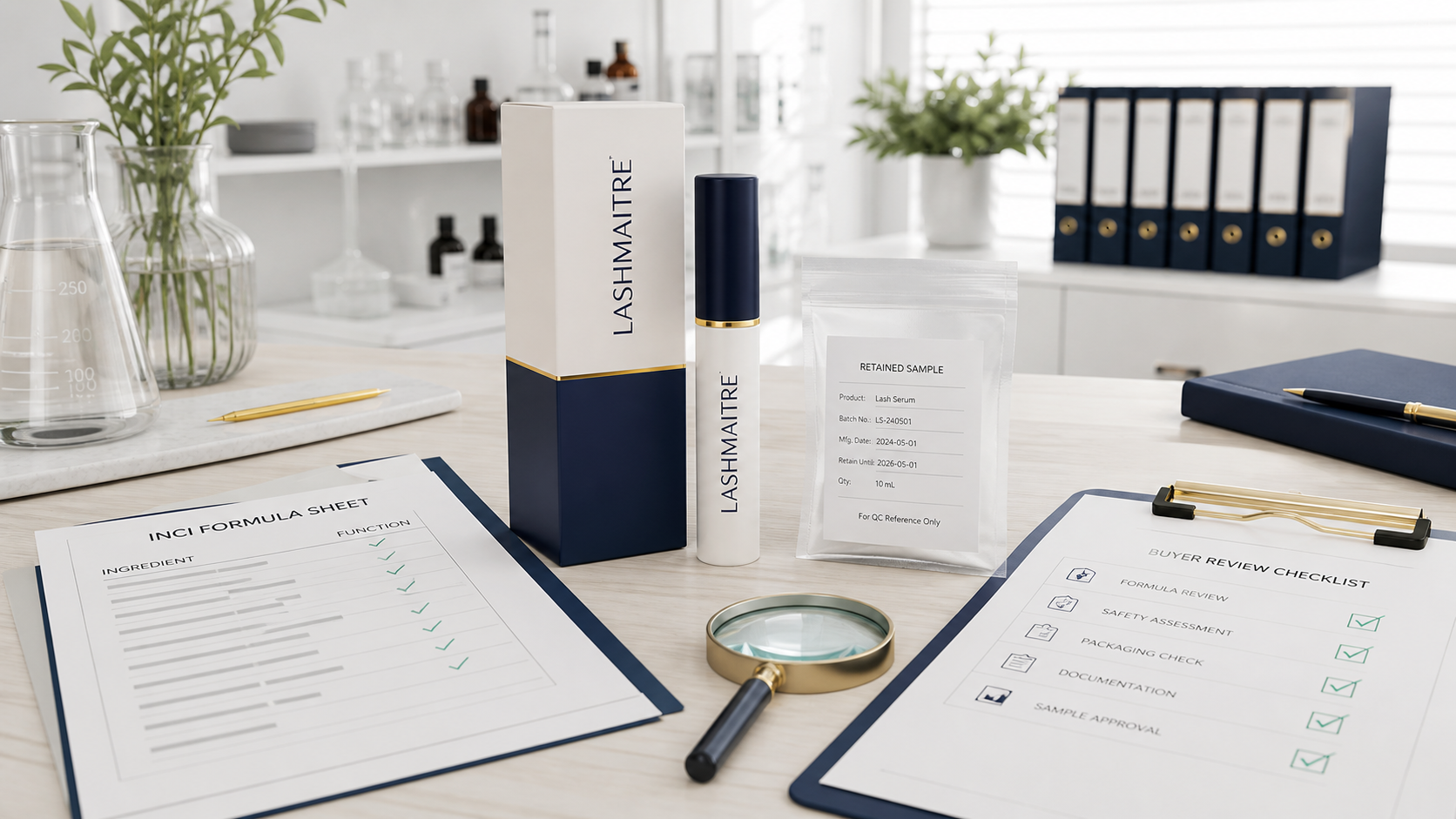
| Formula and ingredient record | Ingredient list, product identity and formula version notes. | Helps buyers review the exact product before label or carton approval. |
| Label proof | Ingredient area, warning text, net content, directions and lot-code area. | Prevents packaging from being approved before basic product information is checked. |
| Physical sample | Actual adhesive bottle, box proof and buyer approval card. | Digital mockups cannot replace handling, odor, leakage and label checks. |
| Batch traceability | Lot code, batch record, sample ID and carton label proof. | Makes complaints easier to trace if odor, drying, retention or irritation concerns appear. |
| Reorder planning | Storage notes, shelf-life notes and reorder timing. | Adhesives can be sensitive to storage and shipment conditions. |
Ingredient And Formula Review Comes First
Ask for the ingredient list before approving packaging. Do not wait until the label has already been printed.
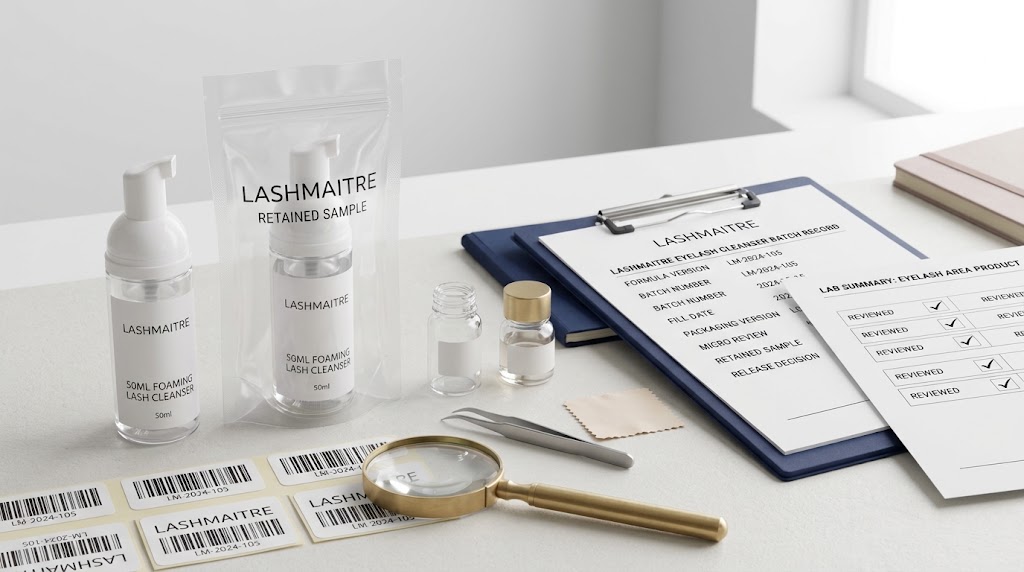
For adhesives, removers, primers and cleansers, buyers should keep a simple formula review file that includes product name, intended use, ingredient list, warning text, net content, storage notes, batch code format and target-market notes.
This does not replace legal or regulatory review. It gives the buyer a basic control point before bulk production.
Label Proof And Warning Text Should Match The Product
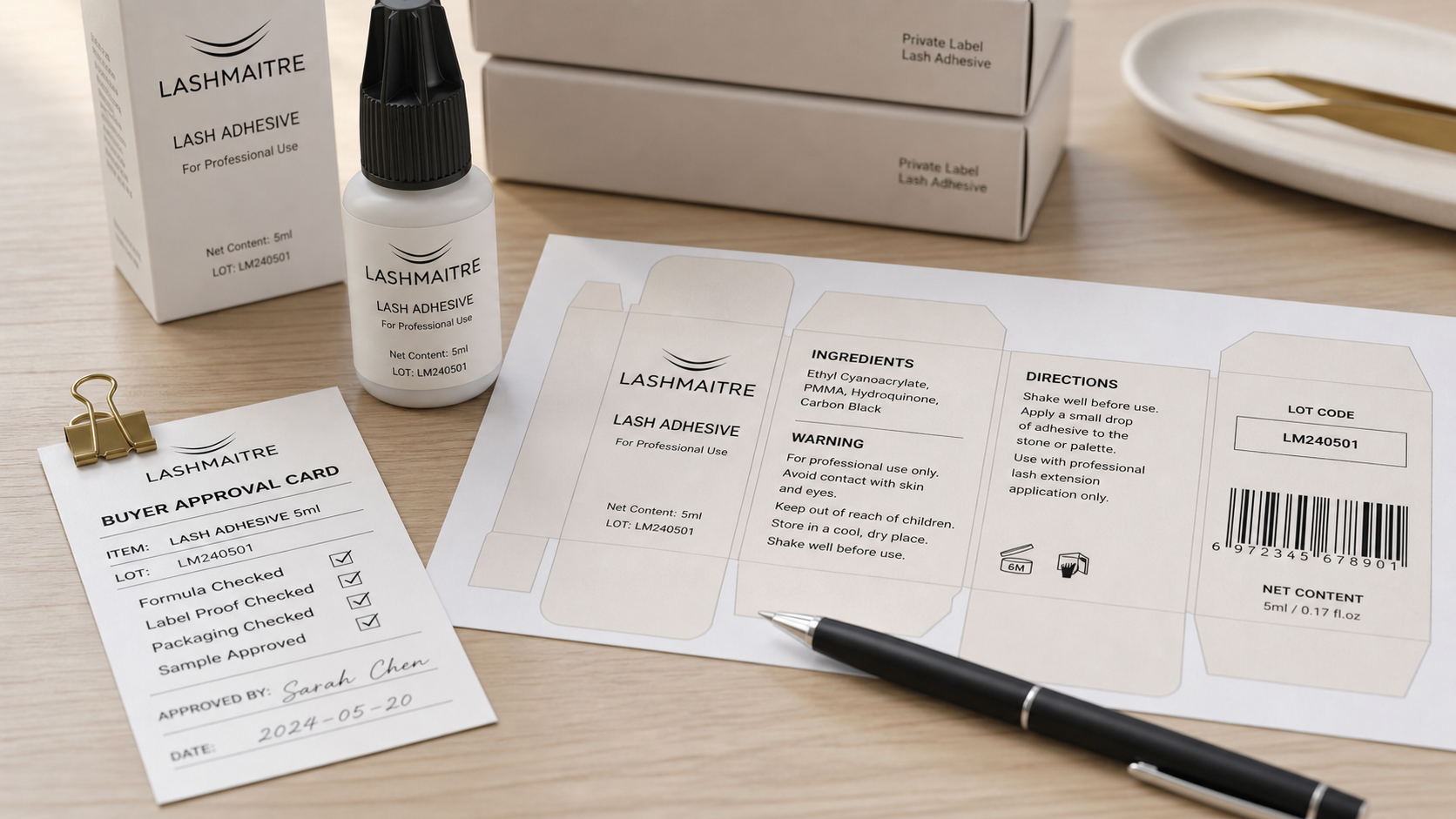
Private label buyers often focus on logo placement and box style. For adhesive products, label content is just as important.
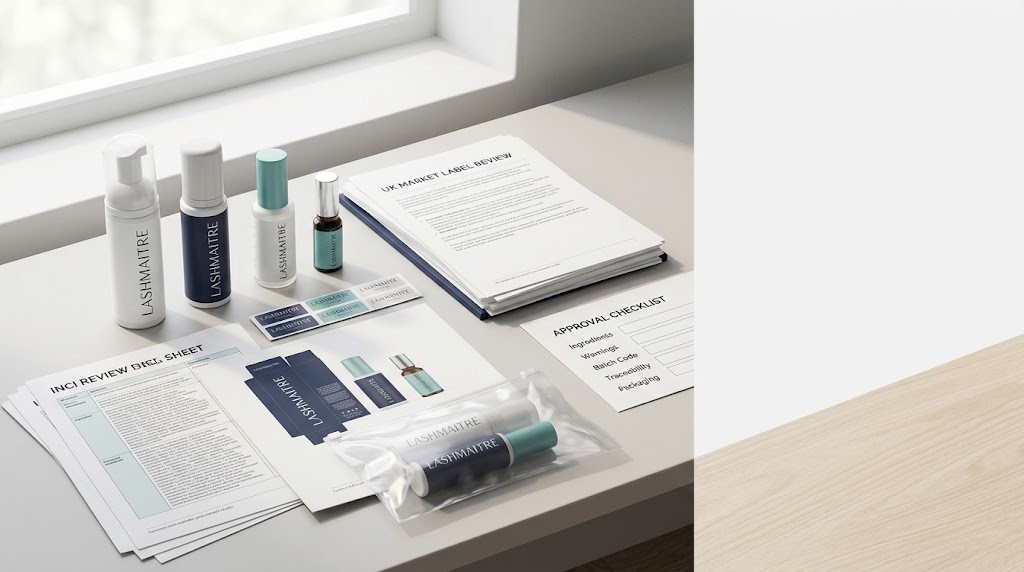
Before approving label artwork, check whether the label includes product identity, net content, ingredient area, warning area, lot-code area, directions or usage notes, and supplier or brand contact information when required for the target market.
If a supplier cannot keep label proof, carton proof and formula version connected in one record, the buyer may struggle to trace problems later.
Sample Approval Before Bulk Production
Do not approve a lash adhesive only from a digital mockup. A better sample approval process should include one physical product sample, one label proof, one carton or box proof, one batch record or sample ID, one buyer approval note and one storage note.
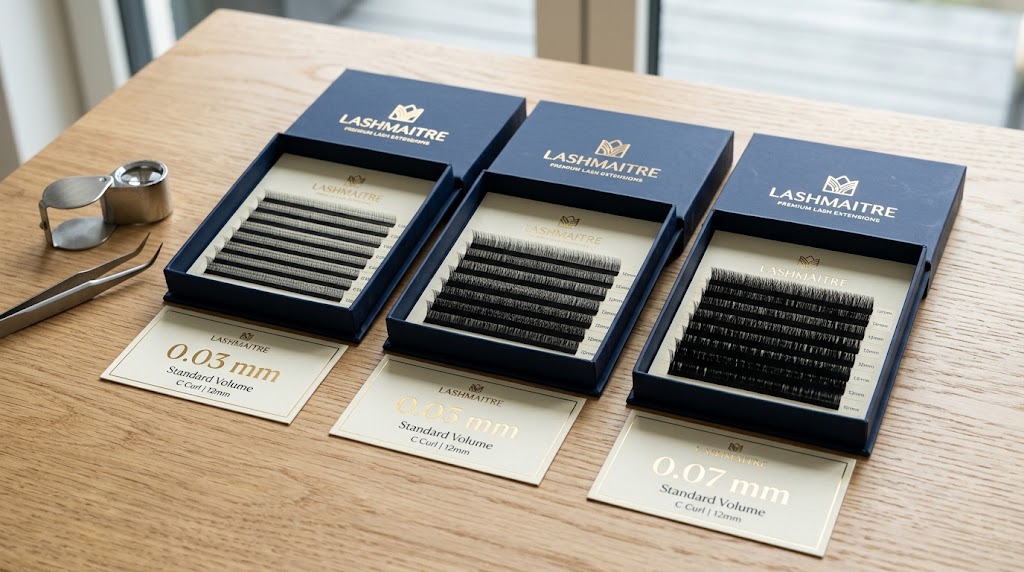
For buyers who are also purchasing lash trays, cleansers or removers, the same sample-first logic applies. Test the full product and packaging experience before scaling.
Batch Code And Complaint Traceability
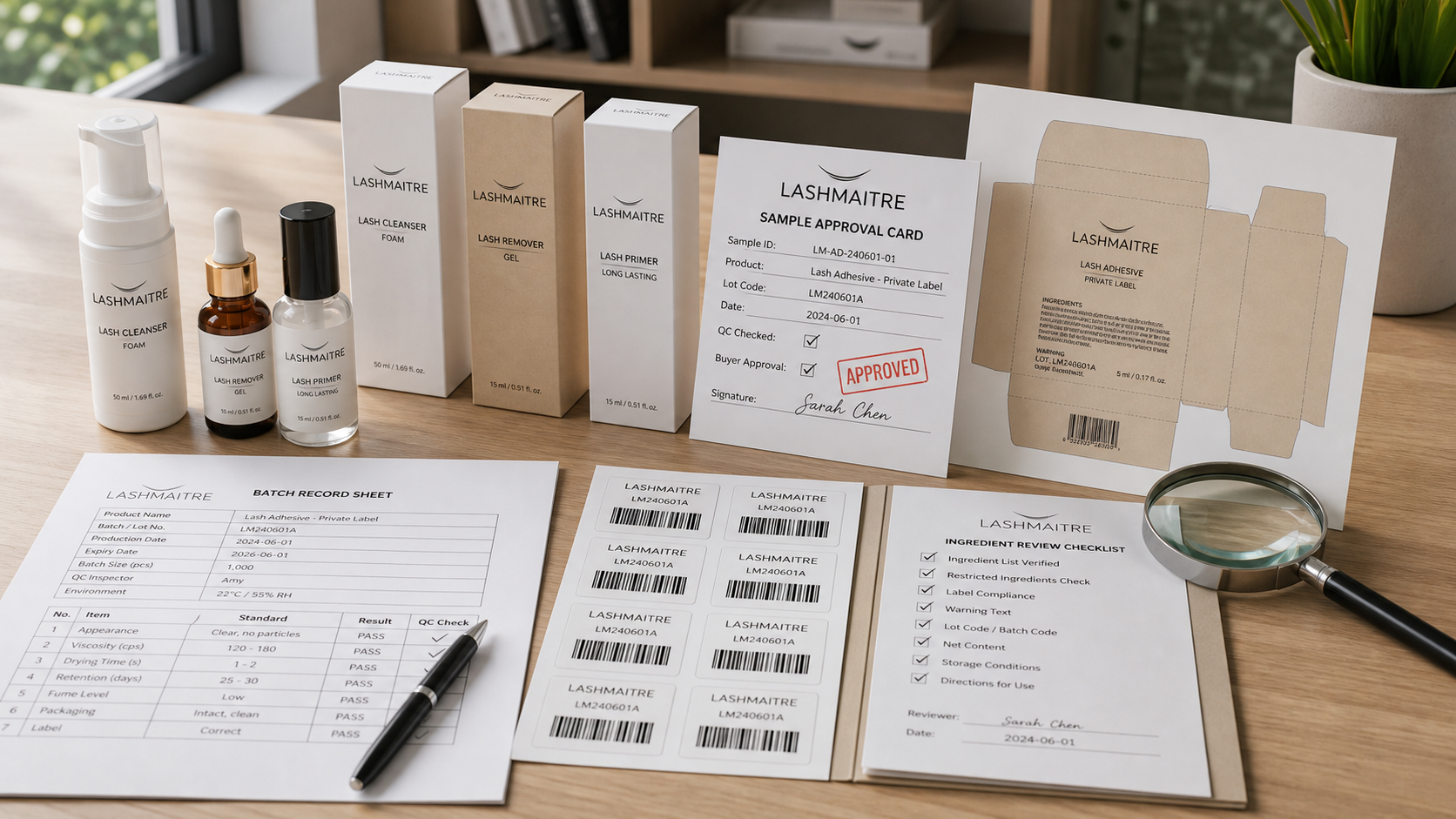
Low-price products often become expensive when a buyer cannot identify which batch caused a problem.
A wholesale buyer should confirm that every adhesive or aftercare product can be traced by batch code, production date or lot reference, sample approval record, label version, packaging version, carton label and reorder record.
This matters when customers report odor, irritation, leakage, drying issues, unstable retention or packaging mismatch. Without traceability, the buyer can only guess.
Storage And Shipping Conditions
Lash adhesives are sensitive products. Storage and shipping can affect buyer experience after delivery.
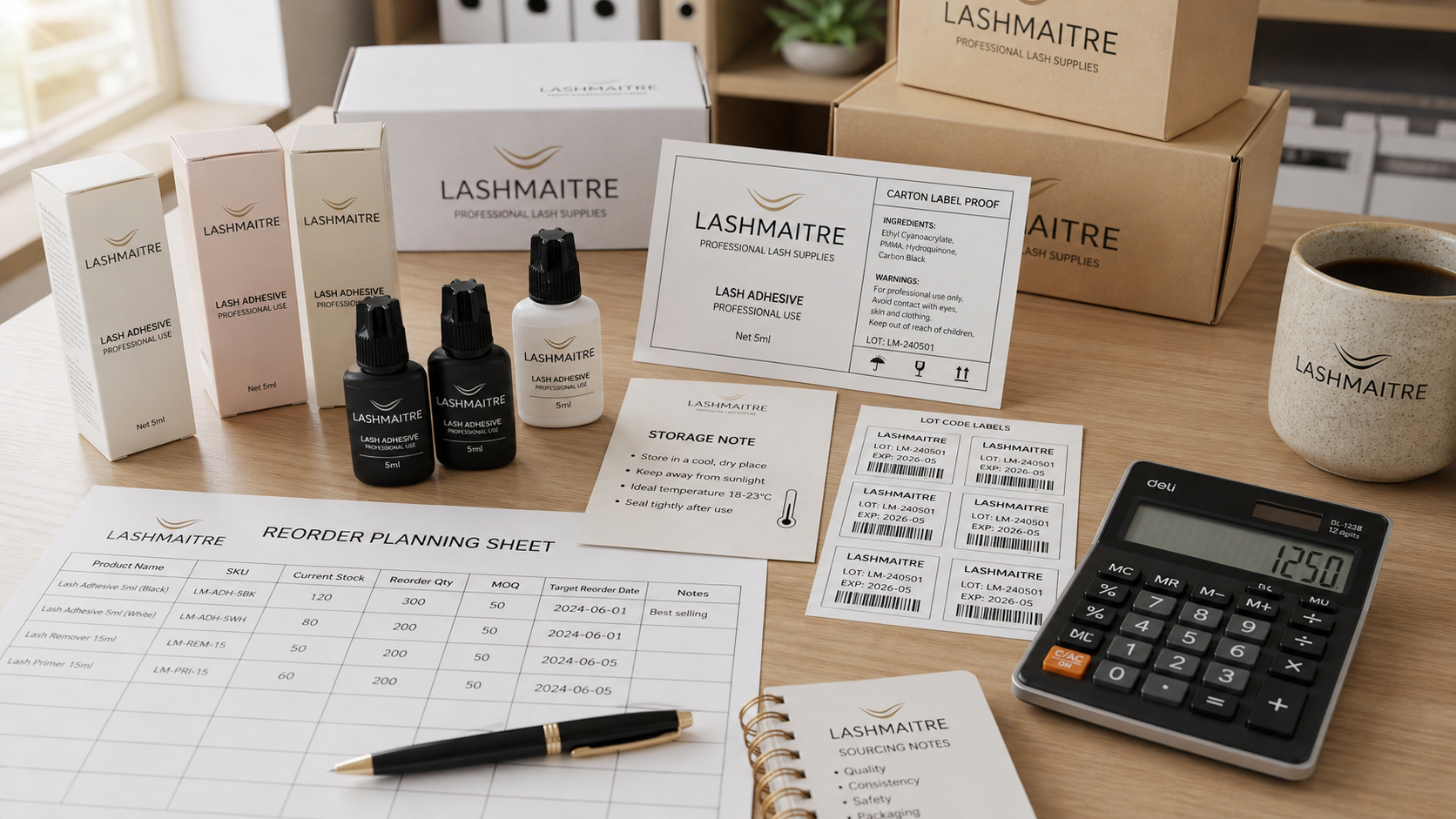
Before scaling, ask the supplier how the product should be stored and how reorder timing should be planned. Even if the formula is acceptable, poor storage notes or unclear packaging instructions can create complaints after shipment.
How LASHMAITRE Turns Safety Concerns Into Procurement Checks
For LASHMAITRE, adhesive and aftercare sourcing is not treated as a simple catalog order. The safer path is to move from sample to approval to repeat order with clear records.
- Choose a small test order or sample set.
- Review the product label and packaging proof.
- Confirm ingredient, warning and lot-code areas.
- Test the sample under realistic use conditions.
- Record buyer feedback before bulk production.
- Approve packaging only after product and label review.
- Keep reorder notes for batch consistency.
Low-Cost Lash Glue Risk Checklist
- Ingredient list received
- Label proof reviewed
- Warning area included
- Lot code format confirmed
- Physical sample tested
- Packaging proof checked
- Batch or sample ID recorded
- Storage notes documented
- Reorder timing discussed
- Supplier contact path confirmed
If one of these items is missing, the buyer does not need to cancel the project immediately. But the order should not move into bulk production until the missing control point is resolved.
Review Lash Adhesive Samples Before Bulk Orders
Planning a private label lash adhesive, remover or aftercare SKU? Start with LASHMAITRE sample support, review quality control records, and send a wholesale inquiry before scaling.
Related LASHMAITRE Resources
Source Notes
Sources checked for this news article:
- FDA, Eye Cosmetic Safety: fda.gov.
- The Sun, consumer-reported low-cost lash glue incident: the-sun.com.
- Poison Control, eyelash glue ingredient risk overview: poison.org.
- Missouri Poison Center, eyelash glue risk overview: missouripoisoncenter.org.
FAQ
Are low-cost lash glues always unsafe?
No. Low cost alone does not prove a product is unsafe. Low-cost lash glue risk increases when the buyer cannot verify ingredients, warning text, batch records, sample performance and supplier documentation before bulk production.
What should private label buyers check first?
Start with the ingredient list, label proof, warning text, lot-code area and physical sample. These five checks help buyers identify sourcing risk before packaging is printed.
Should wholesale buyers test lash adhesive before bulk orders?
Yes. Lash adhesive should be tested through samples before repeat or bulk purchasing. Buyers should record handling, odor, drying behavior, packaging condition and any feedback from controlled use.
How can a lash brand reduce adhesive complaints?
Use sample-first approval, clear label review, batch tracking, realistic storage notes and consistent reorder records. These controls do not remove all risk, but they make problems easier to prevent and trace.

Lash Maitre: Your Trusted Partner in Eyelash extension Solutions
Lash Maitre is dedicated to providing professional insights and tips in the eyelash extension industry. Sharing the latest trends, techniques, and product knowledge, Lash Maitre helps lash artists and enthusiasts enhance their skills, stay inspired, and achieve the perfect lash experience.